Author / Naz

Pasta

Baba’s Spaghetti Alla Carbonara

Carbonara.

He sends you flying.

It’s controversial.

High up in the air.

The same way hummus is controversial.

You spread your wings, catch your breath, and squeal with delight.

Or guacamole.

It’s innate. The dream of flight.  And in an instant he has given you wings.

To soar.  Beyond your dreams.

Or fesenjan.
He claps once.  Maybe twice.  Depending on how much air you catch.

A recipe can only take you so far.

Fathers love this game.  Mothers hold their breath and look away.

Children are perpetually caught in the middle.  In mid-air.

A recipe is only as good as the hands that prepare it.  The soil that feeds the herbs.  The stories, memories, love, frustrations, ambitions, disappointments, history, experience, traditions, culture, tears and laughter that pour out of your heart, surging through your shoulder blades, down your arm, through your finger tips, on to the cutting board, and sizzling into the pan.

You come tumbling back down.  Back down into his arms.

And sometimes a recipe is just a recipe.  A means to an end.  And that’s ok too.

He’s always there to catch you. Baba.
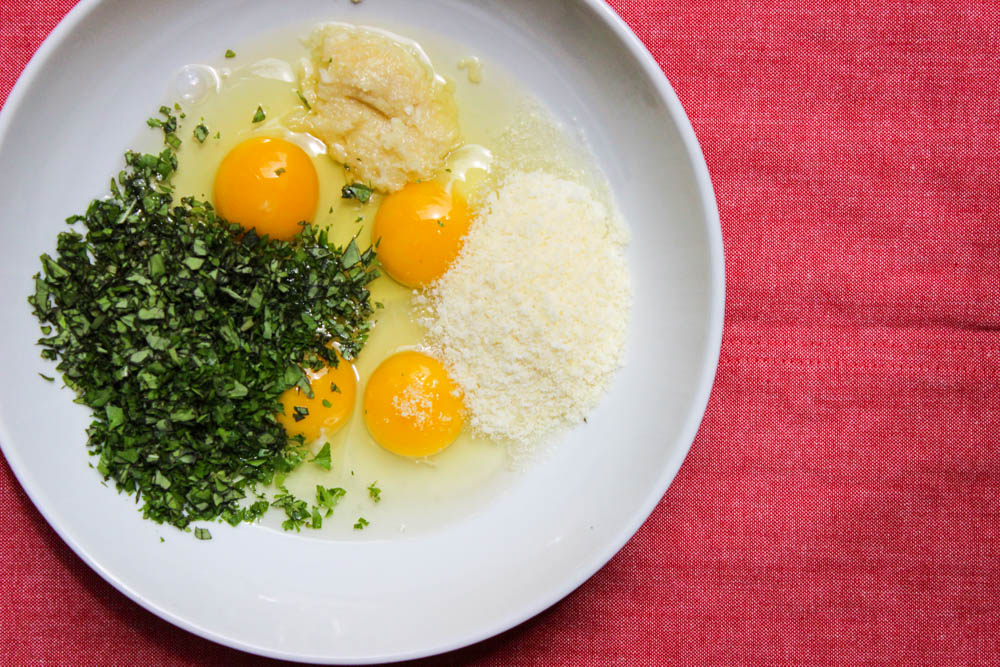
Carbonara is a maddeningly delicious – lick your fingers, smack your lips and go back for more – comfort food. It boasts very few ingredients while stirring up very strong opinions and allegiances.  At its most traditional preparation it is simply fresh raw eggs (yolk only or the whole egg is debatable), Parmigiano Regianno and Pecorino Romano (the use of one or the other or a combination of the two, also debatable), and guanciale – Italian cured pork cheek or jowl (the use of pancetta and bacon, again, debatable), black pepper and the pasta cooking water (the use of which is non-debatable, salt that water and use it!).

Purists and traditionalists will demand you stick to these few simple ingredients and beware their wrath, disapproval and eye rolls lest you venture off course.  Passions run high.  Very high.

And so it is with a healthy dose of respect and a nod to tradition that I stir up the carbonara pot and debate even more.
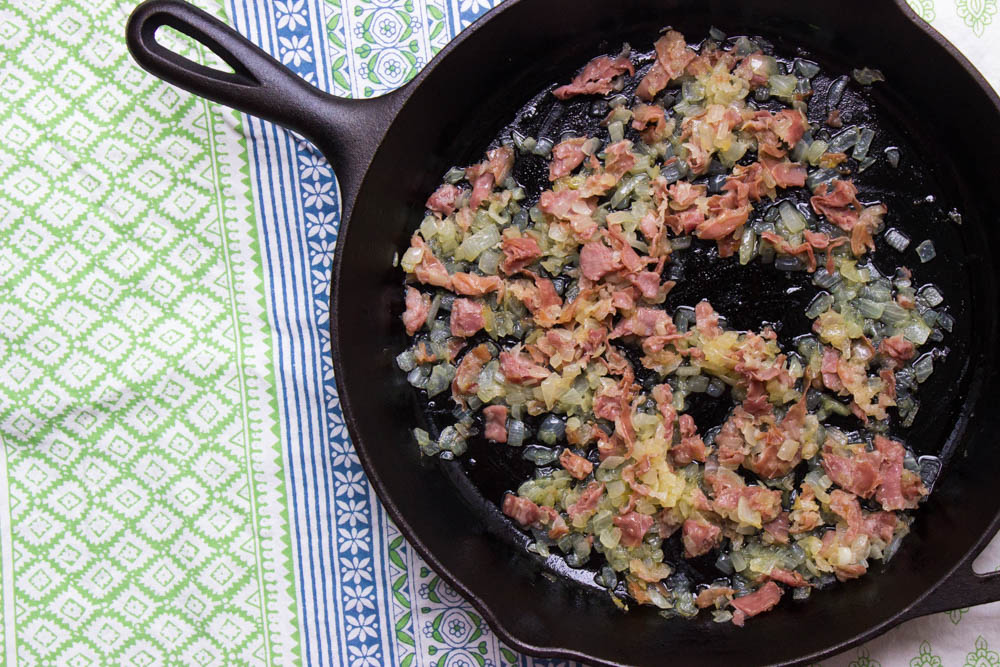
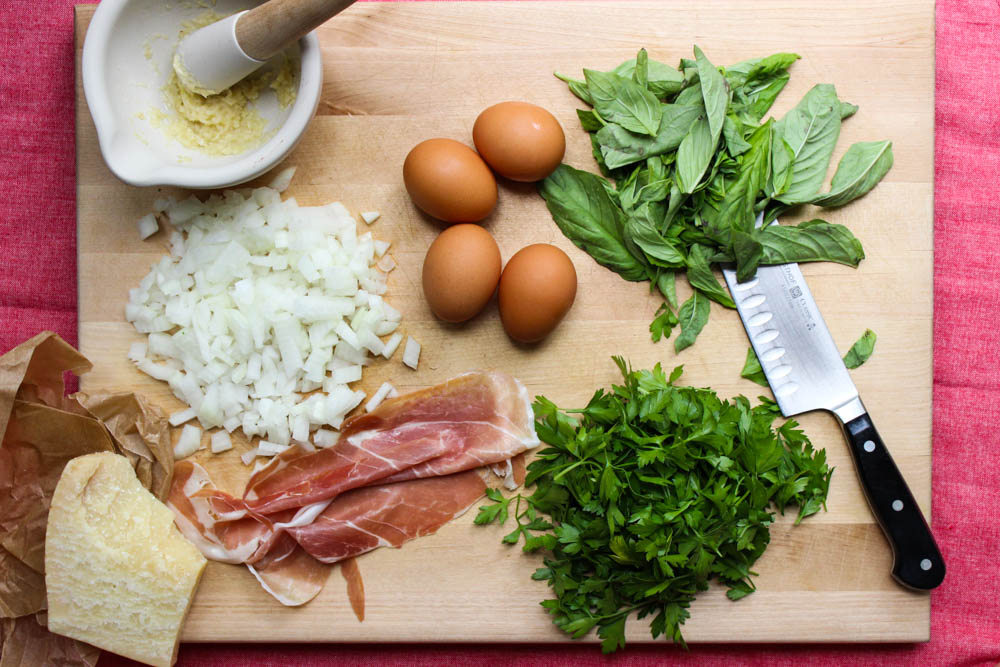
No matter where you fall in the carbonara wars, one thing can be agreed upon by all sides: the freshness of all your ingredients.  Especially that of the eggs.  I use the whole egg here, the yolk and the whites.  And since the eggs are raw, it is imperative that they be as fresh as possible.  Baba’s Carbonara starts off with a saute of onion and prosciutto.  You could use pancetta, bacon or guanciale, but the sweet prosciutto works wonderfully here.  Baba also likes to stray from tradition and add fresh parsley and basil to his carbonara.  The fresh herbs really brighten and lighten up the dish.  And I love incorporating fresh herbs anywhere I can.  The fresh herbs are mixed in a bowl with the eggs, parmesan/pecorino, pepper and crushed garlic.  This mixture is set aside until ready to be incorporated to the pasta.  It is also imperative that the pasta be drained (reserve about 1 cup of that pasta water) al dente because it will continue to cook as it is tossed with the onion and prosciutto.  The trickiest part of preparing carbonara – what is seemingly an easy dish to prepare – is incorporating the egg mixture with the pasta without srambling the eggs. The success of every carbonara is judged upon this.  The idea is that the raw eggs will cook with the residual heat of the noodles, creating a smooth and creamy consistency.  No scrambled eggs!  Once you add the egg mixture to the noodles you need to quickly and efficiently toss the pasta.  And add the reserved pasta water as needed (judiciously, not too much and not too little) to thin out the sauce and to keep the noddles from drying out.
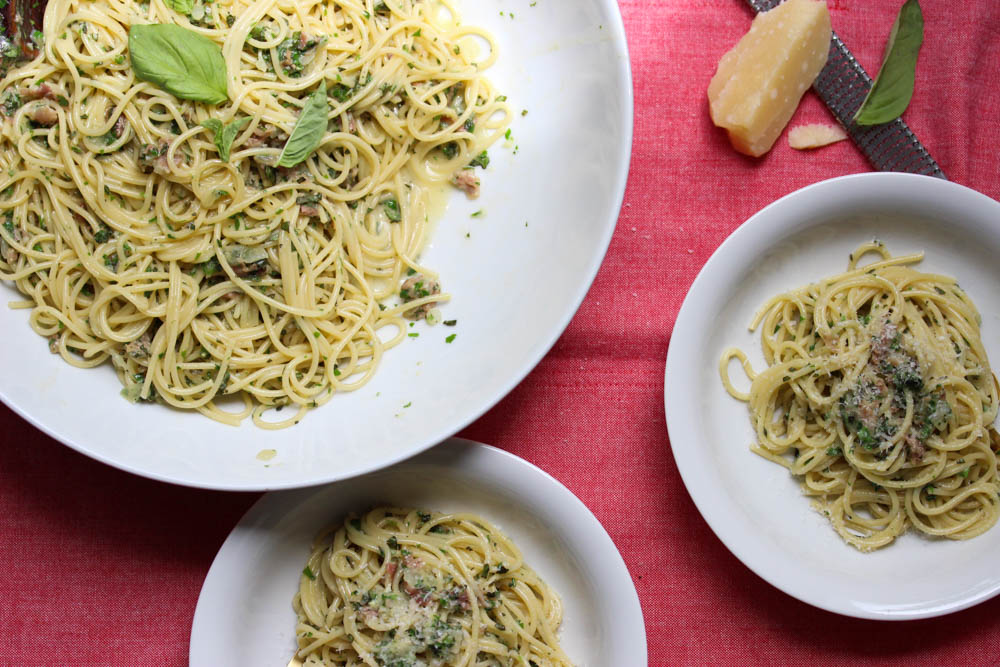
Baba’s Carbonara is the one dish that has my girls (and husband) drop whatever they’re doing and come crashing to the dining table. It is the dish that every other carbonara is compared to.  It’s Hawaii in December.  It’s Vancouver in July.  It’s Baba and Grandma Kumi working side by side, a finely honed duet.  Baba chopping the herbs, Grandma Kumi cracking the eggs.  It’s the constant debate over how many eggs to use.  One more she suggests, one less he insists.  Passions run high.  Very high. It’s everyone stepping back and giving Baba room to swiftly and expertly incorporate the raw eggs with the steaming pasta.

It’s the hands that prepare it.
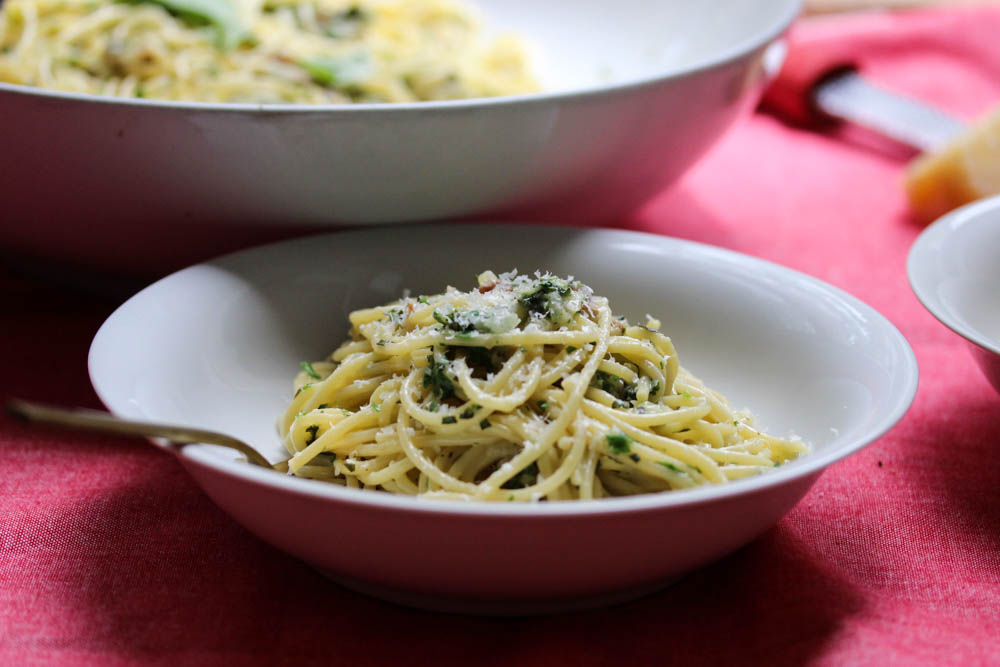
He is no longer able to send you flying. You are grown now and his back is far too weak.

It’s Baba singing and his granddaughters trailing him with squeals of delight as he sets the carbonara on the table.

But he is always there to catch you.

In mid-air or with your feet planted firmly on the ground.

Carbonara.  It’s controversial.  It’s family.  And it’s maddeningly delicious.
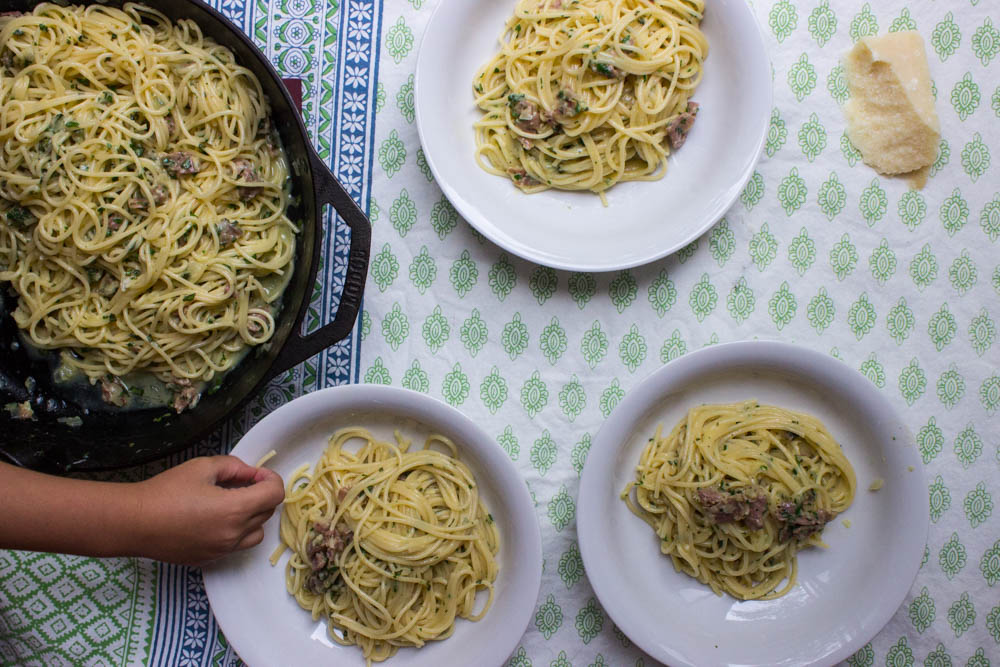
BABA’S SPAGHETTI ALLA CARBONARA

NOTES:

  • Raw eggs are used in this dish. Please use your own judgement in preparing this dish. Make sure you use extremely fresh eggs.
  • Please salt that pasta water.  This is not negotiable.  Salt it so it tastes like the ocean. Yes, really.
  • The garlic needs to be really crushed well. Almost to a paste.  Since it is used raw here.  You can use a garlic crusher.  But I find the best way to crush garlic is in a mortar and pestle with a pinch of coarse salt as an abrasive.  You can also crush the garlic on the cutting board by chopping it, sprinkling it with salt and using the flat of the blade and the palm of your hand working in a back and forth motion to work it into a paste.
  • Don’t drive yourself crazy measuring out the herbs.  Just grab a handful and chop away.
  • I use a mix of Parmesan and Pecorino cheeses here.  If you only have Parmesan on hand just use a full 3/4 cups of that.

Ingredients:

Serves 6

1 pound spaghetti
3 tablespoons olive oil
1 medium onion, chopped
5 ounces sliced prosciutto, chopped
4 fresh eggs
4  medium sized cloves garlic, crushed almost to a paste
25g/1 ounce/a handful fresh parsley, finely chopped (about 3 tablespoons chopped)
25g/1 ounce/a handful fresh basil, finely chopped (about 3 tablespoons chopped)
1/2 cup finely grated parmesan
1/4 cup finely grated pecorino
salt
black pepper

Bring a large pot of generously salted water (see note above) to a boil.  Add spaghetti and cook until al dente, about 8-10 minutes.  Please do not over cook the pasta.  Before draining set aside about 1 cup of the pasta water (you won’t use all this water but good to have on hand).  Drain the pasta.

WHILE the pasta is cooking heat the oil in a large pan over medium heat.  Add the onions and sauté until soft and translucent, about 8 minutes.  Add the prosciutto give a quick saute, about 2-3 minutes and turn off the heat.

WHILE the onion cooks, in a medium sized bowl whisk the eggs and add the garlic, parsley, basil, cheese (see note above), 1/2 teaspoon sea salt, 1/4 teaspoon pepper.  Mix well to fully combine.  No lumps.

Turn on the onion and prosciutto pan back up to medium heat .  Add the spaghetti to the pan along with a couple of splashes of the pasta water.  Quickly toss the pasta to incorporate. The water will evaporate.  Remove the pan from the heat.

Add the egg mixture to the pan.  Work quickly.  Toss the pasta with egg mixture until egg mixture is incorporated fully and creamy (no scrambled eggs!).  The heat from the pasta will cook the eggs through.  As you toss add splashes of the pasta water to thin out your sauce, if necessary.  I usually end up adding about 1/4 cup of pasta water.

Season with more black pepper if you like (I skip this part since my kids don’t approve). Serve immediately with freshly grated parmesan.  A crisp salad, and a crisp Rosé accompany this dish beautifully.

Happy Summer!

Dessert

The Recital – Cheryl’s Milk Chocolate Yogurt Pots

She wrote this song about John Mayer. You whisper conspiratorially into his ear.

There was a time when this easy lean into his shoulder, followed by hushed murmurs, carried with it information of a different nature.

But today it’s all about Taylor Swift.

Such is the evolution of a marriage.

He – your husband – looks back at you slightly intrigued but mostly bewildered.

You – his wife – raise your eyebrows as you often do to emphasize your foolproof knowledge of a fact, and nod simultaneously to really drive home the point.

Exactly when and how you came upon this very important piece of information is unclear.

Exactly when and how Taylor Swift entered your realm of existence is also unclear.  But it was bound to happen.  You had heard of this sort of thing happening to other families.  Families with slightly older children than yours.

The young girl,15 maybe 16 years old, croons sweetly as she strums her guitar.  Her father respectfully stands a few steps behind her. Making sure she has the full spotlight.  Making sure she shines.  As he and his electric guitar provide backing – guidance – unconditional support.

Family Recital Night.

I first met Cheryl Sternman Rule at The Saveur 2014 Food Blog Awards in Las Vegas. Cheryl’s 5 second rule was one of the first food blogs I discovered early on, well before our meeting, and return to time and time again.  Not only for the tempting recipes but also for her beautiful and distinctive writing style.  Her wit and humor casually guiding your way to a muffin tin and a few wholesome and tasty ingredients.  Her laser sharp precision and unsentimental economy with words lodging a lump deep in your throat before you are even aware it’s happening.

And so it only made sense to meet for the first time and discuss our mutual love and respect for all things yogurt at the art gallery in The Bellagio Hotel as the sommelier gave us all a private tour of the collections while pairing individual wines to each painting.  A wine and art pairing. Yes. Such jobs do exist.

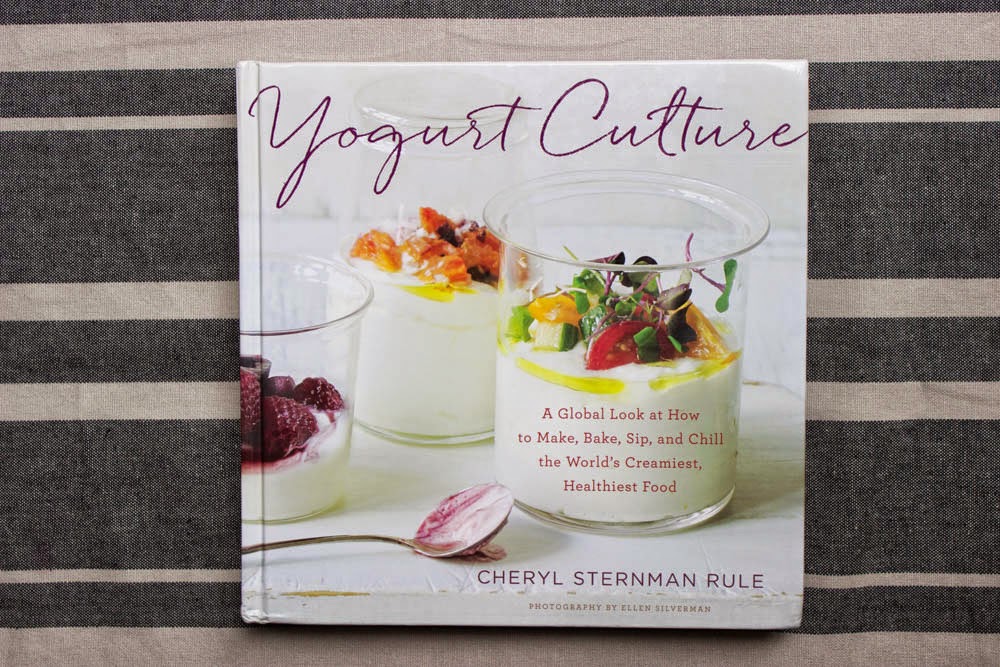
A few months ago Cheryl reached out to me to see if I would be interested in contributing to her new site Team Yogurt.  Friends, if there was ever a team I was destined to be a part of it would be Team Yogurt.  A delicious and informative site devoted entirely to all things yogurt.  And as if that was not enticing enough a couple of weeks ago Cheryl’s beautiful new book Yogurt Culture (Houghton Mifflin Harcourt, 2015) landed on my doorstep and was instantly whisked off to the kitchen.

Next up is a family of four. Older daughter on piano, father on guitar, mother and younger daughter harmonizing a Pete Seeger classic.

Mother with her eyes closed.

The parents must have picked this song, you think to yourself.

Young daughter with her eyes wide open.

When will they ever learn?  You sing to yourself.

When will we ever learn?  You think to yourself.

Yogurt Culture is everything that I look for in a cookbook.  Besides the fact that it is pretty much about the one food item that I can not live without.  Cheryl’s well-researched book takes a global look at yogurt and the many ways it is incorporated into the cuisines of so many varying cultures.  Stories, history, facts and accessible recipes weave cohesively with Cheryl’s knowledgeable and friendly voice guiding your way. The photography is beautiful and simple, allowing the food to shine.  But what is most important is that Yogurt Culture makes you want to get in the kitchen and get cooking.  And what better way to start than with these elegant and decadent milk chocolate yogurt pots.

She takes her place at the piano and pushes her side-swept bangs behind her ear.  As she always does.

He takes his place a few steps behind her.  He straps on his bass guitar and turns on the amp.

She gives him a quick glance and he nods his head four times. They set off on a 45 second duet of Classical Dance.  Left hand and right hand play together. As he picks at his electric bass as gently as possible.  He is there to back her up, to provide support, to let her shine. Unconditional.

She – your daughter – takes her bow with pride and beams as she introduces her father, her accompanist – your husband – also beaming with pride.

She floats off the stage and into your arms.  She declares she’s ravenous.  Post-show hunger pangs.  You remember the sensation well.

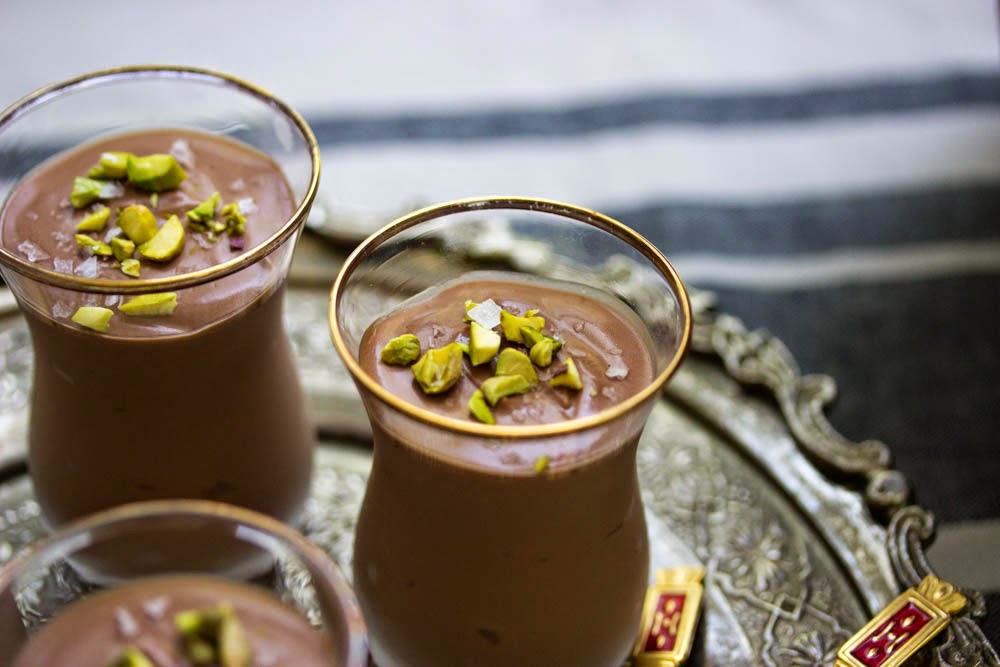
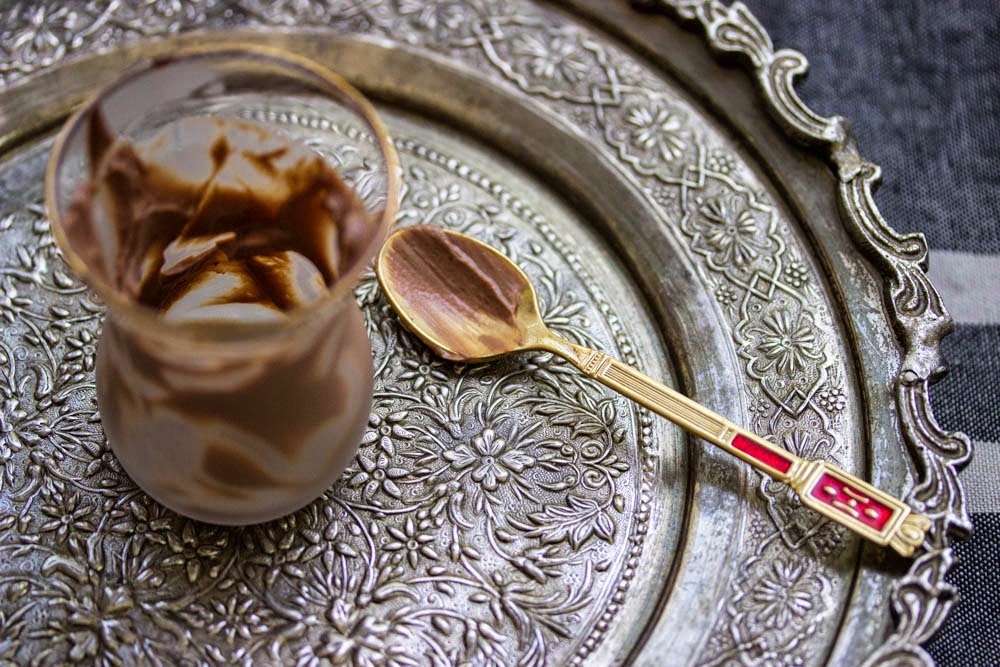
You remind her of the milk chocolate yogurt pots waiting for her at home. The ones setting in the fridge.  You remind her of the chocolate you gently melted. She reminds you of the thick, creamy yogurt you slowly stirred into the luscious warm chocolate.

The chocolate and the yogurt melding into each other, shining as one. The sweetness of the milk chocolate backing up the tang of the yogurt.

A well-orchestrated duet.  Deliciously played, Cheryl.

MILK CHOCOLATE YOGURT POTS

Very slightly adapted from Yogurt Culture by Cheryl Sternman Rule with permission from Houghton Mifflin Harcourt.

These milk chocolate yogurt pots make for a perfect elegant dessert that you can prepare ahead of time. They are decadent, rich and mousse-like in texture.  The ingredients are few and the preparation very simple.  Please don’t skimp on the lusciousness of these yogurt pots.  Use the best quality chocolate you can find and whole milk yogurt if possible.

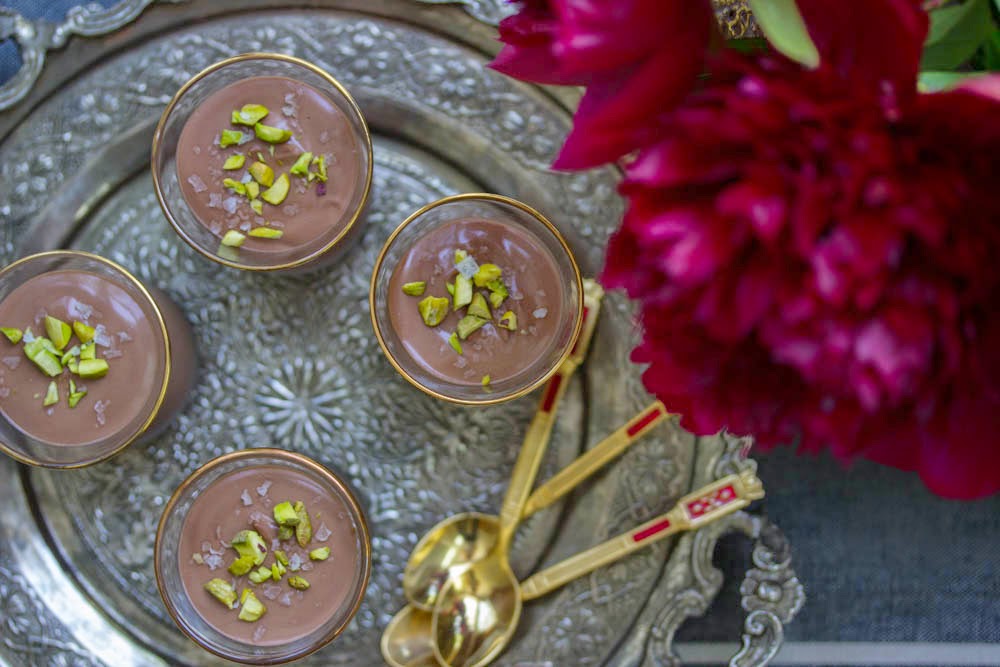
Cheryl tops the yogurt pots with salted roasted peanuts, which sounds delicious.  I didn’t have any peanuts on hand so I used crushed pistachios and a sprinkling of crunchy sea salt.  I also added a small pinch of cardamom to the mixture.

Ingredients:

Serves 6

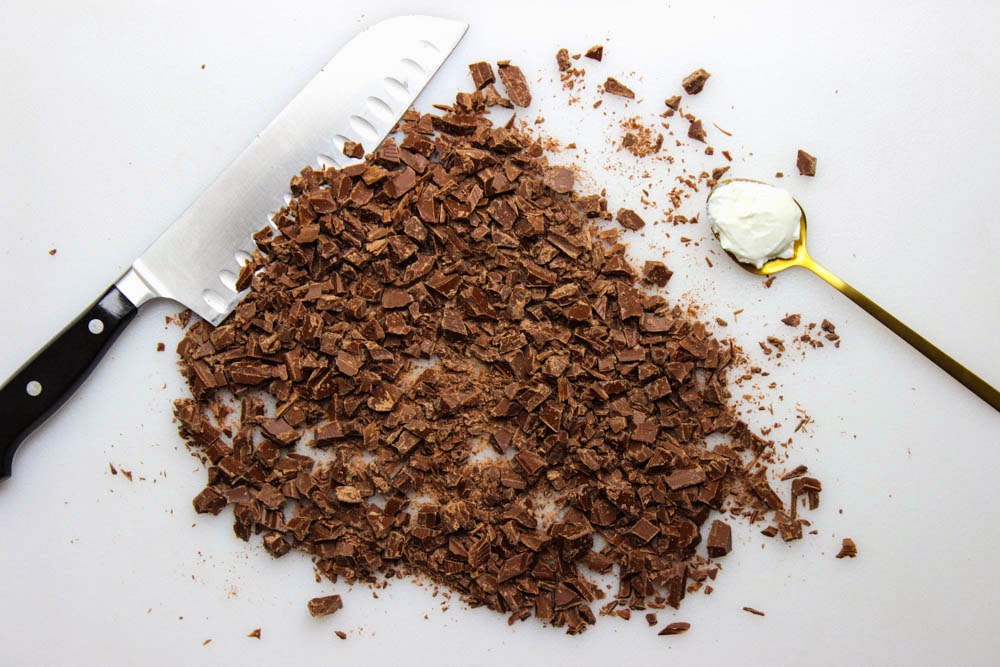
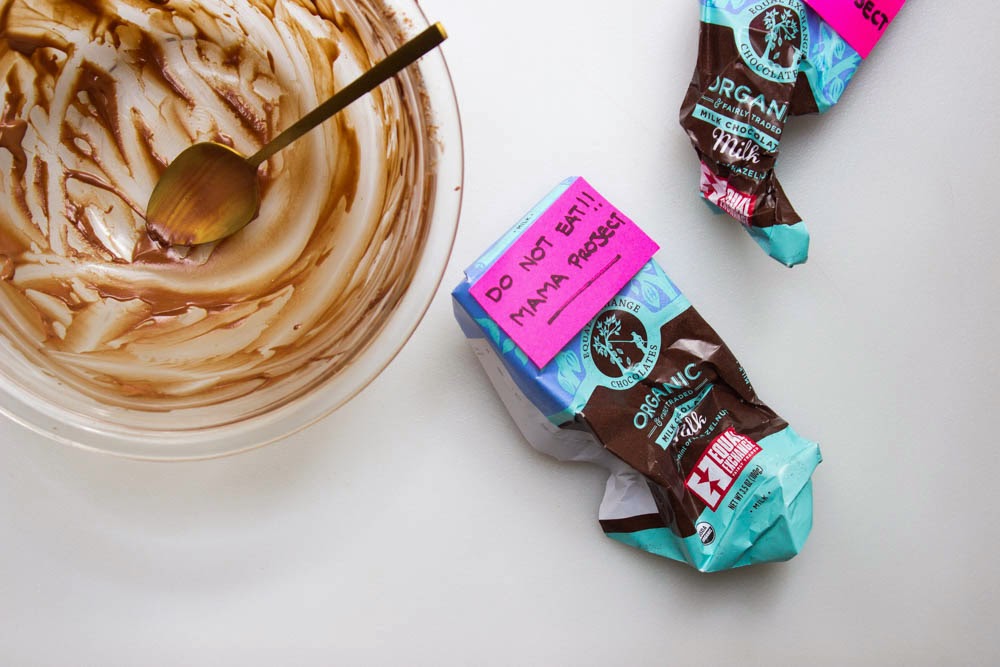
8 ounces high quality milk chocolate, finely chopped (do not use chocolate chips)
2 cups plain Greek yogurt, preferably whole milk
1/2 teaspoon pure vanilla extract
1/8 teaspoon cardamom (optional)
Pinch of kosher salt
Confectioner’s or granulated sugar, to taste (optional)
2 tablespoons salted roasted peanuts or raw pistachios
Sea salt flakes, as garnish (optional)

1- Melt the chocolate by slowly stirring the chocolate in a double boiler over barely simmering water. (If you don’t have a double boiler use a large, heat proof bowl over a smaller saucepan filled with about 2 inches of barely simmering water.  Keep the heat as low as possible) Turn off the heat, but leave the double boiler in place over the still-warm burner so that the residual heat keeps the chocolate warm.

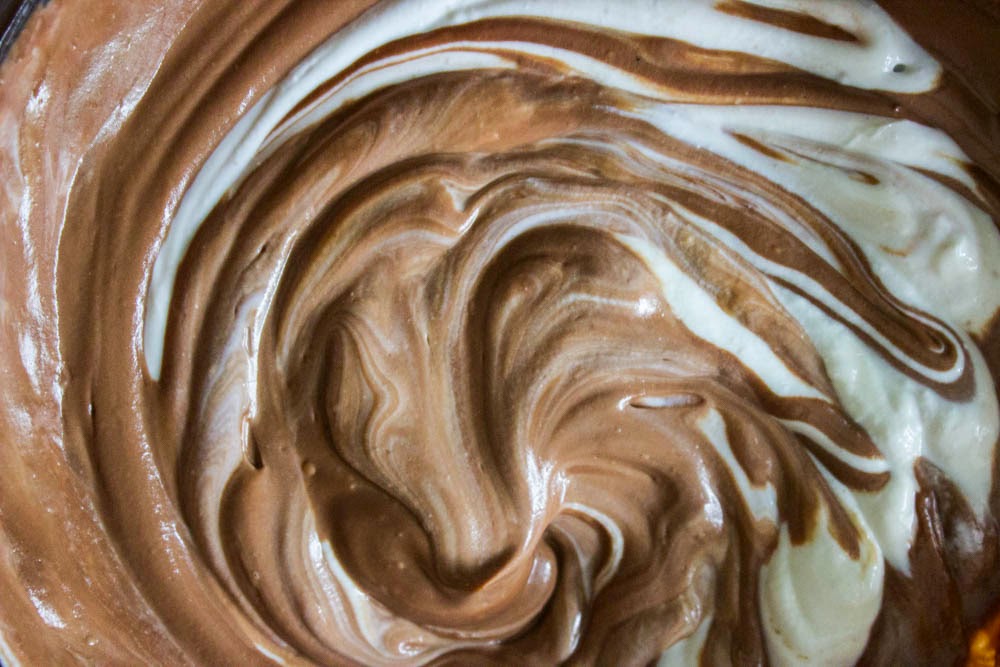
2- Slowly whisk the yogurt into the chocolate, stirring with a spoon at first and then switching to a whisk.  You are looking to warm the yogurt slightly so it marries completely with the chocolate and to prevent the chocolate from seizing back up and becoming gritty.  Once you’ve got a completely smooth texture, whisk in the vanilla, salt and cardamom (if using).  Taste, and if it’s not sweet enough for you add a bit of sugar (I added 2 scant teaspoons of maple syrup).  Pour the mixture into six 4 ounce ramekins or serving jar of choice.

3- Refrigerate for at least 1 hour to set (this is imperative). Garnish with salted peanuts or pistachios and flaky salt before serving.

The chocolate pots can be refrigerated, covered with plastic wrap, for up to 8 hours.

Chicken

The Neighborhood Thief – An Orange Blossom, Yogurt, Saffron, Shio Koji Roast Chicken

Grab your gardening shears.  Grab a basket, a bag, a sack, anything with handles.  Feel the weight and the cool metal of the shears rest against the warm embrace of your palm.  Make the most of this auspicious occasion. You don’t garden.  You’d like to.  But you don’t.

Call out to your shadows.  Announce you are off to forage.  You don’t forage either.  But you hear it’s the thing to do, the word du jour to throw around.  So you try it out.  It makes you feel current, in the know, in the now.

You steal.

From your neighbors.

With your children in tow.

You have been given permission to do so.  So your conscience sleeps easy.

Most nights.

Make the marinade.  Combine the yogurt, shio koji or salt, and honey. Yogurt tenderizes, shio koji for umami, and a drizzle of honey to balance out the acids but more importantly to sweeten your taste buds and your life.  Marvel at the instant color transformation as the saffron water drip-drops into the yogurt mix. It just never gets old. The beauty of saffron.  Refrain from dipping your finger in for a taste.  There’s more goodness to come.

Take your children by the hand and walk them across the street.  Show them how to look left – right and then left – right again before crossing. Such a simple gesture holding such weight.  Will they ever get it?  Have you repeated yourself enough?  Will your heart ever grant you permission to let them go?

Across the street.

Across town.

Across the ocean.

What if they look left but then get distracted by the rolly polly bug they have entrapped in the fold of their skirt and forget to look right?

Let go.

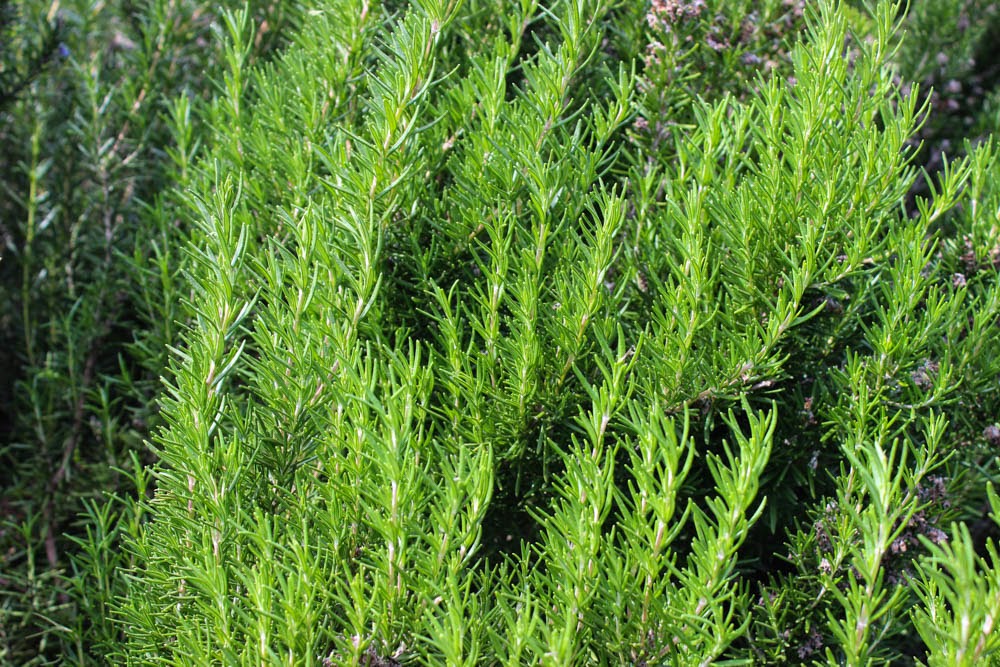
Watch them run towards the overflowing, bountiful rosemary bush standing guard at your neighbor’s front yard.

Put the neglected shears to work and snip away as the girls run their hands along the spindly branches and stick their noses in as far as they can and take a long, deep inhale. Mmmm’s and ahhhs  abound. Mostly for their own pleasure but also to please you.  To let you know that they’re old enough, sophisticated enough to appreciate the sharp, woodsy aroma that permeates the air as they brush against each and every branch.  The scent that carries with it a promise.  A promise of something good and tasty to come. They want you to know that they get it. They’re in the know, in the now.

Cut a lemon in half and squeeze with one hand as the other hand catches the seeds before they hit the yogurt mixture.  Inevitably a couple always sneak through. Fish them out with a spoon, a fork, your fingers.  Balance the microplane over the bowl and zest an orange, rhythmically tapping on the side of the bowl as you release all the brilliant flecks.  Magical fairy dust your girls would proclaim.  Flip the microplane over and run your finger along the back of the cool grates. Inevitably some of the magic gets stuck back there.  Refrain from dipping your finger in for a taste.  There’s more goodness to come.

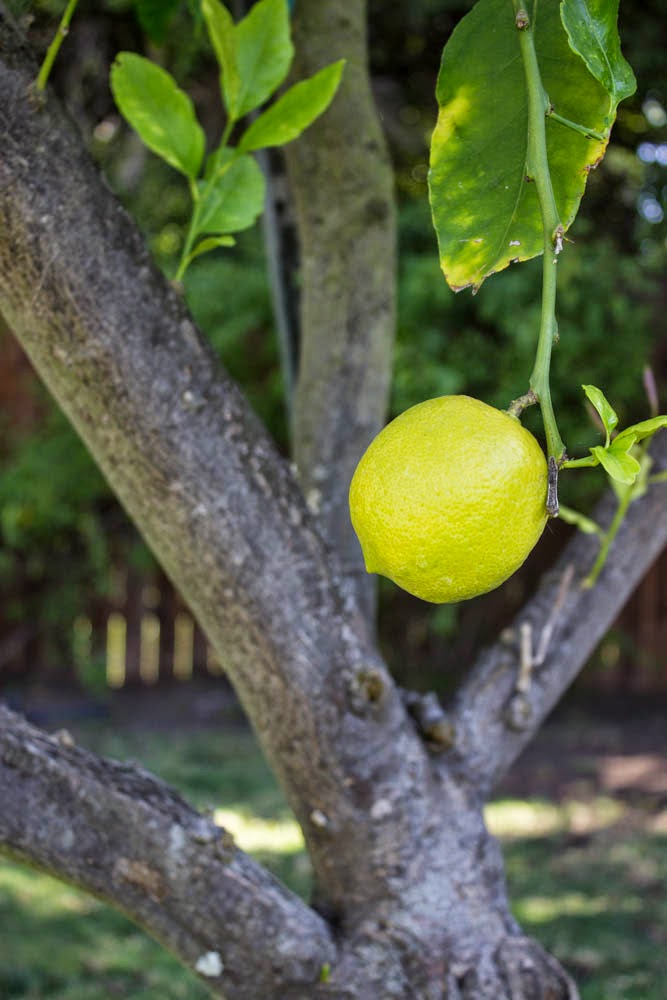
Move on to your next heist.  The next house.  The next yard.  The lemon tree.  The very same one that serves as the official ambassador for the girls’ lemonade stands. The very same one that brightens up every stew, sauce, dip, and dressing with a burst of flavor. If it needs fixing squeeze a little lemon on it (a little more salt wouldn’t hurt either).

Fill the basket, the bag, the sack with as much citrus as you and your shadows can carry back.  Haul your loot back home.

Take the top off the orange blossom water.  Bahar narenj – spring orange.  Bring it close and take a long deep inhale.  You do this every time.  Even though by now you are fully versed with its mesmerizing scent.  The scent of spring, of love, of poetry.  Mmmm and ahhhh to no one in particular.  Mostly for your own pleasure but also to please your sense of memory.  Memory of a land, a time, a childhood that you can now only recall in fragments, in splinters and in the alchemy of bahar narenj.  Carefully, very carefully add a few drops to the yogurt mixture.  You don’t want to go overboard with orange blossom water.

Spread your loot out on the backyard table.

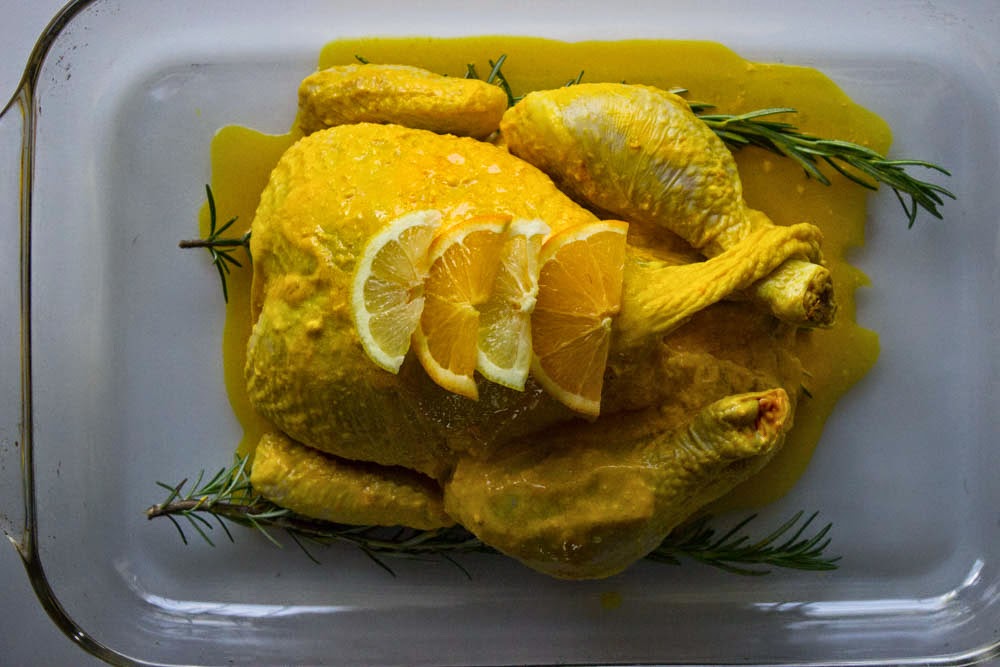
Lay down a few rosemary sprigs on a small roasting pan.  Set the chicken on top.  Gently run your fingers under the skin of the breast, creating some space without tearing the skin.  Work your way around the bird as much as you can.  Lifting the skin off the meat.  Gently.  Gently.

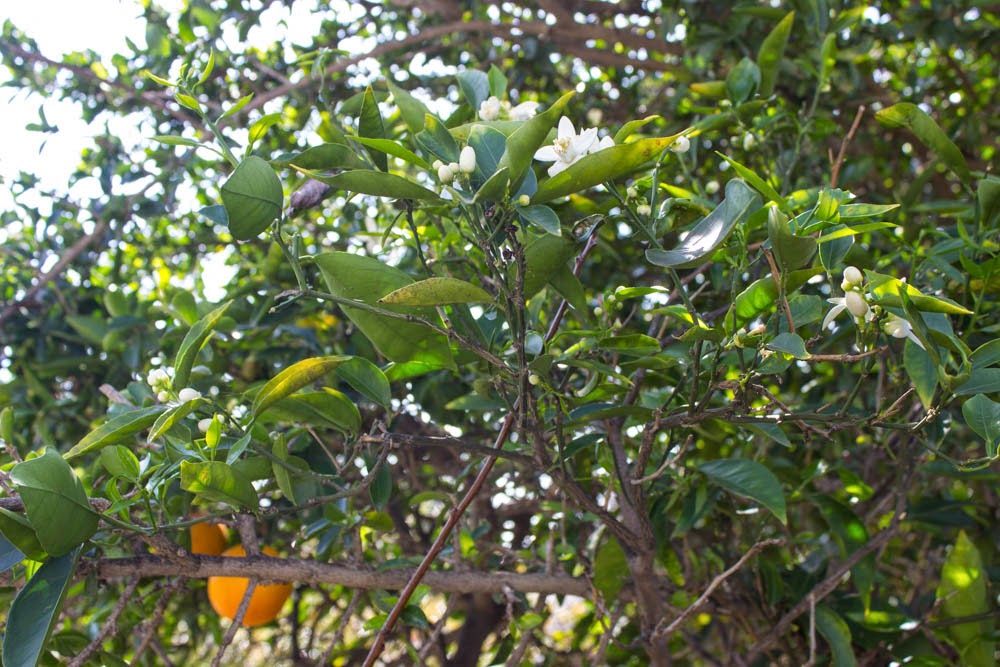
Take a moment and look up.  Look up and beyond. That’s where true beauty reveals itself. Up and beyond your shared fence. Up and beyond where your next door neighbor’s orange tree weeps down over your fence. It’s not oranges that you spot but orange blossoms. Uncapped. Un-bottled. Fragments and splinters of memory permeate the air and swirl all around you at a dizzying speed.

Spoon half the the marinade under skin of the chicken.  Get in there with your hands.  Rub it all around.  Gently.  Gently.  Try not to tear that skin.  Pour the rest of the marinade on top of the chicken, and inside the chicken.  Front and back.

Grab a stool.

Stuff the cavity with lemon, orange, a shallot, a sprig of rosemary.

Grab your shears.

Place the chicken in the oven.

Climb on top of the stool.  Reach your arm out and grab a branch.

While the chicken roasts prepare the barberries and caramelized onion.

Ignore the concerned calls from your shadows.

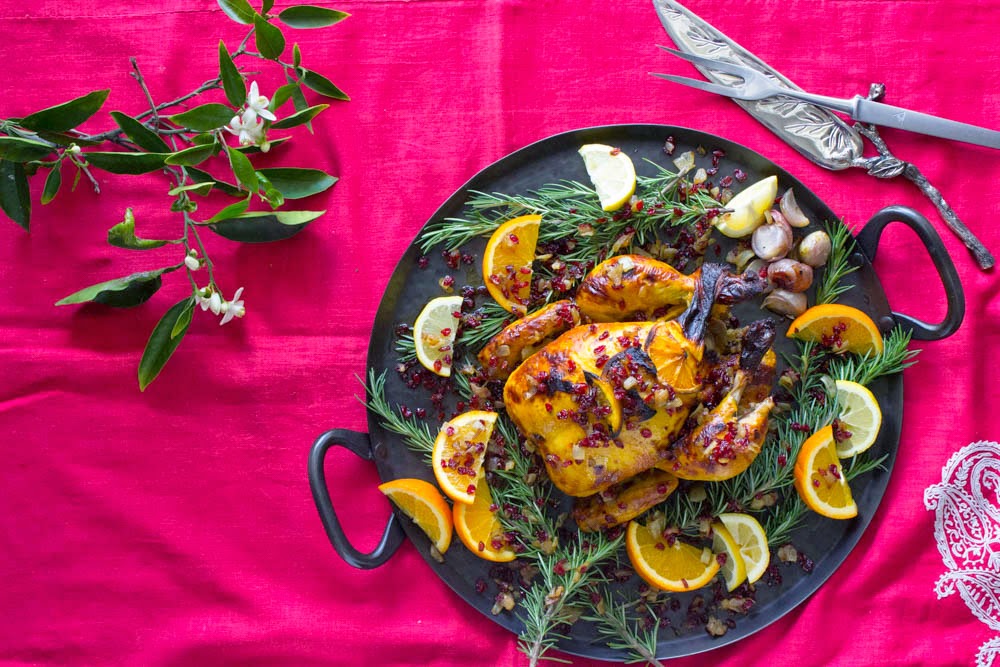
Scatter the barberries over the orange blossom chicken and serve.

It’s a quick clean cut.  A single click of the shears and there you stand with an orange blossom branch in your hands.

Set aside a plate.  Place a few chicken pieces on the plate and spoon the fragrant juices all over.

Walk over to your next door neighbor’s house.  With your shadows in tow and a plate of chicken in hand.

Make sure you have some crusty bread to dip into the pan juices.

Ease your conscience and tell the neighbors about the shears, the orange blossom, the thieving.  Hand over the chicken plate.

Mea culpa.

AN ORANGE BLOSSOM, YOGURT, SAFFRON, SHIO KOJI ROAST CHICKEN

Notes:

  • If I’m going to roast chicken I usually roast 2 chickens. I use the bones for chicken stock and any remaining meat can be used in sandwiches, soups, stews. This recipe can easily be doubled.
  • If you use only one chicken make sure you don’t use a large roasting pan.  You don’t want the juices to disperse and burn.
  • Orange blossom water and barberries can be found online and at Middle Eastern grocery stores.  Check here for a more detailed post on how to clean barberries.
  • Shio Koji adds a great depth of flavor and helps in tenderizing the chicken but you can easily use sea salt instead. Amounts for both given in the recipe below.
  • You can also use a small onion wedge to stuff the cavity if you don’t have any shallots on hand.

Ingredients:

Serves 4-6

1 4-lb. chicken
1 cup plain yogurt
1/3 cup shio koji OR 1 heaping tablespoon sea salt
1 tablespoon honey
1 large lemon, half of it juiced, the other half quartered
zest of one orange, save 1/4 wedge for stuffing cavity
1/4 teaspoon ground saffron steeped in 1 tbs hot water
1 1/4 teaspoon orange blossom water
3 large rosemary sprigs
1 shallot
olive oil, for drizzling
caramelized onion with barberries (recipe below)

1- Combine the yogurt, shio koji or salt, honey, lemon juice, orange zest, saffron water, and orange blossom water in a small bowl.

2- Place 2 rosemary sprigs on a small roasting pan.  Place chicken on top.  Starting at the neck of the chicken, very gently lift the skin off the breast.  Run your fingers down the chicken gently lifting the skin off the meat as far as you can.  Try not to tear the skin.  Spoon half of the marinade under the skin of the chicken.  Rub the rest of the marinade all over the outside of the chicken and inside the cavity. Marinade in the fridge for at least 2 hours or preferably overnight.

3- Preheat the oven to 350F.  Take the chicken out of the fridge and allow to come to room temperature for 30 mins. Stuff the cavity with 1 shallot, 1 rosemary sprig, 1/4 wedge of a lemon, and 1/4 wedge of an orange.  If you have any citrus left over you can slice into rounds and place on top of the chicken.  Drizzle the top of the chicken with olive oil, about 1 tablespoon.

4- Roast chicken for  1 1/2 – 2 1/2 hours.  Basting with pan juices every 20 minutes.  You want the skin to get crisp and golden but if it starts burning loosely cover. Roast until a thermometer inserted in the thickest part of the thigh reads at 165F degrees.

5- Allow the chicken to rest for 15 minutes.  Spoon the pan juices and the barberries over the chicken and serve with plenty of crusty bread to dip into the pan juices.

CARAMELIZED ONION AND BARBERRIES

Ingredients:

2 tablespoons olive oil
1 small onion, chopped
salt
1/2 cup barberries, picked through and soaked

1- In a small pan heat the olive oil over medium heat.  Add the onion, sprinkle with a little salt and cook, stirring frequently until gently caramelized, about 20 minutes.  Turn down the heat if necessary.  Add the barberries and cook for about 5 minutes, stirring frequently.  Remove from heat and set aside until needed.

Rice

Scattered Showers – A Green Herb Rice – Sabzi Polo

I wish we could all be together this Nowruz.

I wish we weren’t all scattered across the country.

Scattered across the continent.

Scattered across the globe.

She sits in her dedicated spot at our kitchen table.  Her words echo through the kitchen, twisting and turning, bouncing off you, looking and yearning for a spot to land, eventually finding their way out – seduced by the wide open door and a gentle late winter breeze.

Scattering across our parched lawn.

Across our parched city.

Across the country, the continent, the globe.

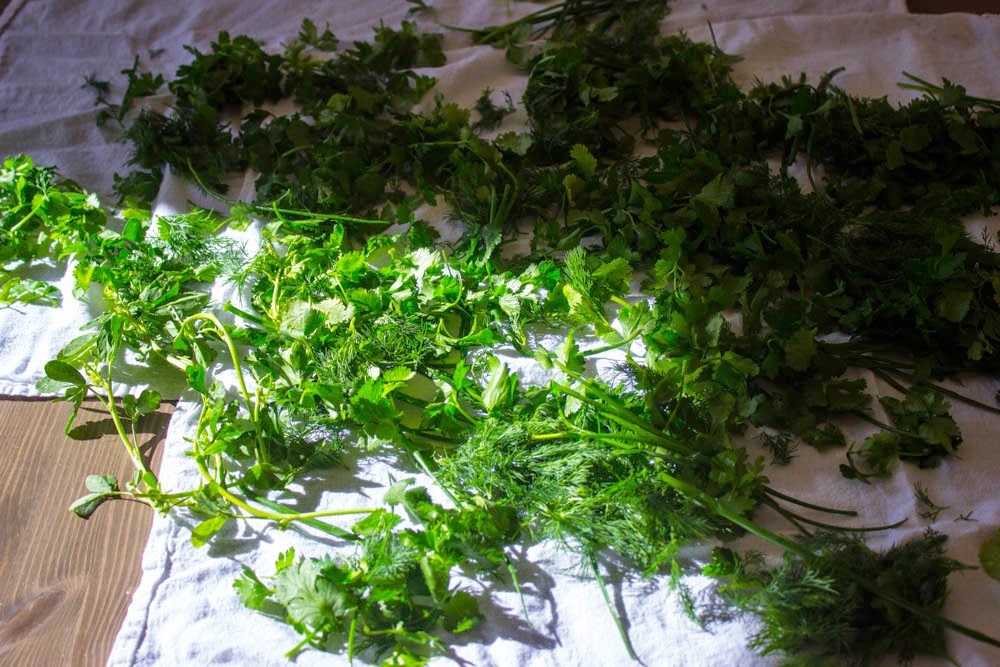
Slowly and meticulously she sorts through the bunches upon bunches of green herbs scattered before her.

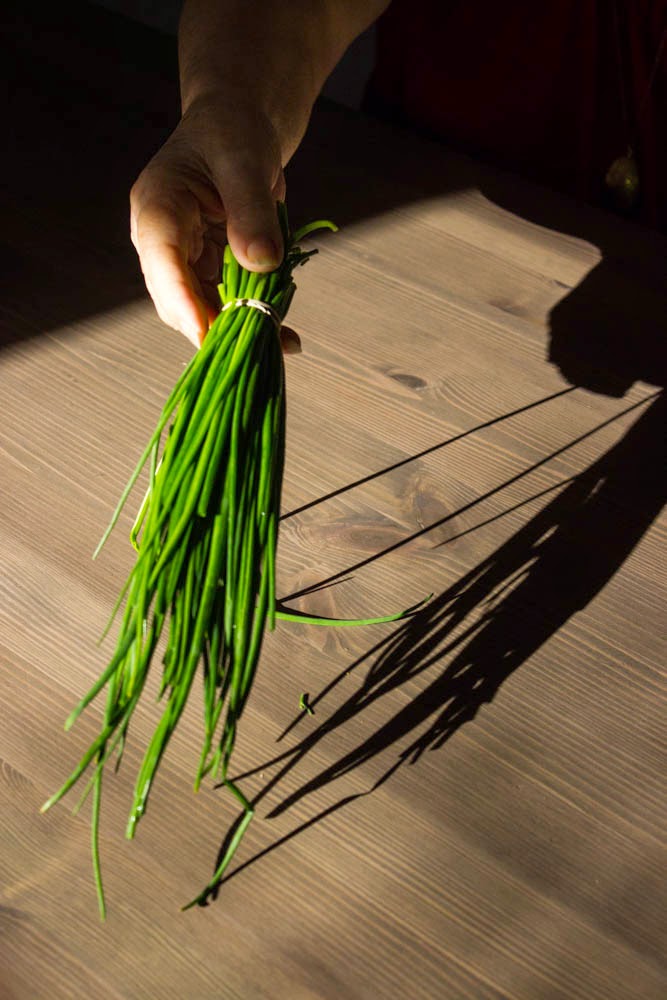
Parsley, cilantro, dill, chives, tarragon, fenugreek, spinach, green onion, mint.

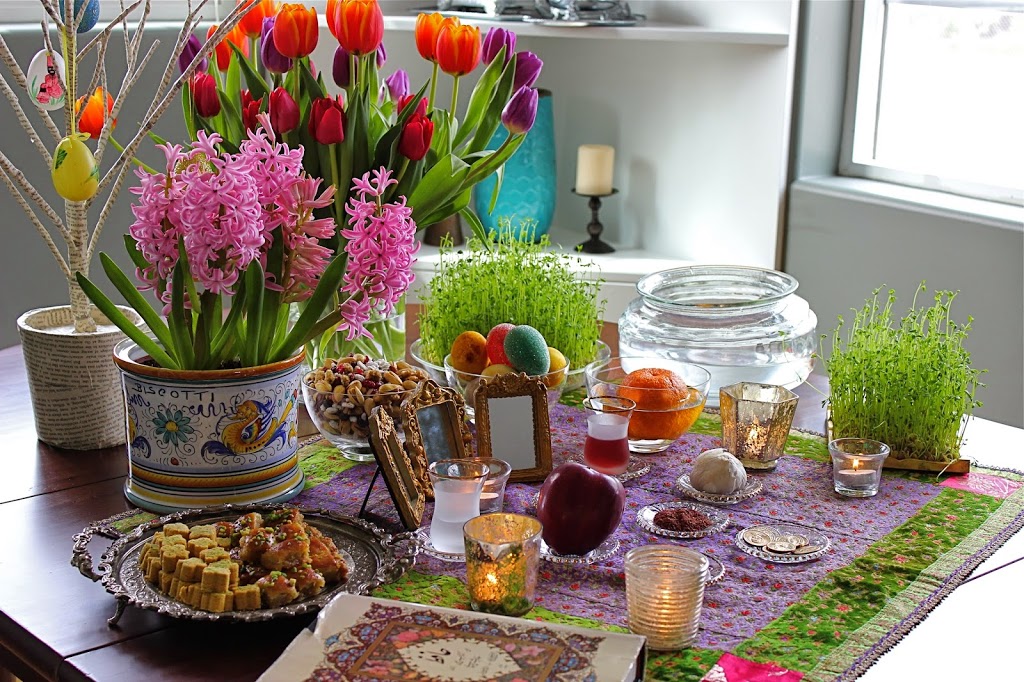
Fragrant and willing representatives of new life, new beginnings, and Spring.  Nowruz.  Persian New Year.

Back in those days – when I was a little girl – in Iran – everyone started their khooneh takooni – the shaking out of the house weeks before the new year.

She moves on to the cilantro.  Notoriously difficult to sort through.  Methodically her aged but still elegant hands pick the leaves off the stems.  Setting the stems aside for a broth to be used for aash-e reshteh.

Windows would be washed, closets and attics would be sorted through, rugs would be swept and hung out to freshen up.

You turn your head, look over your shoulder, and sneak a quick glance at your carpet.  Faded – but ever present markings of a certain time, a certain age staring right back at you.  The spinach smoothie that got knocked over, the blueberry sauce that didn’t quite make it to its destination, the chocolate shavings forever embedded into its mosaic theme.

Then, on the night of Chaharshanbeh Suri (the last Tuesday night before Nowruz) my Aunt – Ammeh joon and Uncle – Amoo joon would take me to the Chaharshanbeh Suri bazaar.  This was one of the joys of our childhood.

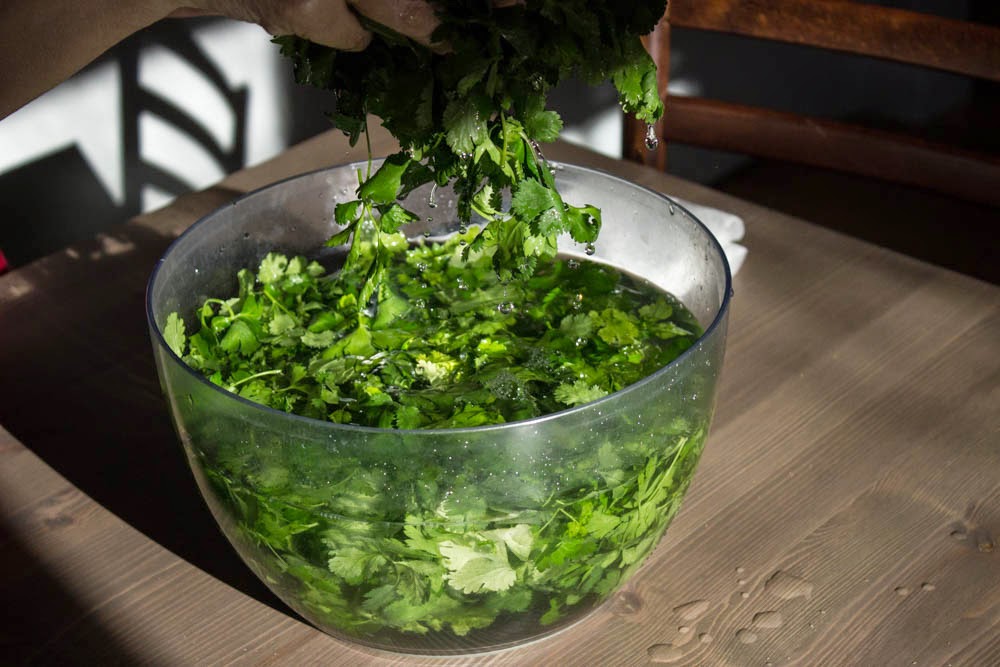
You glance up at the clock, hurriedly grab the sorted bunches of parsley, dill and chives and escort them to the sink.  Scattering the herbs across the cool water.

All the streets would be lit up with lights, candles, colorful balloons, all sorts of decorations.  The scent of the sonbol (hyacinth) drunkenly guiding us through the streets and alleyways.

She slowly but purposefully makes her way to the sink, nudging you away.  You’ve rinsed the herbs twice.  She thinks they need another rinse.  Her hands reach into the cool water and gently, respectfully lift the greens in and out of the water.

Scattered showers.

Joyful music filled the streets.  Everyone would be out selling their goods. Ajeeleh Chaharshanbeh Suri Tabrizi, the mixed nuts from Tabriz was the best.  And all the kids would get to pick out their favorite candy.  Everyone loved khooroos ghandi – the rooster-shaped, sweet, hard candy.

You quickly lay out fresh towels.  And she patiently scatters the herbs across it to dry.  A field of greens on your kitchen table.  A most familiar sight.

Ammeh joon would do all her own Nowruz baking.  All the families did their own baking then.  Noon berenji (rice flour cookies) as thin as a piece of paper, noon nokhodchi (chickpea cookies) that would melt in your mouth.  All baked on the manghal (a charcoal grill).

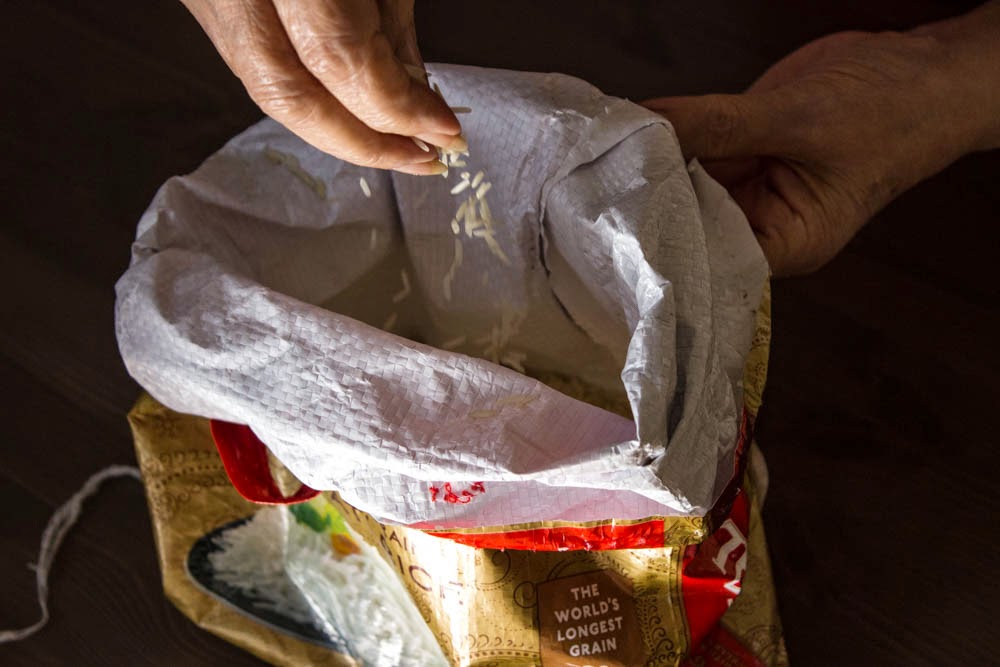
You grab the 10 lb sack of rice and watch as each grain clink-clanks into the bowl.  A most familiar sound.  You rinse the rice a few times – just like she taught you.  Swirling it around and around with your finger.  Rinse, drain, repeat until the water runs clear.  Add fresh water and salt and set aside to soak for at least one hour.  Just as she taught you.

Of course, Ammeh joon and all the ladies would pamper themselves days before Nowruz. Hair would be done, new clothes purchased, make-up beautifully applied.    Everything and everyone should be fresh and new.  Ammeh joon – she had the most beautiful, almond shaped, kohl-rimmed eyes.  Those eyes.  Those eyes.

Once again you transfer the herbs from the kitchen table back to the counter, to the food processor.  Working in batches you pulse away until they are finely chopped.  But not too finely chopped.  It’s always a balancing act.

We used to do all this chopping by hand.  A bunch of herbs, a board, and a knife.

Pulse.  Pulse.  Pulse.

It’s much easier and faster now with these machines.

Pulse.  Pulse.  Pulse.

But what you gain in time, you lose in flavor.  There’s something about the blade of the knife that retains the fragrance and flavor of these delicate greens.  But who has the time and patience now to chop all this by hand.

You bring a pot of salted water to a boil.  You add the rice.

And there you pause.

Simultaneously.  Both of you.  Mother and daughter.  At the rice pot.

Tradition, culture and the meaning of life contained in this one critical moment.  Exactly when to drain the rice.

Each grain of rice should soften on the inside but still have a bite to it.  Not too soon, not too late.

A balancing act.

You gently nudge her out of the way and grab the rice pot.  Moving the pot from the stove to the sink is not an easy task for her anymore.

You drain the rice as now she gently nudges you out of the way to scatter some fresh water over the rice.

And then came Nowruz. The Sofreh Haft Seen would be set and we’d all gather around it.  Ammeh joon always took such care to set out the most beautiful Sofreh Haft Seen.  The same Zari (ornamental cloth) that you use now for your sofreh – she used then.  And Amoo joon who was the elder of the family always had a bowl full of gold coins ready to be handed out.  For prosperity, for luck in the new year.

You watch the butter melt, as she sprinkles the saffron.  She scatters the rice over the bottom of the pot.  The tahdig layer.  She sets aside a cup full of freshly chopped herbs and scatters the rest – parsley, cilantro, fresh dill, chives, fenugreek – over the rice.  And then some dried dill.

Back to the rice.  The herbs.  The dill.  Repeat.  Top off with a couple of fresh spring garlic.  For its flavor, for its aroma.  For spring.

I can still smell and taste our Nowruz meal.  The koo koo sazi, aash-e reshteh, the smoked fish, the white fish.

You wrap a fresh towel over the lid and cover the pot.  Let it steam and work its magic for an hour.

And of course it wouldn’t be Nowruz without Sabzi Polo – Green Herb Rice.  Ammeh joon would always first set aside the best part of the tahdig for me.  Just like I used to do for you and your brother.  Just like you do now for the girls.

She lifts the lid off the pot and instantly the steam, and fragrant aromas of the herbs and rice echo through the kitchen, twisting and turning, bouncing off you, looking and yearning for a spot to land, eventually finding their way out – seduced by the wide open door and a gentle late winter breeze.

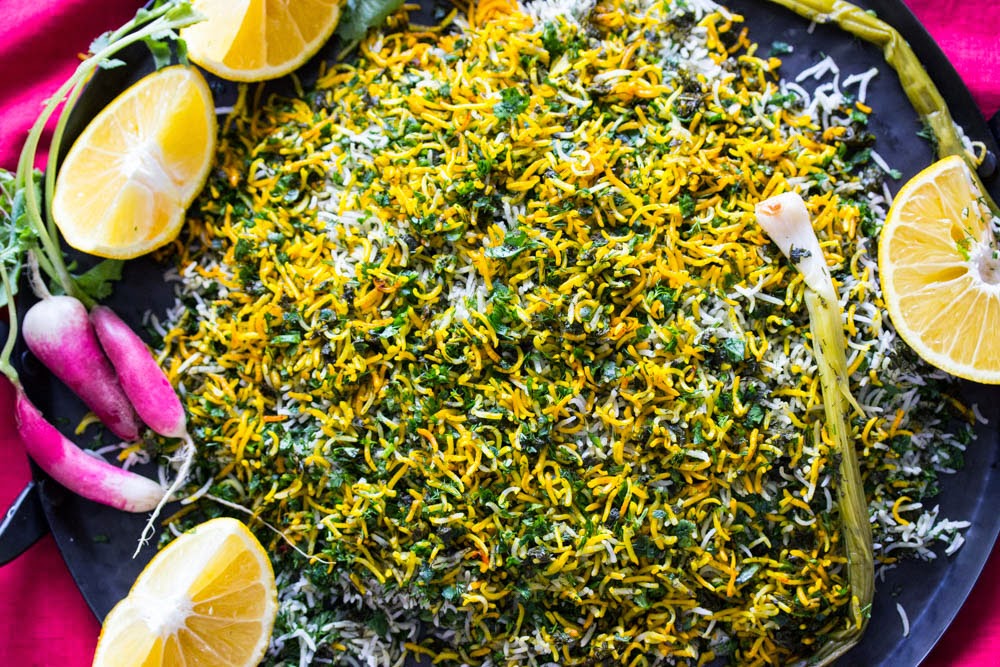
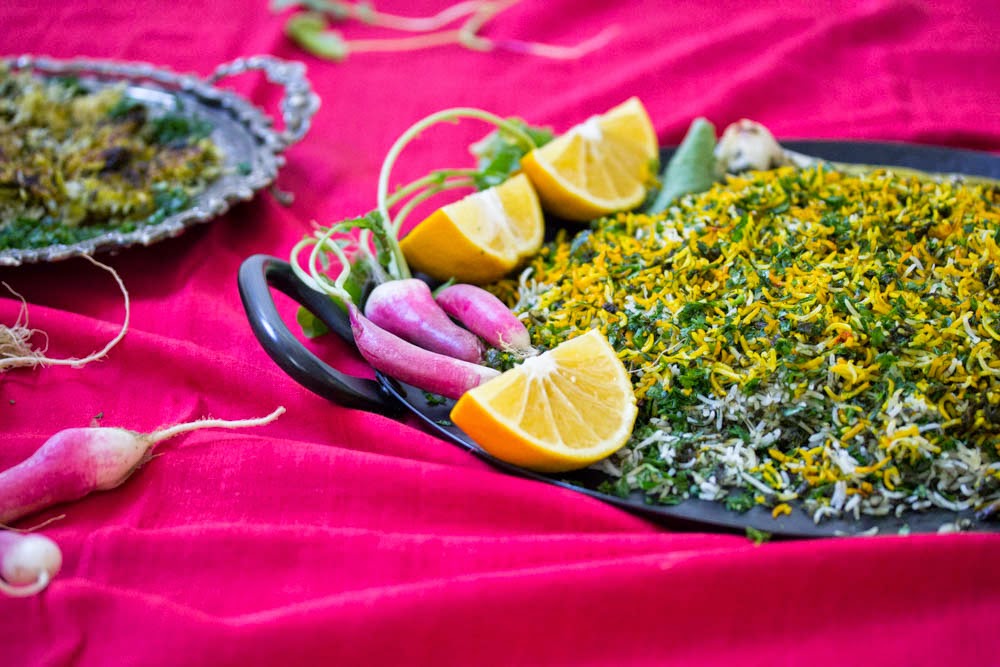
You set the platter right next to her.  She makes room for you.  But you ask her to serve the sabzi polo.  Somehow, it always tastes better if she serves it.  You watch as she delicately scatters the rice across the platter, followed by a layer of the fresh herbs she had set aside.  Scatter the rice, scatter the fresh herbs, repeat, and top with golden saffron rice.

I wish we could all be together for Nowruz.  Everyone.  Even those that are long gone.

You take her hand and walk her to her spot at the kitchen table.  As unexpected drops of rain fall to the ground. Taking your breath away.

Scattered showers.

The promise of new life, new beginnings, togetherness, a brand new year, Spring.

Nowruz.


This year we celebrate Nowruz on Friday, March 20th, 2015 at precisley 3:45pm PDT.  Please take a moment to also enjoy the many tempting Nowruz dishes below from talented Persian food bloggers around the globe.  Happy Nowruz!
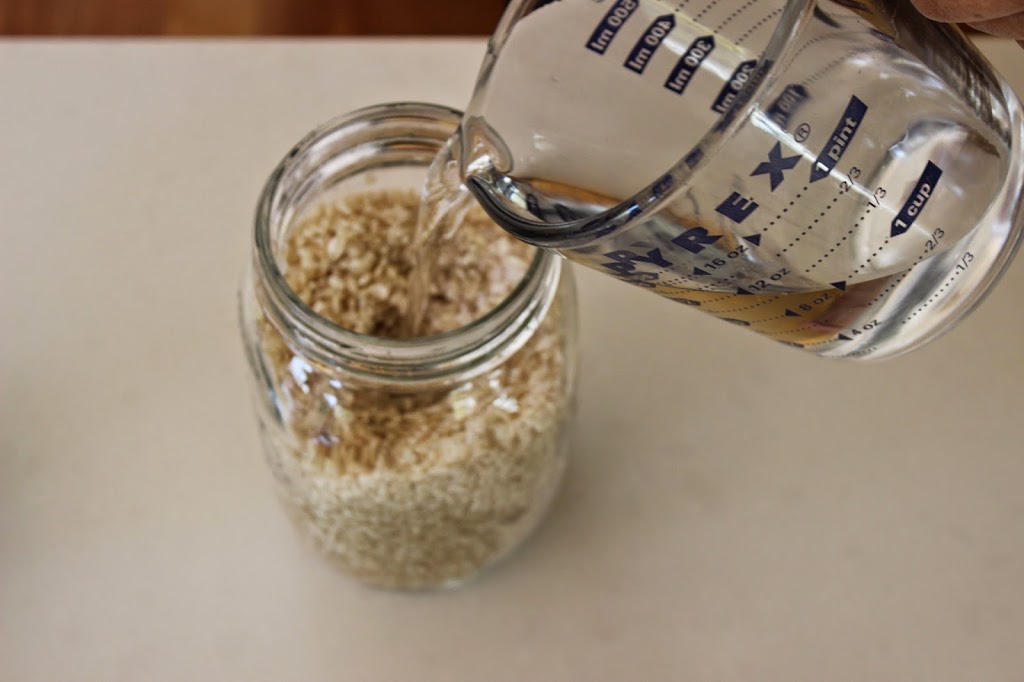
A GREEN HERB RICE – SABZI POLO

Notes:

  • For a more detailed guide to cooking Persian rice please see this post
  • My preferred basmati rice right now is Royal Chef’s Choice I purchase mine from my local Persian store.
  • I realize bunches of herbs come in varying sizes. I ask for large bunches here.  Don’t get too caught up on this. Get a bunch as close to large as possible.  I’m not a big believer in measuring out herbs by cups.  You really can’t go wrong here if your bunch of herbs is medium sized or a little bigger than large.  I also like to use the stems in homemade  broth.  You can even make pesto with the stems.  Just seems a shame to compost all those stems.
  • Fresh fenugreek can be found at farmer’s markets or Middle Eastern grocery stores.
  • For the steaming portion of the rice and herbs I used my deep, 12″ cast iron skillet which worked great and turned out a great tahdig.  I think a slightly bigger size would have also worked nicely.  Giving the rice room to grow and elongate.  If you do use a bigger pot or pan please adjust the amount of butter accordingly.  If you do want to use a cast iron skillet instead of a pot you can’t use any size smaller than 12″ for this amount of rice.

Ingredients:

Serves 4-6

3 cups white basmati rice, washed and soaked in 2 cups cold water with 3 tablespoons  salt for at least 1 hour
water
salt
1 large bunch parsley, cleaned and trimmed
1 large bunch cilantro, cleaned and trimmed
1 large bunch dill, cleaned and trimmed
1 large bunch chives, very roughly chopped
leaves from 5 stems of fresh fenugreek (optional)
5 tablespoons butter or ghee, divided
1/4 tsp ground saffron steeped in 1 tablespoon hot water, plus a small pinch
1/4 cup dried dill
2 whole cloves spring garlic, trimmed

1- Finely chop the first 5 ingredients in a food processor. Combine in a bowl.  You can chop all the herbs together since you want them all combined, but you may need to work in batches to help  your food processor.  Set aside 3/4 cup of the chopped herbs.  Keep the larger batch in the bowl.

2- In a large pot bring 12 cups water and 4 tablespoons salt to a boil.  Once at a boil drain the rice and add the rice to the pot. Stir ONE TIME very gently.  Return to a boil and keep a close eye on it.  Skim off any foam.  Test your rice after 4-6 minutes until the rice is al-dente.  Once al-dente drain the rice (I usually drain the rice at the 4-5 minute mark) and give a quick gentle rinse under warm tap water.  Allow the rice to drain completely. In the meantime, melt 3 1/2 tablespoons of butter and set aside.

3- In a large (not stainless steel) pot or a 12″ cast iron pan (see notes) melt 2 1/2 tablespoons butter or ghee over low heat.  Make sure the melted butter covers the entire surface of your pot and along the sides.  If not add more butter accordingly.  Add a pinch of saffron to the oil and swirl around.  With a spatula add enough rice to fully cover the bottom of the pot. Using the back of the spatula or the back of a wooden spoon pack down the rice firmly. Add a layer of the larger batch of chopped herbs.  Sprinkle 1 tsp of dried dill over the fresh herbs.  Repeat, alternating layers of rice, herbs, and dried dill.  Your top layer should be a rice layer.  Place the spring garlic on top, to the side of the pot.  Pour the melted butter and 2 tablespoons hot water over the rice. Using the handle of a wooden spoon poke a couple of holes in the rice to allow the steam to escape.  Cover and turn up the heat to medium/high.  Cook for 10 minutes.  (Don’t go anywhere!  The tahdig can burn very quickly)

4- Turn down the heat to medium.  Lift the lid and cover with a clean kitchen towel or a couple of layers of paper towel.  Place the lid firmly back on the pot and cook for 10 minutes.

5- Turn the heat down to low.  Place a heat diffuser under the pot and cook for 40 minutes.

6- When the rice is done, lift the lid and set aside the spring garlic. Gently scoop out 1 cup of the green herb rice in a bowl.  Toss with the saffron water and set aside.

7- With a spatula gently scatter one layer of green herb rice on a serving platter.  Make sure you don’t disturb the tahdig at the bottom of the pot.  Add a layer of reserved fresh chopped herbs on top of the rice.  Repeat, alternating layers of green herb rice and fresh chopped herbs.  Garnish the very top with the reserved saffron rice and spring garlic.  Gently scoop out the tahdig and serve on the side.

Sabzi polo is traditionally served with fish for Nowruz.  It is also delicious with chicken kababs.  Will keep in the fridge for up to 3 days.

Uncategorized

Shio Koji – A Round Kitchen

Dear friends, I am truly humbled to be included as a finalist in the 2015 IACP Digital Media Awards for Best Narrative Culinary Blog.  What a great privilege and honor to be recognized amongst such amazing, talented individuals.  Thank you all from the bottom of my heart (and pot!) for all your kind words, support and encouragement.  It means the world to me.  Go Tahdig!


♪ MUSIC WE’RE COOKING TO ♪

We have a globe. Of the light-up variety. Of the round variety.

Because the world is round, Mama.  It’s the truth, Mama.

It’s the kind the girls love to spin and spin, and then randomly bring to a sudden stop.  Mother Earth graciously, patiently, holding still as their little fingers gently but methodically trace a path through her every field and valley, across mountain ranges and tundra, seas, lakes and oceans. All in a matter of seconds.

As fast as the speed, Mama.

It’s called the speed of light, Luna.

Is that faster than the speed of infinity, Mama?

Explorers on an expedition. Little fingers claiming birth places, lived-in places, want-to-visit places, random, exotic, mysterious places.  When you are five and eight years old, the globe holds an immeasurable, magical sense of mystery and respect.

As it should.

For us all.

Whether your globe lights up or not.

Shio koji literally translates to sea salt and koji. Koji is rice or soybeans that has been inoculated with a culture called Aspergillus oryzae.  The same culture/mold can be found in soy sauce, miso and sake.  The popularity of shio koji exploded in Japan about five years ago. But it is deeply rooted in the Japanese traditions of food and fermentation that are thousands of years old. And it has happily found its way into my kitchen.

I have my Japanese step-mother Kumi to thank for introducing me not only to this flavorful ingredient, but to the many beauties and majesties of Japanese culture.

Shio koji.

Little fingers search and search but are unable to trace its history back through the rice fields of Gilan.

No verses of poetry to compare it to zaferan, talayeh sorkheh Khorasan – the prized flaming, golden saffron from Khorasan.

No documented mentions of world-wise and travel-weary merchants along the silk road expounding on its powers of umami as they whetted their palates on the cha’i from Laheejan. As they bit into the chewy, fragrant, and sweet gaz from Esfahan, nesfeh jahan. Half the world, in Esfahan.

To prepare shio koji, rice koji, sea salt, and water are combined and left to ferment for about seven days. After fermentation the shio koji is stored in the fridge and used as a salt replacement in various sauces, vinaigrettes, dressing for vegetables, and particularly delicious when used in marinades.  Kumi uses her shio koji in just about everything – like adding a small amount to her morning oatmeal.

Shio koji delivers an incredible umami punch in the same way that anchovies, tomato paste and kashk do.  And since it is a fermented food you can benefit from its naturally occurring pro-biotics.  Shio koji can be purchased already prepared in a paste form from Japanese supermarkets (I have not seen it yet at any other markets – please leave a comment below if you have) or online.  But it is very simple and much less costly to prepare at home.  And preparing it at home satisfies my appreciation for the simplicity, and magical mystery of fermentation.

I follow Kumi’s instructions when making shio koji.  You need rice koji, fine grain sea salt (I’ve been emphatically told it has to be sea salt – no table salt please!), a jar, and time to ferment.  Rice koji can be found online, and here, and at Japanese grocery stores.

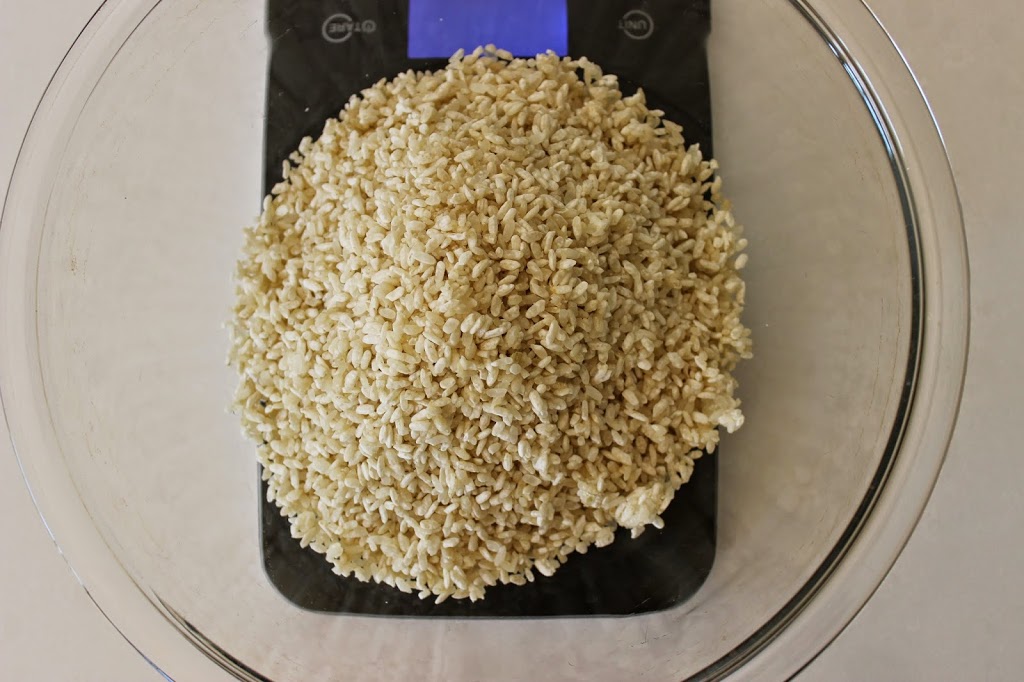
Kumi has given me the measurements by metric weight as it is most accurate, so I highly recommend using a scale when measuring out the ingredients.  The measurements below are for a 1 liter glass jar.  You can also easily halve this recipe.  Any left over rice koji can be stored in the freezer for up to 6 months.

Place 400 grams rice koji in a bowl.

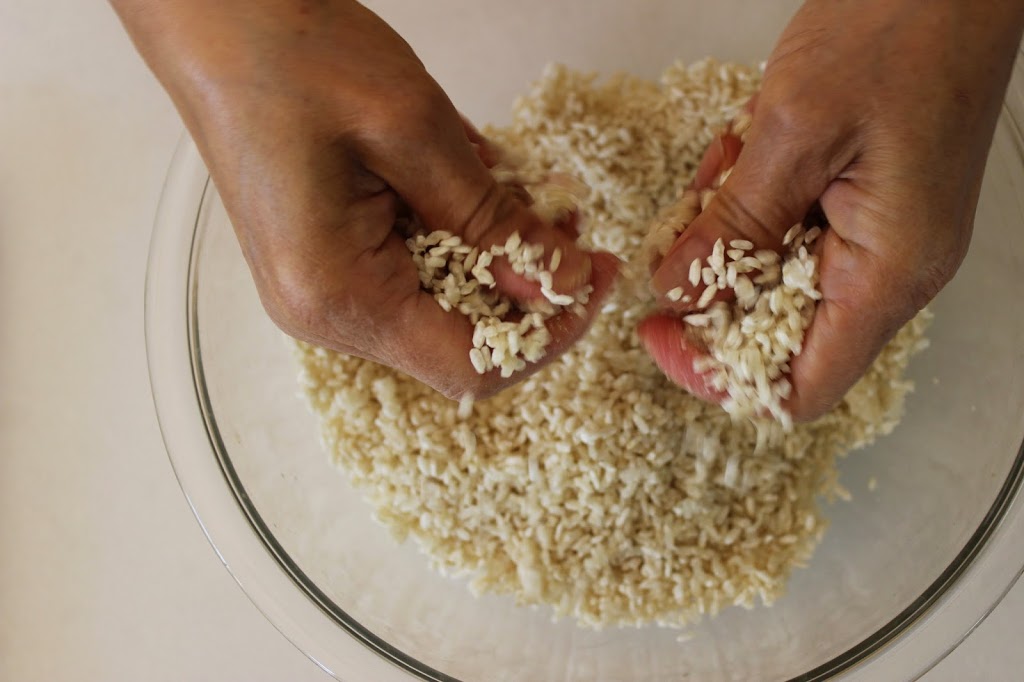
Break up any clumped up pieces of rice.

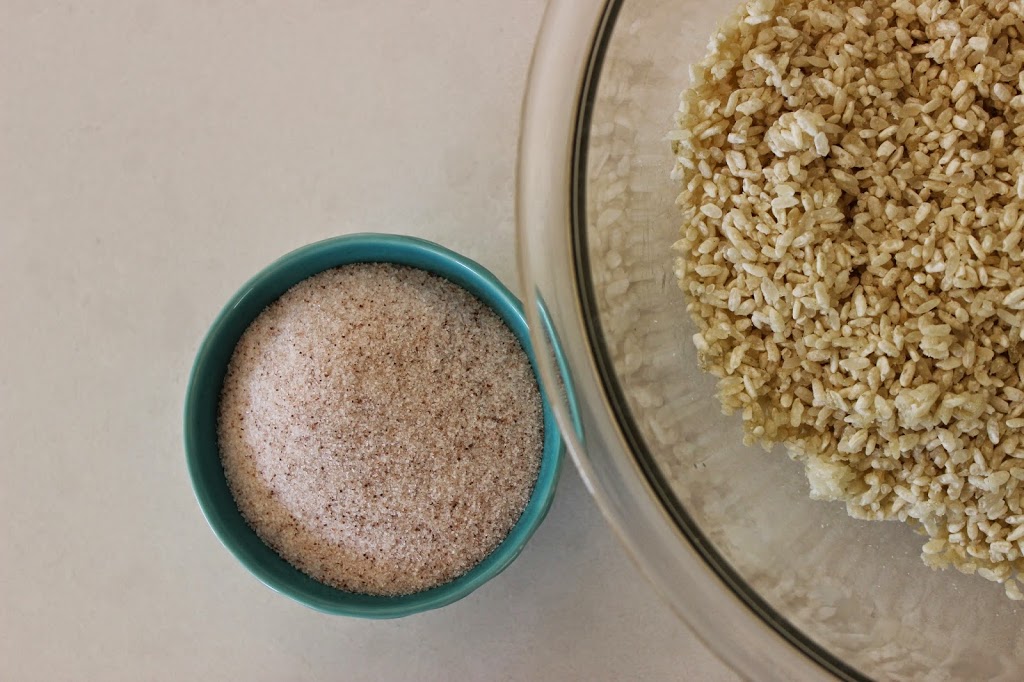
Add anywhere between 140-160 grams of fine grain sea salt to the rice.

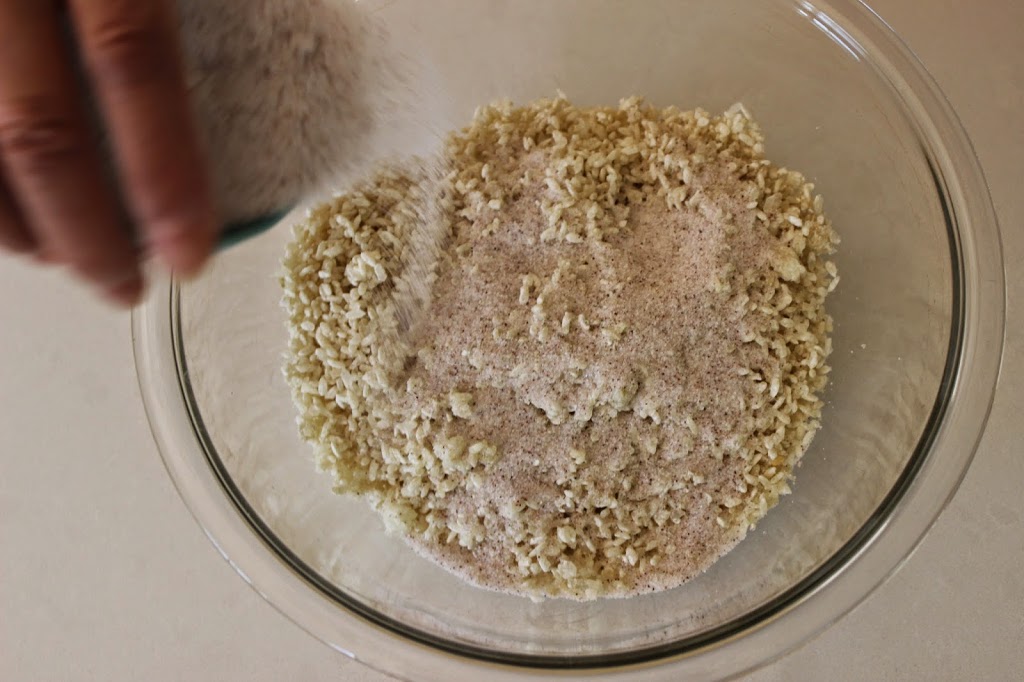
Combine the sea salt and the rice koji by kneading the two ingredients by hand for about 5 minutes. During this process the rice koji and sea salt will start to come together. As you knead, you should be able to form a clump in your hands like loose pie dough coming together. During this process you should also be able to smell a slight malty aroma, similar to soy sauce.

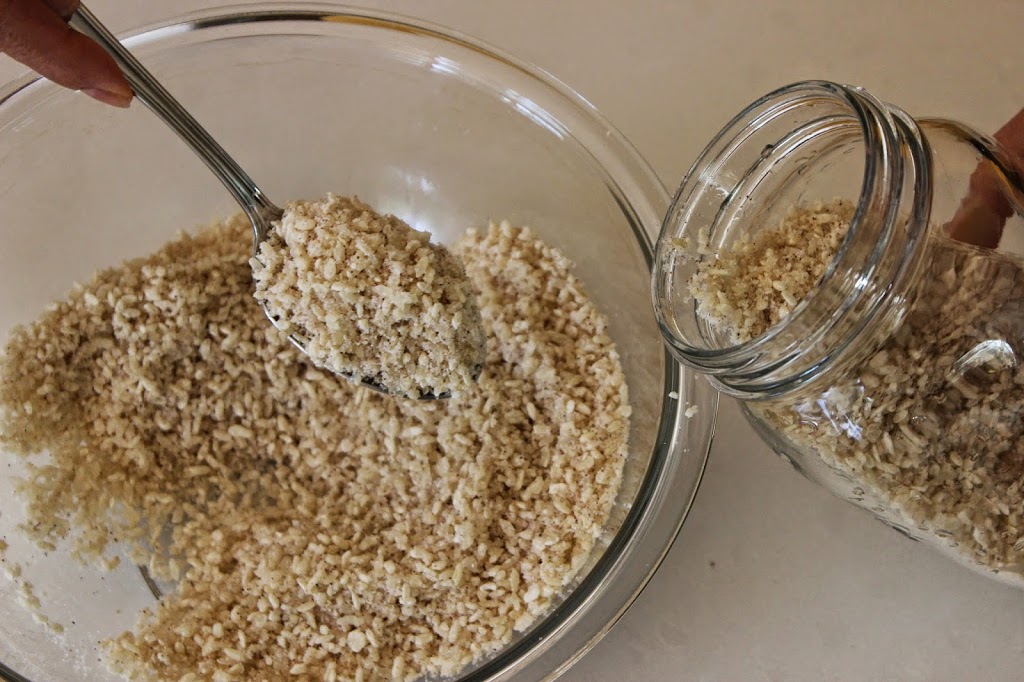
Using a spoon, transfer the rice koji/sea salt to a sterilized 1 liter glass jar and add 500ml water.  Make sure there is enough water to fully cover the surface of the koji.

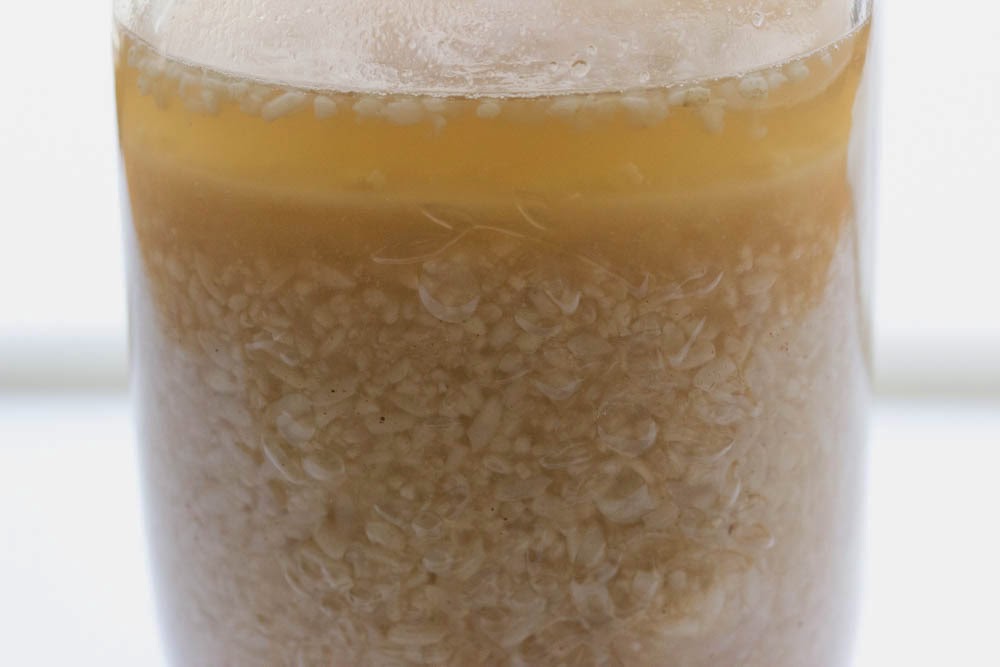
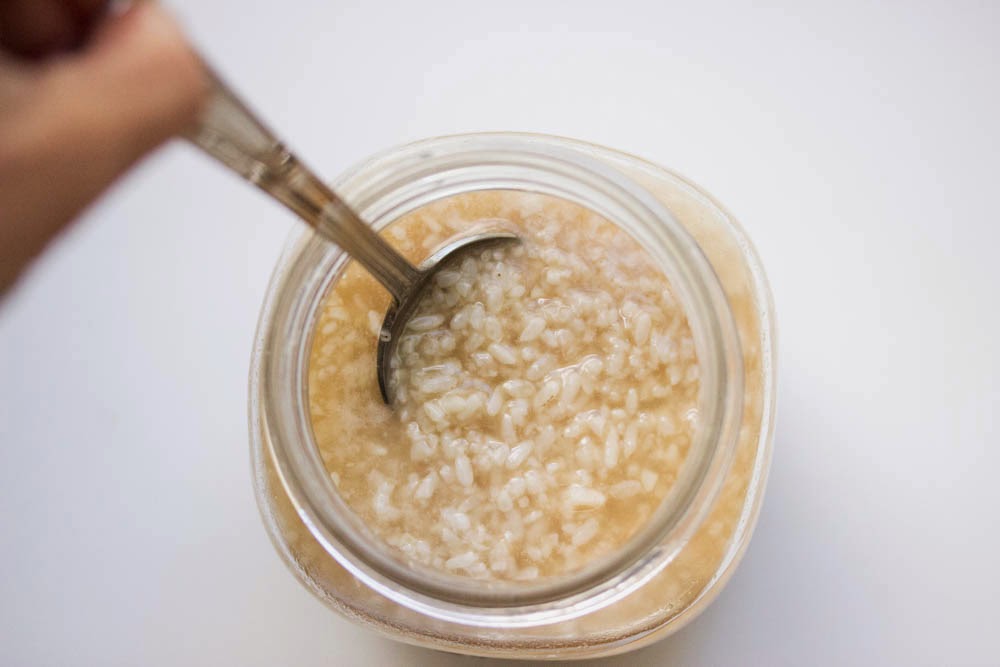
Place the cap on the jar and store at room temperature to ferment for 7-10 days.  The length of fermentation depends on room temperature.  It is important to stir the shio koji once a day by lifting the rice up and over from the bottom of the jar. This method of stirring allows for oxygen to circulate.  By days 7-10 the rice granules should be softened and there should be a distinct fermented and malty aroma.  This is how you know the shio koji is ready and has reached full flavor.  You can taste the shio koji.  The rice granules should have softened.  It might taste rather salty but don’t panic; this will temper over time.  At this point you can place the shio koji in a food processor and process to a smooth paste.  Kumi doesn’t process her shio koji, but I sometimes prefer it smooth.  Store the shio koji in the fridge and use as needed. It will keep in the fridge for up to 6 months.

Generally, when using shio koji as a salt substitute you can use 2 teaspoons of shio koji for 1 teaspoon of salt. When using as a marinade the general rule of thumb is the ratio 10:1. For every 100 grams of food use 10 grams of shio koji.  Also, take note that shio koji can burn at very high temperatures.  So stick to moderate heat.

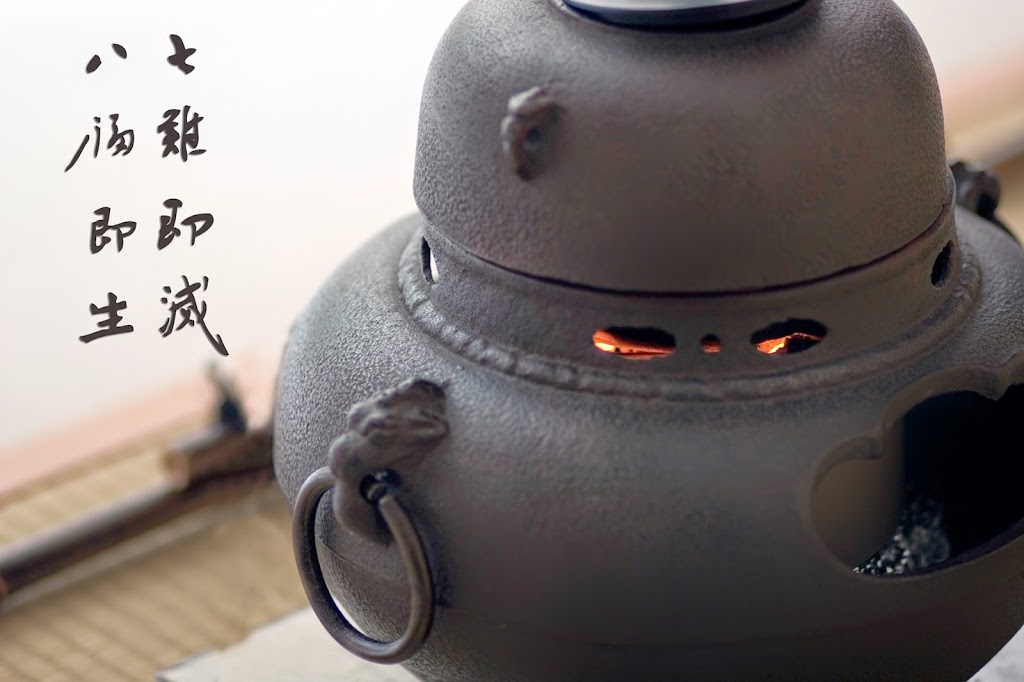
“Nana korobi ya oki”  “Fall Down Seven Times, Stand Up Eight.”  Japanese proverb.
Little fingers traced and searched but couldn’t find the bridge connecting the shio koji to their mother’s birth place.

Alas, all well mapped out and thought through expeditions must eventually come to an end.

Make their way back home.

For rest.  For provisions.  For a hug.

And just like that little fingers lift off the globe, bid Mother Earth adieu with a dizzying final spin, and fly towards the kitchen. Crashing into the arms, warmth and comforts of their Mama. Recounting harrowing tales of their journeys.

Simultaneously.

At the speed of infinity.

All the while keeping a close eye on their Mama as she reaches in the fridge for Grandma Kumi’s shio koji with one hand while stretching her other arm towards the spice cupboard for the zaferan, talayeh sorkheh Khorasan.

A bridge.  A path.  A connection.

What’s for dinner, Mama?

A most umami packed, golden roast chicken.

* All Japanese tea ceremony photos are courtesy of Ramin Deravian copyright 2015

SHIO KOJI

You can easily halve this recipe if you want to make less shio koji.

Ingredients:

400 grams rice koji
140-160 grams fine grain sea salt
500 ml water

1- Place rice koji in a medium bowl.  Break up any clumps of rice with fingers.  Add salt.  Combine salt and  rice koji by kneading together by hand.  Knead for about 5 minutes until it starts to come together in your hands like loose pie dough.  Spoon into a sterilized 1 liter glass jar.  Add water to completely cover.  Place cap on jar and allow to ferment at room temperature for 7-1o days.  It is very important to stir the shio koji once a day as it ferments.  Stir with a clean spoon by lifting the koji from the bottom of the jar up and over.  By days 7-10 the rice should have softened and there should be a distinct malty fermented smell.  You can taste the shio koji to test.  Once it has fully fermented you can place in a food processor and process into a paste.  Spoon the shio koji paste back into the jar and store in the fridge.  Use as needed. Shio koji will keep in the fridge for up to 6 months.

Side Dish

Taste – A Collard Greens Borani Collard Greens with Yogurt and Caramelized Red Onion Sumac

 ♪ MUSIC WE’RE COOKING TO ♪

Raw honey.

Like the jar from Trader Joe’s.

Dripping in gold, warmth, and sweetness.

My daughter’s eyes, Soleil’s eyes, the sun’s eyes, shimmer like raw honey.

Dripping in gold.

Showering us with warmth, sweetness, and unyielding love.

And occasionally stubbornness, and intense, deeply felt, unyielding five-year-old emotions.

Pure and raw.

These are the very same – stop you in your tracks, take hold of your heart and soul – eyes that stare back at me.

Piercing right through me with passion, vehemence, and absolute indignation at 4pm on New Year’s Eve.

We are both splayed out on the kitchen floor with me holding a spoon of blueberry sauce inches from her face.

The concoction slowly but purposefully working its way down the wooden spoon, onto my hand, circling my wrist, trailing my well-pronounced bluish purple veins, down my arm and delicately drip, drip, dripping on to the wood floor.

The blueberry sauce has brought us to our knees.

Literally.

Well, actually, even lower than our knees.

Onto our bellies.

I have quite a fondness for all things bitter.  The bitter-sour in combination agree with my taste buds the most.  Especially bitter greens.  Arugula, frisee, escarole, radicchio, rapini, endive, dandelion greens, mustard greens…Maybe my exposure to Italian food as a child (bitter greens) and Persian food (all things sour) has had a hand in shaping and nurturing my taste buds.

But for the longest time there has been one bitter green that I just couldn’t come to embrace.  Collard greens.  Not that I would ever turn away collards, unless they’ve been boiled down to mush.  That goes for any vegetable boiled to oblivion.  But collards wouldn’t be my first choice of greens.  Again, perhaps my lack of exposure to these beloved greens of American Southern cuisine has something to do with it.

It also just so happens that this time of year our farm box and the farmer’s markets explode with such greens.  And so inevitably I can expect a bunch of collards in our farm box every week.  Normally, I treat collards as I do other greens.  Simply.  Saute in olive oil, sprinkle with salt, pepper, hit it with some sort of acid, add a little water (if needed), put a lid on it and give the rather tough leaves time to soften and tenderize.  But, recently I decided to treat my collards and my taste buds to a special treat.

To a most trusted and loyal friend.

“…my late night confidante, my consigliere…”

Yogurt.

A borani.

Her blood courses through mine.

As does mine through hers.

Her passion matches mine.

As does her flair for drama.

And much can be said about the paralyzing stubbornness that occasionally takes hold of our bodies and selfishly refuses to let go.

She stands her ground. (Well, more like the wood floor she is splayed across)

Unwavering and proud.

As do I.

Unwavering.

And proud.

But, Mama I don’t like blueberry sauce!

Soleil, I added maple syrup to it this time.  Just taste it.  It’s sweet!

Mama, you always tell me to listen to my body.  And my body is telling me I DON’T LIKE BLUEBERRY SAUCE!!!

Well, your body doesn’t know what it’s talking about right now.  I put MAPLE SYRUP in it!!!

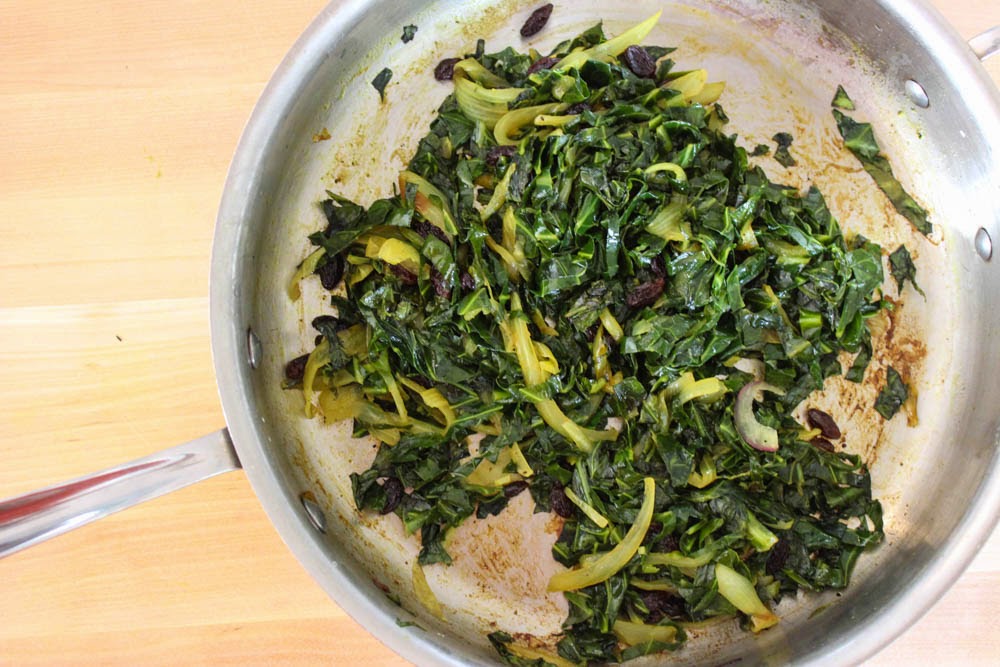
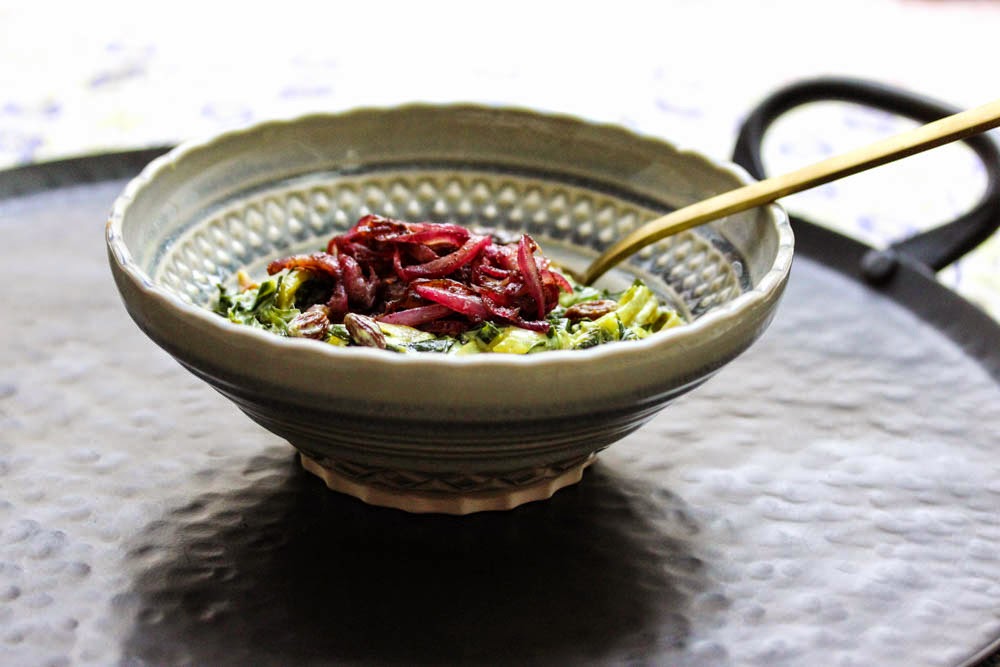
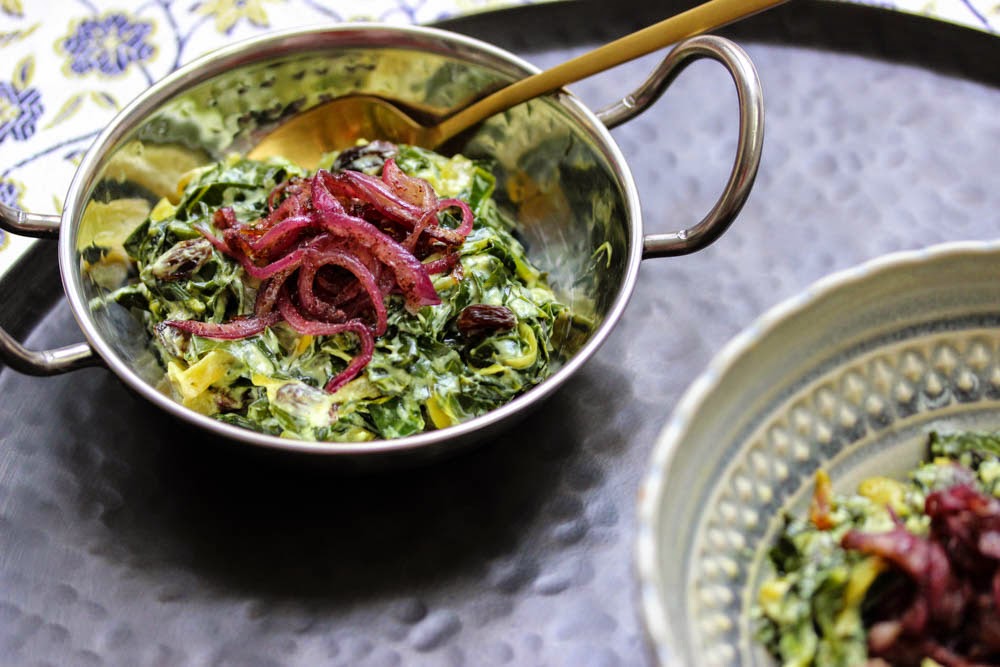
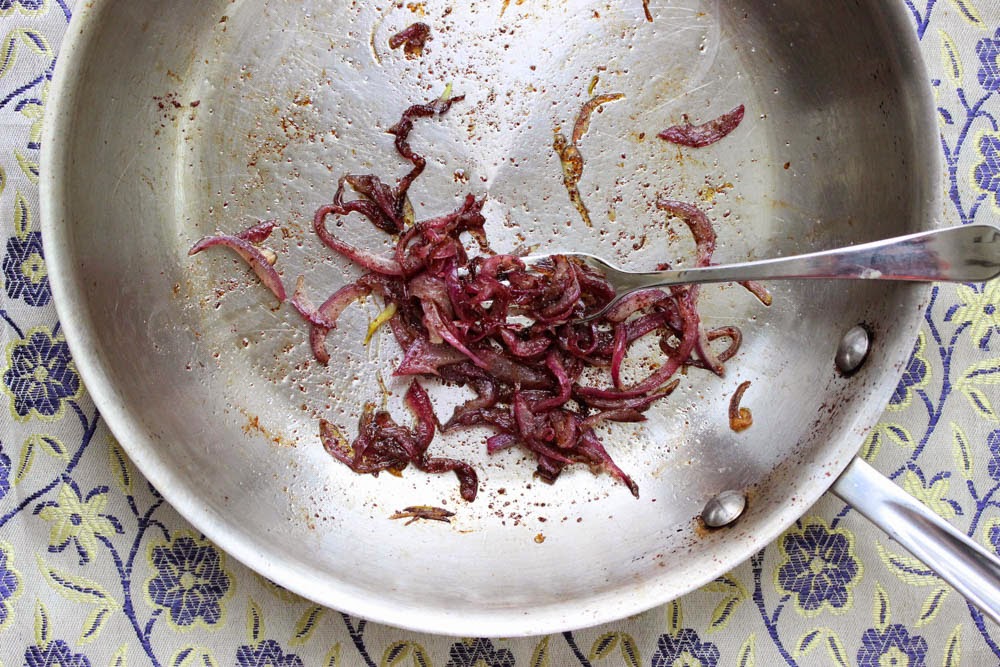
Borani is a side dish or dip made with thick, creamy yogurt and an array of vegetables or herbs.  It really speaks to the Persian (and my) love affair with yogurt.  My favorite borani as a child and perhaps the most well-known one is borani-e esfenaj.  In our house we simply call it mast o esfenaj – yogurt and spinach.  Also, a great way to get the little ones to eat their spinach.  Keeping with my theory that everything just tastes better with yogurt added to it, I decided to put this to the test with my troublesome greens – collard greens.  And the results are fantastic.  I first saute the greens with onion, garlic and turmeric.  Then add a splash of water to the pan and put the lid on it and give the greens time to slowly soften.  I cook the greens just long enough to tenderize but still maintain their rich color.  I have also added plump raisins to this dish for extra texture and a little something sweet to chew on. Once the collards cool slightly I mix in the yogurt and a splash of vinegar (you could also use lemon juice).  You can’t have bitter without sour. The vinegar also helps to balance out the sweetness of the raisins.  The borani can be served as it is at this point, you could even sprinkle the top with some walnuts.  But what makes this dish really sing is the caramelized red onion with sumac.  You need these onions in your life.  Be it topping this borani, or gracing a salad, burgers, meats.  Make a big batch and have on hand in the fridge – to use at all times.

This collard greens borani is great served as a dip with some warm flat bread to scoop up all the creamy goodness.  It also makes a great side dish alongside a roasted chicken or grilled fish.  Or, my occasional favorite 10 pm cuddle on the couch with the borani bowl nestled snugly in my lap and a bag of crunchy chips at my side (Trader Joe’s organic yellow corn tortilla chip rounds, if you care to know).  A meditative and quiet time (save for the crunching of the chips).  A time for self-reflection.  Where I get to acknowledge that sometimes my body doesn’t know what it’s talking about either when it comes to collard greens.  All I needed to do is give them another try with a dollop of yogurt.  And then just taste and marvel at the goodness of it all.

They stand above us – my husband and my first-born.

Luna.  My moon girl.

Representatives of peace, truth, justice and all things fair.

Embodying all that we wish the UN could really be.

They look down at us and the blueberry spoon with kindness and curiosity.

Ok you two – time to separate you.

Says my husband as he scoops up our second born off the floor and gently cradles her in his arms and carries her off for a game of Pretty, Pretty, Princess.

Luna bends her body just so, to get a better look at me and my situation.

I lift my head slightly and come face to face with those heart melting almond shaped, chestnut brown eyes.

Warm, deep and all encompassing.

Mama?  Can I lick that spoon?

A COLLARD GREENS BORANI – COLLARD GREENS WITH YOGURT & CARAMELIZED RED ONION SUMAC

Ingredients:

Serves 6-8 as a dip or side dish

3 tablespoons olive oil
1/2 yellow onion, thinly sliced
2 garlic cloves, finely chopped
1 bunch collard greens, off the stem and cut into ribbons
1/4 tsp turmeric
salt
pepper
1/4 cup water
2 heaping tablespoons raisins
1/2 cup strained Greek style yogurt, plus more if needed
1 tablespoon red wine vinegar
caramelized red onion sumac, as topping (recipe below)

1- Heat the oil in a large pan over medium heat.  Add the onions, sprinkle with a little salt and saute until soft and translucent, about 8-10minutes.  Add the garlic and saute for about 3 minutes, stirring often making sure the garlic doesn’t burn.  Add the collards, in batches if necessary, turmeric, raisins,  1/4 teaspoon salt, 1/4 teaspoon pepper.  Stir to combine. Add 1/4 cup water and cover immediately.  Turn down heat to medium-low or low.  Allow to cook until the collards soften and tenderize, about 20 minutes.  Check occasionally and add more water 1 tablespoon at a time if necessary.  Uncover and take off heat when done and allow to cool.

2- In a medium sized bowl combine the yogurt and vinegar.  Add the collards and combine.  Add more yogurt if you like it creamier. Season well with salt and pepper to taste.  Top with caramelized red onion sumac.

Serve with warm flat bread as a dip or as a side dish.  Will keep in the fridge for 1 or 2 days.

CARAMELIZED RED ONION SUMAC

Ingredients:
2 tablespoons olive oil
1/2 red onion, thinly sliced
1 teaspoon sumac
salt
pepper

1- Heat the oil in a medium sized pan over medium heat.  Add the onion, gently season with salt and pepper.  Turn down the heat and saute for about 20 minutes.  Until the onion nicely caramelizes.  Stir often and turn down the heat if necessary.  Add the sumac to the onion in the last 5 minutes of cooking.

Soup

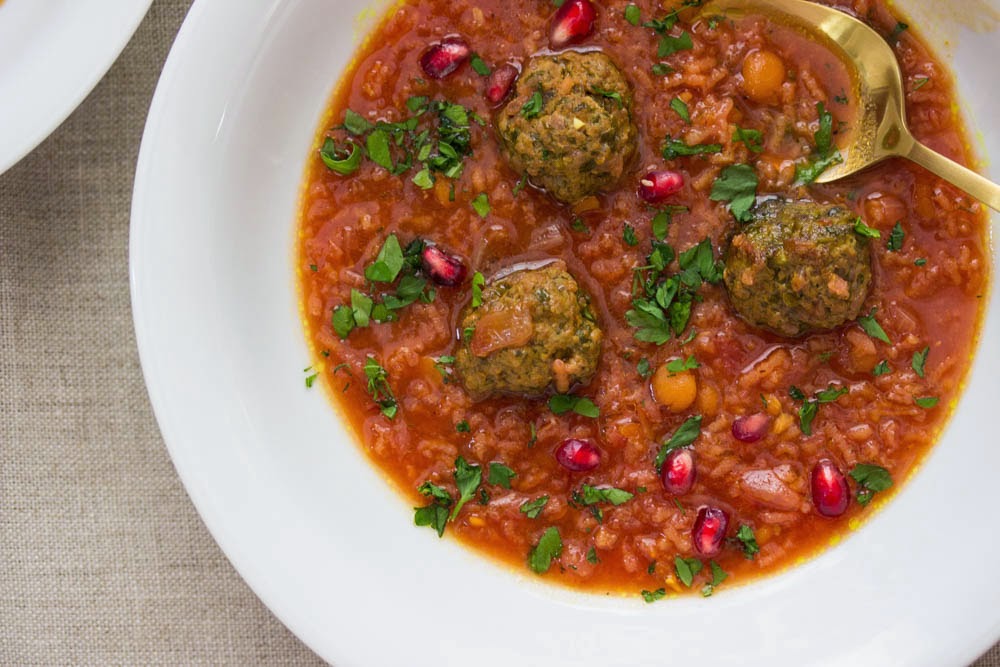
A Winter’s Tale and a Pomegranate Soup – Shab-E Yalda – Aash-E Anar

Yeky bood, yeky nabood…

‘Twas the longest night of the year.

‘Twas the darkest night of the year.

‘Twas the most magical night of the year.

Soak the rice as the split peas simmer away.  Immerse your hands in the cold water and gently break up the rice into bits and pieces. Feel the familiar beat of nostalgia course through your body.  Memory knocking at your door.  It always begins with a gentle knock. Patiently waiting for permission to enter.  Sometimes you grant it – sometimes you don’t. It’s a slippery slope – the unpaved road to nostalgia and memory. You often tread those loose cobblestones cautiously. But tonight you are in a generous mood. It’s a night of celebration.  A night of light, poetry, food, music, laughter, dancing, stories, family, jokes, togetherness, and a warm and tangy crimson-hued Aash-e Anar – Pomegranate Soup. You gently shake the rice off your fingers, dry your hands and place a firm grip on memory’s door. Wildly swinging it open. Welcoming with it a howling gust of wind echoing with tales of

Shab-e Yalda/Shab-e Chelleh.

Winter Solstice – December 21, 2014.

‘Tis the one night of the year children are allowed to stay up all night.

(Only to inevitably fall asleep at the foot of the korsi.  In the warmth of their grandmother’s lap.)

Giddy with anticipation of outlasting the long and dark night and welcoming a new crimson dawn.

Turn the music up.  Let its joyful rhythm, fervor and urgency draw your girls down the stairs. Add the rice to the aash along with a sprig of mint. Stir, stir and stir some more. The split peas have a tendency to stick.

What’s he singing about, Mama? -Luna

I’m not sure. It’s in Kurdish. I think it’s a love song.

Who are Kurdishes, Mama? -Soleil

Friends and neighbors.

Interlace your fingers with your moon and sun and start spinning.  Orbiting around one another.  Shake your hair out, shimmy your hips, spin, spin and spin some more. Let yourself get lost in the moment.  Catch the sun’s light reflect off the moon and bounce around the room.  A magical night, after all.  Spin, spin, and spin some more.  Jump and sing along until your heart can’t take it anymore.  Collapse on the floor.  Only to get back up and repeat it all.

‘Tis the night of Yalda – birth.

The birth of the sun.

As light, love, truth and wisdom prevail over darkness.

Start on the meatballs.  Put the girls to work.  Add the parsley, cilantro, dill and advieh to the mixture.  Now listen – don’t get too crazy measuring out the chopped herbs.  Grab a handful and chop away.  What you don’t use in the meatballs you can use as garnish on the aash.  Place a small bowl of water next to the girls and show them how to wet their hands a little before forming the mini-meatballs.  Show them how small you want them. Bite your tongue and move away (go stir the aash) as they start forming odd shapes and sizes.  Let them get lost in the moment.

‘Tis a well-told and oft-repeated tale.

Told by ancient Persians six thousand years ago.

Told by George Lucas. In six parts.  Soon to be seven.

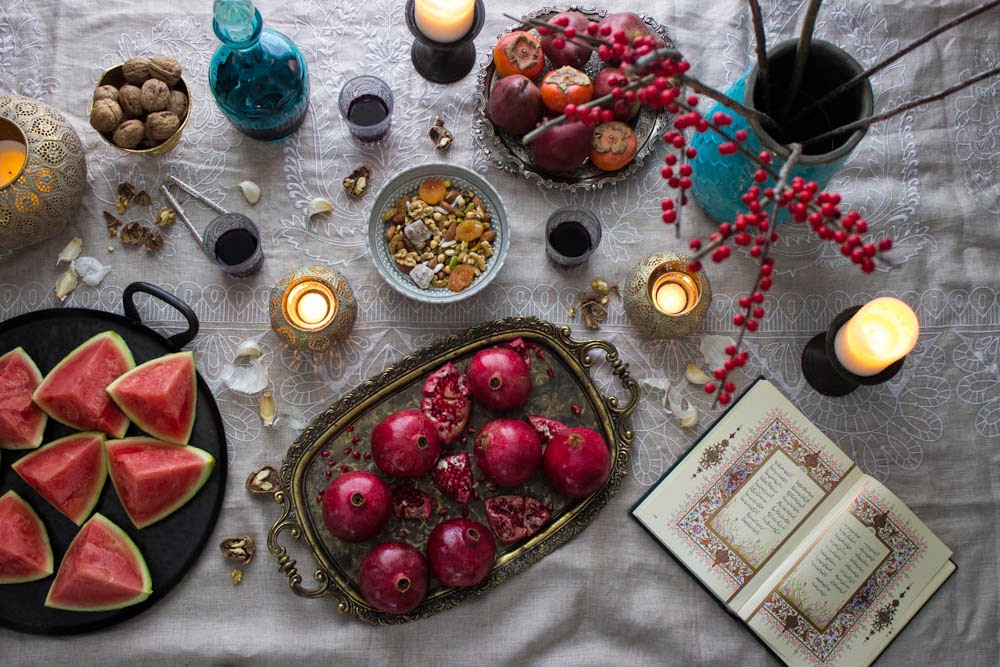
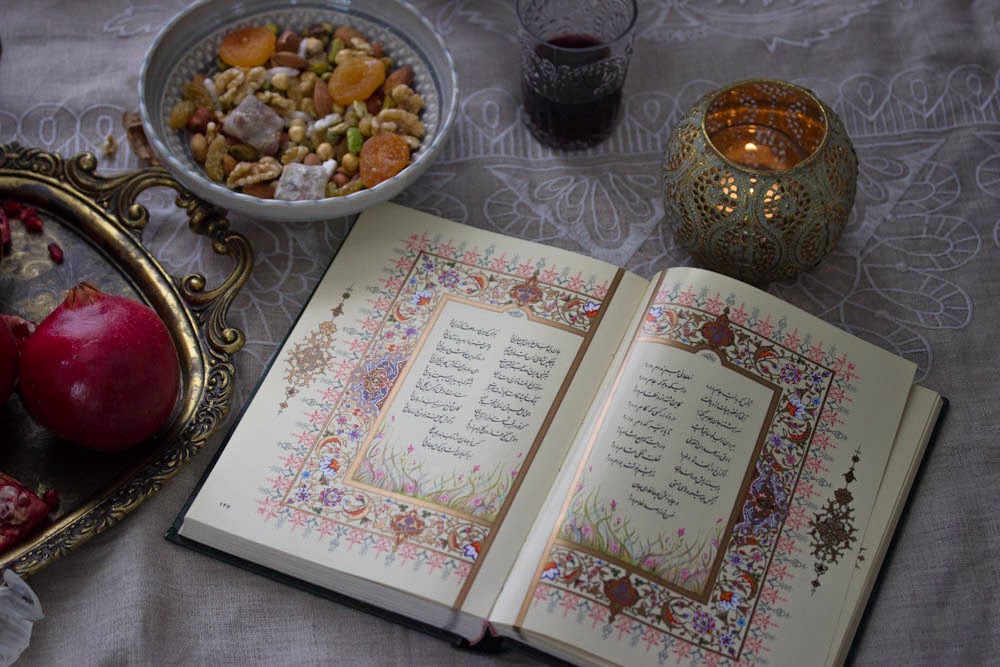
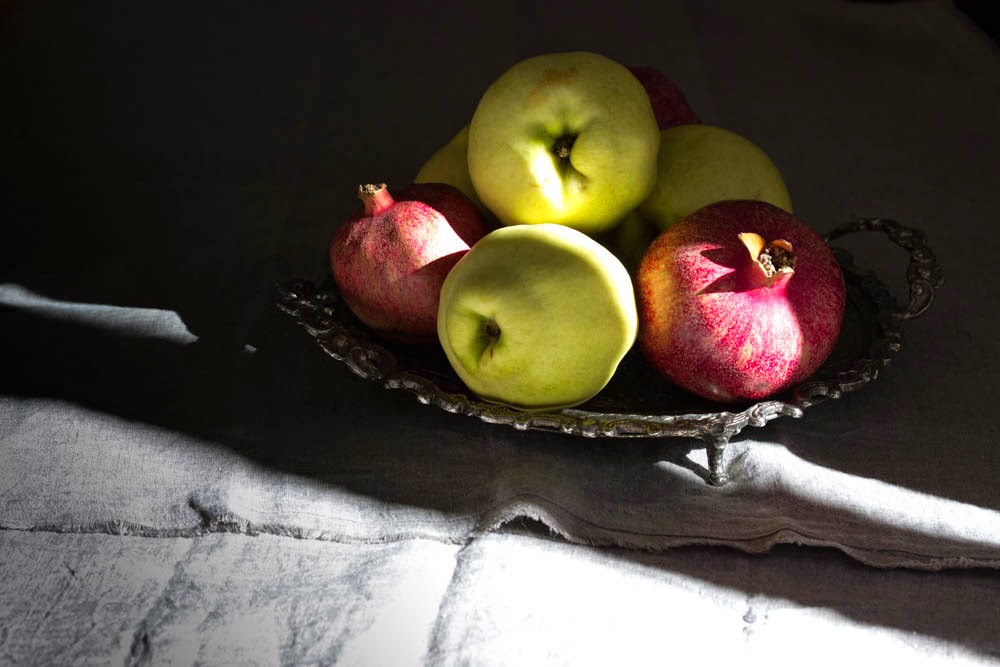
Set the Yalda table.  A study in various shades of red. All to symbolize a crimson dawn – the light of life. Watermelon for protection against excess heat in the summer months. Pomegranates and red pears to ward off insect bites.

Just like those patches we put on to keep away the mosquitos when we went camping.  Remember, Mama?

I remember, Soleil.

Dried fruits and nuts for an abundant and prosperous harvest. Candles to light the house and keep darkness at bay. Garlic for joint pain.

Mama, do your joints hurt?

Not right now, Luna.  But just in case…

Divan-e Hafez to stir your soul and look into your future. And a crimson-hued wine to stir your thoughts and reminisce of days long gone.  A magical night, after all.

‘Twas a well fought battle.

With no end in sight.

As the night raged on and on.

Gently drop the meatballs in the pot. Grate the beet and let its juices drip through your fingers and into the aash.  Chalk it up to more good luck. Hold the bottle of pomegranate molasses high above your caldron as you release its contents. Stir, stir and stir some more, then cover.

But where there is dusk – there is dawn.

And the sun always rises.

She always rises.

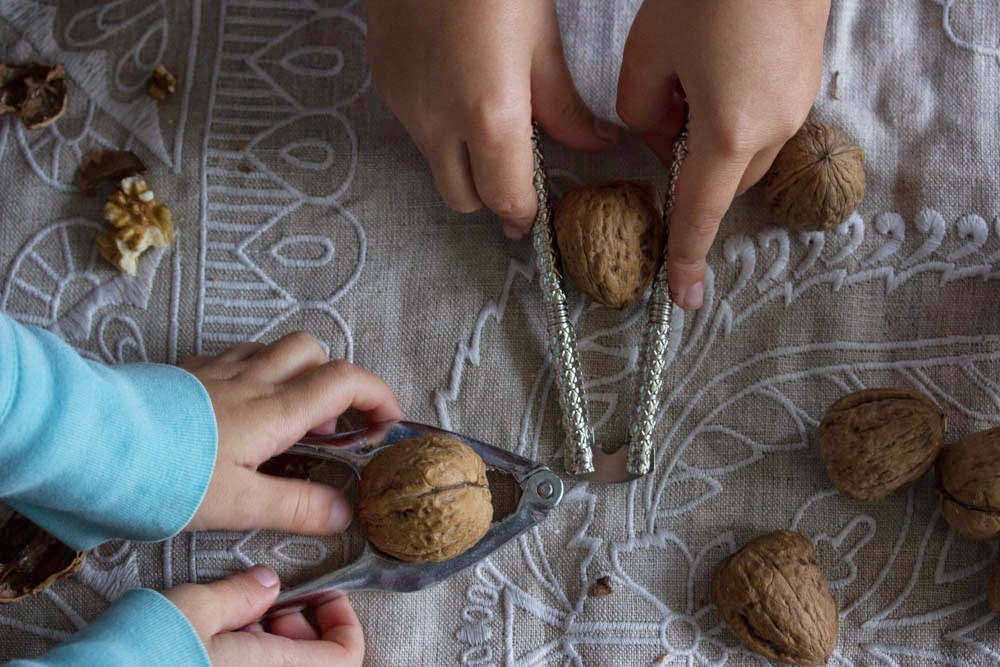
Serve the warm and tangy crimson-hued Aash-e Anar as the girls crack open the walnuts.  Duck as walnut shells ricochet off the walls.

Mama, can we please stay up all night?  Please?

Yeky bood, yeky nabood…

Wishing you all a very joyful and happy Yalda and Holidays. Please make sure you also check out the wonderful Yalda posts below. Plenty to tempt you with for this Yalda night.

POMEGRANATE SOUP – AASH-E ANAR

Notes:

  • Soaking the rice makes it easier to break it into pieces.  This is so we have smaller pieces of rice visible in the soup. You want to break the rice into bits and pieces; don’t pulverize it.
  • How long you simmer the yellow split peas depends on the quality and freshness of your peas.
  • Pomegranate molasses can be easily found in Middle Eastern markets, most grocery stores and online. I use a more sour kind.  This aash is meant to be slightly tangy.  But if you prefer, and depending on the kind of pomegranate molasses you use, you can balance out the flavors by adding a little bit of sugar.  Start with a small amount and add as needed.
  • Advieh is a Persian spice mix. Recipe can be found here.
  • This aash is best if made a day or two in advance. The flavors sit and mingle and really intensify.  When reheating adjust the water.  You want this aash on the slightly thicker side.

Ingredients:

Serves 6

3 tablespoons olive oil
1 medium yellow onion, chopped
2 garlic cloves, chopped
1 teaspoon turmeric
1/2 cup yellow split peas, picked over and rinsed
1 1/2 teaspoons salt
1/4 teaspoon pepper
water
1/2 cup white basmati rice, soaked in cold water for 30 minutes
1 mint sprig
1/2 cup pomegranate molasses
1 small beet, grated
sugar or sweetener of choice (optional), to taste
fresh chopped herbs (parsley, dill, cilantro, mint), as garnish
pomegranate seeds, as garnish

MEATBALLS

1/2 small yellow onion, grated
2 garlic cloves, finely chopped
2 tablespoons chopped parsley
2 tablespoons chopped dill
2 tablespoons chopped cilantro
1/2 teaspoon advieh
3/4 teaspoon salt
pepper, to taste
1 lb ground beef or lamb or combination of

1- In a large pot heat the oil over medium heat.  Add the onion and saute until it softens, about 6 minutes.  Add the garlic and turmeric and cook for 2 minutes.  Add the yellow split peas and give a quick stir.  Add 8 cups water and 1 1/2 teaspoons salt and pepper and bring to a boil. Lower the heat and simmer, partially covered and stirring ocassionally, for about 20-30 minutes, depending on the quality of the peas.

2- Gently break the rice into bits and pieces.  Add the rice to the pot and bring back up to a gentle boil.  Add the mint sprig and lower the heat and simmer, partially covered and stirring ocassionally, for 20 minutes. In the mean time make the meat balls.

3- In a large bowl combine the onion, garlic, parsley, dill, cilantro, advieh, salt and pepper.  Add the meat and combine well.  Wet your hands and form into mini meatballs. I use a 1tsp measuring spoon to scoop out the meat.  Should make about 30 meatballs.

4- Add the pomegranate molasses and the grated beet to the soup.  Stir to combine.  Gently drop in the meatballs and cover.  Simmer for about 20 minutes, until the meatballs are cooked through and the peas are tender (but not mushy).  Taste and adjust seasoning.  Add sweetener if desired.

Garnish with fresh chopped herbs and pomegranate seeds and serve.

Will keep in the fridge for up to 3 days and in the freezer for up to 3 months.  Adjust water amount when reheating.

Dessert

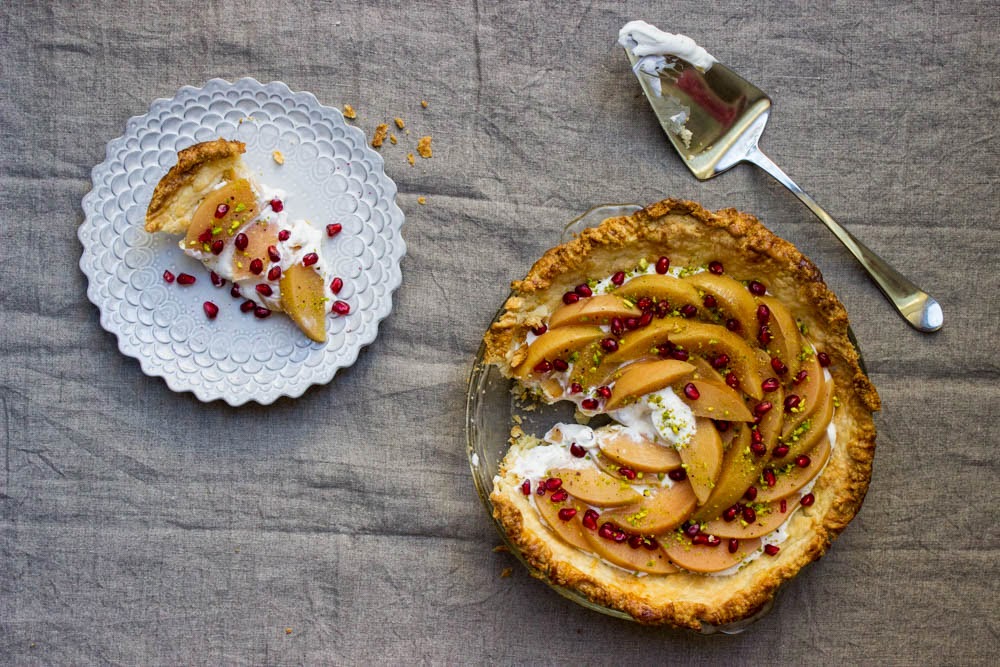
The Chef, the Quince, His Thoughts and Her Pie – A Quince and Labneh Pie

♪ MUSIC WE’RE COOKING TO ♪

You give the wobbly wheel a swift kick right where it counts and knock it back into place.  You may or may not utter a few unsavory words.  You and your traveling companion –  an old laundry basket on wheels – hurdle your way down the blocked off street.  Giving a quick hello to the lovely farmer who sells your precious sweet lemons to your left, and a nod of the head to the organic dates guy, who is perpetually singing “get your nature’s candy” to your right.

The Wednesday Santa Monica Farmer’s Market.

You try to keep your cool with the clog of human traffic.  Casually milling about, admiring the finger limes and slowly savoring the chocolate persimmon.  You contemplate the cute  wicker baskets (pinterest & instagram-worthy) fashionably swung on the arms of the equally cute and hip young shoppers.

You come to a sudden standstill.

You utter a few more unsavory words.

You give the rickety old wheel another kick.

You re-contemplate the cute wicker baskets.

And just as quickly you and your ever-so-moody lower back dismiss the idea.  Cute wicker baskets just don’t cut it when you’re hauling four pounds of sweet lemons, four pounds of fava beans, an armful of sour green plums, and bags upon bags of fresh herbs.

You dodge the huge restaurant crates coming at you, overflowing with edible flowers, beets and squash of every color and dimension.  You start to panic. You’re too late.  You utter a few more unsavory words at the clog of machinery that had you stuck on the Escherian stairwell, also known as the Santa Monica Freeway.

And then with no fan fare, with no trumpets blowing or declarations you spot her.  You spot a whole table full of them.  Quince.  Beh.

You don’t approach.  You admire them from afar.  You wave hello to the farmer enlisted with the delicate task of protecting these blushing beauties.  You walk right past them, thinking you’ll come right back to them.  Right after you make your way to the end of the market to pick up the pomegranate.  You make your way down to the pomegranate stand in a daze. Your head swimming with thoughts of rose water, creamy labneh, and fragrant beh.  A pie.  The whole thing pretty much comes together right there before your eyes as you gently place the pomegranate in the well-traveled and well-lived laundry cart, and make your way back to the blushing beauties.

What do you mean you sold out of them?  There was a whole table full of them just five minutes ago!

Your hands are gesticulating madly (as they quite often are wont to do).  A farcical pantomime of recreating the picturesque (pinterest & instagram worthy) table overflowing with the quince.  You know if you give a convincing performance the quince will magically reappear.  If you believe it, they will come.

You didn’t do so well in mime class.

Physical theatre was never your forte.

The quince do not reappear.

There sure was – but then came along the chef and he carted them all way.  Who knows what he’s going to do with them all.  Who knows what he’s thinking.

The farmer is matter of fact and kind.  He once invited you to a Halloween party.  You politely declined.

Your eyes dart back and forth between the tomatoes, the sun chokes, the bell peppers, and the pumpkin.  All that pumpkin.  So much beauty, so much color.  But none of it registers.  None of it matters. The one and only thing that brought you here is gone.

Absconded by the chef.

And his thoughts.

What was he thinking?

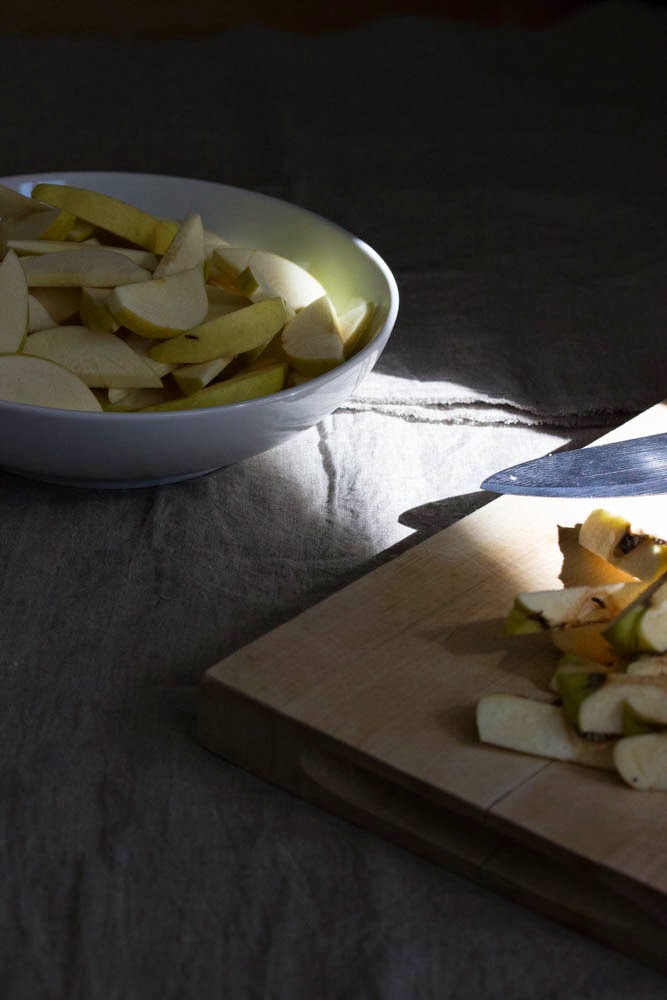
Was he thinking of taking out the rose water and gently sprinkling it, flicking it lightly with his fingers over the softening quince?  Did he look away as they blushed?  Was he thinking of stirring the cardamom into the labneh, and then stirring in some more because his eight-year-old thought it needed more?  Did he make his own labneh?  Was he thinking of layering it all in a flaky, buttery pie crust to be garnished with flecks of pistachios and ruby red jewels – pomegranate arils?  Did he offer a piece to his five-year-old only to be curtly and unequivocally rejected?  Was he thinking of saving and drying the quince seeds to use later as a hot tea to cure a nasty winter’s cough – just as his mother had instructed him to?  Did he watch with delight as his eight-year-old stepped right into the photo and scooped out the creamy labneh with a piece of quince?  Did he savor a piece all to himself with a cup of bergamot-infused black tea – only to have the moment interrupted by the everyday bickering of sisters?

What was he thinking?

POACHED QUINCE

Notes:

  • For this pie you need a fully baked and completely cooled pie shell.  I recommend an all butter crust – but use what you love.  Here are some links for tips and inspiration to make your own pie crust: Pamela Salzman video, Pie Crust 101, the kitchn, gluten free pie crust.  Please make sure your pie crust is completely cool before you fill it with the labneh.
  • If I’m using organic quince I don’t bother peeling them.  The peel becomes very soft as it cooks down.
  • Depending on their quality, quince can soften as they poach anywhere from 20 minutes to 1 1/2 hrs.  Sometimes they blush more than other times.
  • I don’t like to use too much of a sweetener either in my poached quince or in the labneh.  This pie is meant to be subtly sweet, you don’t want to overpower the natural fragrance and taste of the quince, rose water and spices.  Adjust sweetness to your own liking. If you are going to add more of a sweetener to the labneh I suggest skipping the maple syrup and using sugar.  You don’t want to thin out the labneh so much that it becomes too runny and loose for the pie.
  • You’ll have more quince than you need for this pie.  This is a good thing.  You can enjoy them over yogurt, over pancakes, or as is.  It’s a real treat!
  • You can use store-bought labneh or make you own. It’s really easy.
  • Once assembled, the pie can rest in the fridge for 30 minutes so the labneh can set before you cut into it. I was running out of light for the pictures above so I cut into it right away.  A little messy but still amazingly delicious.

Ingredients:

4 large quince, cored (and peeled if not organic)
1/2 a small lemon
1/3 cup organic cane sugar
water
1 tablespoon rose water

1 – Cut the quince in about 1/4 inch slices. (Save and dry the seeds for sore throats and coughs!)  You don’t want them so thinly sliced that as they cook down and soften they fall apart and become mushy. You want them to keep their shape.

2 – Place the sliced quince in a large heavy bottomed pot. Squeeze the lemon over the quince.  Add sugar and about 3 cups (or more) water.  Enough water to cover the quince. Gently stir to combine.  Bring to a very gentle boil so the sugar dissolves. Turn down the heat to medium-low, cover and gently simmer until the quince soften completely (but not become mushy).  Add the rose water in the final 10 minutes as they simmer.  Remove the quince and turn up the heat to slightly thicken the liquid.  Pour the liquid over the quince.  Allow to cool completely.

The quince will keep in the fridge for over a week or longer.

A QUINCE AND LABNEH PIE

Ingredients:

2 cups labneh
1/2 teaspoon cardamom
2 tablespoons grade A maple syrup, or sweetener of choice
1 teaspoon rose water
poached quince
1 9″ pie shell, fully baked and cooled
pomegranate seeds, as garnish
ground up pistachios, as garnish

1 – In a medium bowl combine the labneh, cardamom, maple syrup, and rose water. Pour the labneh mixture into the pie shell.  Smooth it over. Arrange the poached quince slices over the top.  Garnish with pomegranate seeds and ground up pistachios.  Serve right away or place in the fridge for 15-30 minutes for the labneh to set.

Will keep in the fridge for up to 3 days.

Stew

The Spice Cupboard – A Story of Love – A Yellow Split Pea and Persian Lime Stew – Khoresh Gheymeh

 ♪ MUSIC WE’RE COOKING TO ♪

Casually he lifts up his shirt.  Revealing cuts and bruises.  A skateboarding injury.  Meant to impress I think.  He keeps the shirt up for a beat longer than necessary.  Awkwardly lingering in the moment.  Electrifying and innocent all at the same time. As a young man in his early twenties – really, still a boy – is apt to do.

Casually I ask him if he needs an icepack. As I lean a shoulder into the very white wall of my new apartment.

Leaning into my new life.

Leaning into a new city they call Angels.

Leaning into the blue of his eyes.

Leaning into a new friend.

Pretending not to notice that he has held up his shirt just a little longer than necessary.

Pretending not to notice the social gathering of butterflies in my stomach. Pretending that it’s just hunger pangs.  As a young woman in her early twenties – really, still a girl – is apt to do.

I should make him a soup or maybe a khoresh – a stew – I think. The kind of stew that you long for when the weather starts to turn.  When a long forgotten chill taps on your window panes, and settles in for a good long stay.  Taking your breath away every time. The kind of stew that takes you by the waist and embraces you with warmth and doesn’t let go. The kind that heals cuts and bruises. The kind that calms the whisper of  butterflies.

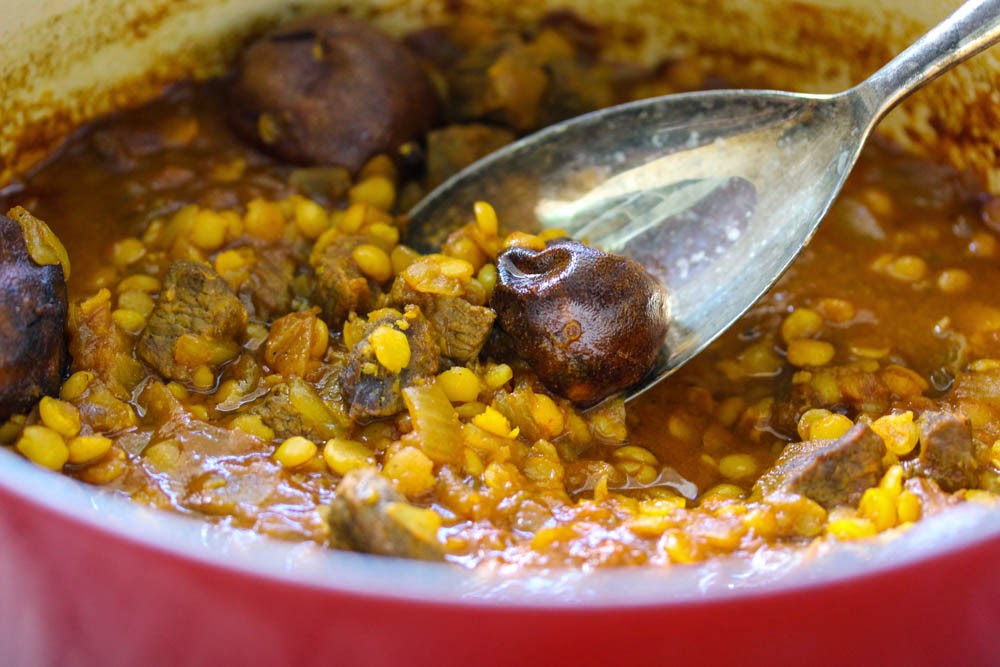
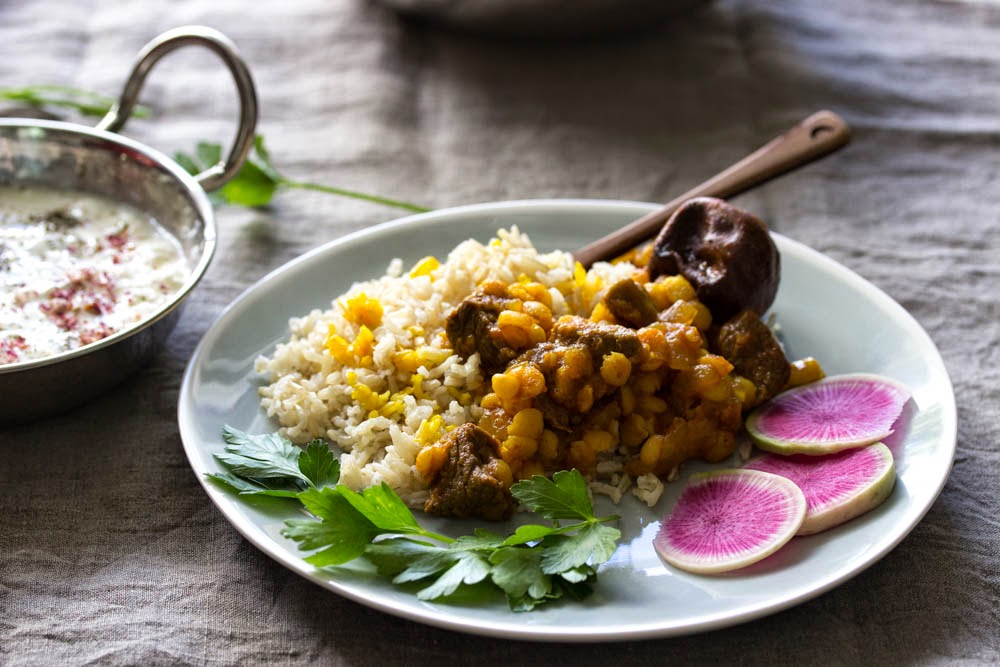
Khoresh Gheymeh is the ultimate late-fall/winter stew.  I recently had the opportunity to meet Yotam Ottolenghi at an event for his recent book Plenty More.  The conversation turned to Persian food and Mr. Ottolenghi remarked on how Persian food is really homemade cooking at its very best. I couldn’t agree more.  And this stew is a perfect example of such.  I like to make a big batch on a Sunday and hypnotize my family with its tantalizing aromas of faraway lands.  Khoresh Gheymeh is a hearty stew so I like to serve it with brown rice, a side of mast-o-khiar, and fresh herbs to balance out the whole meal.  What we don’t devour right away gets portioned out for school, work lunches and the freezer – when in a few weeks you can once again indulge yourself and your family to a fantastic and comforting mid-week meal.

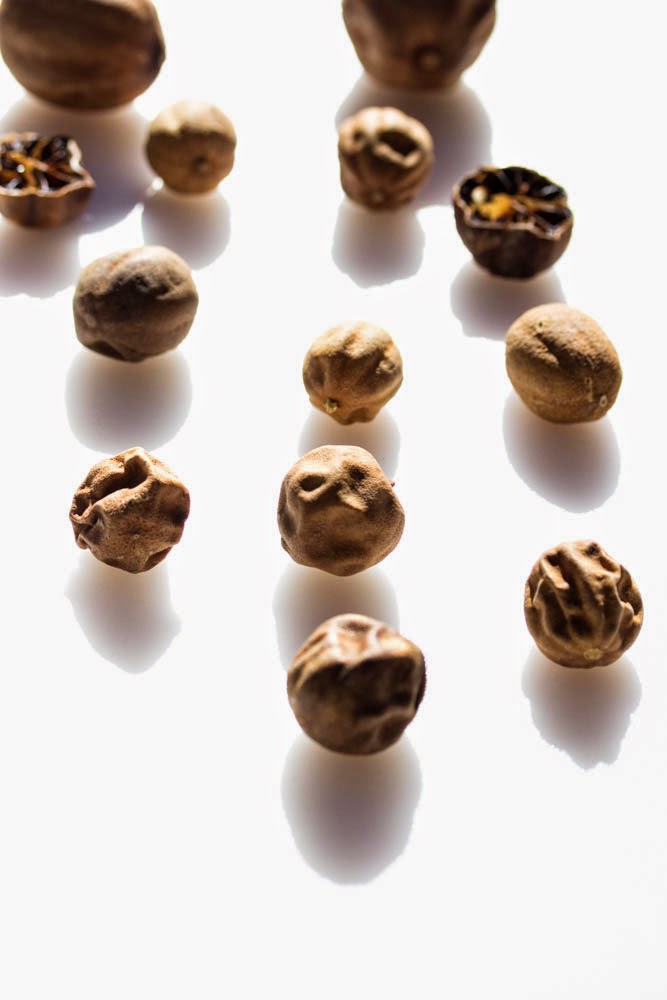
Typically this stew is made with beef or lamb, yellow split peas, advieh – Persian spice mix, limoo omani – Persian dried limes, and garnished with matchstick fried potatoes. I don’t cook with red meat often so when I do I try to use the best quality meat I can.  For this stew I like to use grass-fed eye of round stewing meat.  Like most stewing meats, this cut of beef requires the luxury of time to sit and braise.

I prefer to cook the yellow split peas separately because the cooking time of the peas can vary. What you are ultimately looking for are peas that are completely cooked through, maintaining their shape without turning mushy. I find the best way to ensure this is to par-cook the peas separately and finish cooking them off in the stew in the final twenty minutes or so.

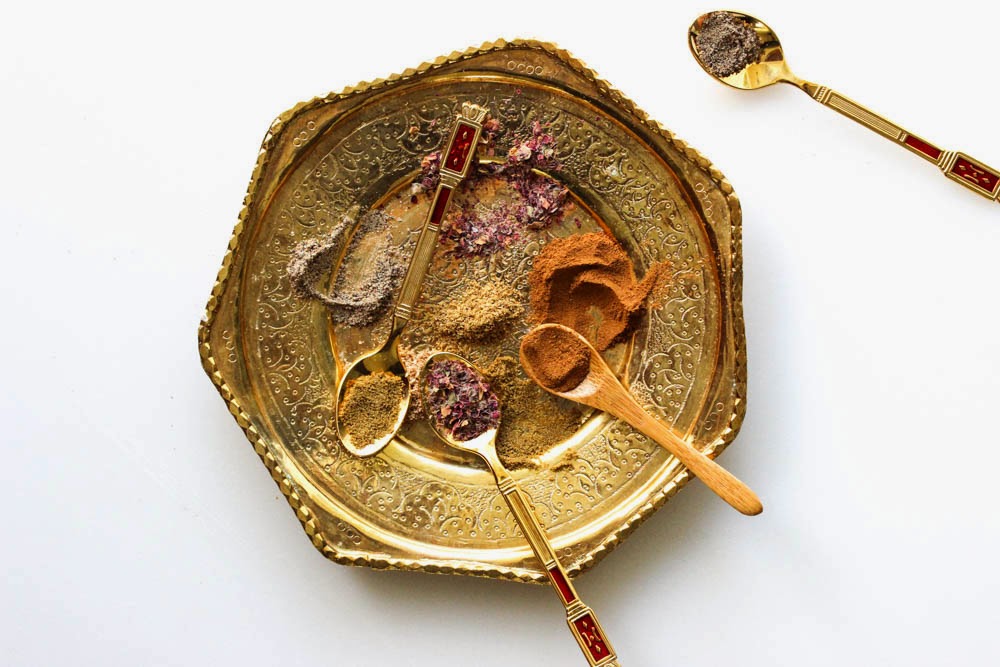
Advieh is a very fragrant and flavorful spice mix.  There are two types of advieh most commonly used.  One for rice dishes and one for stews and meats.  The spices used varies from region to region and home to home.  Common spices used in any combination can include turmeric, cinnamon, cardamom, nutmeg, rose petals, golpar, corriander, black pepper, cumin and ginger.  You can prepare a combination of these spices and store in a jar.  Keep in mind that a small amount of advieh goes a long way.

He places the paper bags on the 2-person glass patio table. Now serving as my indoor dining table.  He has come over to cook for me – some kind of pasta dish.  I’ve made us a couple of pies – as I was apt to do in those days. He starts pulling out all sorts of brand new Trader Joes spice jars – basil, oregano, thyme.  As he pulls out his salt shaker I can no longer contain it and break out into a giggle.  What he doesn’t know – yet-  is that what I may be lacking in furnishings, in wall decor, in plates, glasses and mugs – I more than make up for in my spice cupboard.

Saffron, turmeric, cinnamon, rose petals, cardamom, golpar, my advieh jar,  salt – my dear, dear, companions.

Well traveled mismatched glass jars. Tiny little Bonne Maman jam jars filled with my precious ground up saffron.  My own Maman’s handwriting forever etched on some of the jars – in Persian, English, some in Italian.  These spices and the jars that so humbly house them tell the story of our lives.

Limoo Omani is the secret ingredient that gives Khoresh Gheymeh its unmistakable unique tart flavor – a key flavor in Persian cooking.  Limoo Omani is a dried Persian lime and is quite often used whole or ground up in stews.  The flavor of Limoo Omani as it cooks down and softens up, releasing its juices is absolutely incredible.  This is where I could tell you to substitute fresh lime or lemon juice for the Limoo Omani.  But I won’t, because to really enjoy and appreciate Khoresh Gheymeh you need to use these flavorful and aromatic dried limes.  Limoo Omani can be found at Middle Eastern grocery stores or online.  You first need to very carefully puncture them (so as not to stab yourself!) in a couple of places with a sharp knife and then place them in the stew.  As they cook down you gently press down on them with the back of a wooden spoon to release their juices. I like to eat the Limoo Omani along with my stew.  But I will readily admit eating them whole is an acquired taste.

Khoresh Gheymeh is also famous for the delicious matchstick fries that garnish it.  When I prepare this dish at home I usually don’t make the fries – with apologies to all the traditionalists out there!  I find the stew in combination with the rice it is served with makes for a very hearty meal as is.  And doesn’t require the addition of another starchy food such as potatoes – and fried ones at that.  But…if you have me over and make me Khoresh Gheymeh with matchstick fries I will happily and enthusiastically accept!

The boy from all those years ago became a best friend, a lover, a confidante, a husband, a father.

He still makes me pasta dishes.

I still look forward to making him soups and stews.

His skateboard comes out every once in a while.  If only to trail the moon and the sun.  As they try to find balance in it all.  On their bikes.  In their lives.  He’s never far behind.  Tending to his daughters’ cuts and bruises.

My spice cupboard is now our spice cupboard.

Full of mismatched glass jars.

And he still mixes up the turmeric with the saffron.

ADVIEH KHORESH – PERSIAN SPICE MIX FOR STEWS

Notes:

  • Please be very careful when piercing the limoo Omani.  Work on a flat surface holding the dried limes firmly with one hand.  I like to use a sharp paring knife.  You just want a couple of punctures so the juices can release when they soften up in the stew.
  • Make a double batch of this stew.  It freezes really well and makes for a great mid-week meal. Adjust water when reheating.

Ingredients:

1/2 teaspoon dried ground rose petals
1/2 teaspoon cinnamon
1/4 teaspoon cardamom
1/4 teaspoon ground nutmeg
1/4 teaspoon cumin
1/8 teaspoon ground dried coriander

In a small bowl mix all spices together place in a small jar and use as needed.  This mix will make about 1 tablespoon.  Feel free to double if you’d like more on hand.

A YELLOW SPLIT PEA AND PERSIAN LIME STEW – KHORESH GHEYMEH

Ingredients:

Serves 4-6

3/4 cup yellow split peas, picked over and rinsed
water
3 tablespoons olive oil
1 large onion – chopped
1 pound stewing meat (preferably eye of round), cut into 1/2 inch cubes
salt
1/4 teaspoon pepper
1/2 teaspoon turmeric
1/2 teaspoon freshly grated ginger
1/4 cup tomato paste, mixed with 1/2 cup warm water
1/2 teaspoon advieh (Persian spice mix)
1/4 teaspoon ground saffron steeped in 2 tablespoons hot (not boiling) water
5 small limoo omani (Persian dried limes), pierced in a couple of spots
zest of 1 small orange
juice of 1/2 small orange

1- Place the yellow split peas in a small pot and cover with 2 cups water and 1 teaspoon salt.  Bring to a boil.  Turn down the heat to medium/low and partially cover.  Cook until the yellow split peas are al dente.  Not completely cooked through, softened but with a bite to them.  This can take anywhere between 15-30 minutes depending on the quality of your yellow split peas.  Set aside.

2-  Heat the olive oil in a large Dutch oven over medium heat.  Add the onion, meat, 1 teaspoon salt, turmeric and ginger.  Saute for about 6-8 minutes until onion softens (but doesn’t brown).  Add 1 3/4 cups water and bring to a very gentle boil.  Cover and simmer on low for 30-40 minutes.

3- Add the tomato paste/water mixture, advieh,  saffron water, limoo Omani, and the orange zest.  Stir to combine. Cover with the lid ajar and simmer on medium/low for 30-45 minutes.  Occasionally gently press down with the back of a wooden spoon on the limoo Omani so they release their juices into the stew.  Add the yellow split peas in the last 20 minutes of cooking. Taste for seasoning.  Add more salt if necessary. If the stew gets too thick add more water.  If you like it on the thicker side remove the lid and allow some of the water to evaporate.   Add the orange juice right before turning off the heat.   The stew is ready when the meat is very tender and the yellow split peas are cooked through but not mushy.

Serve over rice with a side of mast o khiar and sabzi khordan.  Will keep in the fridge for up to 3 days and freezes beautifully for up to 3 months.

Dinner

Lost Things – Jashneh Mehregan – A Broccoli Koo Koo

 ♪ Music we’re cooking to ♪

Mama, can you squeeze the clouds to make it rain? – Soleil

Step outside.

Plant your bare feet firmly in the grass.

Let your toes wander. Let them search and settle amongst the rough and dying blades.

What was once lush and green.  What was once childhood.  What was once a vibrant summer respectfully fading away and making room for a crisp and most welcome autumn breeze.

Lost.

Mehregan

Mehregan is an ancient Persian Autumn festival dating back thousands of years.  It was observed by Zoroastrians as a same day/name day feast.  The ancient Persian calendar was based on 30-day months.  Each day was given a name and 12 of those days were given the same name as the month.  Celebrations were held each month when the day name and month name corresponded.  The names of the months in the Persian calendar are dedications to a certain virtue or a particular divinity. The month of Mehr derives its name from and is a dedication to the Zoroastrian god Mithra – the divinity of the Sun, Light, Truth, Friendship and Justice.  The word mehr also means kindness, caring and compassion.  These virtues combined with the Autumn harvest are the basis for this much revered celebration – Jashneh Mehregan.  Mehregan is still celebrated by Persians around the globe.  Perhaps an ancient predecessor to Thanksgiving – we celebrate by gathering with friends and family, celebrating the harvest with a feast, and helping our planet and those in need with kindness, caring and compassion.

Reach up with one hand to shield your eyes.

Look straight up.  Remember to squint.

Come face to face with your second born’s namesake.

Look hard.  Squint even harder.

Not to be found.

Lost.

Broccoli Koo Koo

For some time now, broccoli has gone the way of quinoa around our house.  Both girls will happily eat it as a smooth velvety soup – but don’t even consider serving it lightly steamed drizzled with olive oil/lemon and salt, roasted or otherwise.  I myself am not one to ever shun any particular type of food – especially one so packed with goodness; but I too will readily admit that I have fallen into a broccoli rut.  So when my mom told me about her Broccoli Koo Koo I happily jumped at the chance to try it out and add my own twist to it.

Great and delicious things can come out of a good fridge clean-out, my mother having taught me.  This dish is a strong example of such.  It does not disappoint.  Just like my Fresh Herb Koo Koo – this egg-based dish (very similar to a frittata) is packed with nutrient-rich vegetables, nuts and spices.  I used an abundance of fresh herbs (cilantro), a whole head of broccoli, a carrot for texture and color, walnuts for crunch, barberries for a tangy pop, feta cheese, and fragrant spices.  The effort here is minimal, especially if you use a food processor to very finely chop up the broccoli and herbs.  The beauty of this Koo Koo is that it can be enjoyed as a satisfying breakfast/brunch, enveloped in some really nice crusty bread as a sandwich for lunch, an after school snack, or served alongside some rice with a side of mast-o-khiar for dinner. And no one will mind if you hit it with a dash of hot sauce, as Drew likes to.  It also makes for a beautiful side dish to serve for a Mehregan celebration or a Thanksgiving feast.

Tilt back your head.

Slightly arch your back and drop your arms gracefully to your sides.

Let your hair cascade down your back.

Close your eyes.

Part your lips.

Wait for it.

Wait for it.

Wait for the drip – drip – drip.

The cheek – cheek – cheek.  As you would say in your mother tongue.

Wonder how it would be pronounced in China.  In Iceland.  In Bolivia.

Wait for it.

Lost.

Your Anita Ekberg moment lost without the Trevi.  Without any fountains.  Without any water.

All the fountains have dried up.  And shut down.

A drought, they say.  One of the worst around these parts, they say.

She left us quite some time ago.

The rain.

She gave up on us, they say.

She packed her bags, turned her back and walked out the door.  She hasn’t been seen since around these parts.

She lost her way back, they say.

If you happen upon her, or if she happens upon you, tell her we’re waiting for her with open arms.

Waiting for her drip-drip-drip.

Her cheek-cheek-cheek.

Tell her we’ll be waiting with a Broccoli Koo Koo.

Tell her we’ll be waiting with Mehr.


I am very happy to have been invited to join a group of very talented Persian food bloggers from around the world in a cyber celebration of Mehregan.  Please make sure you check out all of their amazing and delicious work!

Ahu Eats: Badoom Sookhte Torsh | Sour Caramelized Almonds
All Kinds of Yum: Jeweled Carrot Salad
Cafe Leilee: Northern Iranian Pomegranate Garlic and Chicken Stew
Coco in the Kitchen: Zeytoon Parvardeh |Marinated Olives with Pomegranate & Walnuts
Della Cucina Povera: Ghormeh Sabzi | Persian Lamb & Herb Stew
Fae’s Twist & Tango: Rice Meatballs | Kufteh Berenji
Family Spice: Khoreshteh Kadoo | Butternut Squash Stew
Fig & Quince: Festive Persian Noodle Rice & Roasted Chicken Stuffed with Yummies for Mehregan
Honest and Tasty: Loobia Polo | Beef and Green Bean Rice
Lab Noon: Adas Polo Risotto | Persian Lentils Risotto
Lucid Food: Sambuseh 
Marjan Kamali: Persian Ice Cream with Rosewater and Saffron
My Caldron: Anaar-Daneh Mosamma | Pomegranate Stew 
My Persian Kitchen: Keshmesh Polow | Persian Raisin Rice
Noghlemey: Parsi Daal Rice Pie
Parisa’s Kitchen: Morasa Polow | Jeweled Rice
Persian Spice: Rice Meatballs
Sabzi:  Ash-e Mast | Yogurt Soup With Meatballs
The Saffron Tales: Khorosht-e Gheimeh | Yellow Lentils Stew
Simi’s Kitchen: Lita Turshisi | Torshi-e Liteh | Tangy aubergine pickle
Spice Spoon: Khoresht-e-bademjaan | Saffron-Scented Aubergine Stew
Turmeric & Saffron: Ash-a Haft Daneh | Seven Bean Soup
The Unmanly Chef: Baghali Polow ba Mahicheh | Rice with Fave Beans and Lamb Shank
ZoZoBaking: Masghati | Persian Scented Starch Fudge

Disclaimer: The blue spatula pictured in this post was kindly sent to me by Gir. We’ve really been digging their whole line of colorful silicone made spatulas and thought I’d pass it on.  All opinions are completely mine.


BROCCOLI KOO KOO

NOTES:

  • I made this Koo Koo in a 12″ cast iron pan which works great.  Alternately, you could also use a 10×15 baking dish as I did for the Fresh Herb Koo Koo .  Just saute the onion separately in a pan.
  • I highly recommend using a food processor to very finely chop up the broccoli and cilantro.  It saves a lot of time.
  • Barberries can be found at Middle Eastern grocery stores or online.  Read here for more on barberries and how to clean them.
  • If you are not a fan of feta cheese you can try subbing in any cheese you like.  Goat cheese would be nice too.
  • Some of the ingredients listed as “optional” are optional but highly recommended!  Unless, of course if you have dietary restrictions.

Ingredients

Serves 6-8

1/3 cup olive oil, plus 4 tablespoons
1 onion, finely chopped
1 teaspoon dried mint
1 large broccoli (florets and stems), about 1 pound
2 bunches cilantro
1 large carrot, grated
zest of 1 lemon, grated
1/2 teaspoon turmeric
1 teaspoon salt
1/4 teaspoon ground black pepper
1 tablespoon all-purpose flour
1/3 cup walnuts, roughly chopped (optional)
1/3 cup dried barberries, soaked, rinsed and dried (optional)
1/2 cup crumbled feta cheese (optional)
6 large eggs

Preheat oven to 350 degrees F with oven rack set in the middle position.

1- Heat 2 tablespoons olive oil in a 12″ cast iron pan over medium heat.  Add the onion, sprinkle a little salt and saute until it softens, 6-8 minutes.  Stir in the mint and immediately turn off the heat.  Transfer onion to a bowl and allow to cool.  Don’t wash your pan, you’ll be using it shortly.

2- Roughly chop up the broccoli, florets and stems.  I like to first trim off the tough outer layer of the stem (which you can save and use later for stock). Put the broccoli in a food processor and pulse until very finely chopped.  It should have a flour-like consistency.  But not mushy.  Do this in batches if necessary.  Place in a large mixing bowl.

3-Run your knife through the cilantro and place in the food processor. I trim a couple of inches off the stems (save and use for stock!) and then use the whole cilantro.  Pulse until you have a very fine chop.  Place in the mixing bowl.

4- Add the sauteed onion and all the remaining ingredients except for the eggs to the bowl.  Mix to combine.  In a separate small bowl lightly whisk the eggs and add to the broccoli mixture.  The mixture should have the consistency of thick yogurt.  Not too dry but not too loose either.

5- Pour 1/3 cup olive oil in the pan, swirling it around to make sure the pan is well coated.  Pour the mixture into the pan and spread evenly.  Bake in the oven for 30 minutes.

6- Take the pan out.  The Koo Koo should have set.  Cut the Koo Koo in eight equal portions and drizzle the remaining 2 tablespoons olive oil in between the cuts.  Place back in the oven for another 15 minutes.  At this point you can place the pan under the broiler for 3-5 minutes for a golden surface. Make sure it doesn’t burn.

Serve warm or at room temperature.  Enjoy with a dollop of yogurt, or a dash of hot sauce.  It’s fantastic served as is, in a sandwich, or alongside some rice or grain of choice.

Will keep in the fridge for up to 3 days and freezes really well for up to 3 months.  Just make sure to cover it well when freezing.