Category / Stew

Stew

The Spice Cupboard – A Story of Love – A Yellow Split Pea and Persian Lime Stew – Khoresh Gheymeh

 ♪ MUSIC WE’RE COOKING TO ♪

Casually he lifts up his shirt.  Revealing cuts and bruises.  A skateboarding injury.  Meant to impress I think.  He keeps the shirt up for a beat longer than necessary.  Awkwardly lingering in the moment.  Electrifying and innocent all at the same time. As a young man in his early twenties – really, still a boy – is apt to do.

Casually I ask him if he needs an icepack. As I lean a shoulder into the very white wall of my new apartment.

Leaning into my new life.

Leaning into a new city they call Angels.

Leaning into the blue of his eyes.

Leaning into a new friend.

Pretending not to notice that he has held up his shirt just a little longer than necessary.

Pretending not to notice the social gathering of butterflies in my stomach. Pretending that it’s just hunger pangs.  As a young woman in her early twenties – really, still a girl – is apt to do.

I should make him a soup or maybe a khoresh – a stew – I think. The kind of stew that you long for when the weather starts to turn.  When a long forgotten chill taps on your window panes, and settles in for a good long stay.  Taking your breath away every time. The kind of stew that takes you by the waist and embraces you with warmth and doesn’t let go. The kind that heals cuts and bruises. The kind that calms the whisper of  butterflies.

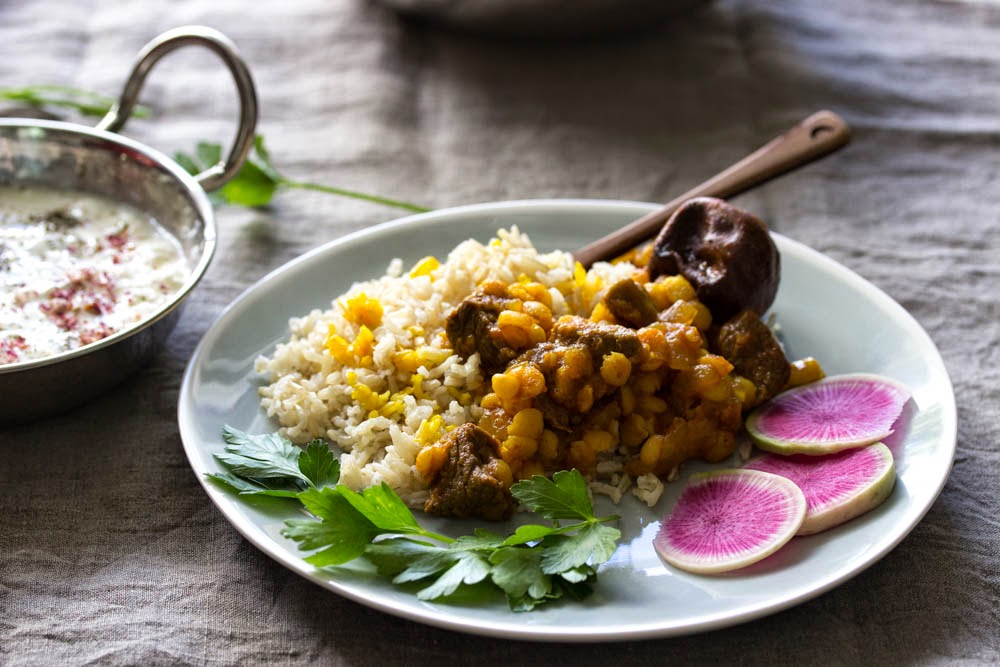
Khoresh Gheymeh is the ultimate late-fall/winter stew.  I recently had the opportunity to meet Yotam Ottolenghi at an event for his recent book Plenty More.  The conversation turned to Persian food and Mr. Ottolenghi remarked on how Persian food is really homemade cooking at its very best. I couldn’t agree more.  And this stew is a perfect example of such.  I like to make a big batch on a Sunday and hypnotize my family with its tantalizing aromas of faraway lands.  Khoresh Gheymeh is a hearty stew so I like to serve it with brown rice, a side of mast-o-khiar, and fresh herbs to balance out the whole meal.  What we don’t devour right away gets portioned out for school, work lunches and the freezer – when in a few weeks you can once again indulge yourself and your family to a fantastic and comforting mid-week meal.

Typically this stew is made with beef or lamb, yellow split peas, advieh – Persian spice mix, limoo omani – Persian dried limes, and garnished with matchstick fried potatoes. I don’t cook with red meat often so when I do I try to use the best quality meat I can.  For this stew I like to use grass-fed eye of round stewing meat.  Like most stewing meats, this cut of beef requires the luxury of time to sit and braise.

I prefer to cook the yellow split peas separately because the cooking time of the peas can vary. What you are ultimately looking for are peas that are completely cooked through, maintaining their shape without turning mushy. I find the best way to ensure this is to par-cook the peas separately and finish cooking them off in the stew in the final twenty minutes or so.

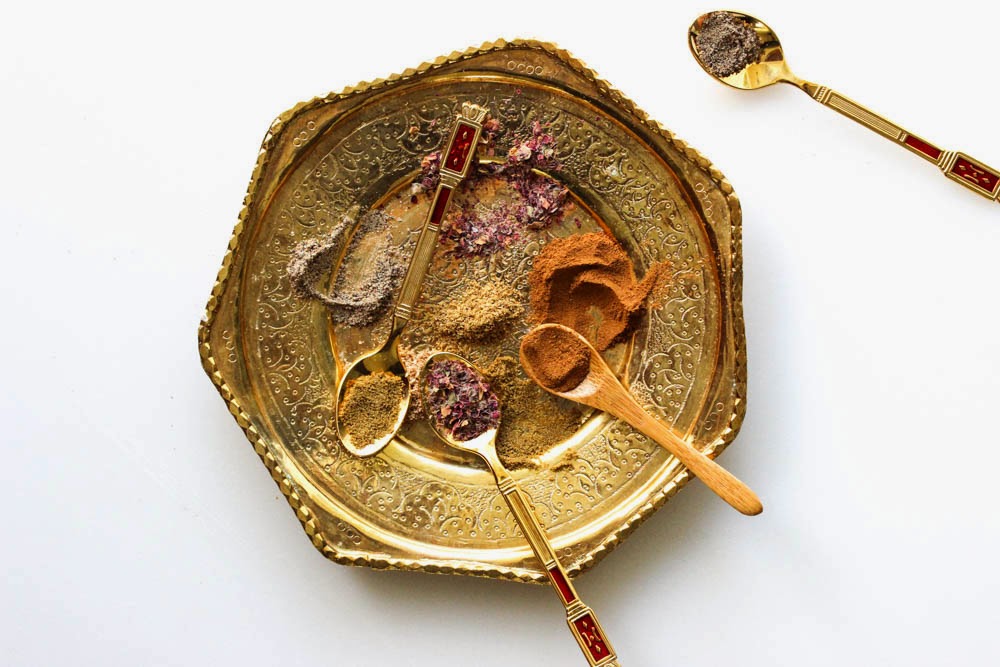
Advieh is a very fragrant and flavorful spice mix.  There are two types of advieh most commonly used.  One for rice dishes and one for stews and meats.  The spices used varies from region to region and home to home.  Common spices used in any combination can include turmeric, cinnamon, cardamom, nutmeg, rose petals, golpar, corriander, black pepper, cumin and ginger.  You can prepare a combination of these spices and store in a jar.  Keep in mind that a small amount of advieh goes a long way.
He places the paper bags on the 2-person glass patio table. Now serving as my indoor dining table.  He has come over to cook for me – some kind of pasta dish.  I’ve made us a couple of pies – as I was apt to do in those days. He starts pulling out all sorts of brand new Trader Joes spice jars – basil, oregano, thyme.  As he pulls out his salt shaker I can no longer contain it and break out into a giggle.  What he doesn’t know – yet-  is that what I may be lacking in furnishings, in wall decor, in plates, glasses and mugs – I more than make up for in my spice cupboard.

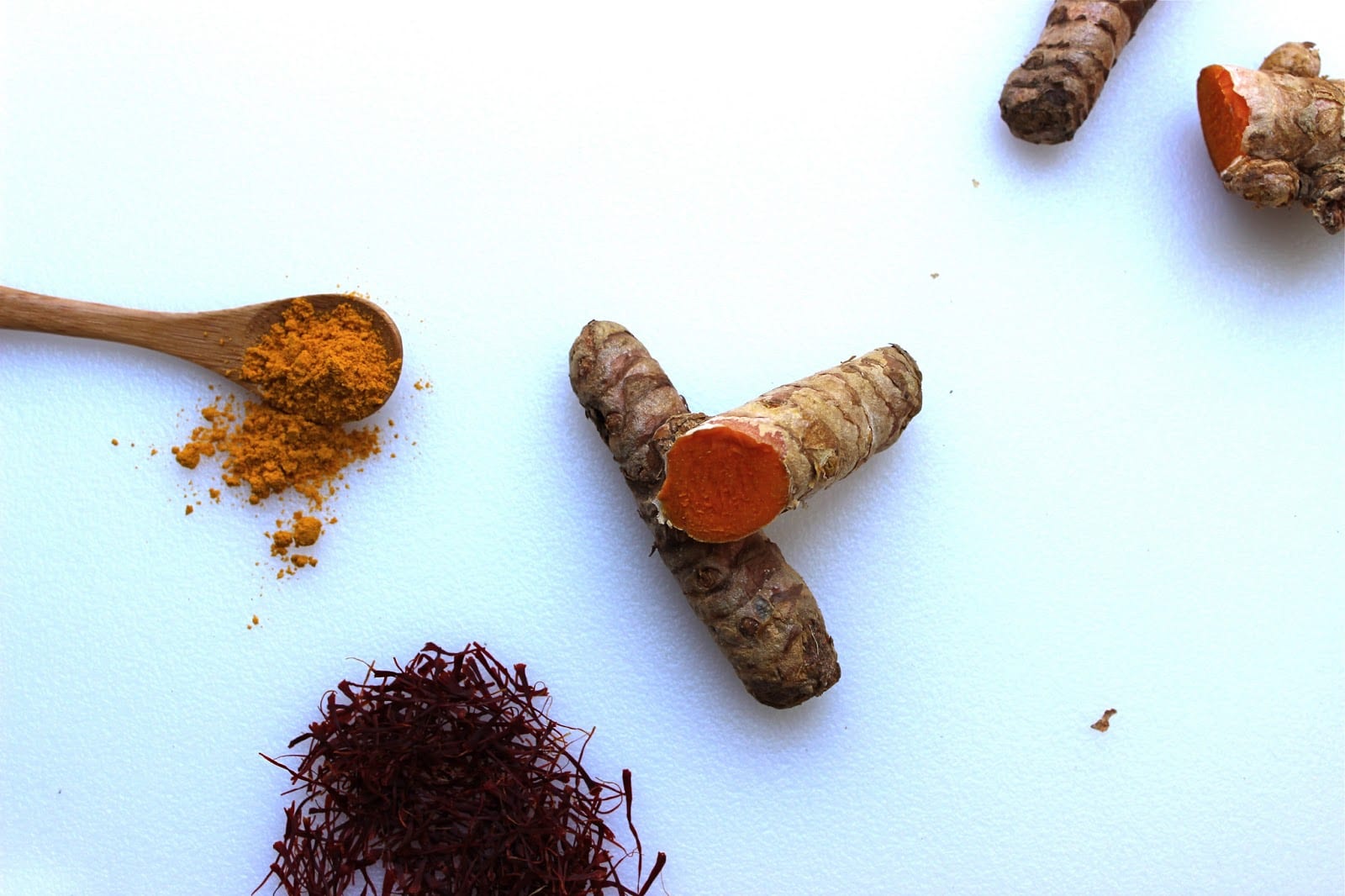
Saffron, turmeric, cinnamon, rose petals, cardamom, golpar, my advieh jar,  salt – my dear, dear, companions.

Well traveled mismatched glass jars. Tiny little Bonne Maman jam jars filled with my precious ground up saffron.  My own Maman’s handwriting forever etched on some of the jars – in Persian, English, some in Italian.  These spices and the jars that so humbly house them tell the story of our lives.
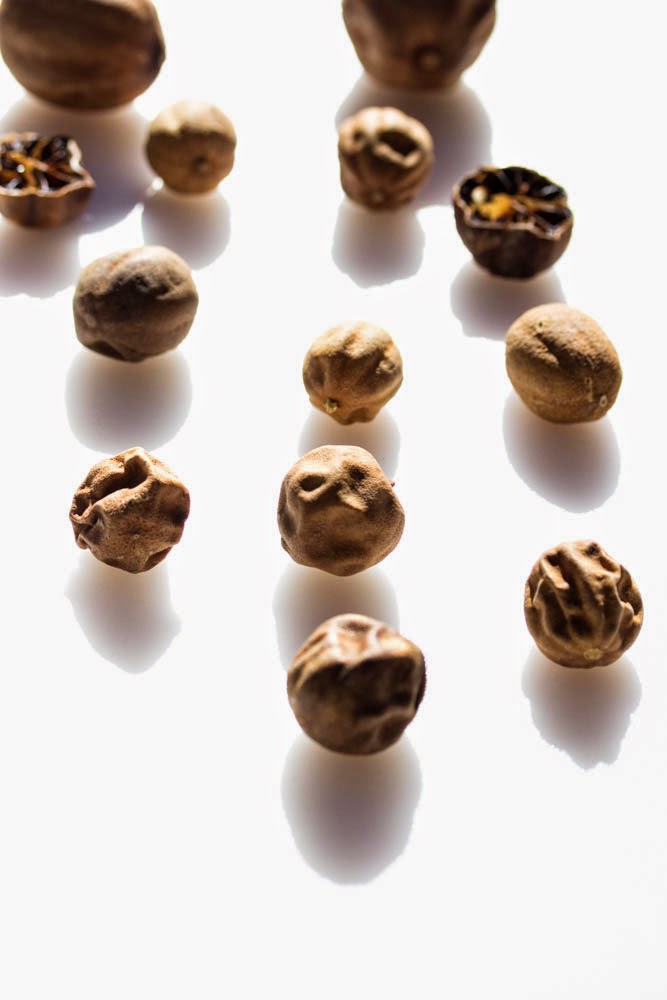
Limoo Omani is the secret ingredient that gives Khoresh Gheymeh its unmistakable unique tart flavor – a key flavor in Persian cooking.  Limoo Omani is a dried Persian lime and is quite often used whole or ground up in stews.  The flavor of Limoo Omani as it cooks down and softens up, releasing its juices is absolutely incredible.  This is where I could tell you to substitute fresh lime or lemon juice for the Limoo Omani.  But I won’t, because to really enjoy and appreciate Khoresh Gheymeh you need to use these flavorful and aromatic dried limes.  Limoo Omani can be found at Middle Eastern grocery stores or online.  You first need to very carefully puncture them (so as not to stab yourself!) in a couple of places with a sharp knife and then place them in the stew.  As they cook down you gently press down on them with the back of a wooden spoon to release their juices. I like to eat the Limoo Omani along with my stew.  But I will readily admit eating them whole is an acquired taste.

Khoresh Gheymeh is also famous for the delicious matchstick fries that garnish it.  When I prepare this dish at home I usually don’t make the fries – with apologies to all the traditionalists out there!  I find the stew in combination with the rice it is served with makes for a very hearty meal as is.  And doesn’t require the addition of another starchy food such as potatoes – and fried ones at that.  But…if you have me over and make me Khoresh Gheymeh with matchstick fries I will happily and enthusiastically accept!
The boy from all those years ago became a best friend, a lover, a confidante, a husband, a father.

He still makes me pasta dishes.

I still look forward to making him soups and stews.

His skateboard comes out every once in a while.  If only to trail the moon and the sun.  As they try to find balance in it all.  On their bikes.  In their lives.  He’s never far behind.  Tending to his daughters’ cuts and bruises.

My spice cupboard is now our spice cupboard.

Full of mismatched glass jars.

And he still mixes up the turmeric with the saffron.

ADVIEH KHORESH – PERSIAN SPICE MIX FOR STEWS

Notes:

  • Please be very careful when piercing the limoo Omani.  Work on a flat surface holding the dried limes firmly with one hand.  I like to use a sharp paring knife.  You just want a couple of punctures so the juices can release when they soften up in the stew.
  • Make a double batch of this stew.  It freezes really well and makes for a great mid-week meal. Adjust water when reheating.

Ingredients:

1/2 teaspoon dried ground rose petals
1/2 teaspoon cinnamon
1/4 teaspoon cardamom
1/4 teaspoon ground nutmeg
1/4 teaspoon cumin
1/8 teaspoon ground dried coriander

In a small bowl mix all spices together place in a small jar and use as needed.  This mix will make about 1 tablespoon.  Feel free to double if you’d like more on hand.

A YELLOW SPLIT PEA AND PERSIAN LIME STEW – KHORESH GHEYMEH

Ingredients:

Serves 4-6

3/4 cup yellow split peas, picked over and rinsed
water
3 tablespoons olive oil
1 large onion – chopped
1 pound stewing meat (preferably eye of round), cut into 1/2 inch cubes
salt
1/4 teaspoon pepper
1/2 teaspoon turmeric
1/2 teaspoon freshly grated ginger
1/4 cup tomato paste, mixed with 1/2 cup warm water
1/2 teaspoon advieh (Persian spice mix)
1/4 teaspoon ground saffron steeped in 2 tablespoons hot (not boiling) water
5 small limoo omani (Persian dried limes), pierced in a couple of spots
zest of 1 small orange
juice of 1/2 small orange

1- Place the yellow split peas in a small pot and cover with 2 cups water and 1 teaspoon salt.  Bring to a boil.  Turn down the heat to medium/low and partially cover.  Cook until the yellow split peas are al dente.  Not completely cooked through, softened but with a bite to them.  This can take anywhere between 15-30 minutes depending on the quality of your yellow split peas.  Set aside.

2-  Heat the olive oil in a large Dutch oven over medium heat.  Add the onion, meat, 1 teaspoon salt, turmeric and ginger.  Saute for about 6-8 minutes until onion softens (but doesn’t brown).  Add 1 3/4 cups water and bring to a very gentle boil.  Cover and simmer on low for 30-40 minutes.

3- Add the tomato paste/water mixture, advieh,  saffron water, limoo Omani, and the orange zest.  Stir to combine. Cover with the lid ajar and simmer on medium/low for 30-45 minutes.  Occasionally gently press down with the back of a wooden spoon on the limoo Omani so they release their juices into the stew.  Add the yellow split peas in the last 20 minutes of cooking. Taste for seasoning.  Add more salt if necessary. If the stew gets too thick add more water.  If you like it on the thicker side remove the lid and allow some of the water to evaporate.   Add the orange juice right before turning off the heat.   The stew is ready when the meat is very tender and the yellow split peas are cooked through but not mushy.

Serve over rice with a side of mast o khiar and sabzi khordan.  Will keep in the fridge for up to 3 days and freezes beautifully for up to 3 months.
Dinner Stew

An Artichoke, Mushroom, and Sour Green Plum Stew – Khoresh Kangar-E-Farangi Ba Gojeh Sabz – An Official Dinner Invitation

 ♪ MUSIC WE’RE COOKING TO ♪

Mama!  The radio just said Air Force One landed at LAX.  Can the President come over for dinner?  Please?!

What’s Air Force One, Luna?

Air Force One is the President’s airplane, Soleil.  And he’s here!  If Mama says it’s ok then he can come over for dinner.  Can he Mama?  Please?!  You could make Polo with Tahdig.  I bet he would love it.  Let’s call him.  Mama please!!.

How do you know so much things, Luna?

Well, I’m a first-grader, Soleil.  First-graders know a lot.  And I’m going to be the president when I grow up.  And a pop-star.  First I’ll be a pop-star, then I’ll go to space and then I’ll be president.  If you want – when I’m president I can make you mayor or one of those people in a cabinet.

I don’t want to be mayor or a cabinet.  I’m going to be a mommy and a teacher when I grow up.

Isn’t it strange, Soleil – there haven’t been any girl presidents.  Like – at – all. How come, Mama?

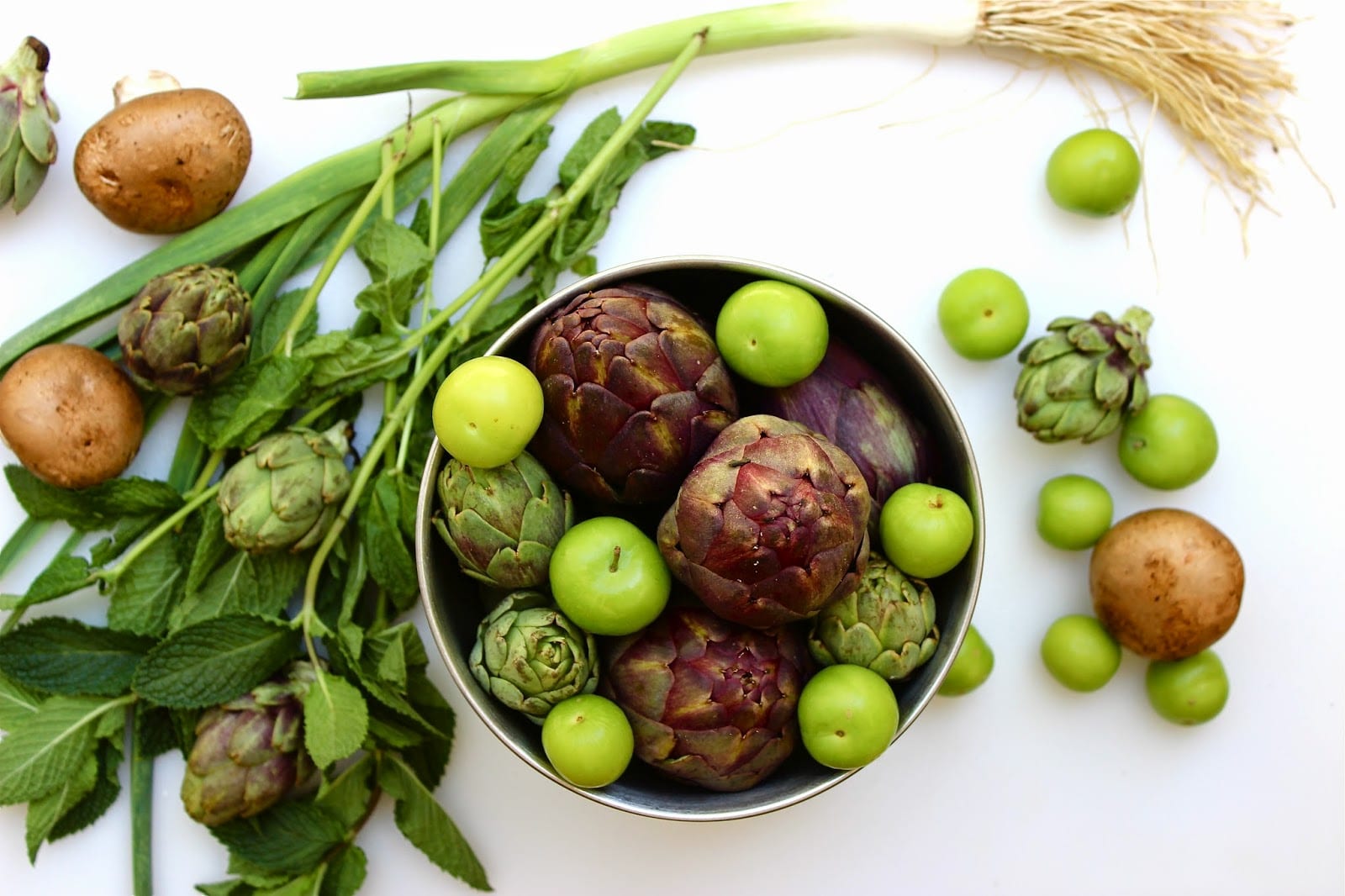
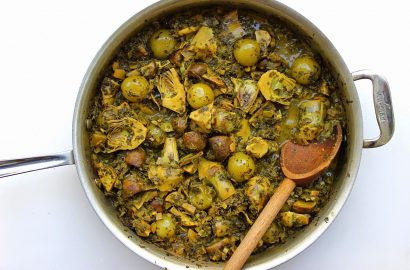
Food serendipity.  Or more like a food puzzle.  Sometimes that’s how a meal comes to life around here.  On this particular day it started with a bunch of fragrant mint we got from the overflowing garden at Soleil’s preschool.  The next piece easily fell into place with our farm box delivery: parsley, spinach, spring garlic.  Followed with a visit to the Farmers Market:  baskets upon baskets of baby artichokes.  A quick stop at the Persian grocery store and the fate of this evolving puzzle was sealed: sour green plums – gojeh sabz.  A Spring Stew.

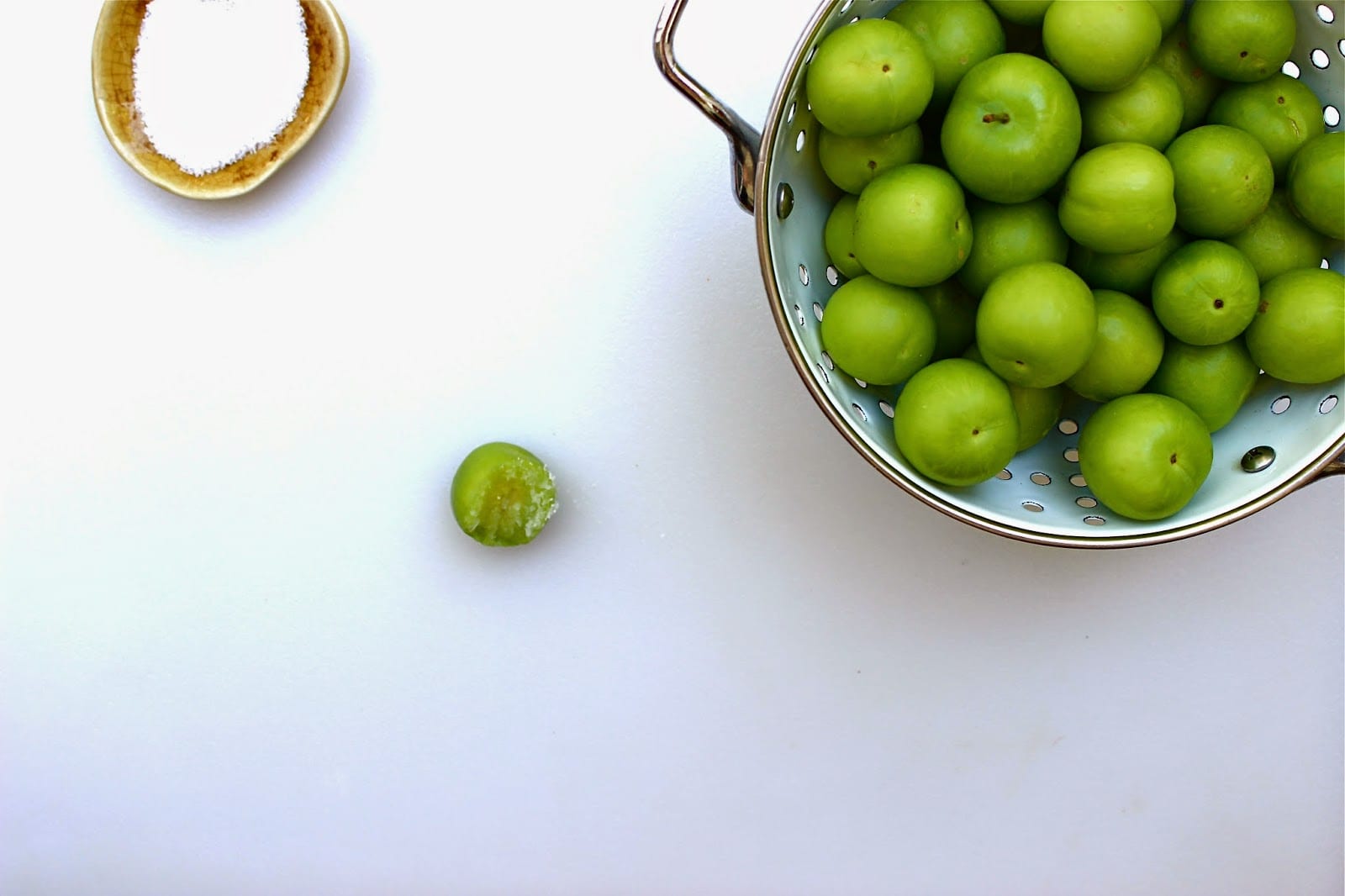
Sour Green Plums – Gojeh Sabz

A sour green plum – also referred to as a green cherry plum – is essentially a plum that’s not yet ripe.  Biting into one of these is a delightful explosion of crunchy sourness, making this a highly coveted and sought-after fruit.  Typically it’s consumed raw as a snack – just as it is – with a pinch of salt. Take a bite – sprinkle some salt on it – take another glorious bite of spring – repeat process.  Try not to over-consume.  As a child, there was nothing better than to be greeted with a bowlful of Gojeh Sabz after school. Gojeh Sabz is also used in stews or also preserved to make a pickle.  Persians have an affinity for anything sour.  Which is why you will often find something sour or acidic added to a dish, not only to brighten up all the flavors but also to balance out the salt and sweet.  To bring all the flavors to life.  As the Gojeh Sabz slowly simmer away in this stew they soften up and release their tart juice.  I also think they add a nice visual texture to the stew.  Just be mindful of the pit.  If you can’t get your hands on sour plums you can always compensate by increasing the amount of lemon or lime juice used in the stew.  Sour green plums are only available for a very brief period in the spring time – before the plums ripen up. They can be found at Persian markets between April and May.  Make sure you ask for them as sometimes they are kept behind the cash register – in view but not within reach – as they were at my market.  They are a hot commodity!  I also spoke with a farmer at the Santa Monica Farmers Market and he said he’ll be bringing in sour plums in the next couple of weeks.  Worth asking around and keeping an eye out for them at farmers markets and Middle Eastern grocery stores.

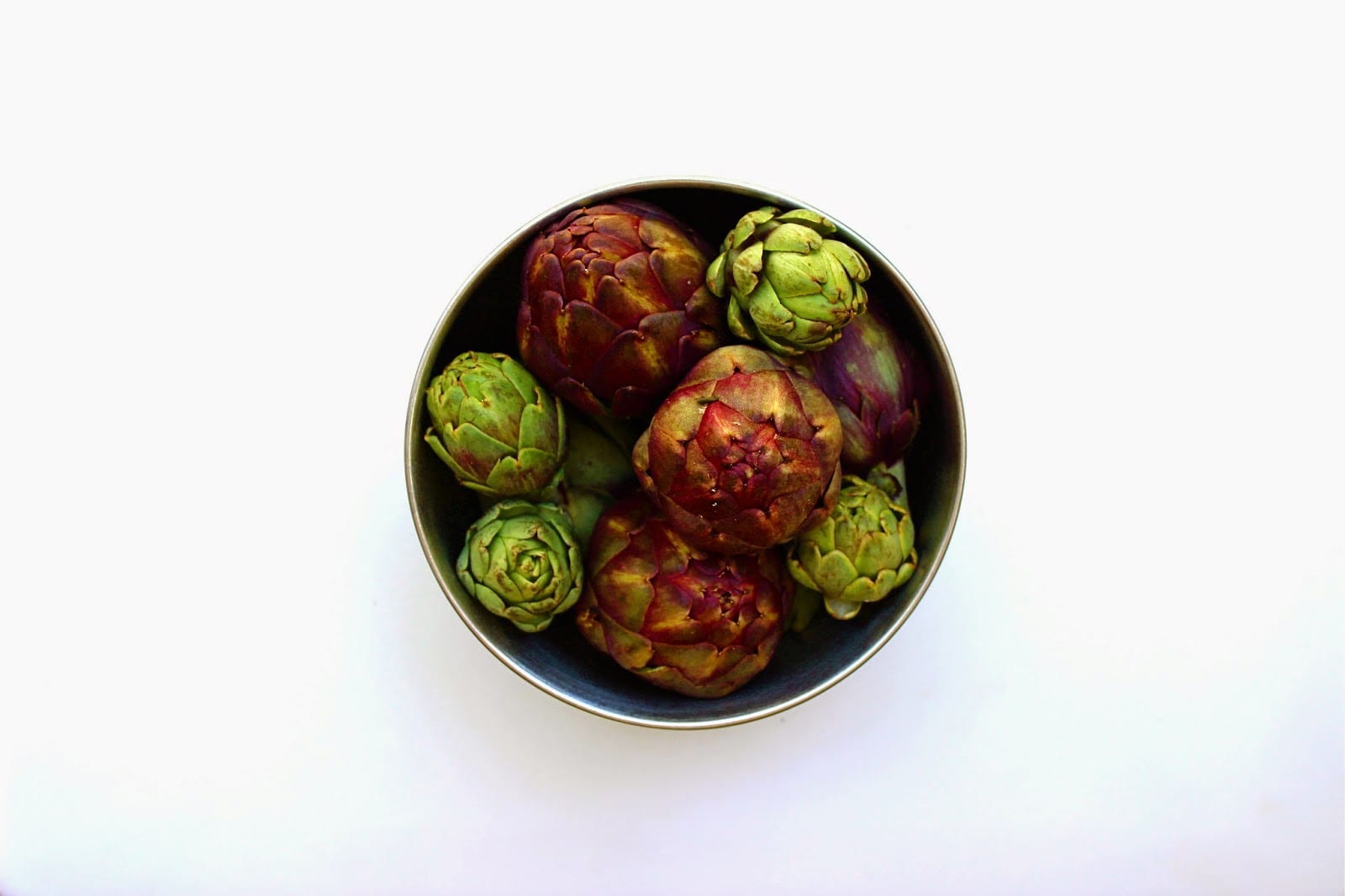
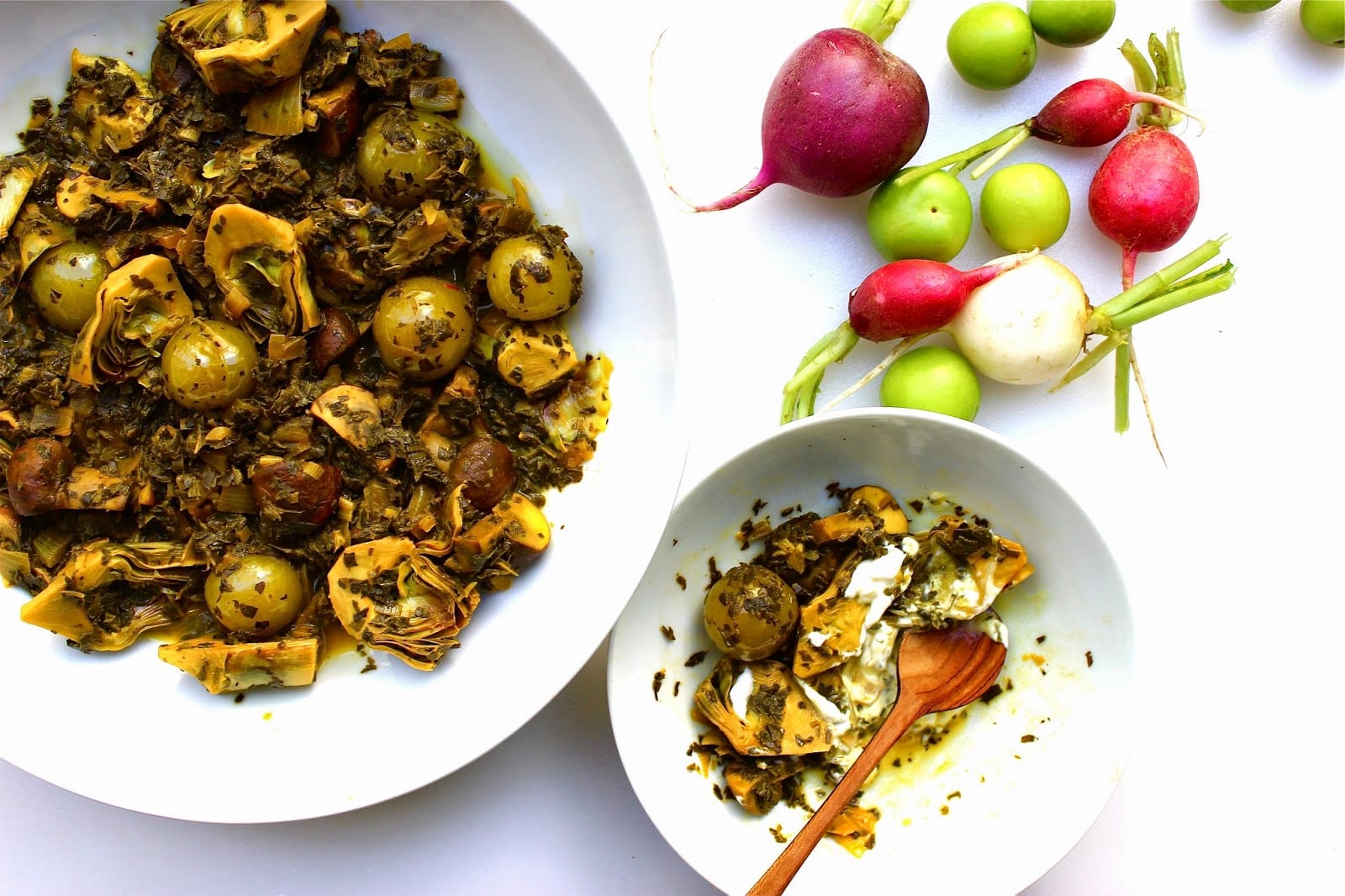
The Persian word for artichoke is Kangar-e-Farangi, which translates to foreign or European cardoon.  In our house we use either their Italian name – carciofi or their French name – artichaut.  Semantics.  Artichokes are very popular in our house.  Luna often claims two whole globe artichokes all to herself.  I was smitten by the baby artichokes at the market and knew they would make a perfect companion to the tart sour plums, the chopped up greens, and the meaty mushrooms in this stew.  But here’s the thing – prepping artichokes (much like shelling 4lbs of fava beans) – paring them down to the heart for a stew like this – takes some time and loving dedication.  And certainly not a job for a weekday.  But if you have the time or if you have little helpers that can assist in peeling away the outer leaves then it is well worth it – otherwise feel free to use frozen artichoke hearts.  They work great as well.   As in so many Persian stews, the greens are a necessity here.  Not only for flavor but also because the parsley and mint aid in offsetting the indigestion (read flatulence) that can occur with the use of the sour green plums and artichokes.  Just keep in mind that mint can burn very quickly and too much of it can turn the dish bitter.  This Artichoke and Sour Green Plum Stew is fantastic served over rice of course.  But I also like to serve it spooned over some crusty bread with a dollop of creme fraiche or Greek yogurt.  I’ve also reheated leftovers with a couple of eggs cracked over it for a quick and delicious lunch.

Dear Mr. President,
This is a long shot, I know.  But as the official Social Secretary to a certain seven-year-old I feel obliged to carry through her request (it has actually grown into a fever pitch command) to invite you and your family over to dinner next time you land at LAX.  Stopping by our house might actually be of assistance to you.  For reasons out of your control I’m sure – what with layovers, flight availability, weather delays, flight cancellations – you seem to have a penchant for braving the streets of our fair city at 6pm.  I understand – it cannot be helped.  But you see Sir, everyone and I mean EVERYONE is in their car and on the streets in Los Angeles at 6pm.  So it might not be such a bad idea to avoid this sea of humanity and machinery and join us for some Polo and Tahdig.  I’ll bet anything Polo and Tahdig will not be served at the dinner party you are scheduled to attend.  It is also my understanding that you do not enjoy beets.  Neither does my four-year-old.  Beets shall not be served.  With the weather warming up we can also grill some kababs to go along with the rice and enjoy it all with a side of Artichoke and Sour Green Plum Stew.  Not sure what your position is  where artichokes or sour green plums are concerned.  On this side – the seven-year-old loves it – the four-year-old not so much.  Much to discern, much to discuss.
Thank you for considering this invitation.
Yours Truly, A Mom

OK Luna I emailed The President inviting him over to dinner.

Mama – you should have called him.


ARTICHOKE, MUSHROOM AND SOUR GREEN PLUM STEW – KHORESH KANGAR-E-FARANGI BA GOJEH SABZ

*There are many resources online with step-by-step instruction on how to prepare artichokes.  Here are a couple: Food52 and theKitchn Keep in mind that the choke (the fuzzy stuff in the middle of the heart) is not fully developed in a baby artichoke so you can skip that part if using baby artichoke.  I also found it helpful to have all my other ingredients prepped before I started prepping the artichokes.  Because you want to get those hearts in the pan as quickly as possible so they don’t brown and oxidize.

** If you can’t find sour green plums just increase the lemon juice to taste.

Ingredients:

Serves 6

2 tablespoons olive oil
1 medium onion, chopped
1 spring garlic (green parts too) or 3 garlic cloves, chopped
1/2 lb cremini mushrooms, halved or quartered depending on size
*2 lbs baby artichokes, pared down to the heart, or 1 package frozen artichoke hearts, thawed
salt
pepper
1/2 teaspoon turmeric
2 cups chopped parsley (I used about 2 small bunches)
1/2 cup chopped fresh mint (I used about half a small bunch), or 2 tablespoons dried mint
1 cup chopped spinach (I used about half a large bunch)
1/4 teaspoon ground saffron steeped in 4 tablespoons hot water
2-4 tablespoons lemon juice, plus more to taste (have about 4 lemons ready to use both for the stew and for prepping the artichokes)
**14 sour green plums
water

1- Heat olive oil over medium heat in a large saute pan .  Add onion and saute until tender about 8 minutes.  Add the garlic and cook for 2-4 minutes.

2- Add the mushrooms and cook for about 5 minutes until they release all their liquid.  Drain the artichoke hearts (if using fresh ones that have been soaking in acidulated water) and add to the pan.  Add turmeric and season with salt and pepper.  Stir to combine and  saute for about 4 minutes.  Add the parsley, mint and spinach.  Give a quick stir to combine.  Add the saffron water, 2 tablespoons lemon juice (4 tablespoons if not using sour green plums), sour green plums, 1 1/2 teaspoons salt and 2 cups water.  Bring to a gentle boil.  Put lid on slightly ajar and turn down heat to medium-low.  Simmer gently for 20-25 minutes.

3- Adjust seasoning and lemon juice to taste. I added another 1/2 teaspoon salt and another 2 tablespoons lemon juice.  If there is not enough liquid add more water, if there is too much liquid remove lid and allow the liquid to evaporate to liking.  Simmer for about another 10-15 minutes until artichoke hearts are tender and sour green plums have softened (but not mushy!) and released their juices.

Serve over rice or grain of choice with a dollop of creme fraiche or Greek yogurt.  Also fantastic spooned over crusty bread.  Remind friends and guests (and children!) that sour plums have pits in them.

Will keep in the fridge for up to 3 days.

Stew Uncategorized

A Music Education and a Pomegranate and Walnut Stew – Khoresh Fesenjan

George Michael and Andrew Ridgely.  They dreamily look deep into my soul – unearthing every little secret and thought as I flop on my bed – chin resting on hands looking even  deeper into their souls – the intensity of my stare almost burning a hole in the album cover – held inches from my nose.  I fancy myself Andrew’s best bud and the next Mrs. George Michael.

Well – we all know how that all turned out.  But that’s what you do when you’re twelve and a mad fan of Wham!.

Losing myself in a selfie slow-dance to the heartbreak that is Careless Whisper – and always ending with a big finale of me forgiving George (this one time) for his cheating ways – a radically different sound pounds through my bedroom floor knocking me off my feet and leaving the Careless Whisper sax solo whimpering in the dust.  My brother’s music.

Hands on hips, an I-mean-business glare in my eyes, and ready to confront the injustice that has been assailed upon me and George (the same look I now spot in Soleil to much hilarity) – I storm down the stairs ready to unleash all my pre-teen angst on my older brother.  But halfway down I stop, and the fumes rising out of me slowly fizzle out.  For days afterward I sneak halfway down to the basement, take a seat on the stairs and listen to this sound that is planets away from anything I have heard before.  But you can sneak around secretly enjoying your older brother’s music for only so long before you’re caught.

He doesn’t tell me to take a hike, or embarrass me, or make me feel like a silly little WHAM!-loving twelve-year-old that I am.  Instead he invites me in – passionately sharing with me this new world of music.  Excitedly he rattles off facts – stories – one thought quickly leading to another – faster than I can keep up – as is his way to this day.  We listen through his entire record collection – the MOD/PUNK/”alternative music”/SKA canon. The Jam – Dead Kennedys – The Cramps – Madness – The Specials – Bahaus – The Smiths – Style Council – The Clash – The Stranglers – Talking Heads – The Who – Velvet Underground….

Weekends become about trips downtown to Odyssey Imports on Granville Street (before Granville Street became the tourist hub that it is now) to check out the latest import releases out of the UK.  When there was a distinct rivalry between the music coming from the UK vs the US.  When the freshly mohawked punk rockers had claimed the front entrance to Eatons as theirs and theirs alone.  All frightening and exhilarating at the same time for my pre-teen eyes.

Those early years in Vancouver, after a day spent record shopping, Saturday nights were also synonymous with a dinner party at our family friends house – the K’s.  Where we would all gather seeking comfort in the company of other families – expats – having gone through similar travels, similar adversities.

New immigrants to a new land.

Where you could be guaranteed plenty of dancing and plenty of Mrs. K’s mouth-watering Khoresh Fesenjan – Pomegrante Walnut Stew.

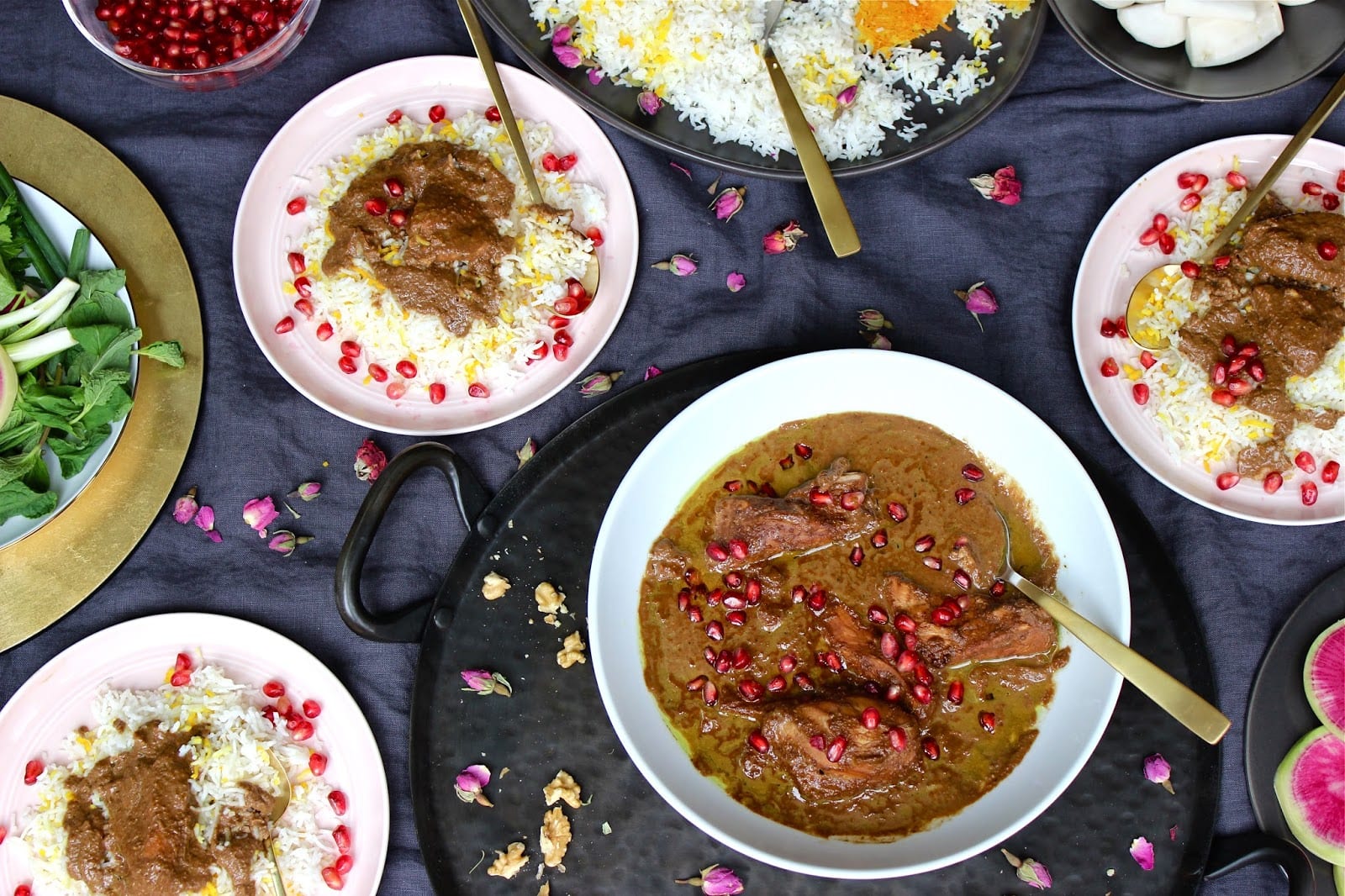
Food in general demands our respect.  Khoresh Fesenjan commands our respect.  The respect of time and patience.  The respect of slowly and lovingly allowing a much celebrated stew of walnuts and pomegranate molasses simmer quietly away for a few hours on your stove on a Sunday afternoon.  Warming up your home with its tantalizing aromas – transporting you to a faraway land –  a faraway orchard – or – simply as my mother puts it – allowing all the flavors come to life.

Sweet or Sour – Pomegranate Molasses
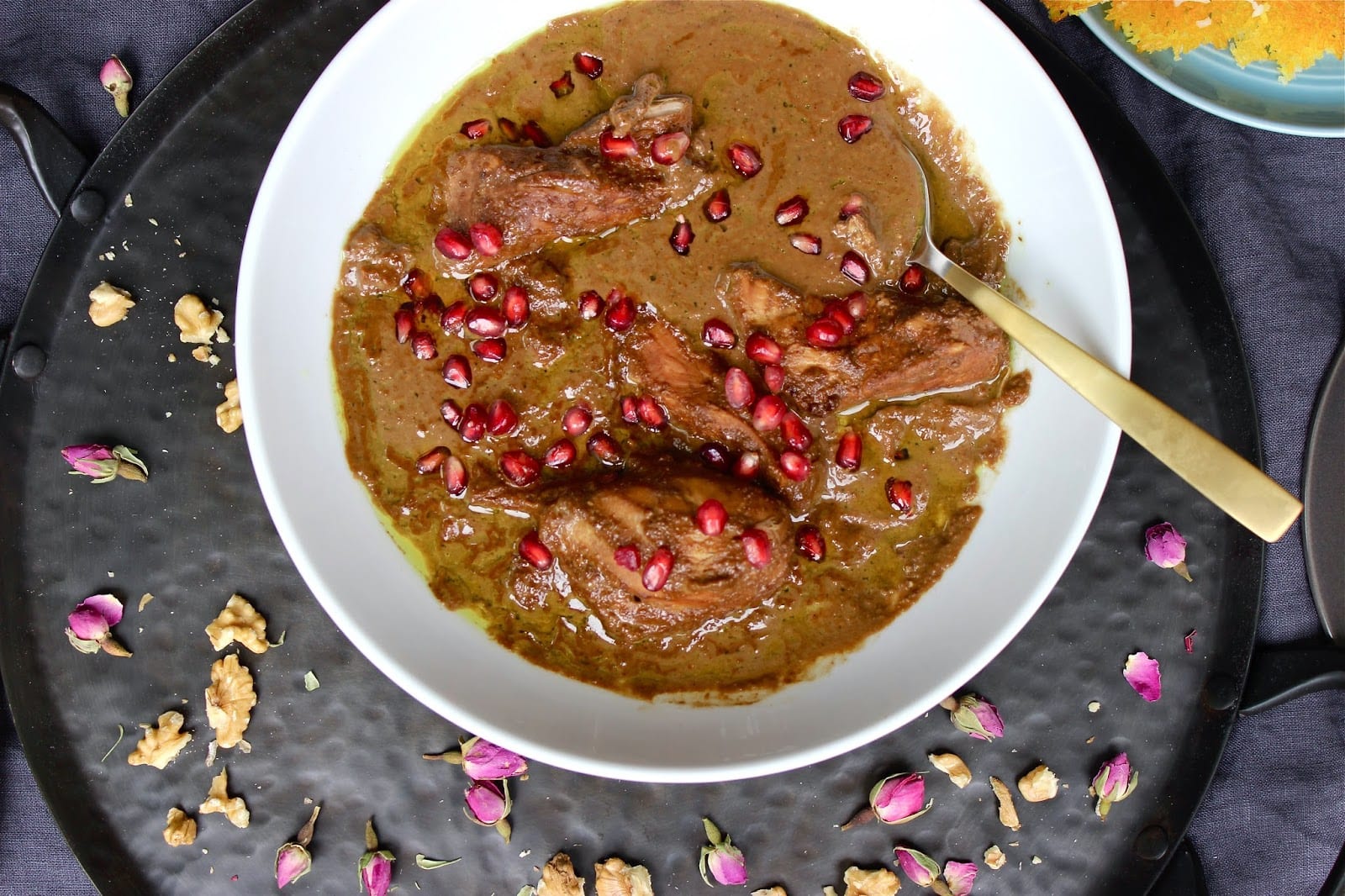
Contrary to popular belief Khoresh Fesenjan is quite simple to prepare.  At its simplest preparation it is nothing more than ground up walnuts, pomegranate molasses, water, chicken (or vegetable of choice), salt to taste.  That’s all you need.  But for a little added depth of flavor you can enhance with some extra spices. I like to use a little bit of turmeric, ground up dried rose petals and cinnamon. However, this simple yet sumptuous dish is often quite polarizing as to how it should be prepared.  This divisiveness comes down to a personal preference for what type of pomegranate molasses to use.  Sweet or sour or something in between – sweet and sour.  It is not uncommon for people to get quite particular and passionate about this preference.  You know you are talking about quite a special dish when there is so much passion and intensity surrounding it. I like and prepare my Fesenjan sour – the way Mrs. K and my mom prepare it – the way it is prepared in Gilan – Shomal – the Northern region of Iran bordering the Caspian sea  – known for its Khoresh Fesenjan.  Now, by sour I don’t mean a mouth-puckering taste that makes you wince.  It only means that there is no sugar or other type of sweetener added to the stew.  It is a subtle and satisfying tartness which is dictated by the kind of pomegranate molasses that is used.  I use this pomegranate molasses which says sour on it.  If you are new to Khoresh Fesenjan I recommend trying different kinds of pomegranate molasses and see what suits your palate best.

Walnuts
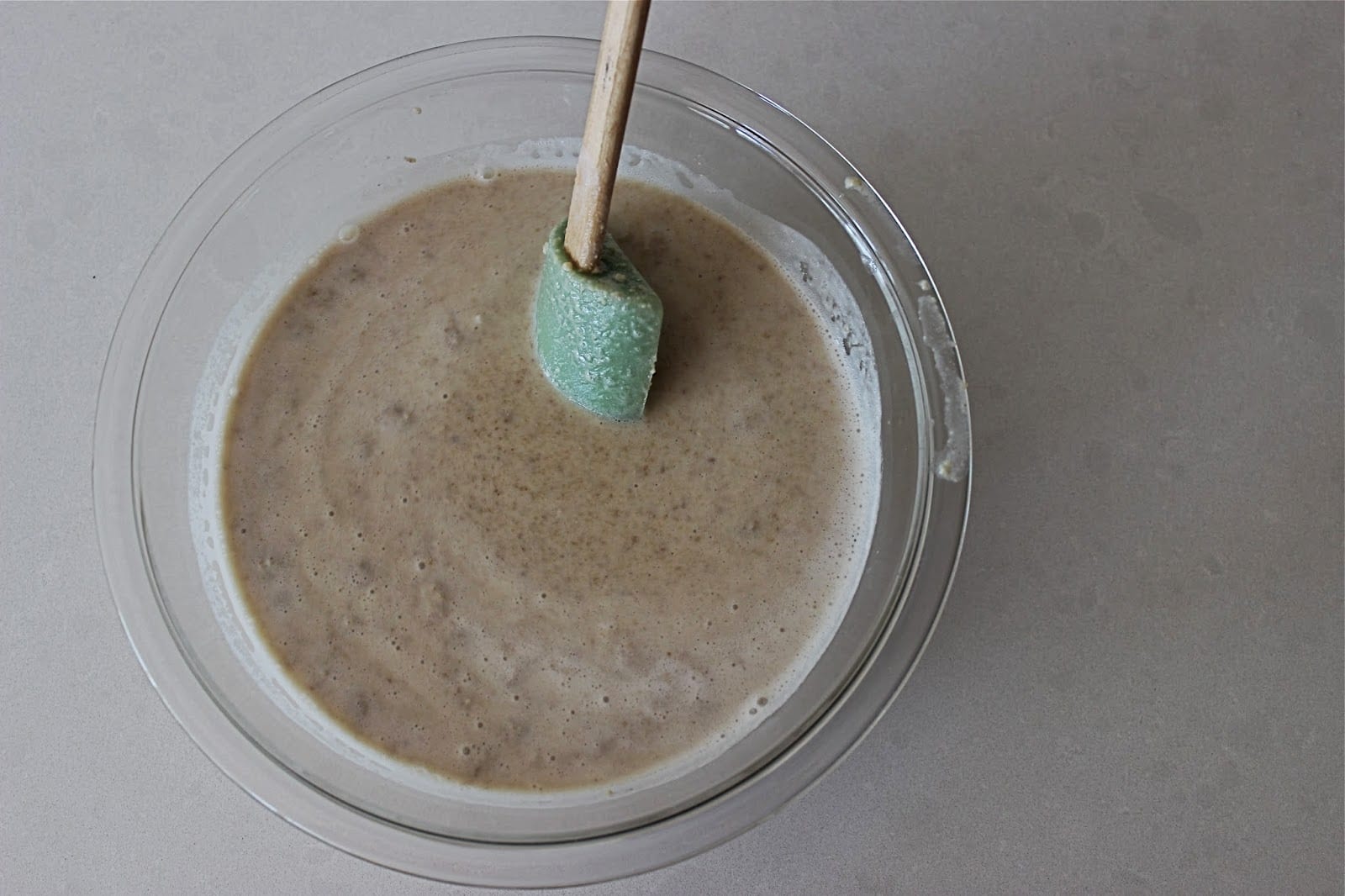
There is also a debate as to how fine the walnuts in the stew should be ground up.  Again, this comes down to a personal preference.  Some like the texture of a rougher grind, where you can feel the crunch of the walnut in the stew.  I prefer my Fesenjan smooth so I grind up the walnuts to a fine meal, or even to a paste. You’re looking for a grind resembling a flour like texture or smoother. The walnut meal is then mixed with some water and added to the pomegranate paste in the pot.

Simmer, Simmer and Simmer Some More
There is one thing about the preparation of this stew that is not up for debate.  And that is allowing the pomegranate/walnut sauce to sit and simmer slowly for at least a couple of hours before adding your meat or vegetable.  No quick fixes here.  The color, depth of flavor and richness of this dish depend on this step.  Just like any good stew or braise, this is your chance to bring the flavors to life.  Specifically to bring the walnuts to life .  As the stew simmers, the walnuts will slowly start to release their natural oils.  The more the walnuts release their oils the more they will come out of their raw state and the color of the stew will start turning from a very pale cappuccino shade to a rich brown .  That is what we are looking for.  The walnuts can make this dish a very rich and hearty dish, so you want to skim off as much of those oils that come to the surface as possible to cut down on some of that richness.  Also we don’t want a raw walnut aftertaste in the stew which can often be rather bitter. As the stew sits and simmers uncovered it will start thickening so you want to keep adding about half a cup of water to it every half hour or so.  This process should take about 2 hours.  You will know the sauce is ready when its color has turned to a rich brown, when most of the walnut oil has been released and when it is at the desired consistency: not too thick and not too watered down.  At this point you should taste the sauce and make any necessary adjustments like adding more pomegranate molasses if necessary.  This is also where I add the cinnamon and ground rose petals, if using.  The sauce can be made ahead of time up to this point and kept in the fridge before adding the chicken.  If I am pressed for time or preparing for a dinner party  I usually make the sauce one day ahead.

Duck, Chicken or Vegetables
Traditionally, Khoresh Fesenjan was served with a whole duck placed in the sauce and cooked through.  It has now become more common to make Fesenjan with chicken – whole or cut up into pieces – which is how I like to prepare it. Some preparations also use mini meatballs which cook through in the sauce.  You can also make a vegetarian version with eggplant or mushrooms or various types of squash.  It goes without saying that Fesenjan, or Fesenjoon as it is more colloquially called, should be enjoyed over rice.  This dish is also a perfect example of the Persian tradition of balancing a meal. A rich and satisfying stew like Fesenjan should always be accompanied with something fresh, raw and crisp to aid in digestion.

We are a culture obsessed with digestion.

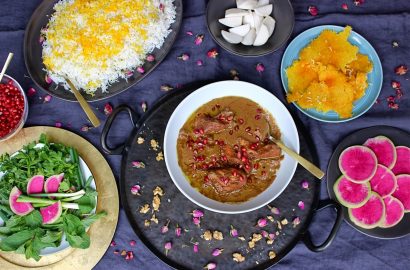
So you will most definitely find Sabzi Khordan – a platter of fresh herbs and radishes (I love using watermelon radishes when available) at the table along with a bowl of crisp, fresh turnips as is tradition in Gilan and at Mrs. K’s house.

Those Saturday nights at Mrs. K’s, after a feast of Fesenjan, Baghali Ghatogh, Mirza Ghasemi and smoked fish – following the obligatory after-dinner tray of tea and dates (for digestion of course) was passed around – after the platter of fruit (for digestion, of course) was served – after the dancing and clapping (also for digestion, of course) – my best friend S. and her older sister M. and I would watch my brother, their older brother B. and another good friend F. go through their ritual of getting ready for a night out.

It almost always involved excessive amounts of hair gel.

I secretly longed to one day tag along, be a part of that world.  But until then I was quite content with George upstairs in my room and the new world order I was experiencing downstairs in my brother’s room.  Clinging to my childhood but on the threshold of crossing over to something new, exciting and nerve-racking: the teenage years.

That’s what happens when you’re twelve.

On the cusp of when his music, becomes our music – my music.

Dedicated to the memory of Farzad and Sepideh.


WALNUT AND POMEGRANATE STEW – KHORESH FESENJAN

Inspired by Mrs. K. and Maman

Ingredients:

Serves 6 – 8

1 lb/450 grams shelled walnuts, ground up to a fine meal
water
3/4 cup sour pomegranate molasses, or pomegranate molasses of choice
1/2 teaspoon turmeric
salt
1/2 teaspoon cinammon
*1/8 teaspoon ground dried rose petals (optional but highly recommended)
2 1/2 – 3 lbs. skinless, boneless chicken pieces, I use 2 breasts/2 drumsticks/4 thighs
pomegranate seeds, for garnish (optional)
pepper

* You can grind up dried rose petals in a spice grinder.  You can buy dried rose petals at Middle Eastern markets or here or here for organic ones.

1- In a medium size bowl mix the ground up walnut meal with 3 cups room temperature water.

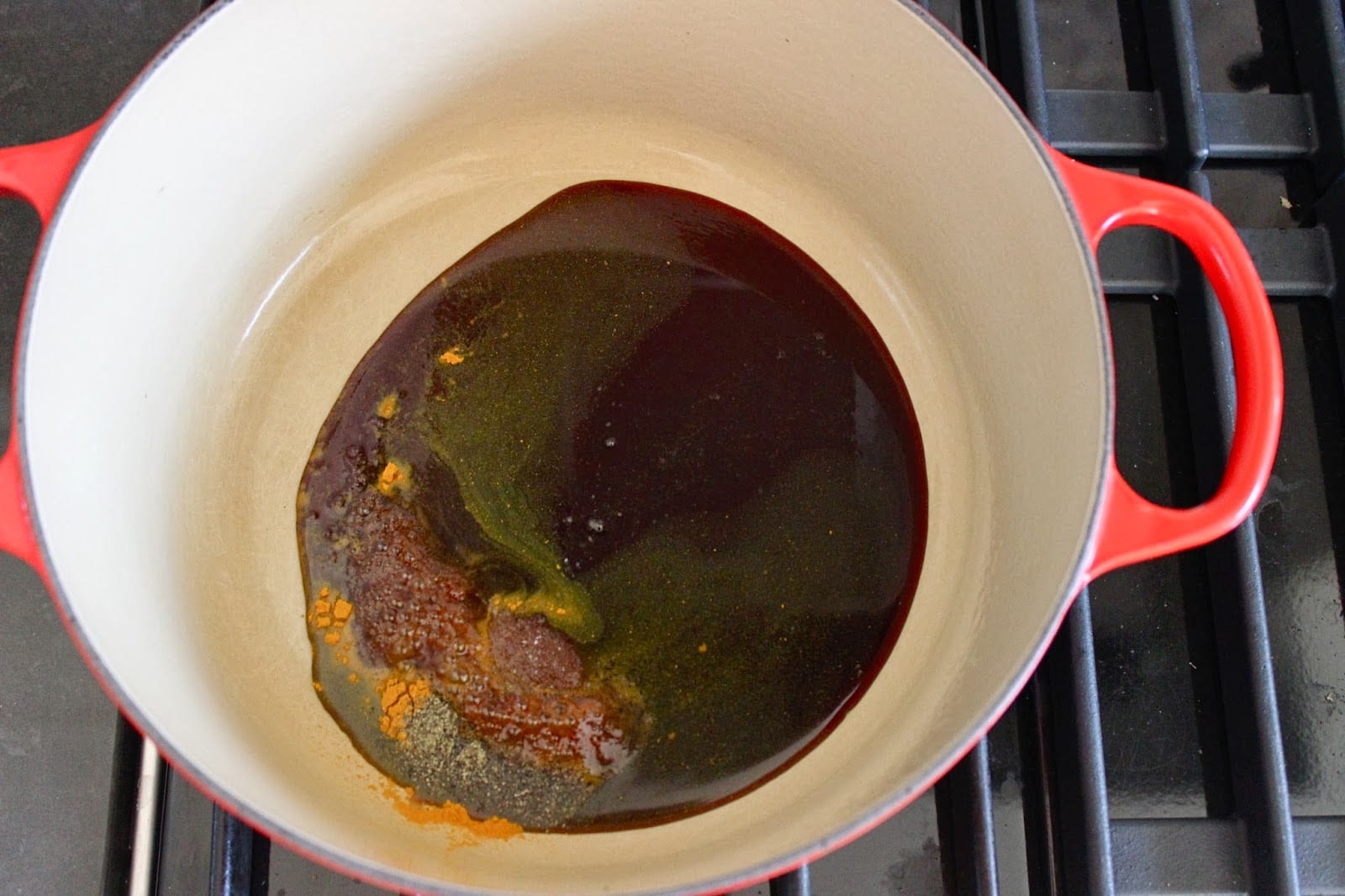
2- Heat a large dutch oven style pot over medium heat.  Add the pomegranate molasses, 1 teaspoon salt and turmeric and stir to combine.  Keep a close eye on it. As soon as the molasses starts to bubble and come to a gentle boil add the walnut/water mixture.  Stir and allow to gently boil for about 5 minutes.  Turn the heat down to low and gently simmer the sauce uncovered.

3- You will be simmering the sauce uncovered for the next 2 hours or so. Add about 1/2 cup of water every half hour or so.  You will know it’s time to add more water as the sauce starts to thicken and the walnut oil starts to rise to the top.  Make sure you stir once in a while making sure nothing is sticking to the bottom of the pot and your sauce isn’t burning at the bottom.  Skim off any oils that come to the surface.  The color of the sauce will start turning from a pale beige to a rich brown throughout this process.  Once the sauce is ready add the cinnamon and ground up rose petals.  Taste and make adjustments.  I usually add another 1/4 cup of pomegranate molasses.  Hold off on adding more salt because the chicken will be seasoned with salt.  The sauce can be made ahead of time up to this point.  Or carry on right to the next step.

4- Cut up the chicken breasts and thighs into medium sized pieces.  I cut the thighs in half and the chicken breasts into 3 or 4 pieces.  Season the chicken with salt and pepper.  Add the chicken to the sauce and simmer for 45 minutes – 1 hour until the chicken is cooked through (if the stew starts thinning out turn up the heat slightly, just make sure you are stirring so nothing sticks or burns).  I prefer the stew on the thinner side than the thicker side.  Taste and adjust seasoning if necessary.

Serve over rice and garnish with pomegranate seeds if you like.  Enjoy with a side of Sabzi Khordan and/or raw turnips for digestion of course!

Will keep in the fridge for up to 3 days and in the freezer for up to 3 months.
Stew

A SPRING FAVA BEAN, DILL AND EGG STEW – BAGHALI GHATOGH

The salty air.  The very salty sea.  A warm seaside breeze.  Hair tangled and knotted in the wind – sticking to very salty lips. 

These are my memories of Shomal – North.

Memories can be very elusive, hard to pin down.  They tease us with a hazy snap shot of what once was – a time long since passedA familiar scent, taste, the caress of a warm breeze.  Sometimes that’s all it takes to get wrapped up in the allconsuming embrace of nostalgia.

The Northern region of Iran bordering the Caspian sea is referred to as Shomal.  It is made up of three seaside provinces: Gilan, Mazandaran and Golestan.   

My father’s family hails from Gilan, a region well known for its rice paddies, lush green Alborz mountains, popular seaside destinations (for tourists and locals alike), its very distinct Gilaki dialect, and of course its cuisine.  Volumes could be written about the delicious food of Gilan –  khoresh fesenjan (pomegranate and walnut stew – a dish  particularly close to my heart), mirza ghasemi, kabab torsh, zeitoon parvardeh…and of course the abundance of fresh seafood and its much prized caviar.  But the one dish enjoyed most often is baghali ghatogh.

Baghala ghatogh (as it’s called in Gilaki) is traditionally made with a type of bean called pacha baghala – which literally translates to shortleg beans.  

I was inspired to try my hand at baghali ghatogh after spotting the abundance of fresh fava beans popping up at the farmers market.  Fava beans (fresh or frozen) or lima beans (fresh or frozen) are often used as a substitute for pacha baghala – which is not readily available outside of Iran.  After a call to my cousin for a little direction I learned that canned white kidney beans (cannellini beans) are also a good and quick substitute.  So you have a few choices for the bean – but I had my sights set on those favas.

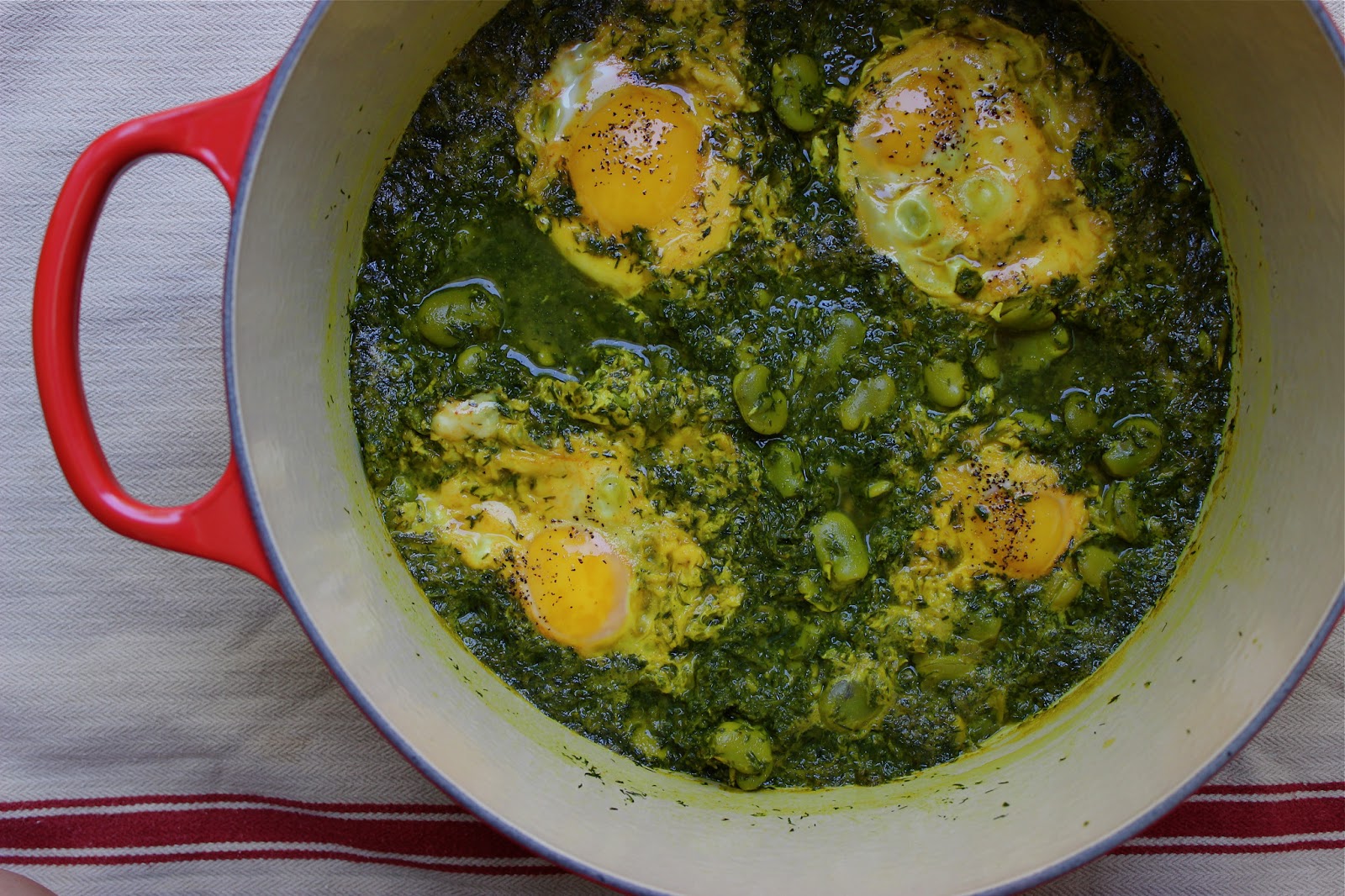
Call it cooking serendipity, chance – what you will – it was also right around this time that Baba –  my dadand step-mother Kumi decided to surprise us with a visit.  And after one glorious family outing to the farmers market I had Baba making his baghali ghatogh.  Fresh fava beans, fresh spring garlic, fresh dill, and eggs.  The makings of a perfect springtime meal.

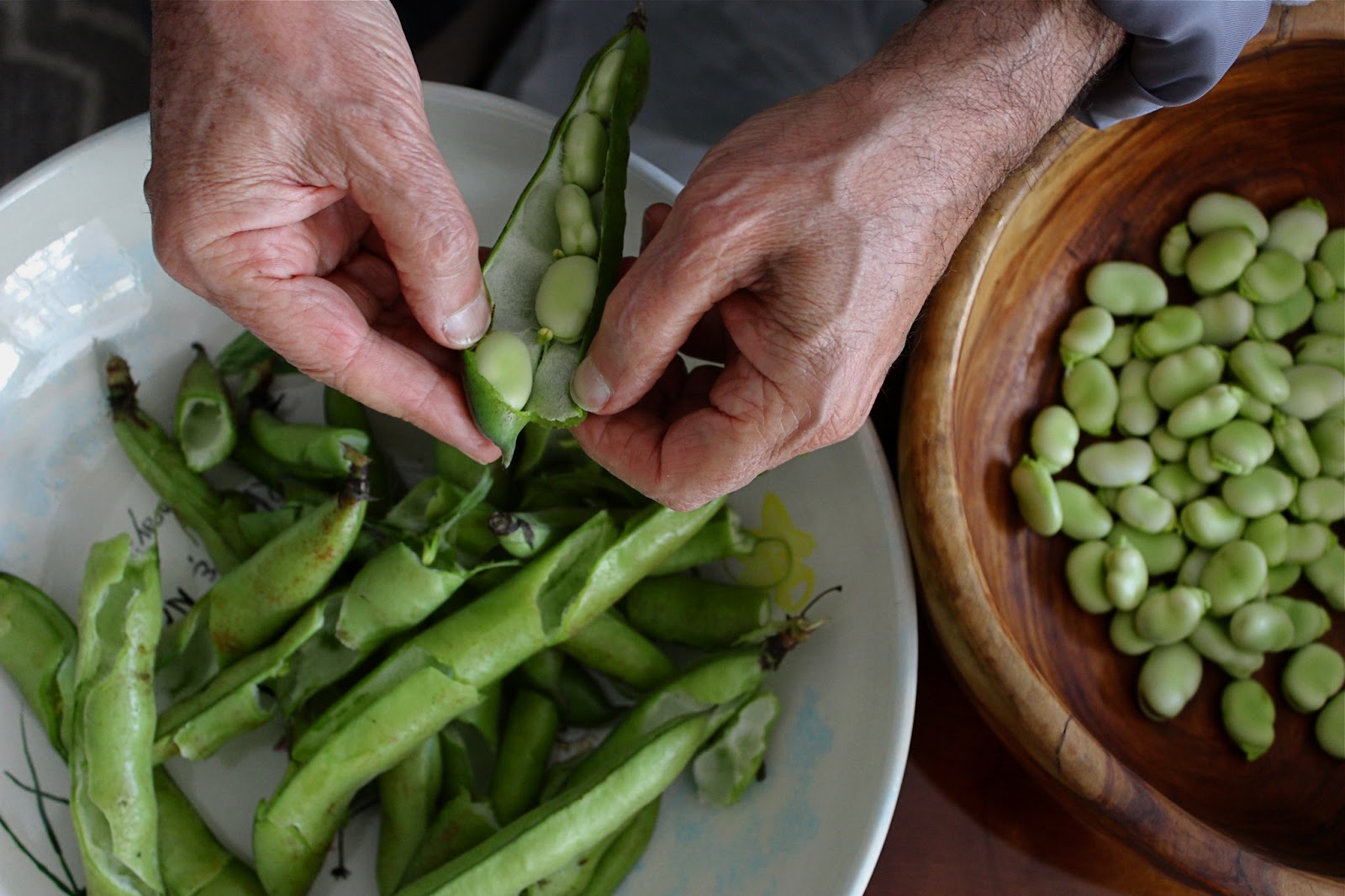
This dish is very quick and easy to prepare.  Except for one thing – shelling and peeling the fresh fava beans.  I won’t sugarcoat this.  It takes some time – as in, it took 45 minutes to get through it.  And like you,  I really don’t have an extra 45 minutes to devote to shelling 4lbs of fava beans.  But I do it because fresh favas are here for a short period of time and they taste great – because of the ritual – the tradition – beacause I imagine my aunts, uncles and cousins having done the same.  And yes, also because I‘m inclined to get obsessive like that.  To make it a little less timeconsuming you can split up the bean shelling and peeling process.  You can shell the beans the night before while you catch up on your favorite tv show.  Then store the shelled beans in a plastic bag in the fridge.  All you have to do the next day is peel the outer skin.  Try not to split the bean in half when you do this.  Once the outer skin has been peeled you have to cook the beans right away.  Or even better, enlist the help of others. (Please note fava beans can cause a rare but serious allergic reaction in some people and children.  Make sure you or your little ones are not allergic before handling or eating favas.)

The afternoon we got back from the farmers market with our 4lb bag of favas quickly turned from a we’ll just make a simple baghali ghatogh dinner to an epic food odyssey.  As it often does.  Seduced and inspired by the goods at the farmers market, we decided last minute to throw together a fresh herb koo koo (Kumi’s request), steam some artichokes (the girls’ absolute favorite), put some rice on and quickly saute some fish (the way Baba likes his baghali ghatogh served).  As for Drew he had no requests – he just loves and consumes it all, in high quantities.  

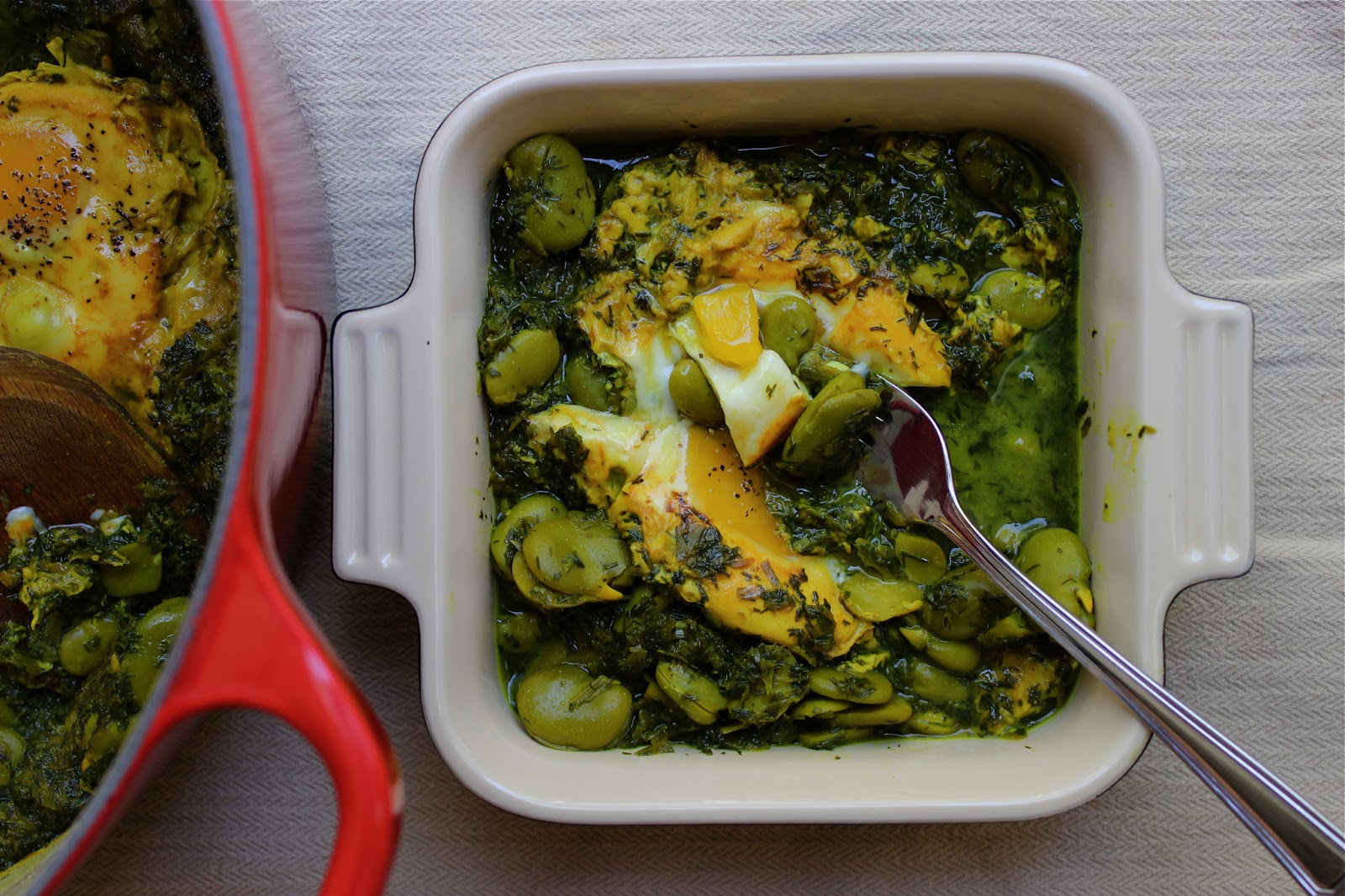
Baghali ghatogh is typically served over rice, with a side of smoked fish.  Or that caviar from Gilanif you can get your hands on some… I also like it served over some crusty bread to soak up all the delicious juices with some salty feta cheese (to mimic the salty smoked fish) crumbled on top. 

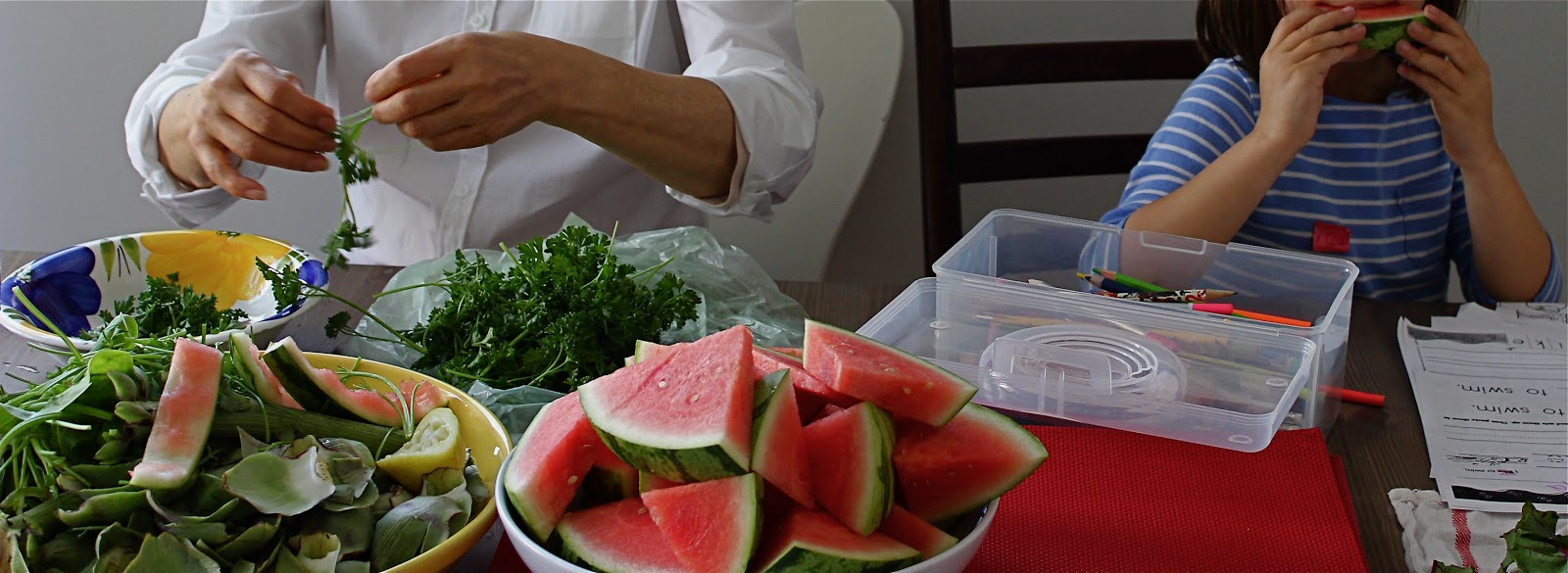
Every corner of the house was alive with activity.  Baba shelling and peeling the favas at the coffee tableSoleil perched in front of him watching attentively.  Kumi prepping the herbs for the koo koo at the kitchen tableLuna working on homework and munching on watermelon.  Me at the kitchen island – command central – wondering exactly how we got ourselves into this madness.  Every pot in use, both oven and stove in play, the background music trying to keep up with our tempo, children’s questions, costume changes (impromptu fairy performance!) and other needs being met.  Absolute wonderful chaos.  And somehow, as is usually the case, it all came together.  All of us gathered around that kitchen table digging into some baghali ghatogh
 
 
I was about Soleil’s age the last time we were in Shomal.  And now, all I have to recall from my visits are those hazy snapshots the salty air, the salty sea, the warm breeze. 

I wonder if many years from now the girls will all of a sudden get a flash, a snapshot of a bustling and loud kitchen filled with the aroma of fresh dill and parsley, homework with a side of watermelon, aged but still strong and gentle hands of a grandfather shelling fava beans… 

Fava Bean, Dill And Egg Stew – Baghali Ghatogh

Inspired by Baba and my cousin F.

Ingredients:

Serves 4-6

1 pound fresh fava beans shelled and outer skin peeled*, OR 1 pound frozen favas or lima beans, thawed,  OR 1 14-16oz can white kidney beans (cannellini beans), rinsed and drained
3 tablespoons olive oil, or butter or ghee
2 fresh spring garlic, finely chopped (green parts too!), OR 5 garlic cloves, minced
1 bunch fresh dill, finely chopped,  OR 4 tablespons dried dill  
2 teaspoons turmeric
1 teaspoon salt
1/4 teaspoon fresh ground pepper
1/4 teaspoon ground saffron steeped in 2 tablespoons hot water (optional)
4-6 eggs
olive oil for garnish (optional)
feta cheese, crumbled, for garnish (optional)

* I found roughly 4 pounds fresh favas in their shell yielded about 1 pound favas  shelled and peeled

1- In a dutch oven or pot or deep skillet heat oil over medium heat.  Add garlic, give a quick stirAdd beans and dill.  Gently stir to combine for 2 minutes. Until the dill begins to wilt and release its aroma.  Take care not to over stir.  You want the beans to maintain their shape and not break down.

2-  Add the turmeric, salt, and pepper.  Stir to combine.  Saute for 2 minutes. Add the saffron water (if using).

3-   Add enough water to cover the beans.  I used about 2 cups of water.  If the stew starts to dry out add more water.  Bring to a gentle boil.  Reduce heat to medium-low.  Cover and cook with the lid slightly ajar until the beans are fork tender.  About 15 minutes for fresh favas.  Take care not to overcook the beans.

4- Taste and adjust seasoning.  Right before serving crack the eggs one by one (one egg per person) into the stew.  Cook until the egg whites set, about 3 minutes Sprinkle the tops of eggs with a little salt and pepper.  Finish off with a drizzle of olive oil.

Serve over rice with a side of your preferred smoked fish (you can skip the fish all together if you want) or serve over crusty bread topped off with crumbled feta cheese.

Will keep in the fridge for up to 3 days.


Stew

A Comforting Parallel Universe Celery Stew – Khoresh Karafs

The skies have turned grey.  The fog is rolling in.  There’s talk of rain.  Yes, this does happen in Los Angeles.

I need everything to slow down.  A break from the daily routine.  I begin to yearn for my parallel universe.

That alternate life where I curl up on the couch with my boyfreind – now my husband.  Watch a movie at three in the afternoon. And then ponder whether we should watch another – and quickly agree that we should.  Just like we used to.

No responsibilities.  No errands.  No school lunches.  No 6am wake ups.  Little three year old fingers prying open our eyelids – literally.

Simultaneously I move through my current universe. My girls burst through the front door.  I help them take off their coats, boots, sweet-sweaty-stinky-been-playing-working-hard at school socks.  Settle them into the afternoon routine.  Snacks, homework, play, bickering, hugs, melt-downs.

I feel little three your old fingers tugging on my pants, demanding more sweet lemons, more pistachios and toot (mulberries), and can she please! please! have some chocolate today.  Please mama!

I am bombarded with fantastical tales, profound declarations, and silly knock – knock jokes from a wise-beyond-her-years six year old.  And if her sister is going to have chocolate then it’s only fair that I have some too, mama!

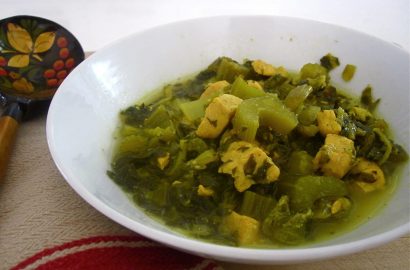
It is on days like these that we crave something comforting.  Something familiar.  Something that says home, love, family.  Something that will wrap us in its embrace and re-energize us for the week that’s to come.  And something that will partly bridge that gap between this reality and that parallel universe I sometimes yearn for.  That for us  is khoresh karafs – celery stew.

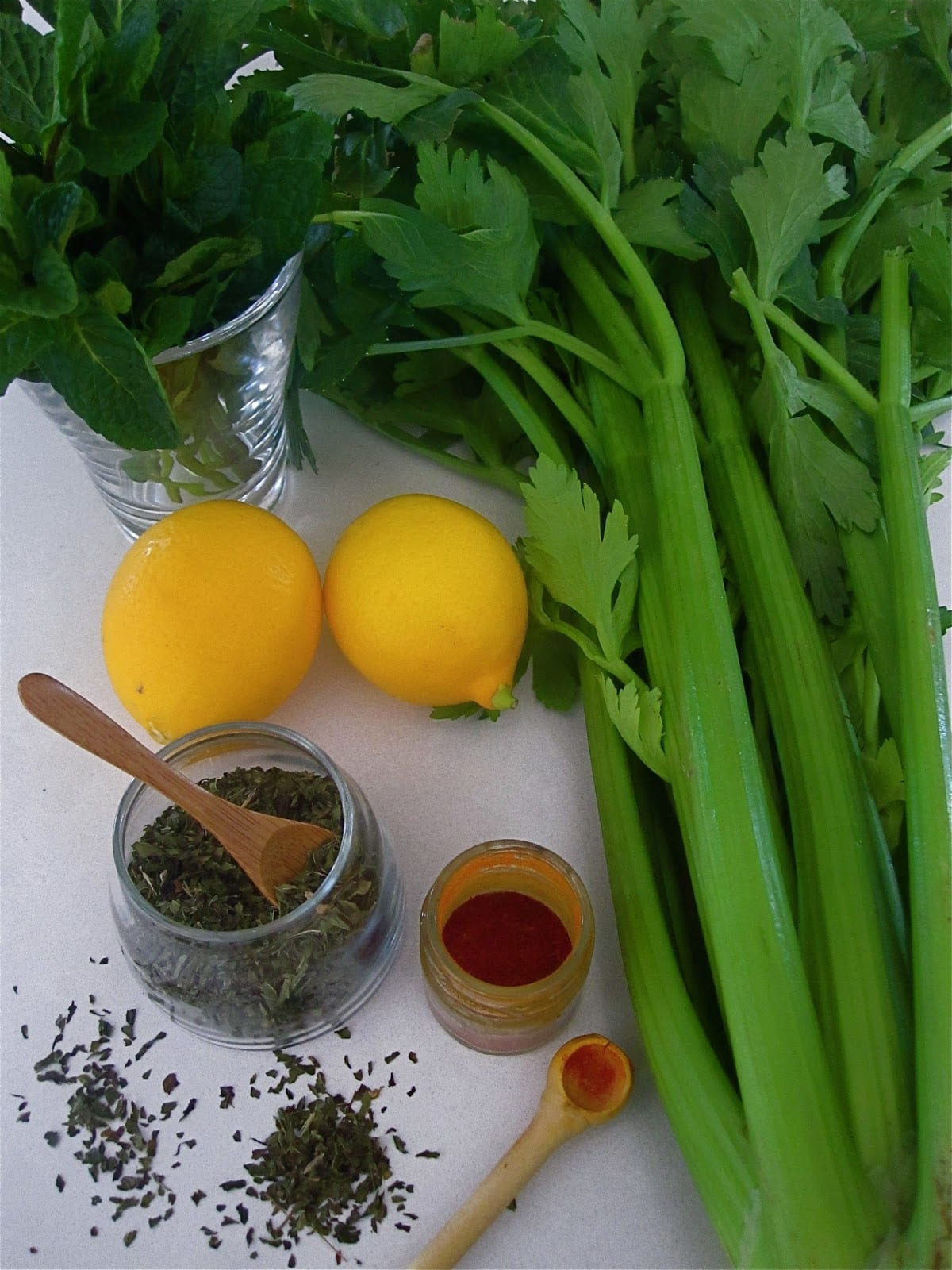
This dish used to be one of my favorites as a child and has now become a staple Sunday supper for us.  Whenever I pull out a luscious green head of celery from my weekly farm box, I know this meal is in our near future.  I use the entire celery head – green leaves included which add so much flavor along with fragrant parsley and mint.  And I am once again reminded (by my mom) of the method behind the creative and sometimes haphazard art of cooking.  There is actually more to the combination of celery, and aromatics like mint and parsley.  Celery can cause excessive gas.  Mint and parsley are known to help with flatulence and digestion – helping to offset the possible indigestion of celery.  An elegant dance choreographed by our ancestors hundreds of years ago.

This stew is also a classic example of the marriage of saffron and turmeric in most Persian dishes.  Combine these two spices together in one form or another and you’ll have the makings of a Persian stew.

Like most stews, the longer you let it simmer on a low flame the more flavorful it will be.  This is also a great make-ahead-of-time dish.  It tastes even better the next day (and makes an excellent school lunch – the girls’ thermoses come back licked clean).  If you do make it ahead of time just make sure that when you reheat it you adjust the liquid. You will most likely need to add more water and adjust the seasoning.  This is not a dry stew, nor should it be runny like soup.  But you do want it to be juicy.  Traditionally it is served over rice. This is how we enjoy it, but you can also serve it with a side of quinoa or other grain of choice.

My husband – my then boyfriend – walks through the door.  I hear the shrieks of Dada! Dada! greet him before he has even had the chance to step inside.  The girls launch into telling him all about the ins and outs of their day.

As I make my way to the kitchen table I catch a glimpse of the fog rolling by, the last of the winter light settling behind the trees, making way for spring – new beginnings.

We all come together around the table.  Tucking into a warm dish of khoresh karafs over rice with a side of mast o khiar.

This is my universe.  I wouldn’t want it any other way.

Well, maybe I could occasionally time travel back to the three in the afternoon movie watching days with my boyfriend…


CELERY STEW – KHORESH KARAFS

Ingredients:

Serves 6-8

6 tablespoons olive oil, divided
1 medium yellow onion, diced
2 skinless boneless preferably organic chicken breasts, cut in 1″ stewing cubes
salt
pepper
1 teaspoon turmeric
1 head celery, sliced in 1/2″-1″ slices
green celery tops (leaves) chopped (if using)
1 bunch fresh parsley, chopped
3 tablespoons fresh mint, chopped plus 1 teaspoon dried mint OR 2 tablespoons dried mint (if not using fresh mint)
juice of 2 lemons or limes, more according to taste
1/4 teaspoon ground saffron dissolved in 5 tablespoons hot (not boiling) water
water

  1. Heat 3 tablespoons olive oil in a large pot or Dutch oven over medium heat.  Add onion, sprinkle with a little salt and saute until translucent, about 6-8 minutes.
  2. Add chicken.  Give a quick stir add 1/2 teaspoon salt, 1/4 teaspoon pepper, and turmeric.  Stir and saute for 5 minutes.
  3. Cover, and turn down heat to low.  Simmer for 15 minutes until chicken releases some of it juices.
  4. In the meantime heat up remaining 3 tablespoons olive oil in a large pan over medium heat.  Add celery and celery tops (if using).  Add 1/2 teaspoon salt.  Saute celery for 10 minutes until softened but not cooked through, stirring occasionally so the celery doesn’t stick.
  5. Add parsley and fresh mint.  Stir constantly and saute with celery for about 3 minutes.  Turn down heat if needed.  Mint can burn very quickly.  Keep an eye and a nose on it.  If using dried mint, rub the mint between your palms to release fragrance and flavor and add it to the celery only in the last minute.  Give a quick stir and turn heat off.
  6. Transfer the celery, parsley, mint mixture to the chicken.  Add lemon juice, saffron water, 1 cup water and remaining 1 teaspoon salt. Stir everything to combine.  Bring to a VERY GENTLE boil.  Partially cover and simmer over low heat for at least 45 minutes.  You want the celery to be cooked and tender but NOT mushy.  It should hold its shape.  Add more water as necessary. Taste. Add more fresh lemon or lime juice if needed.  Adjust seasoning as needed. Maybe a little more dried mint?  Salt?  Taste again.  Adjust again to taste.  Taste.  Adjust.  Taste.  Adjust.

Serve over rice.  Will keep in the fridge for up to 3 days.  And in the freezer for up to 3 months.