Happy Summer!
Join me over at Team Yogurt today to celebrate with these simple, luscious, and elegant Harissa Stuffed Dates.


Happy Summer!
Join me over at Team Yogurt today to celebrate with these simple, luscious, and elegant Harissa Stuffed Dates.

Luna, pretend, pretend the princess is on her way to the ball but she got lost.
Ok, but Soleil first pretend she is in her room practicing for the gymnastics competition and forgets she has to go to the ball.
But Luna pretend when she remembers she gets lost. Ok?
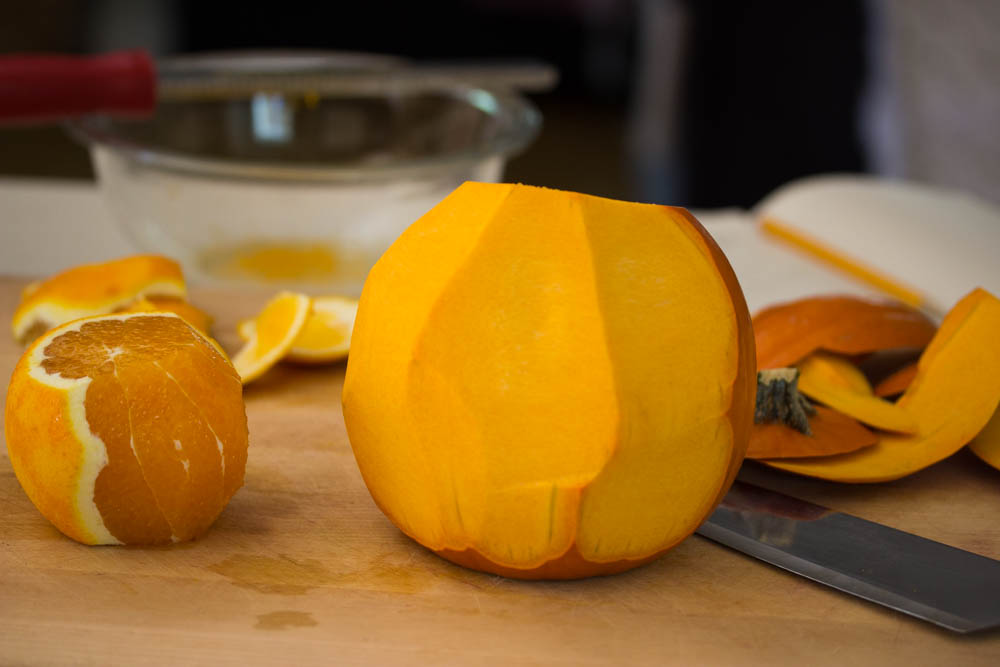
Set the pumpkin and orange on the cutting board. Slice the tops and ends off each. For stability, for support. Use a sharp knife and cut downwards. Revealing the flesh. Be bold, be precise. Peel away the skin,the membrane, the rind. Let the curves of the fruit guide your way.
Mama, pumpkin is really a fruit because it has seeds. But we can pretend it’s a vegetable if you want. Should we pretend, mama?
Pretend.
Pretend your last Mehregan wish echoed up through the hills and beyond the valleys.
Pretend she took heed of your murmurs, your whispers, and your cries. And the sky burst at the seams with a thundering bang and a rollicking roll.
Like the heart of young lovers on a hillside under California stars.
Every strike of lightening peeling away the skin, the membrane, the rind. Revealing the flesh. The curtain pulling back and revealing her.
The naked sky. Drip, drip, dripping with rain.
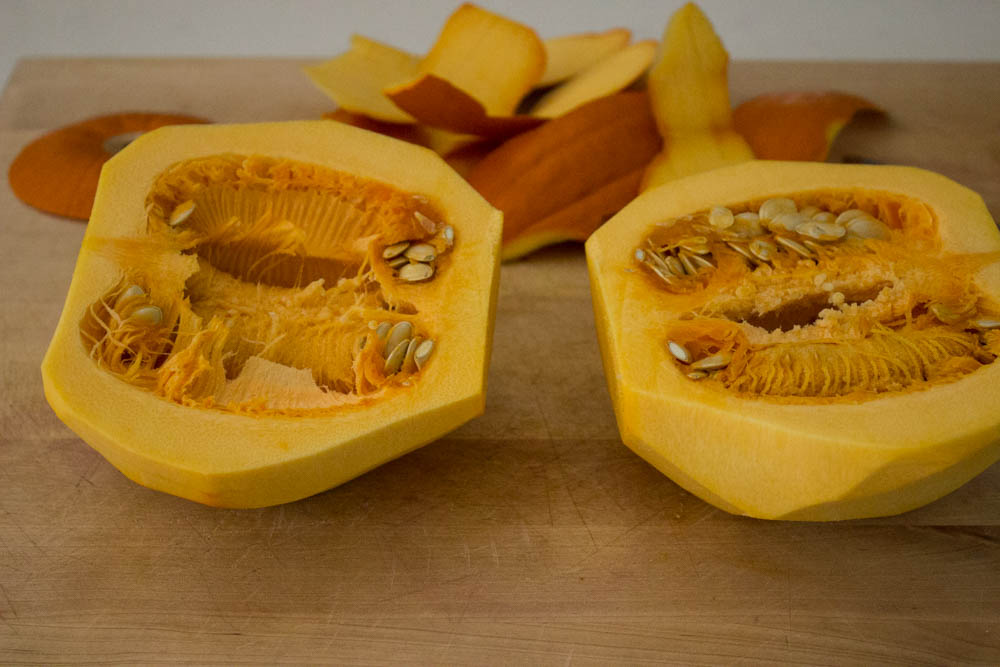
Cut the pumpkin in half and reach in for the seeds The stringy pulp refusing to let go. Pretend you enjoy the mess of it all. Hold a fistful of pumpkin seeds in one hand. You should make use of it all. Don’t waste anything. Use everything.
Let go.
Watch them drop into the compost bin. Think about how you could have rinsed them, dried them and roasted them. But not today. Maybe another day. There will always be another day.
Pretend a cool Autumn’s breeze invites herself in. And stays for a good long while. A much welcome, unexpected guest.
She runs her fingers through your hair and whispers sweet nothings in your ear.
Release the orange segments into a bowl. Cool and slithery, slippery. Bathing in orange blossom water. Juices and all slipping freely though your fingers.
Wash your hands and peer out your sink window. Pretend the leaves have turned. Rust, amber, strawberry blonde.
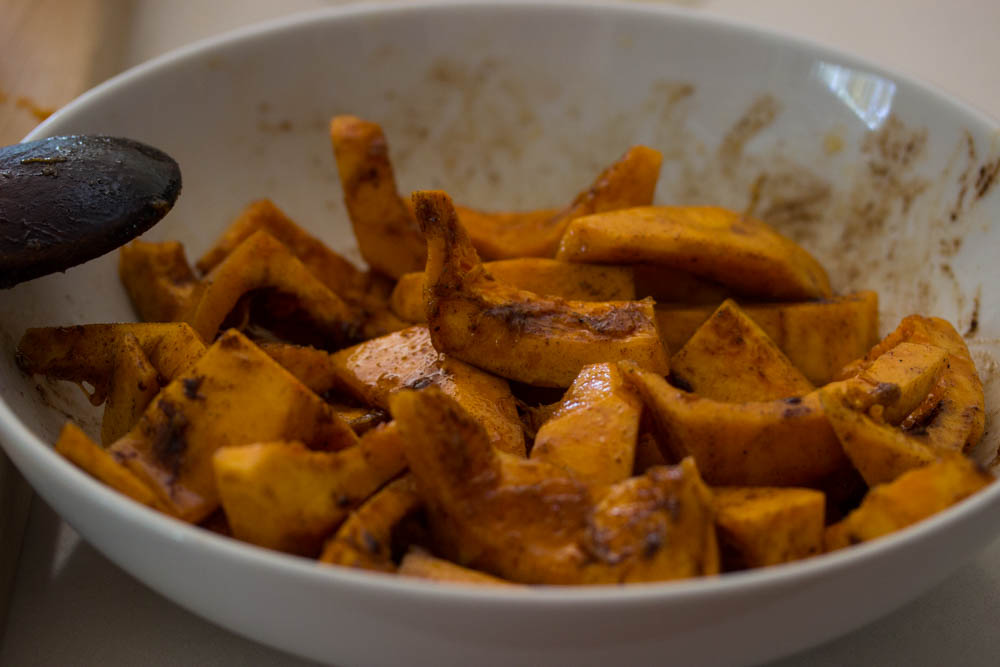
Slice the pumpkin and dress it up for Mehregan. The Autumn Festival.
Pretend you relish the warmth exuding from your oven as the scent of cinnamon, cardamom, nutmeg, cloves, ginger and cumin waltz around your kitchen. An Autumn Waltz.
A Mehregan overture.
A prelude to a celebration of friendship, light, love, and compassion.
Spread the cool, thick yogurt over the roasted pumpkin, add the orange slices, juices and all. Sprinkle all over with pumpkin seeds and sweet medjool dates. Rust, amber, strawberry blonde.
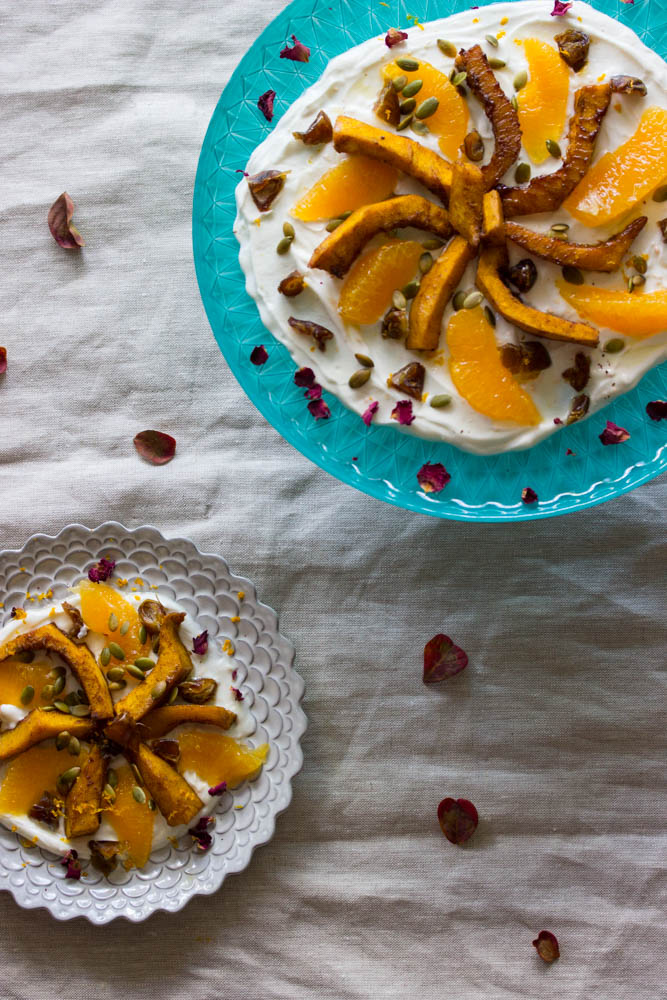
A sweet pumpkin borani. For comfort. For Mehregan.
For when you need to pretend it’s Autumn under California skies.
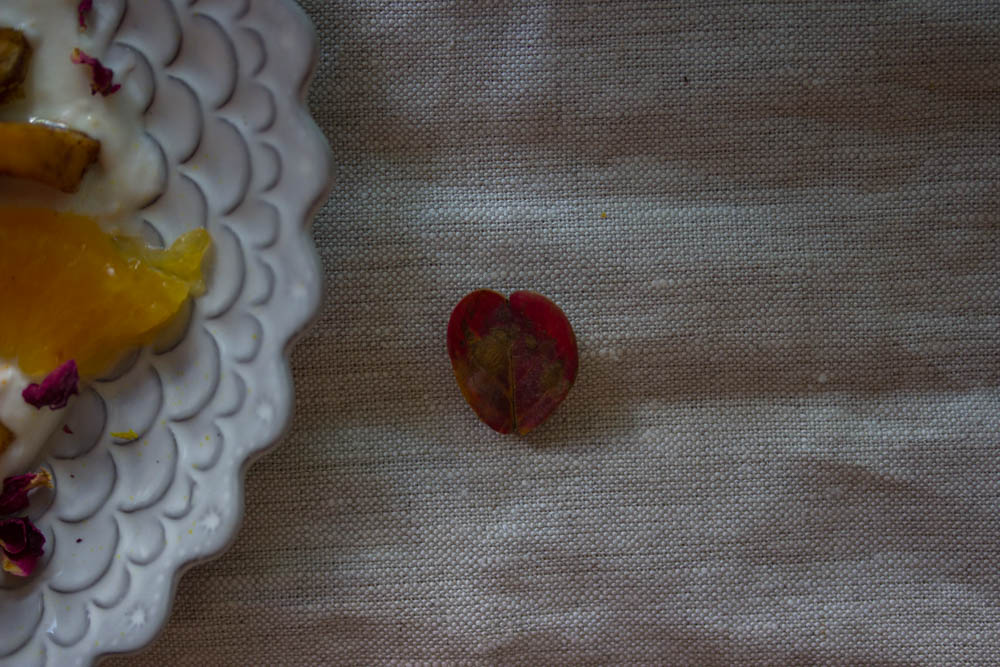
I’m thrilled to be once again joining the following Persian food bloggers for a collaborative Mehregan post. Enjoy!
I’ve really been enjoying this borani for breakfast. But, it also makes a great side dish accompanying any meal. I think it would be particularly festive at a Thanksgiving table. I’ve layered the roasted pumpkin and orange segments over the yogurt in the photos, which makes for a pretty presentation. But feel free to chop up the pumpkin in about 1 1/2 inch cubes and mix everything up with the yogurt. Here’s a great guide to segmenting citrus. I also prefer this borani as is, but if you would prefer it more sweet go ahead and drizzle with extra maple syrup when serving. Just keep in mind the dates sweeten things up quite a bit. This is a great “transitional” dish. When we say goodbye to summer and welcome fall. Or in our case in Los Angeles when we’d like to pretend to do so.
Ingredients:
Serves 4-6
1 tablespoon raw, unsalted pumpkin seeds
1 large orange
1 cup strained Greek style yogurt
1/8 teaspoon orange blossom water
1 small sugar pumpkin, about 2 lbs/1kg
2 tablespoons melted ghee or olive oil or combination of
2 tablespoons maple syrup
1 teaspoon vanilla
1/2 teaspoon kosher salt
3/4 teaspoon cinnamon
1/4 teaspoon cardamom
1/4 teaspoon ginger powder
1/2 teaspoon nutmeg
1/4 teaspoon cumin
1/4 teaspoon cloves
5 medjool dates, chopped
Heat the oven to 375F. Oven rack in the upper 1/3 position.
Line a large baking sheet with parchment paper.
Toast the pumpkin seeds in a small pan over medium heat. Stir often (and never leave them out of your sight, they can burn very quickly!) until they release their oils and fragrance, about 5 minutes. Set them aside to cool.
Place the yogurt in a medium sized bowl and zest the orange over the yogurt. Stir to combine and put the yogurt in the fridge until ready to use.
Peel and segment the orange making sure you catch all the juices in a small bowl. Add the orange blossom water. Gently stir, cover and place in the fridge until ready to use.
Peel the pumpkin (as you did the orange) and discard the seeds and pulp. (You can roast the pumpkin seeds if you’re in the mood) Cut the pumpkin in 1 inch slices or chop up the pumpkin in about 1 1/2 inch cubes. This depends on how you would like to serve it. Place the pumpkin in a big bowl and add the ghee or olive oil, the maple syrup and vanilla. Stir to combine. In a small bowl combine the salt and all the spices. Sprinkle over the pumpkin, stir to combine. Transfer the pumpkin to the baking sheet and roast for 20 minutes. Tossing once halfway through.
Allow the pumpkin to cool slightly. When cooled combine with the yogurt, orange segments and juices, pumpkin seeds and dates. Drizzle with extra maple syrup if desired. Serve immediately. For a prettier presentation you can spread the yogurt over a platter and layer all ingredients on top.
The borani will keep in the fridge for up to 3 days.

It’s deliciously liberating to not have any attachments.
Soak dried chickpeas in plenty of water over night.
To not feel the glare, pressure and judgment of those wiser than you, those that have come before you, searing your back. Those mothers, grandmothers and great-grandmothers, that make a habit of pulling up a stool and comfortably perching themselves on your shoulders, watching your every move. Wagging their fingers at every sprinkle of sweet Spanish paprika. Tisking and tasking as they watch the lemon juice trickle through you fingers – announcing its presence on what were forgotten cuts and scrapes. And perhaps – just perhaps – if these elders are in a giving mood they might grant you one and only one nod of approval as they watch you release the chick peas from the embrace of their skins.
Stir the chick peas with baking soda in a pot over high heat, add more water and watch as the skins rise to the top. Magic.
You breathe a sigh of relief that you are not the carrier of this particular torch. Your shoulders feel weightless – free. This is your kitchen and your mood dictates your kitchen. For better or for worse.
Give the lemon juice, garlic and spices a whirl in the food processor to combine. I use sweet Spanish paprika because I also cook with the moods and taste buds of a five-year-old and eight-year-old in mind. Use smoky paprika if you prefer – or even a sprinkle of cayenne if your taste buds have fully developed. If you’re in the mood for a little more tang and general deliciousness (as I usually am), add the preserved lemons too. If not – don’t. Moody kitchen rules apply here.


Thousands of years of culture, debate and national pride cooly and casually bounce off of you and float off back into the ether. Back towards their homeland.
This “region” that so graciously gave birth to civilization, yet has struggled so to gently cradle it in its arms.
This vast swath of land – where passions run high – extremely high.
Where laughter can echo across its borders without need of passports, papers, religion.
Where tears have flooded its rivers, lakes and seas for far too long – far too long.
Where food – a simple meal prepared over a fire and shared with family, friends, neighbors, and strangers alike – is revered, debated, united, and is more integral to existence than any arbitrary lines etched out on a map.
Where every tribe, every neighborhood, every home will tell you that their preparation for Hummus bi Tahini – chickpeas with tahini is the BEST way, THE authentic way, the ONLY way.
Add the tahini (on this particular day my mood dictates to go easy on the tahini – so I do) with the saved chickpea broth (the water you cooked the chickpeas in – because my taste buds inform me this adds more flavor to the finished product). Give it another whirl.
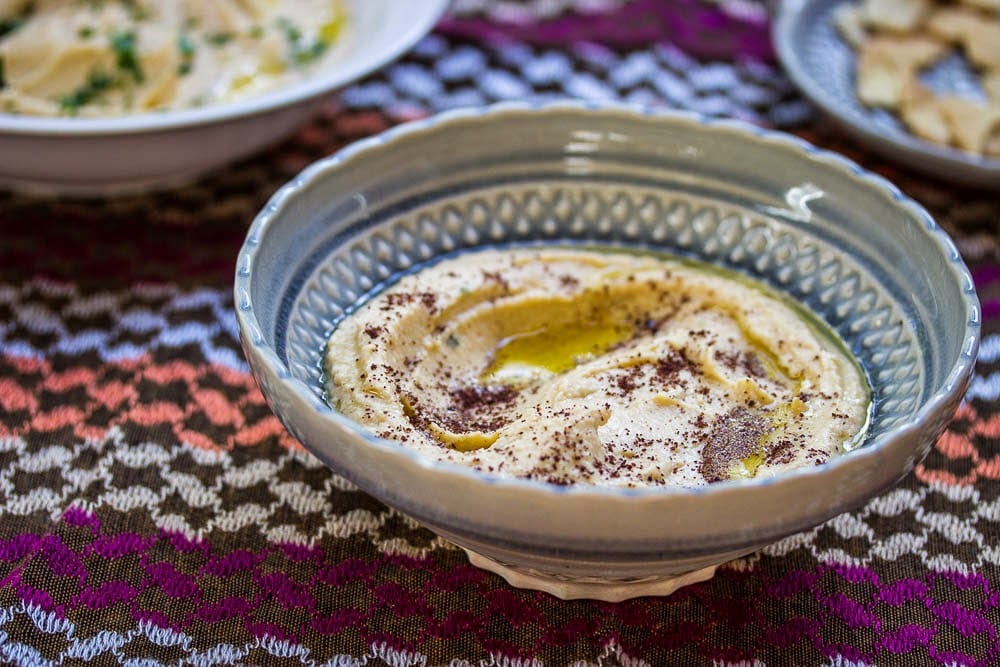
But most of all, you are grateful that for once, your birth place – the very same land that for the first eight years of your life was the only home you knew – is not at the center of this particular regional discourse, debate, crisis. The politics of hummus might brush against the great peak of Mount Damavand, but it does not settle there. It continues on its journey. Becoming one again with the dust, the sea, and mountain ranges of Egypt, Lebanon, Palestine, Syria, Israel, Jordan.
Drop in the chickpeas and blend until smooth and creamy. Excersize patience. This might take a few minutes. If needed add a little more broth to thin out. Taste. Listen – and I mean really listen – to your taste buds. Add more of anything you think is lacking. Let the hummus rest in the fridge for at least thirty minutes before serving – it’s been through a long journey, after all. Bring to room temperature before serving (we can all use the time to acclimate) and drizzle liberally with olive oil. Serve as is or sprinkle top with anything your mood dictates.
You glance up and catch a legion of mothers, grandmothers, and great-grandmothers watching you from afar. You respectfully nod and acknowledge their presence. You are tempted to invite them to tea – but you don’t. They have a long journey ahead of them and many more homes to visit. They nod back and acknowledge that that they will not be staying today. You watch them turn their backs and leave.
You freely sprinkle in the sweet Spanish paprika.
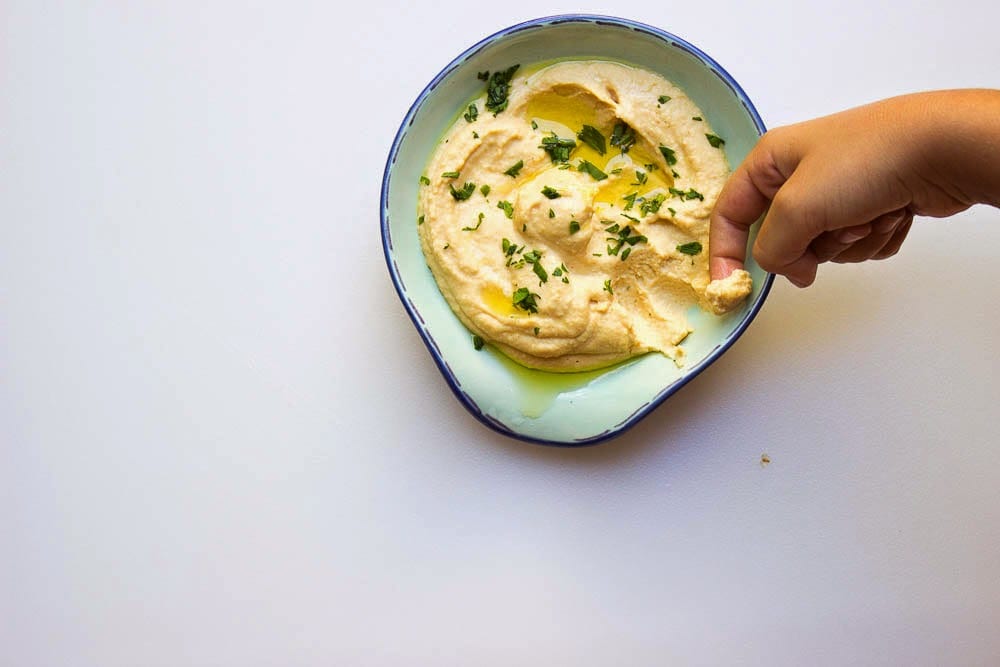
Inspired by Melissa Clark’s Stupendous Hummus – Hyperion and Yotam Ottolenghi and Sami Tamimi – Ten Speed Press
NOTES:
Ingredients
1 1/4 cup dried chickpeas
1 teaspoon baking soda
Freshly squeezed juice of 2 lemons, plus additional if needed
1 teaspoon sea salt, if using preserved lemons, 1 1/2 teaspoons sea salt, if not using preserved lemons
1 fat garlic clove, chopped, or 2 or more (if your taste buds tell you so)
1/2 teaspoon cumin
1/4 teaspoon sweet Spanish paprika, or smoky paprika (depending on mood)
1/2 preserved lemon, chopped, (depending on mood)
1/3 cup tahini, (more if your mood dictate)
1/2 cup reserved chickpea broth, plus more as needed
Olive oil, as needed for drizzling
Sumac, as garnish, (if you’re in the mood)
chopped up parsley, as garnish, (if you’re in the mood)
1- Put dried chickpeas in a large bowl and cover with plenty of water. Soak overnight.
2- Drain the chickpeas. Place in a medium pot over high heat and add baking soda. Cook for about three minutes, stirring constantly. Add 5 cups of water or enough to cover chickpeas by at least 1 inch and bring to a boil. Turn heat down to medium/high and cook chickpeas. Skimming off any foam and any skins that rise to the top. Cook until the chickpeas are very tender but not mushy. This will take anywhere between 20 mins-1 hour, depending on freshness of chickpeas.
3- Drain the chickpeas. MAKE SURE YOU RESERVE THE BROTH, the cooking water. Set aside.
4- In a food processor combine the lemon juice, salt, garlic, cumin, paprika, and preserved lemon, if using. Pulse the mixture to combine. Scrape down the sides.
5- Add the tahini with 1/2 cup of chickpea broth. Give it a whirl to combine. Scrape down the sides.
6- Add the chickpeas and puree until smooth and creamy. This can take a few minutes. It took me about five minutes. Scrape down the sides and taste. With the motor running add more broth if necessary to make it nice and creamy. I usually end up adding another 1/4 cup of broth. Scrape down the sides. Taste. Listen to your taste buds. Adjust any and all flavors as you like.
7- Transfer hummus to a bowl and cover, and let it rest in the fridge for at least 30 minutes. Take it out of the fridge at least 30 minutes before serving. Drizzle a nice olive oil on top, and garnish with any spices or herbs, or just serve as is.
Hummus will keep in the fridge for up to 3 days. And it freezes beautifully for up to 3 months.
When your bucket is full you’re really happy. And when your bucket is empty you’re really sad. When a person dips into your bucket they’re making you sad and taking some good feelings out of your bucket. When a person says something nice to you or are nice to you, they fill your bucket. – Luna
It always starts with a dinner party (and maybe some wine – and of course some Tahdig). About a year ago we had our good friend Krista over for dinner. Loobia Polo – Mast-o-Khiar – all the usual edible suspects. Krista asked me about the preparation of Tahdig, which got me talking about this idea I had for starting a food blog; an idea that had been brewing in my head for quite some time. There it sat comfortably – in its cozy home clothes – in the back recesses of my mind – composing itself – cooking itself – photographing itself. In short – taking up some valuable real estate in my already cluttered mind. After patiently listening to my meandering diatribe on sharing what I know about Tahdig making with friends and its relation to writing a blog – Krista gave me a straight-up talking to. Time to get the Tahdig out of my head and onto the blogosphere. The right friend – with the right words – at the right dinner party.
And so here I am one year later, absolutely humbled and honored to be nominated by SAVEUR MAGAZINE for their 2014 Best Food Blog Awards. Bottom of the Pot is nominated in two separate categories: Best Regional Cuisine Blog and Best New Blog. If you would like to vote for me or any of the other amazing nominated blogs you can click on the link or on the SAVEUR awards badge on the side bar. Voting closes on April 9th. Thank you all for all your support, kind words, and encouragement. But most of all thank you for joining me on this Persian food journey.
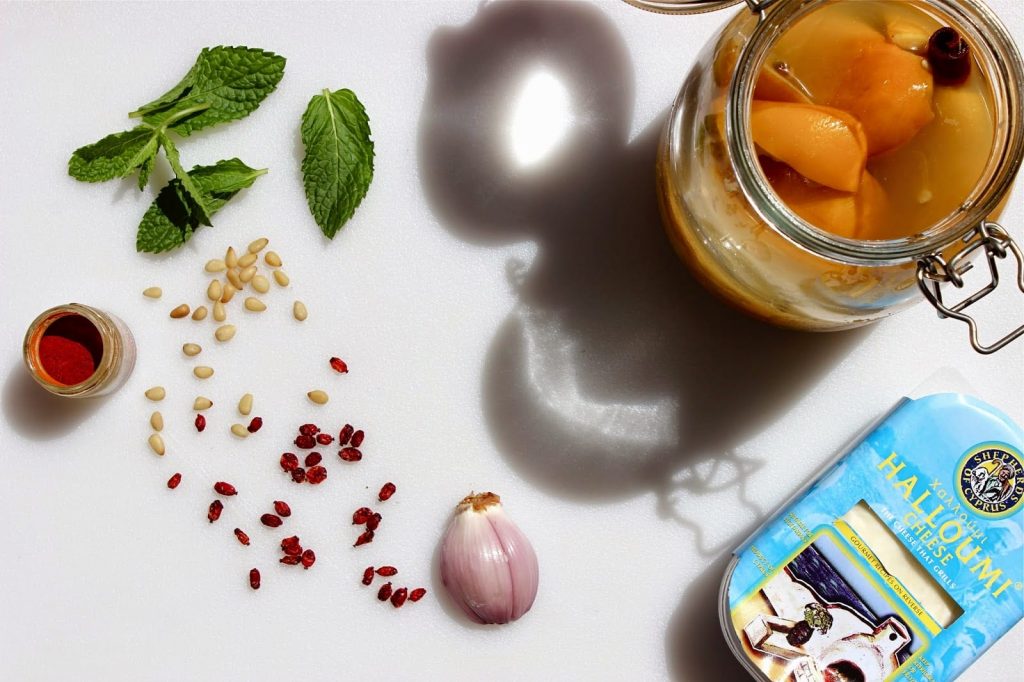
The idea for this Grilled Halloumi appetizer was also born out of a dinner party. An impromptu dinner party – the best kind. 2pm on a Saturday afternoon. Phones start lighting up. How about a casual dinner at our place – the kids can all play… 5 pm – same day. The house awakens from its lazy slumber and echos with laughter/shrieking/crying/stomping/dancing and delectable secretive whisperings of children. Lillet, and Drew’s homemade kombucha flow freely (not in the same glass!) amongst the grown-ups. Friends are put to work chopping the preserved lemons, assembling the salad, stirring the Kashki Bademjan (I had thankfully stored that away in the freezer – perfect for a last-minute dinner party dish). Chairs are pulled out of every room of the house – the kitchen table far too small to seat all fifteen of us. And yet, somehow we all manage to squeeze in. Some sitting – some standing – a couple sharing the piano bench – Drew crouched in the corner on the foot stool. Baby Lilah is passed around the table like another delicious appetizer so her parents can have a moment to eat. And the best part of all – the children are eating! Some (not mine) have even dug into the sauteed mustard greens. The children call out to “aunts ” and “uncles” – although technically no one is anyone’s aunt or uncle. These are friends with whom a night like this is possible. Old friends with history. Family.
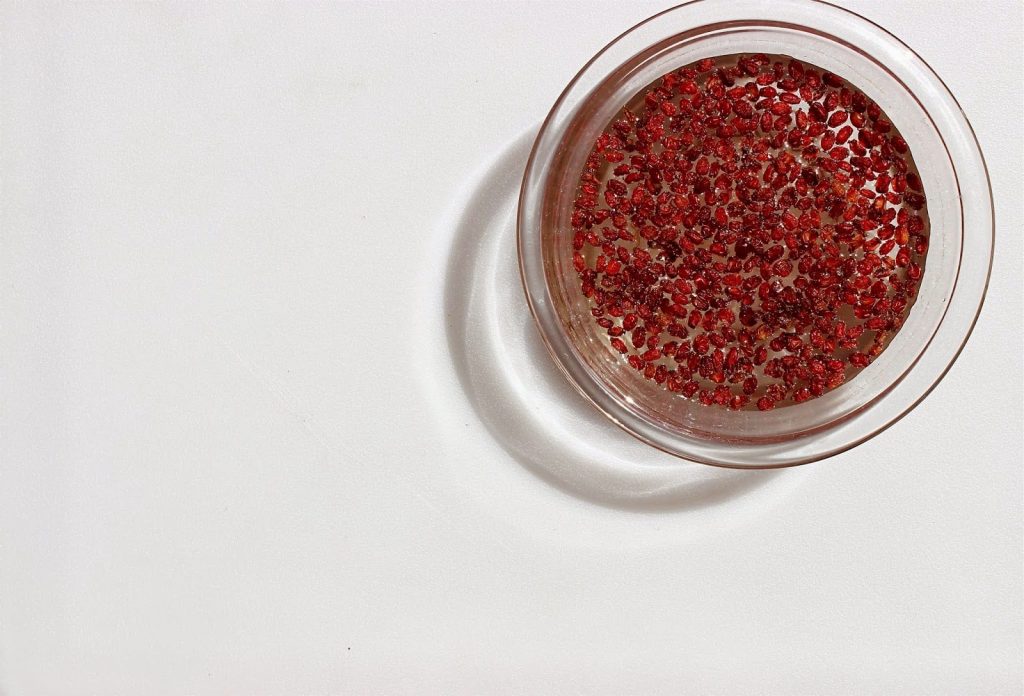
Dried barberries are typically used in any number of Persian dishes – mixed in with rice (Zereshk Polo) – used alongside other ingredients as stuffing for poultry or seafood – enjoyed as a stew – or turned into jam preserves. The dried berries are small like a currant and have a distinct tart flavor. When cooked they release their bright red color and add a beautiful hue to the dish. These little berries really liven up a dish both visually and with their tart pop of flavor. Besides the traditional methods of preparing them I think these berries can really accentuate any number of dishes like salads, quinoa pilafs, eggs, even baked goods. Barberries are also known for their medicinal qualities – such as aiding with indigestion and other digestive ailments. I bet we will soon see these little berries lining up the shelves at Whole Foods touting their ancient medicinal powers – declaring them the next superfood. In the meantime you can purchase dried barberries (for a very affordable price) at Iranian grocery stores or online here, here, or on Amazon. A search for organic barberries online will also give you a few options. What’s important is to use the freshest berries. The ones that are bright red. The shriveled up darker ones are usually old and should be discarded. It is also important to wash and soak the berries before use. The berries contain a lot of sand so soaking them allows the sand to settle at the bottom. Soaking also re-hydrates and plumps up the berries.
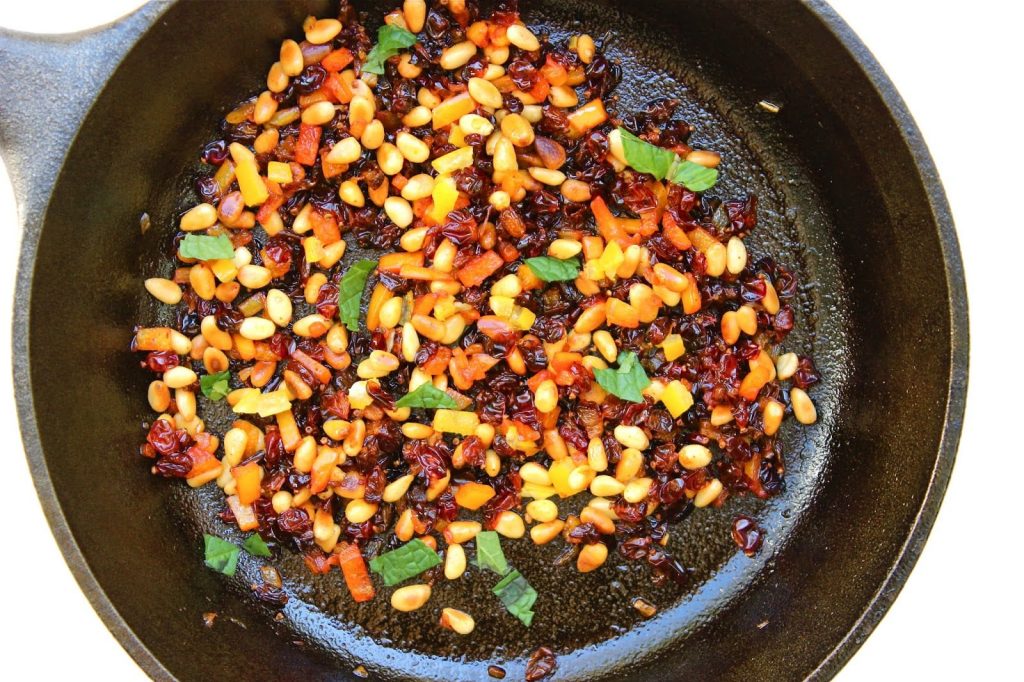
This past winter I made my first batch of preserved lemons with the abundance of Meyer Lemons that were popping up at every Farmer’s Market. And I am so glad that I did because they are fantastic. Salty and sour. Once again – right up my alley. There really wasn’t much to it. A bunch of good looking lemons, stuffed with sea salt and left to ferment in their own juices for a couple of months. I also stuffed a couple of cinnamon sticks in there. There are many sources online that can guide you through the process such as this post by David Lebovitz and this one from Nourished Kitchen. You really can’t go wrong. I already have so many plans for my preserved lemons. The first of which was this topping.
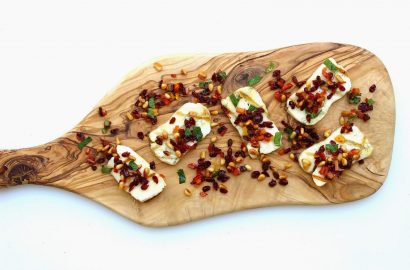
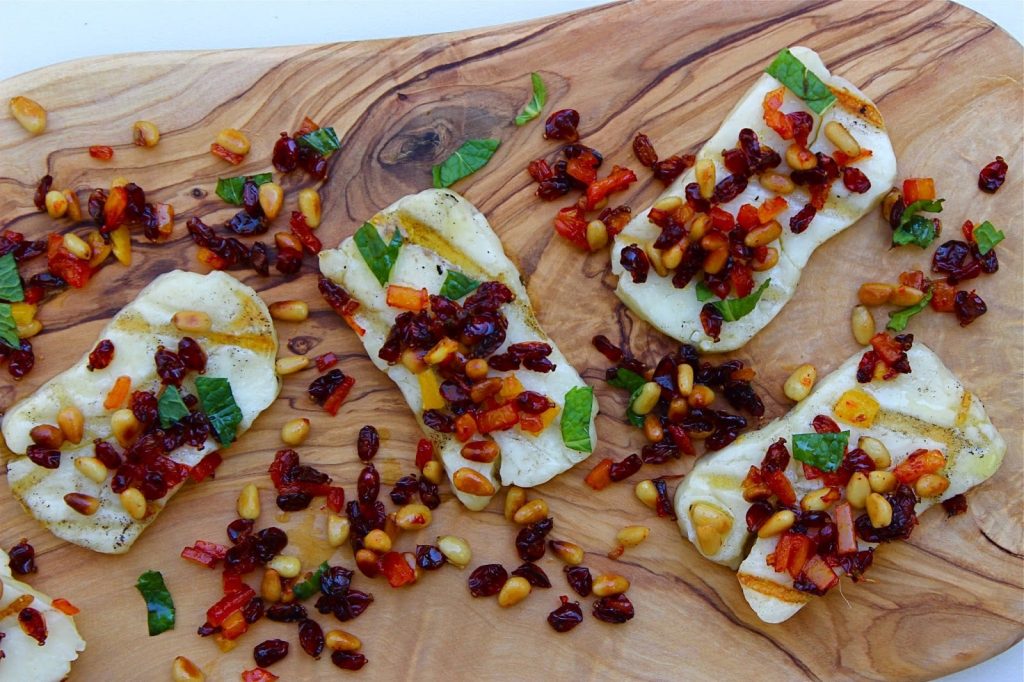
Halloumi is an unripened, brined cheese from Cypress. It is typically made from a mixture of goat’s and sheep’s milk. And because of its high melting point it’s great for grilling or frying. It is somewhat similar to feta cheese in its salty, briny flavor. This cheese is right up my alley. It makes a great appetizer served with a salad or topped off with some delicious ingredients as I have used here. The tart pop of the barberries, the crunch and nutty flavor of the pine nuts and the intense, unexpected and lively bite of the preserved lemons really make for a delicious and beautiful topping for the grilled (or fried) Halloumi cheese. A perfect appetizer for an impromptu or planned dinner party – or even a party of one!
Many years ago I made the decision to once again re-locate – to another city – another country- same continent this time. Away from parents, family, and childhood friends. In search of a new adventure, chasing old dreams and a California sunset. That new city has now become home. But with aging parents, and children who are growing much too quickly I more and more find myself longing for a place and time where we could all be together. And it’s on these days that we throw an impromptu dinner party. To celebrate everything and nothing in particular. To celebrate good news and good friends who have become our surrogate family. And we celebrate the only way I know how. By sitting around a far too small kitchen table and sharing a meal.
Suffice to say my bucket is full.
* Cleaning the barberries: Remove the stems from the barberries and pick through for any that look too dark and old. Place barberries in a bowl and fill with cold water. Allow to soak for 15-30 mins. Lift barberries out of the water with a small mesh sieve or your hands so as not to disturb all the sand that has settled at the bottom of the bowl. Give the barberries a quick rinse place on a paper towel or dish towel and pat dry. Barberries are now ready to cook.
If you can’t find barberries you can substitute with dried cranberries, or cherries. If they are sweet I would omit the maple syrup in the recipe.
Ingredients:
Serves 6 as an appetizer
1 tablespoon olive oil, plus more for drizzling
1 shallot, finely chopped
1/4 cup barberries, cleaned and soaked
1 tablespoon lemon preserves, finely chopped
1/2 teaspoon maple syrup, or sweetener of choice to taste
1/4 teaspoon ground saffron steeped in 2 teaspoons hot water
2 tablespoons toasted pine nuts
1 8.8 oz/250 g package Halloumi cheese
a handful fresh mint leaves, for garnish
Heat grill to medium/high heat
1- Heat oil in a small skillet over medium heat. Add the shallot and saute until soft and fragrant, stirring constantly. Take care not to burn. About 2 minutes.
2- Add barberries, lemon preserves, maple syrup, and saffron water. Turn down the heat to medium/low. Saute for about 10 minutes until the barberries are tender. Add the pine nuts and give a quick stir. Turn off the heat and set aside.
3- Cut the Halloumi in about 1/4 inch thick pieces. Place on the grill and grill each side for about 3 minutes. Until golden around the edges and soft and melting on the inside. Alternately you can also fry up the Halloumi on the stove top.
4- Place Halloumi on a serving dish and top with barberry mixture. Drizzl with a little olive oil and tear up some pieces of fresh mint to garnish with.
Enjoy right away. The Halloumi will get kind of tough and rubbery if it sits for too long.


