Category / Dinner

Dinner

Lost Things – Jashneh Mehregan – A Broccoli Koo Koo

 ♪ Music we’re cooking to ♪

Mama, can you squeeze the clouds to make it rain? – Soleil

Step outside.

Plant your bare feet firmly in the grass.

Let your toes wander. Let them search and settle amongst the rough and dying blades.

What was once lush and green.  What was once childhood.  What was once a vibrant summer respectfully fading away and making room for a crisp and most welcome autumn breeze.

Lost.
Mehregan

Mehregan is an ancient Persian Autumn festival dating back thousands of years.  It was observed by Zoroastrians as a same day/name day feast.  The ancient Persian calendar was based on 30-day months.  Each day was given a name and 12 of those days were given the same name as the month.  Celebrations were held each month when the day name and month name corresponded.  The names of the months in the Persian calendar are dedications to a certain virtue or a particular divinity. The month of Mehr derives its name from and is a dedication to the Zoroastrian god Mithra – the divinity of the Sun, Light, Truth, Friendship and Justice.  The word mehr also means kindness, caring and compassion.  These virtues combined with the Autumn harvest are the basis for this much revered celebration – Jashneh Mehregan.  Mehregan is still celebrated by Persians around the globe.  Perhaps an ancient predecessor to Thanksgiving – we celebrate by gathering with friends and family, celebrating the harvest with a feast, and helping our planet and those in need with kindness, caring and compassion.
Reach up with one hand to shield your eyes.

Look straight up.  Remember to squint.

Come face to face with your second born’s namesake.

Look hard.  Squint even harder.

Not to be found.

Lost.
Broccoli Koo Koo

For some time now, broccoli has gone the way of quinoa around our house.  Both girls will happily eat it as a smooth velvety soup – but don’t even consider serving it lightly steamed drizzled with olive oil/lemon and salt, roasted or otherwise.  I myself am not one to ever shun any particular type of food – especially one so packed with goodness; but I too will readily admit that I have fallen into a broccoli rut.  So when my mom told me about her Broccoli Koo Koo I happily jumped at the chance to try it out and add my own twist to it.

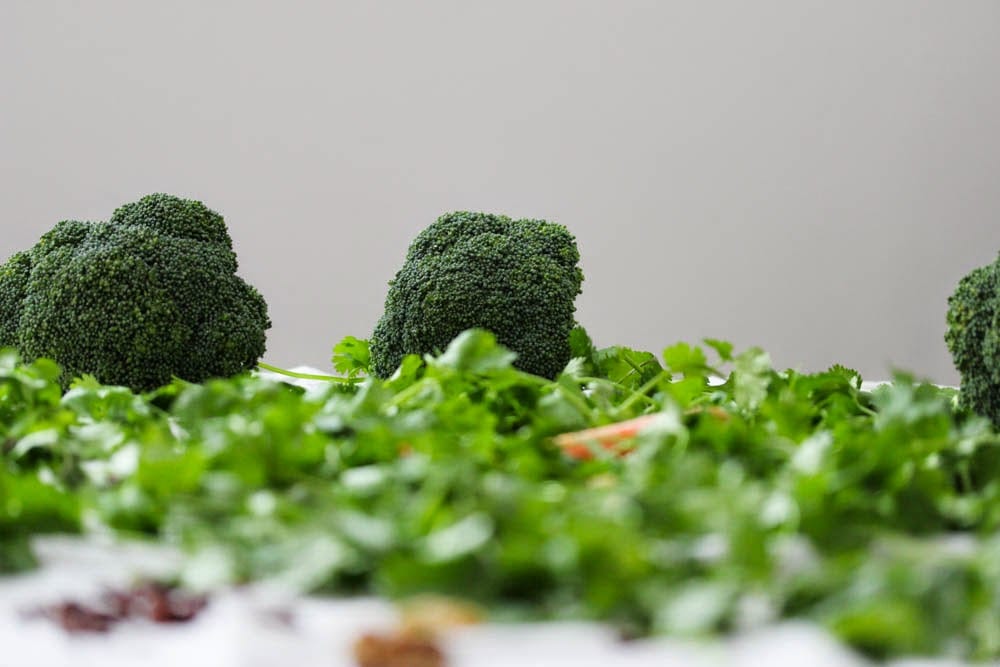
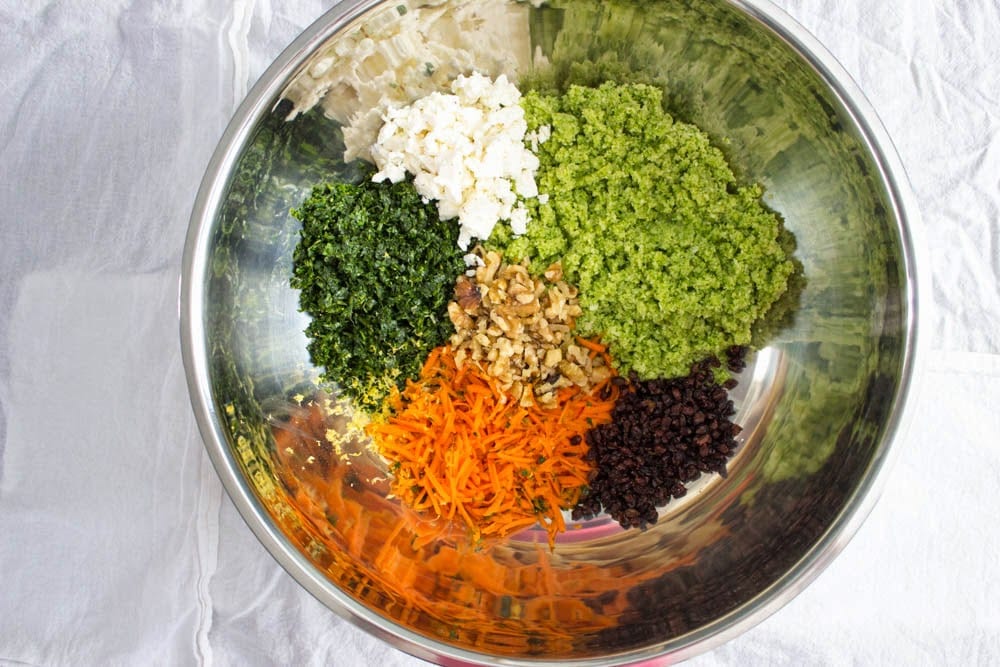
Great and delicious things can come out of a good fridge clean-out, my mother having taught me.  This dish is a strong example of such.  It does not disappoint.  Just like my Fresh Herb Koo Koo – this egg-based dish (very similar to a frittata) is packed with nutrient-rich vegetables, nuts and spices.  I used an abundance of fresh herbs (cilantro), a whole head of broccoli, a carrot for texture and color, walnuts for crunch, barberries for a tangy pop, feta cheese, and fragrant spices.  The effort here is minimal, especially if you use a food processor to very finely chop up the broccoli and herbs.  The beauty of this Koo Koo is that it can be enjoyed as a satisfying breakfast/brunch, enveloped in some really nice crusty bread as a sandwich for lunch, an after school snack, or served alongside some rice with a side of mast-o-khiar for dinner. And no one will mind if you hit it with a dash of hot sauce, as Drew likes to.  It also makes for a beautiful side dish to serve for a Mehregan celebration or a Thanksgiving feast.
Tilt back your head.

Slightly arch your back and drop your arms gracefully to your sides.

Let your hair cascade down your back.

Close your eyes.

Part your lips.

Wait for it.

Wait for it.

Wait for the drip – drip – drip.

The cheek – cheek – cheek.  As you would say in your mother tongue.

Wonder how it would be pronounced in China.  In Iceland.  In Bolivia.

Wait for it.

Lost.

Your Anita Ekberg moment lost without the Trevi.  Without any fountains.  Without any water.

All the fountains have dried up.  And shut down.

A drought, they say.  One of the worst around these parts, they say.
She left us quite some time ago.

The rain.

She gave up on us, they say.

She packed her bags, turned her back and walked out the door.  She hasn’t been seen since around these parts.

She lost her way back, they say.

If you happen upon her, or if she happens upon you, tell her we’re waiting for her with open arms.

Waiting for her drip-drip-drip.

Her cheek-cheek-cheek.

Tell her we’ll be waiting with a Broccoli Koo Koo.

Tell her we’ll be waiting with Mehr.


I am very happy to have been invited to join a group of very talented Persian food bloggers from around the world in a cyber celebration of Mehregan.  Please make sure you check out all of their amazing and delicious work!

Ahu Eats: Badoom Sookhte Torsh | Sour Caramelized Almonds
All Kinds of Yum: Jeweled Carrot Salad
Cafe Leilee: Northern Iranian Pomegranate Garlic and Chicken Stew
Coco in the Kitchen: Zeytoon Parvardeh |Marinated Olives with Pomegranate & Walnuts
Della Cucina Povera: Ghormeh Sabzi | Persian Lamb & Herb Stew
Fae’s Twist & Tango: Rice Meatballs | Kufteh Berenji
Family Spice: Khoreshteh Kadoo | Butternut Squash Stew
Fig & Quince: Festive Persian Noodle Rice & Roasted Chicken Stuffed with Yummies for Mehregan
Honest and Tasty: Loobia Polo | Beef and Green Bean Rice
Lab Noon: Adas Polo Risotto | Persian Lentils Risotto
Lucid Food: Sambuseh 
Marjan Kamali: Persian Ice Cream with Rosewater and Saffron
My Caldron: Anaar-Daneh Mosamma | Pomegranate Stew 
My Persian Kitchen: Keshmesh Polow | Persian Raisin Rice
Noghlemey: Parsi Daal Rice Pie
Parisa’s Kitchen: Morasa Polow | Jeweled Rice
Persian Spice: Rice Meatballs
Sabzi:  Ash-e Mast | Yogurt Soup With Meatballs
The Saffron Tales: Khorosht-e Gheimeh | Yellow Lentils Stew
Simi’s Kitchen: Lita Turshisi | Torshi-e Liteh | Tangy aubergine pickle
Spice Spoon: Khoresht-e-bademjaan | Saffron-Scented Aubergine Stew
Turmeric & Saffron: Ash-a Haft Daneh | Seven Bean Soup
The Unmanly Chef: Baghali Polow ba Mahicheh | Rice with Fave Beans and Lamb Shank
ZoZoBaking: Masghati | Persian Scented Starch Fudge

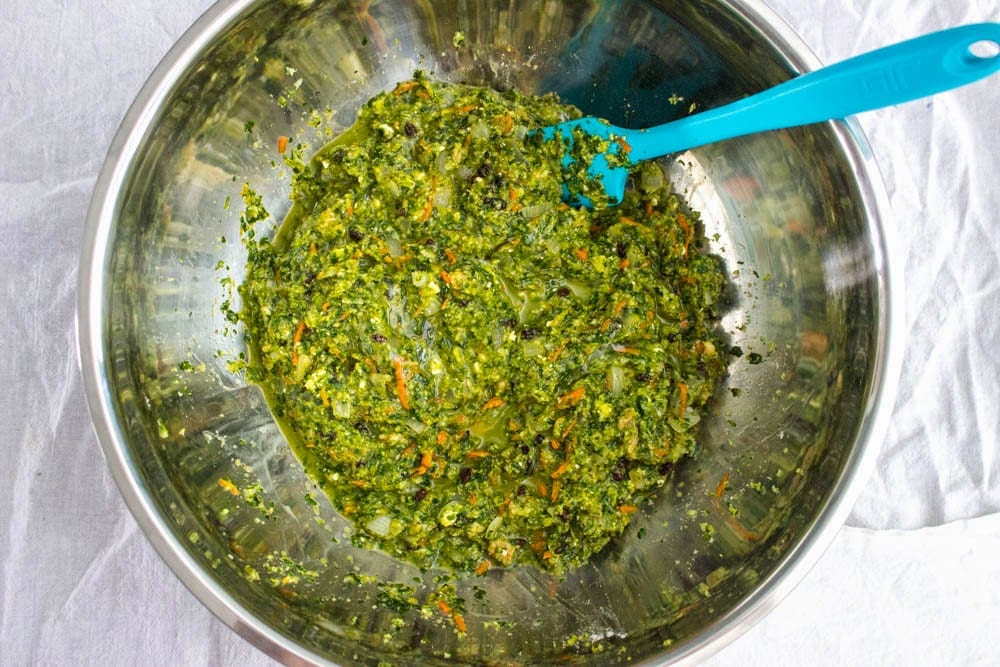
Disclaimer: The blue spatula pictured in this post was kindly sent to me by Gir. We’ve really been digging their whole line of colorful silicone made spatulas and thought I’d pass it on.  All opinions are completely mine.


BROCCOLI KOO KOO

NOTES:

  • I made this Koo Koo in a 12″ cast iron pan which works great.  Alternately, you could also use a 10×15 baking dish as I did for the Fresh Herb Koo Koo .  Just saute the onion separately in a pan.
  • I highly recommend using a food processor to very finely chop up the broccoli and cilantro.  It saves a lot of time.
  • Barberries can be found at Middle Eastern grocery stores or online.  Read here for more on barberries and how to clean them.
  • If you are not a fan of feta cheese you can try subbing in any cheese you like.  Goat cheese would be nice too.
  • Some of the ingredients listed as “optional” are optional but highly recommended!  Unless, of course if you have dietary restrictions.

Ingredients

Serves 6-8

1/3 cup olive oil, plus 4 tablespoons
1 onion, finely chopped
1 teaspoon dried mint
1 large broccoli (florets and stems), about 1 pound
2 bunches cilantro
1 large carrot, grated
zest of 1 lemon, grated
1/2 teaspoon turmeric
1 teaspoon salt
1/4 teaspoon ground black pepper
1 tablespoon all-purpose flour
1/3 cup walnuts, roughly chopped (optional)
1/3 cup dried barberries, soaked, rinsed and dried (optional)
1/2 cup crumbled feta cheese (optional)
6 large eggs

Preheat oven to 350 degrees F with oven rack set in the middle position.

1- Heat 2 tablespoons olive oil in a 12″ cast iron pan over medium heat.  Add the onion, sprinkle a little salt and saute until it softens, 6-8 minutes.  Stir in the mint and immediately turn off the heat.  Transfer onion to a bowl and allow to cool.  Don’t wash your pan, you’ll be using it shortly.

2- Roughly chop up the broccoli, florets and stems.  I like to first trim off the tough outer layer of the stem (which you can save and use later for stock). Put the broccoli in a food processor and pulse until very finely chopped.  It should have a flour-like consistency.  But not mushy.  Do this in batches if necessary.  Place in a large mixing bowl.

3-Run your knife through the cilantro and place in the food processor. I trim a couple of inches off the stems (save and use for stock!) and then use the whole cilantro.  Pulse until you have a very fine chop.  Place in the mixing bowl.

4- Add the sauteed onion and all the remaining ingredients except for the eggs to the bowl.  Mix to combine.  In a separate small bowl lightly whisk the eggs and add to the broccoli mixture.  The mixture should have the consistency of thick yogurt.  Not too dry but not too loose either.

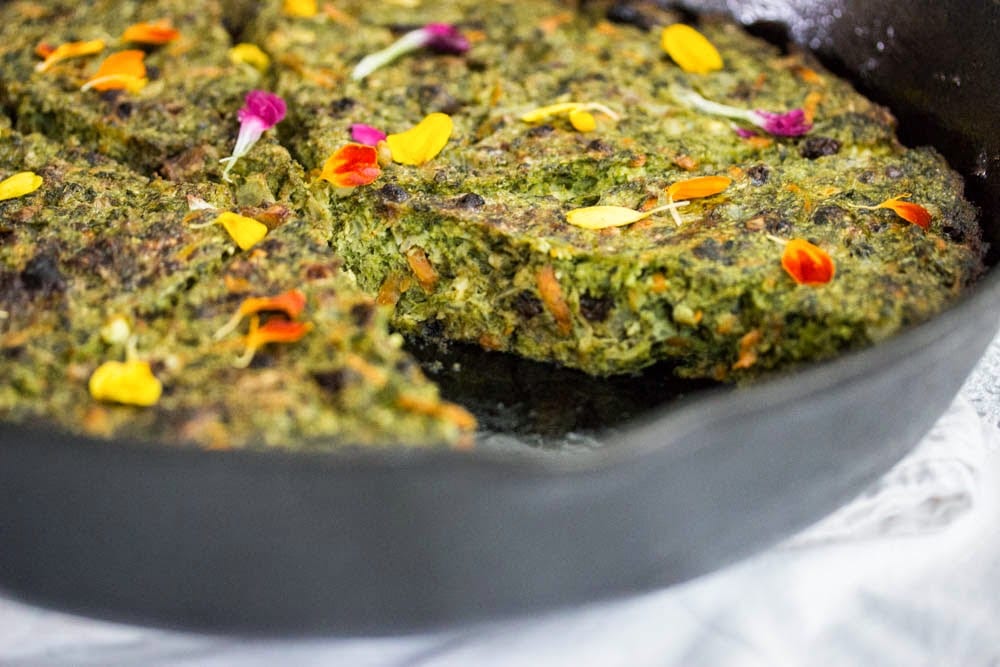
5- Pour 1/3 cup olive oil in the pan, swirling it around to make sure the pan is well coated.  Pour the mixture into the pan and spread evenly.  Bake in the oven for 30 minutes.

6- Take the pan out.  The Koo Koo should have set.  Cut the Koo Koo in eight equal portions and drizzle the remaining 2 tablespoons olive oil in between the cuts.  Place back in the oven for another 15 minutes.  At this point you can place the pan under the broiler for 3-5 minutes for a golden surface. Make sure it doesn’t burn.

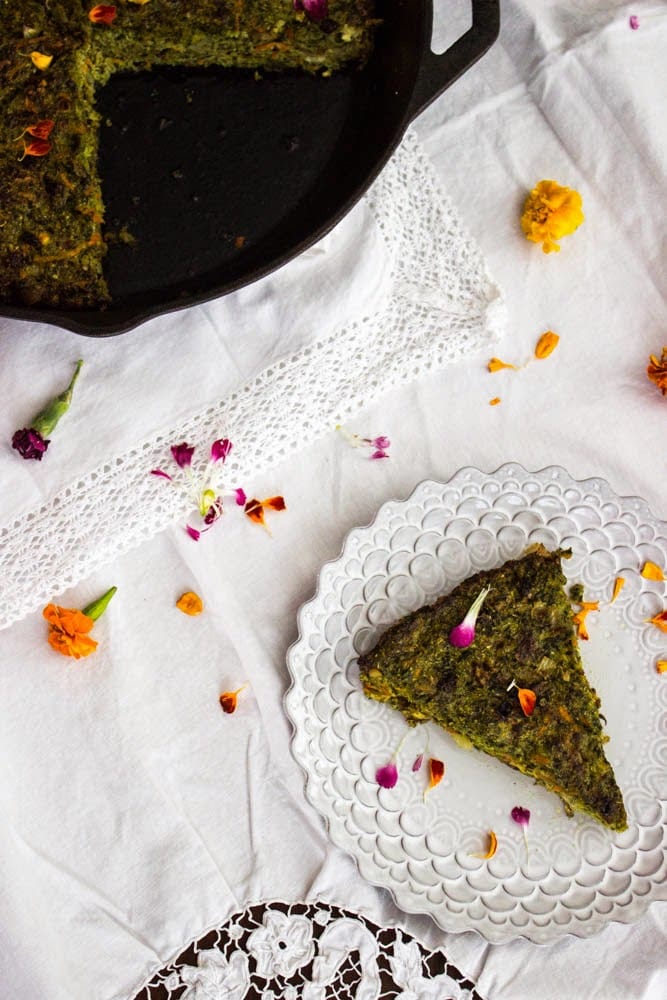
Serve warm or at room temperature.  Enjoy with a dollop of yogurt, or a dash of hot sauce.  It’s fantastic served as is, in a sandwich, or alongside some rice or grain of choice.

Will keep in the fridge for up to 3 days and freezes really well for up to 3 months.  Just make sure to cover it well when freezing.

Dinner

Louisa’s Tempeh Kabas with Minty Cilantro Lime Sauce – Persian Hospitality

 ♪ Music we’re cooking to ♪

Much has been written, said, rumored, about Iran – about Persians.  By Persians and non-Persians alike.  Some true – some pure fiction – some thoughtful – some ignorant – some just plain uninformed.  But the one Persian quality that can be wholeheartedly agreed upon by everyone across time and borders is the generosity and excellence of Persian Hospitality.  It’s legendary.  (Check out Anthony Bourdain’s FB posts about his recent trip to Iran)  If you’ve ever been invited to a Persian home you know what I’m talking about.

It can’t be helped; it’s in our blood.  For better or for worse.

Act One
You are eight years old.  As directed you climb up on a stool to reach deep into the very back, dark crevices of the kitchen cabinet to fetch extra tea cups.  Clear ones of course, so the deep sunset hue of the tea can be collectively admired by all.  Perched on top of the kitchen counter – delicately handling the jingle-jangle of the cups – you watch your mother conduct a symphonic feast.  She frets about not having enough food prepared.  Your eyes dart back and forth from the Aash, to the 3 different kinds of Koresh, the Rice, the overflowing tray of Sabzi Khordan, and the Baghali Ghatogh.  Your brother marches through with all the confidence and pride of his assigned role – Spear Carrier #1.  He diligently gets to work placing tender, fragrant meat on very sharp and very long metal skewers.  Out of the corner of your eye you spy your father on the balcony fanning the burning coals with a piece of cardboard, with the command and authority of a general.  It is all a well-rehearsed and well-orchestrated operetta.  A typical Saturday night.

Act Two
You are now an adult with your own home and kitchen.  You get busy writing your own Saturday night libretto.  Commander General is what your husband lovingly calls you at times like this.  You wear the label with pride.  You begin your pas de deux with your rather brutish love interest – the stove – simply referred to as Viking in the program.  You fret about whether the rice is burning, the Tahdig crisping up properly, the 2 stews humming in pitch-perfect notes.  You should have made more food you say to no one in particular.  Your girls look at you incredulously as they reprise their roles as table-setters numbers 1 and 2.  Your husband walks through with the very sharp and very long metal skewers – he has fully embraced the role of Spear Carrier.  In one swift move you pass him the tray of kababs.  As the symphonic cacophony of sounds and aromas builds to a crescendo, you can’t wait to sink your teeth into your newest obsession – Louisa’s Tempeh Kababs.

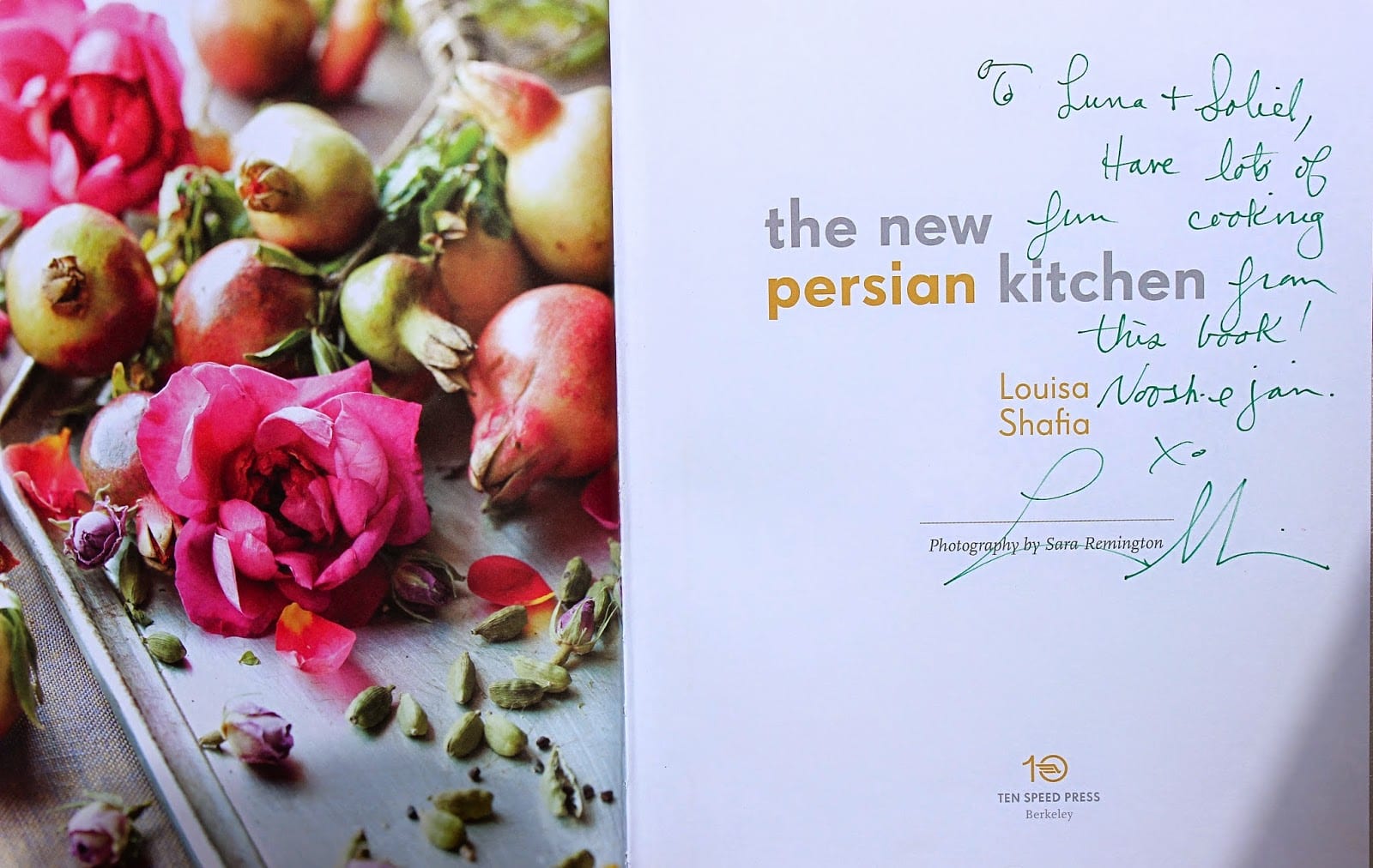
I first met Louisa Shafia over a year ago.  She was hosting a dinner event at Cortez in Echo Park (sadly since closed) featuring dishes from her beautiful cook book The New Persian Kitchen.  Prior to the dinner Louisa and I had exchanged a couple of emails,  primarily me gushing about her book and she graciously taking the time to respond.  The first thing that that struck me when meeting Louisa was her genuine warmth and infectious smile: the very same qualities that radiate through The New Persian Kitchen.  In her book, Louisa graciously invites you on a journey and discovery of Persian food. Persian food for the modern kitchen – for the everyday kitchen – for my kitchen.  What I love about The New Persian Kitchen is how Louisa incorporates what she calls “new world” ingredients into the many tried-and-true dishes – a combination that speaks to the way I cook in my own kitchen.

Tempeh
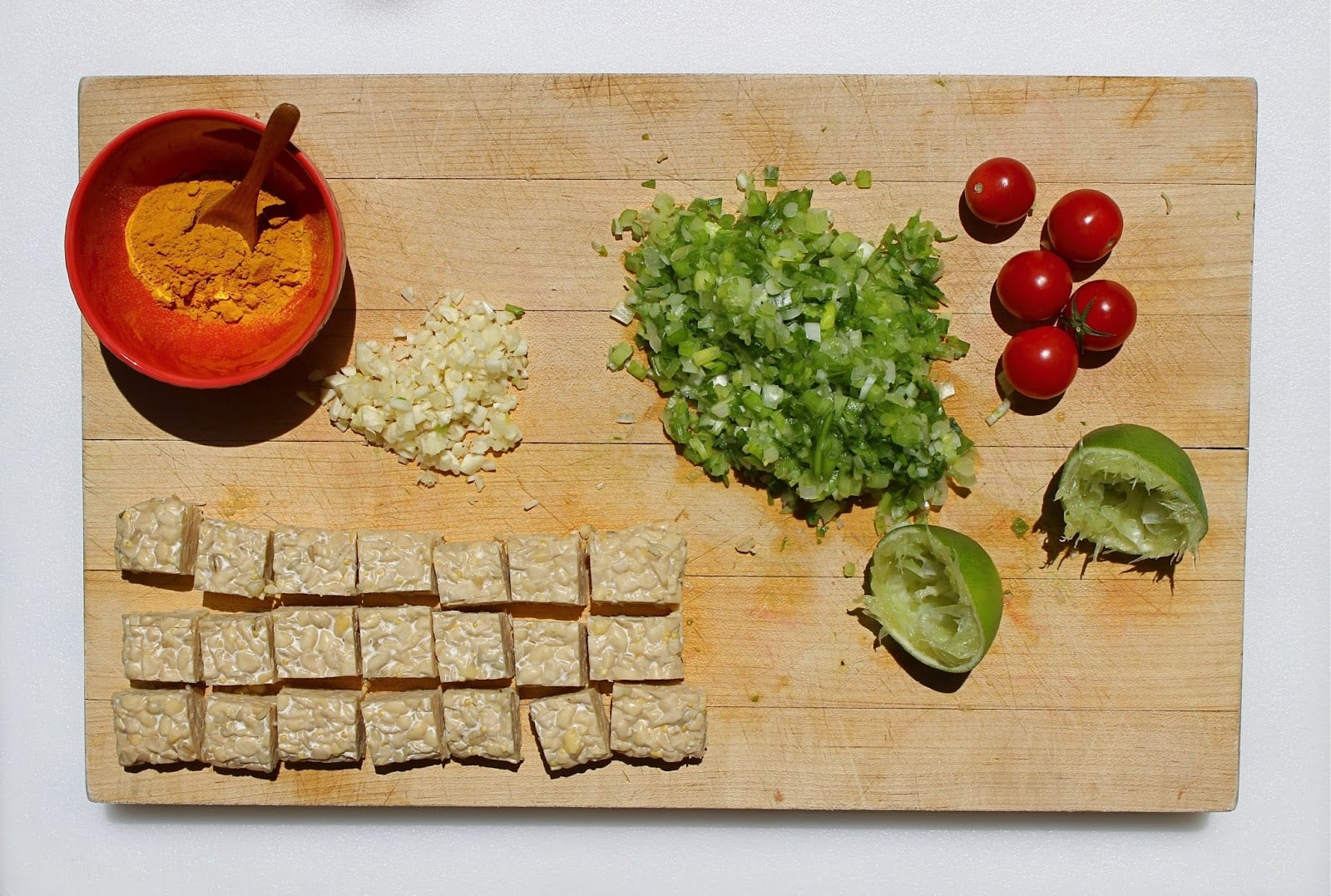
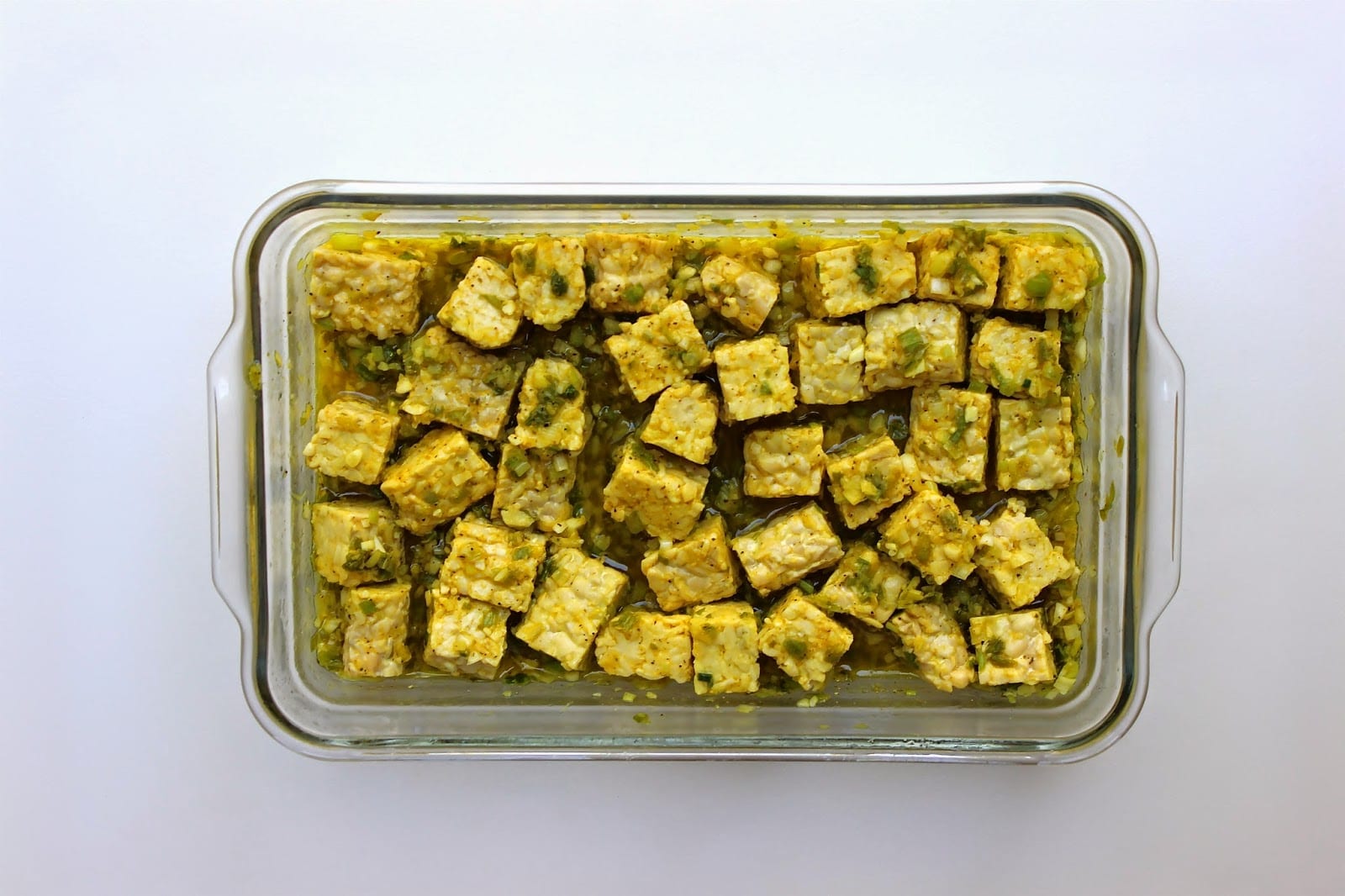
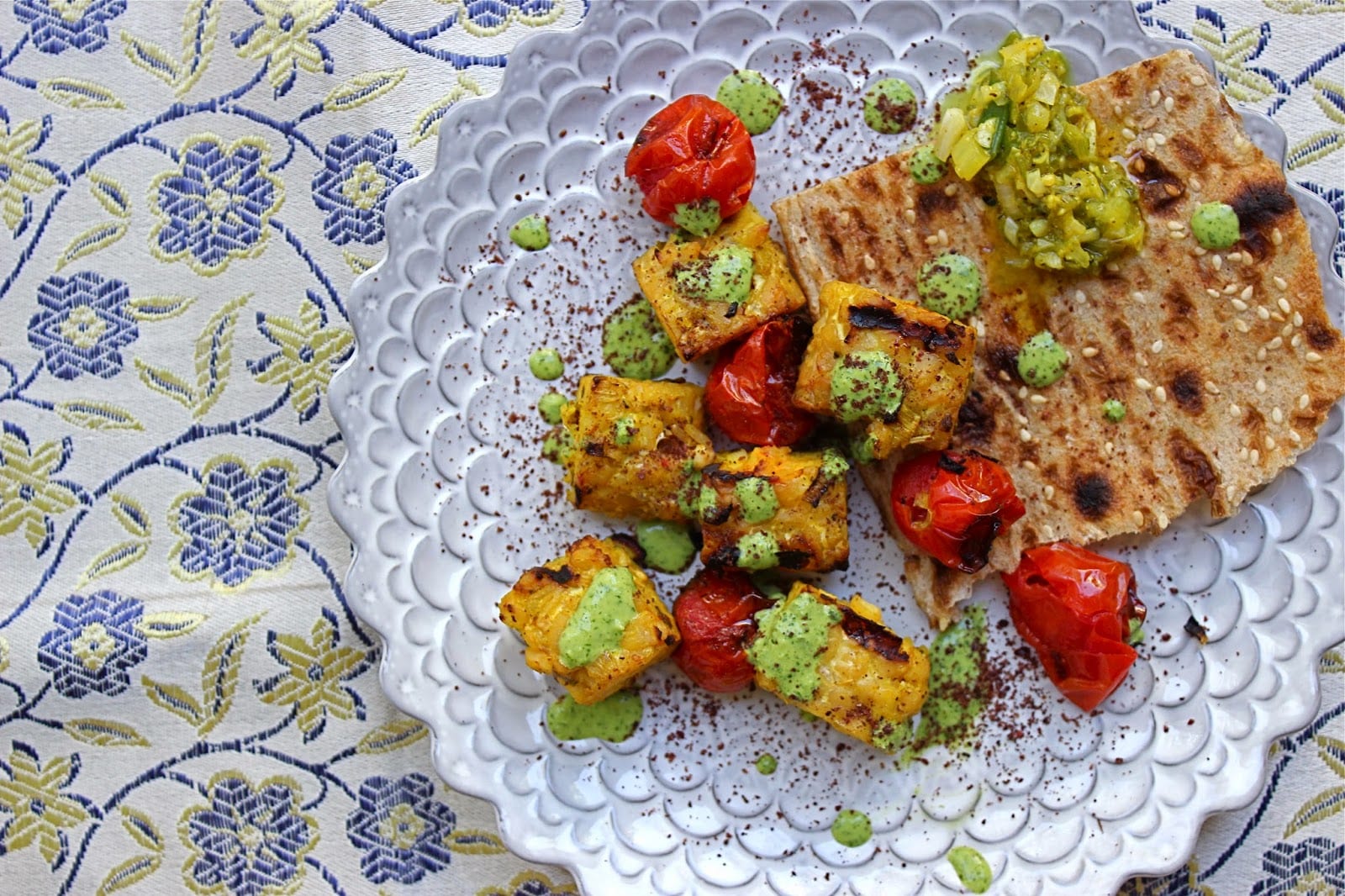
One of the many recipes I was intrigued and inspired by in The New Persian Kitchen is this Tempeh Kabab which has become a grilling staple in our house.  It has its own place right next to the Jujeh Kabab, Kabab Koobideh and Kabab Barg.  Although I have tried tempeh in restaurants before, this was my first time cooking with it at home.  And with this recipe I am now officially a tempeh convert.  Tempeh is fermented soy.  Because it is fermented it makes it a highly digestible food boasting many nutritional benefits.  And unlike most other soy products that are highly processed, tempeh is considered a “whole food.”  I buy my organic tempeh at Trader Joe’s or Whole Foods and prefer the one marked original (I’ve tried the 3 grains one and haven’t enjoyed it as much).  From my limited experience with tempeh I recommend marinating the kababs overnight for a full flavor impact (Louisa even recommends marinating for up to two days).  The simple marinade of turmeric, scallions, lime juice, garlic and pepper makes the otherwise bland tempeh burst with flavor.  These tempeh kababs shine all on their own for vegetarians and non-vegetarians alike.  Louisa suggests serving these kababs with a minty-cilantro sauce, which is delicious.  However, on occasion (because I was too lazy to make the sauce) I have served the tempeh kababs on their own with the scallion marinade on the side (since tempeh is plant based you can eat the marinade without cooking it).  And let me tell you – the slightly tart marinade is delicious and a hit every time we serve it.  It’s a perfect accompaniment to the kababs, like a salsa or torshi (Persian pickles).  I have even used  leftover marinade the next morning in our scrambled eggs or frittata.  You can serve Louisa’s Tempeh Kababs any which way you like – with some fragrant basmati rice, wrapped up in lavash or sangak bread, or with a side salad – for a perfect summer meal.  So get your grill going – time to serve up some Tempeh Kababs.

The New Persian Kitchen is one of those cook books that is timeless and sure to become a classic.  Drew and I had Louisa inscribe our copy to Luna and Soleil.  The perfect  heirloom to pass down from generation to generation.

Act Three
The curtain rises and you welcome your guests.  They remark on the delicious aromas coming from the kitchen.  You say you hope they like Persian food.  They compliment your rug – you are almost compelled to say that it means nothing to you and that it would make you happy if they took it.  Their eyes would widen with joy and bewilderment.  They would look back to the rug expectantly.  Are they really thinking of rolling it up??  Tarof, the Persian art of humbling oneself and putting your guests’ needs and comfort above your own, would be lost in translation.  You thank them kindly, gently steer them away from the rug and towards the dining room and the Tempeh Kababs.

CURTAIN


LOUISA’S TEMPEH KABABS WITH MINTY CILANTRO-LIME SAUCE

Very slightly adapted from The New Persian Kitchen – by Louisa Shafia – Ten Speed Press

I pretty much stick to Louisa’s recipe here with only minor adjustments.  I have reduced the amount of  pepper since the girls will bail on anything if they detect any heat.

Ingredients:

Makes about 10 (8-inch) skewers

TEMPEH KABAS
5 scallions, green and white parts, minced
1/2 cup olive oil
1/2 cup freshly squeezed lime juice (about 4 limes)
1/2 teaspoon ground turmeric
3 cloves garlic, minced
sea salt
black pepper
2 (8-ounce) packages tempeh, cut into 1 1/2 -inch cubes
1 pint cherry tomatoes
sumac, for garnish

MINTY  CILANTRO-LIME SAUCE
1 cup loosely packed fresh mint
1 cup loosely packed fresh cilantro
1/3 cup plain yogurt (not Greek Style)
marinade from the Tempeh Kababs

1- In a large bowl whisk together the scallions, oil, lime juice, turmeric and garlic with 1 tablespoon salt and 1 teaspoon pepper (Louisa uses 2 teaspoons pepper).  Add the tempeh and toss to coat well.  Transfer to a container with a lid and marinate in the refrigerator, for at least 1 hour or up to 2 days (I marinate overnight).

2- Thread the tempeh onto the skewers about 1/4 inch apart with a few tomatoes in between.  If you have any leftover tomatoes give them a quick toss in the marinade and skewer them separately.

3-If you will be serving the Minty Cilantro-Lime Sauce reserve 1/4 cup of the remaining marinade for basting and pour the rest into a blender.  Add the mint, cilantro, and yogurt.  Blend until smooth to make sauce, then season with salt.

4- Prepare a hot grill.  Grill the skewers, basting a few times with the marinade, 4 to 5 minutes per side, until the tempeh begins to char.  Transfer the tempeh skewers (and any tomato skewers) to a serving platter.  Spoon some of the sauce (if using) over the tempeh and put the rest in a bowl for dipping.  If not using the sauce put the marinade in a bowl and serve alongside the tempeh.  Serve the Tempeh Kababs hot and garnish with sumac to taste.

Dinner

Spaghetti Alle Vongole in Rosso – Spaghetti in a Red Clam Sauce – Forza Italia!

“Which of the cities visited did Your Highness enjoy the most?” – Reporter

“Each, in its own way, was unforgettable.  It would be difficult to…Rome!  By all means, Rome.  I will cherish my visit here in memory as long as I live.” – Princess Ann – Roman Holiday

The television set is perched precariously on a make-shift table.   Blankets – well-traveled and lovingly clung to across two continents – adorn the living room floor.  Each fold and crease meticulously smoothed out, more than making up for any lack of furnishings.  The dull brown sliding balcony door perfectly frames the lush green maples swaying rhythmically from side to side, sleepily whispering in hushed tones the arrival of an early Vancouver Summer.  Green – everywhere you look, it’s all green.  But none of this beauty registers.  We sit with our eyes affixed to the TV set.  Anticipation and expectations running high.  These are the years predating the domination of the World Wide Web.  But at the time this antiquated box of moving pictures and sound is our only link to the most important event of the summer – of the year.

World Cup Soccer 1982 Finals.

Italy vs. West Germany.

Growing up, a big pot of water was a permanent fixture on our stove. Always standing at attention  – ready to come up to a boil   On any given day this pot would either serve as the conduit for a fragrant platter of rice (with crunchy Tahdig of course) or a bowl of perfectly cooked al dente pasta.  And depending on which was being served  you could always find its lover – a companion pot lounging right next to it, slowly, dreamily simmering the day away.  A stew of some kind for the rice, or some type of sauce for the pasta.

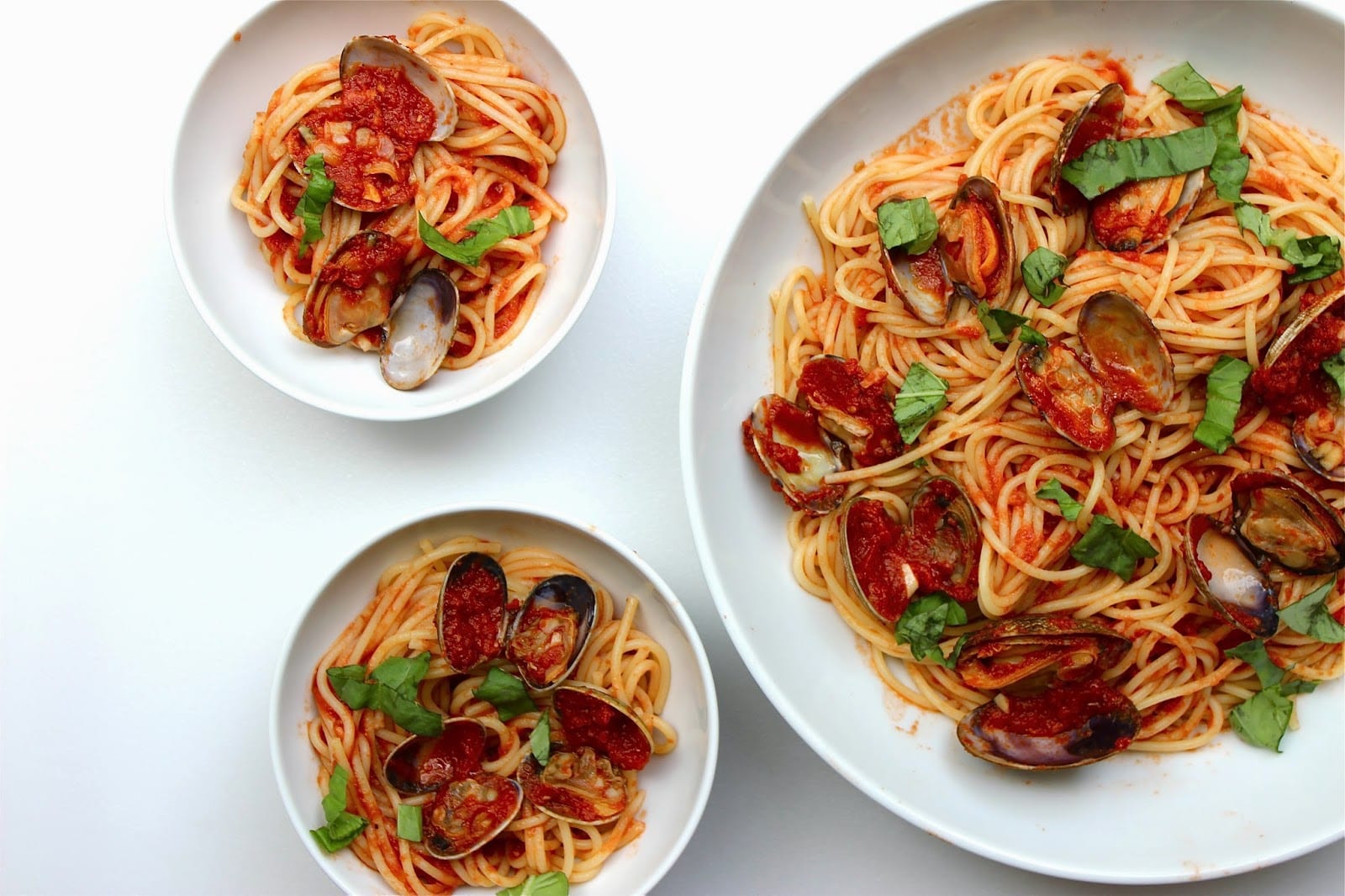
Spaghetti alle Vongole – Spaghetti with Clams is a staple and a favorite in our house.  Just the mention of it will send the girls and Drew into a spirited Vongole dance.  I prefer my Spaghetti alle Vongole in Rosso – in a red sauce.  Just like my Baba – my dad – does.  The best Spaghetti alle Vongole I’ve ever had was some years ago in San Remo.  Baba, my step-mother Kumi and I had just stepped off the train at about 10pm – ravenous.  A local at the train station recommended a small family-owned restaurant, and suffice to say it was one of those forever life-altering meals.  I have been trying to recreate that Spaghetti alle Vongole in Rosso ever since.

Vongole – Clams
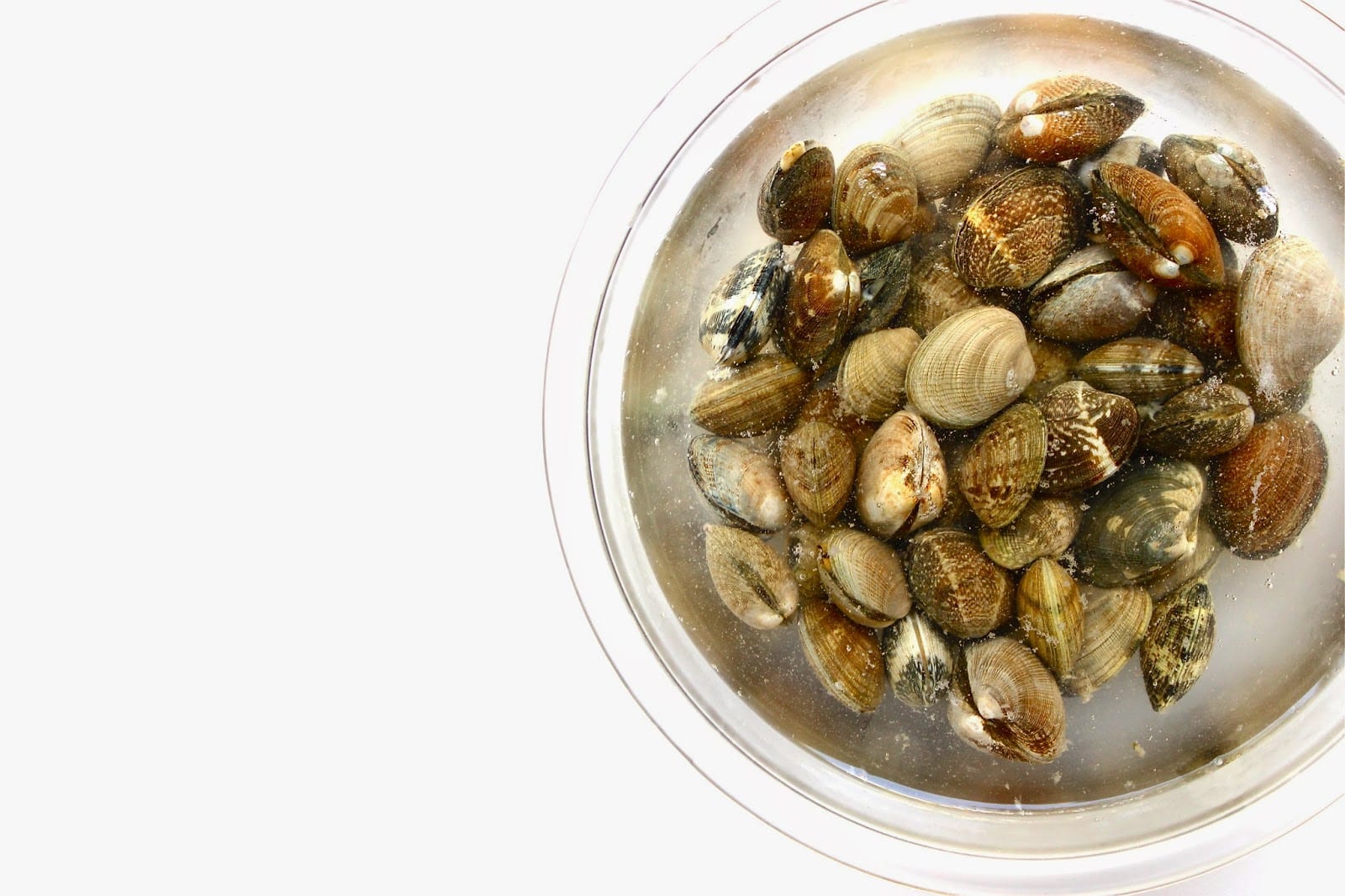
The clam sauce here is very basic with few ingredients.  So it goes without saying that the best quality ingredients will make all the difference.  Fresh clams being the most important.  I like to use small clams – manila clams or cockles.  I buy my clams at the market the day I am going to be preparing them and I make sure to ask for the ones that are closed tight (if they are open they are not alive and cannot be consumed).  Sometimes when you get home some may open up slightly – if so gently tap one clam against another.  If they close up they are ok to use, but if any stay open then discard them.  As soon as you get home gently put the clams in a large bowl and fill with fresh water and add salt to it.  You want to add enough salt to make it like seawater.  This process allows the clams to release the sand trapped in them.  Put the bowl of clams in the fridge (uncovered) for at least 30 mins or until you are ready to use.  When ready, gently lift the clams out of the water so you don’t disturb the sand that has settled at the bottom and give them a quick rinse.  Clams cook fairly quickly and over-cooking them turns them tough and rubbery, so make sure you scoop them out once they have opened up.  Discard any that don’t.

Tomato Sauce
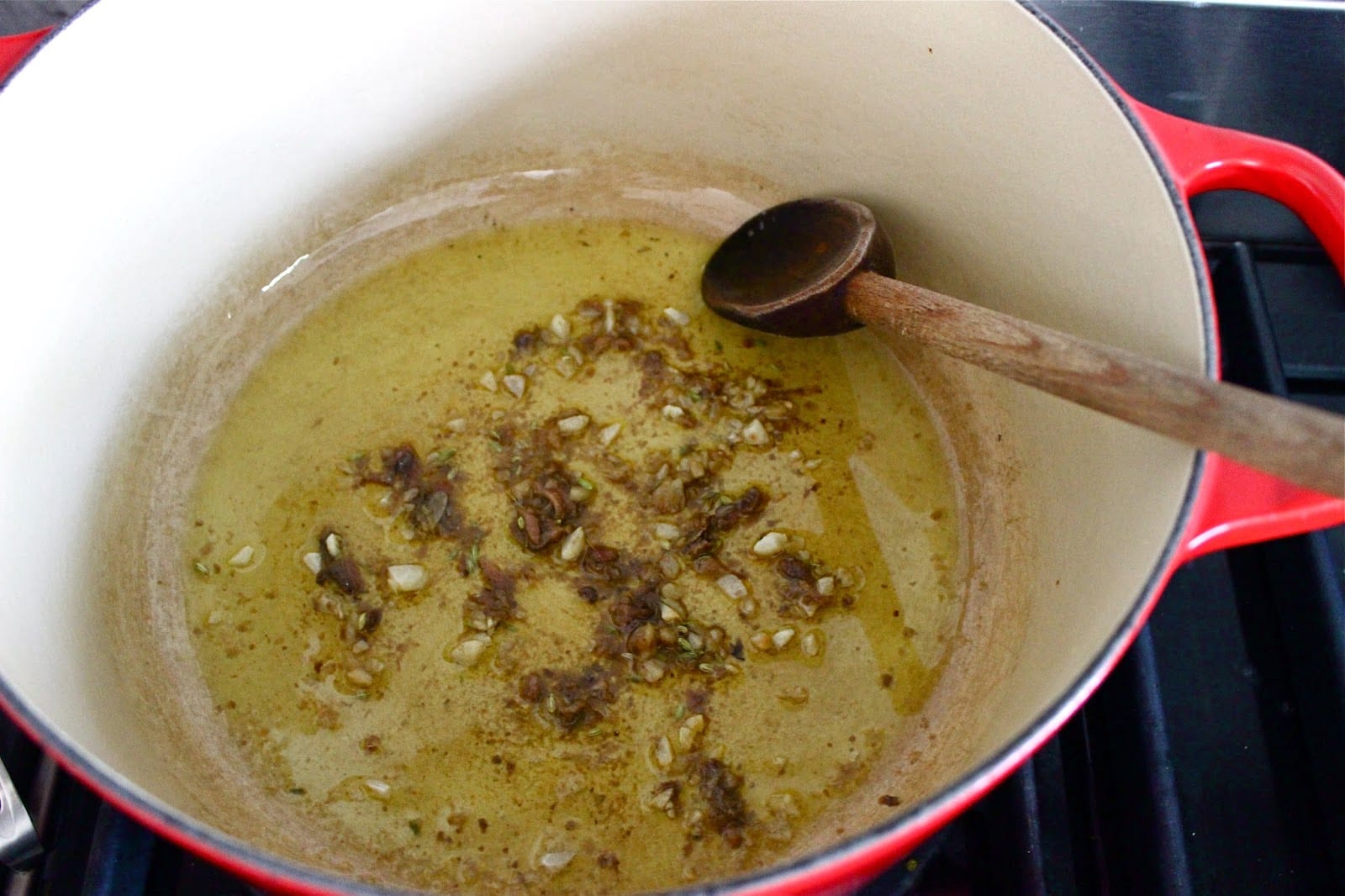
Typically this calm sauce is made with fresh, in-season tomatoes.  But I make mine with good quality jarred tomatoes like these, since in-season tomatoes are limited.  But more importantly since the girls like a smooth tomato sauce, no chunks of cooked tomato Mama!, I puree the tomatoes first.  But you can cook them whole and gently break them down as they simmer if you like.  And taking a cue from a beloved fish stew called Ciuppin I like to add plenty of garlic and anchovies to the sauce with a sprinkle of fennel seeds to liven it all up.  Please, please, please don’t skip the anchovies here.  The anchovies delicately break down and melt into the olive oil and become one with the garlic – creating a paste of sorts that adds a fantastic depth of flavor to the whole sauce.

Pasta
Over the years we have been much more mindful of how much white pasta we eat.  Most of the time trading it in for healthier alternatives.  There are so many options now beyond whole wheat – a variety of grains (spelt, einkorn, etc). One that we enjoy most is a quinoa based pasta which is gluten-free and which I feel comes the closest in replicating the texture and taste of a regular white pasta.  But as is the case with our white rice consumption there is a time and place for the “real” stuff.  And this dish is one of those times when we break out the tried and true to our hearts –  white semolina pasta.  You can use regular spaghetti. I usually like to use a thinner noodle like linguini or spaghettini – thin spaghetti.  Cheese (parmesan/pecorino) is not under any circumstances served with a seafood based pasta.  And now please avert your eyes momentarily if you are a traditionalist when it comes to this hard fast rule because – I like a sprinkling of parmesan on my Spaghetti alle Vongole.  There.  I said it.  Now let’s move on.

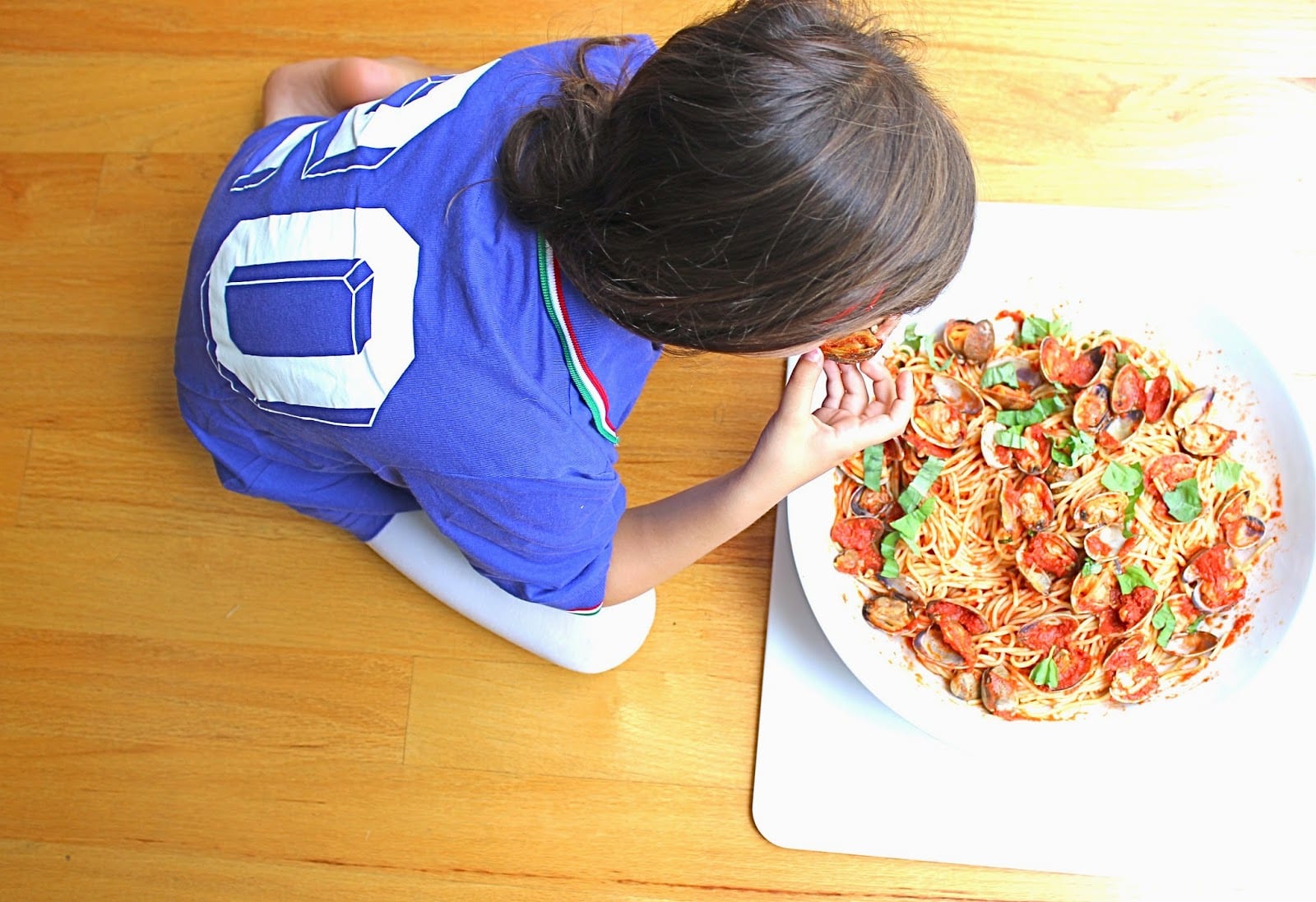
Dino Zoff – the team captain and goalie – runs the course of the stadium – the trophy held proudly high above his head.  Paolo Rossi and the rest of the team clad in their blue jerseys – Gli Azzurri – run right along with him.  The stadium sounds as if it’s about to burst – as do our hearts, an ocean away.  We storm our tiny balcony – wooden spoons, pots and pans in hand, loudly banging one against the other, confounding our very nice Canadian neighbors’ impression of us even more.  Adding to the general mystery of exactly where we have beamed down from – what with the enticing and exotic aromas always wafting down the hall.  Our cheers, hoots and hollers startle and shake up the maple trees.  World Cup fever has yet to catch in this corner of the world.  But on our little corner of the balcony – our makeshift Roman fountain – our hearts are alive and on fire.  And for the first time in two months since our plane took off from Fiumicino airport – that big lump that seemed eternally lodged deep in our throats is set free.  And the tears flow freely.

Do you have World Cup fever?  Who will you be cheering for?  And more importantly, what will you be cooking to celebrate?  Forza Italia!


SPAGHETTI ALLE VONGOLE IN ROSSO – SPAGHETTI IN A RED CLAM SAUCE


Ingredients:

Serves 4-6

3 tablespoons olive oil
3 large cloves garlic
5 anchovies packed in olive oil
1/8 teaspoon fennel seeds
2 – 18oz jar of whole peeled tomatoes with their juice, pureed in a blender or food mill (optional, for a smooth sauce)
sea salt
pepper
2 pounds live manila clams, rinsed scrubbed and soaked in salt water
1 pound spaghettini, or linguini

1- Heat the olive oil in a large pot over medium/low heat.  Add the garlic and anchovies.  Add the fennel seeds by crushing them between your hands.  Stir and cook until the anchovies start breaking down and melting into the oil.  Take care not to burn the garlic, turn heat down if necessary.  3-4 minutes.

2- Add the tomatoes and their juices.  If the tomatoes are not pureed gently break them down in the pot.  Add 1/2 teaspoon sea salt and pepper to taste.  Stir and cook uncovered at a gentle simmer for 35 minutes – 1 hour.  The longer it sits and simmers the more flavorful it will be.   Adjust seasoning as needed.

3- Bring a large pot of salted water to a boil.  Add the spaghettini and cook until al dente.  No mushy pasta please!

4- As soon as you start cooking the pasta add the clams to the sauce.  Gently lift the clams out of the bowl of salt water and rinse them.  Gently add them to the sauce.  Cover the pot and turn the heat up to medium.  Cook the clams until they open.  About 4-6 minutes.  Don’t overcook the clams.  Discard any clams that don’t open.  The clams will release a lot of their juices to the sauce.  Once the clams have cooked you can take them out of the sauce and turn up the heat on the sauce to reduce it until it is slightly thicker.  (I usually don’t have the patience for this though and find the sauce thickens up when I add it to the hot pasta.)

5- Drain the pasta and transfer to a large serving bowl.  Carefully add the sauce and mix until well combined.  Serve immediately.

Dinner Stew

An Artichoke, Mushroom, and Sour Green Plum Stew – Khoresh Kangar-E-Farangi Ba Gojeh Sabz – An Official Dinner Invitation

 ♪ MUSIC WE’RE COOKING TO ♪

Mama!  The radio just said Air Force One landed at LAX.  Can the President come over for dinner?  Please?!

What’s Air Force One, Luna?

Air Force One is the President’s airplane, Soleil.  And he’s here!  If Mama says it’s ok then he can come over for dinner.  Can he Mama?  Please?!  You could make Polo with Tahdig.  I bet he would love it.  Let’s call him.  Mama please!!.

How do you know so much things, Luna?

Well, I’m a first-grader, Soleil.  First-graders know a lot.  And I’m going to be the president when I grow up.  And a pop-star.  First I’ll be a pop-star, then I’ll go to space and then I’ll be president.  If you want – when I’m president I can make you mayor or one of those people in a cabinet.

I don’t want to be mayor or a cabinet.  I’m going to be a mommy and a teacher when I grow up.

Isn’t it strange, Soleil – there haven’t been any girl presidents.  Like – at – all. How come, Mama?

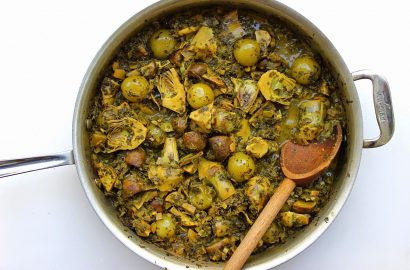
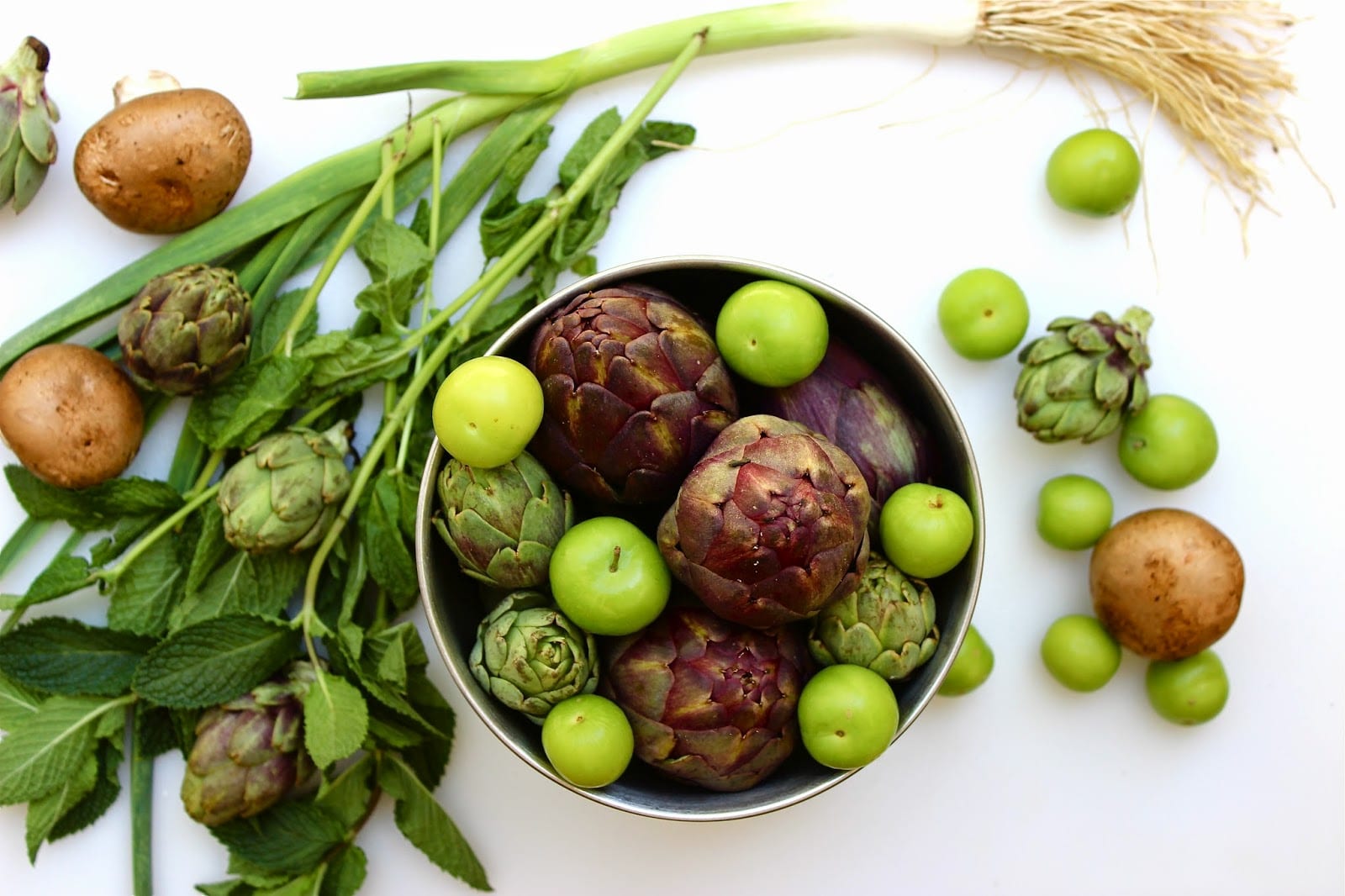
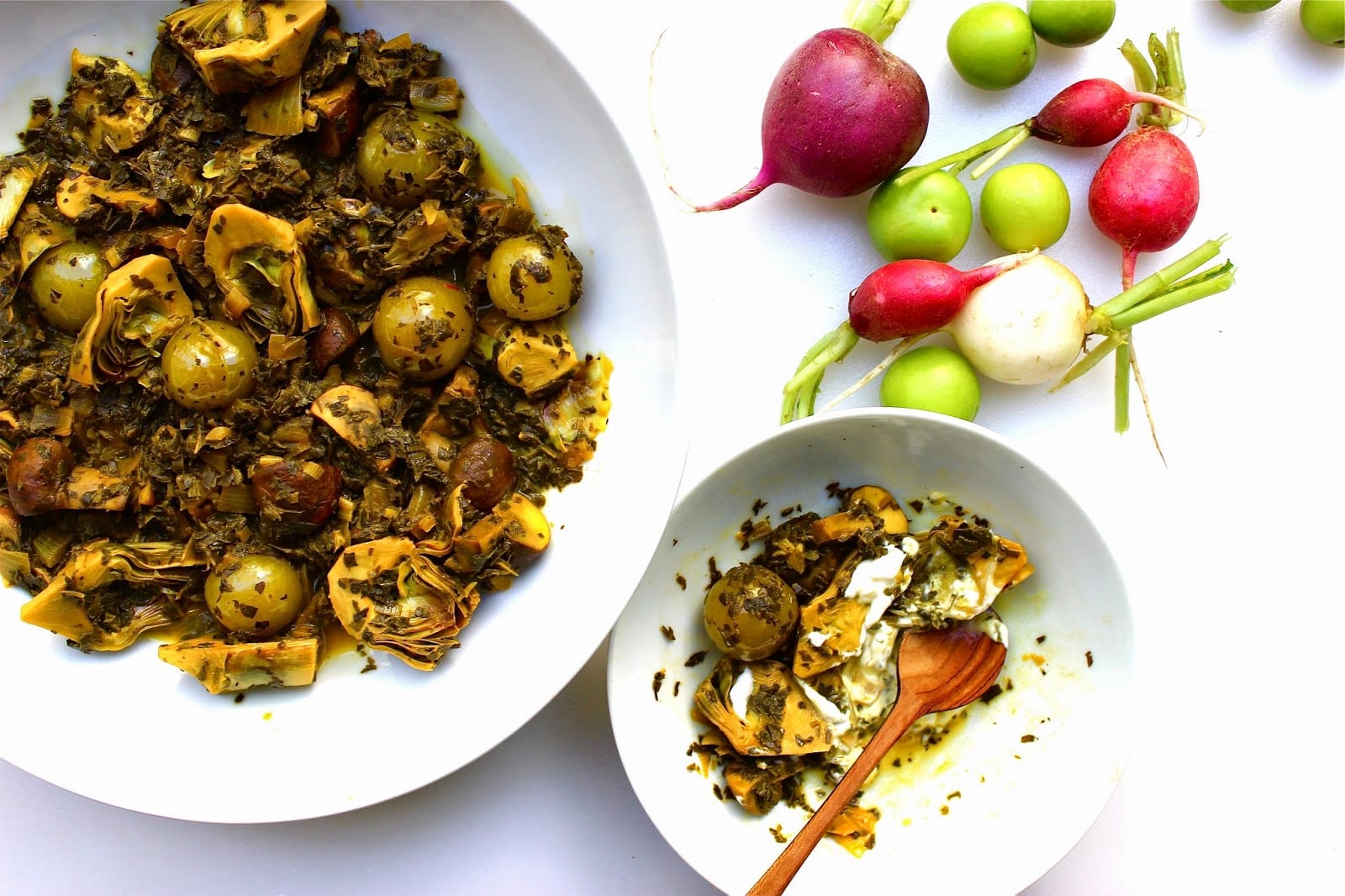
Food serendipity.  Or more like a food puzzle.  Sometimes that’s how a meal comes to life around here.  On this particular day it started with a bunch of fragrant mint we got from the overflowing garden at Soleil’s preschool.  The next piece easily fell into place with our farm box delivery: parsley, spinach, spring garlic.  Followed with a visit to the Farmers Market:  baskets upon baskets of baby artichokes.  A quick stop at the Persian grocery store and the fate of this evolving puzzle was sealed: sour green plums – gojeh sabz.  A Spring Stew.

Sour Green Plums – Gojeh Sabz

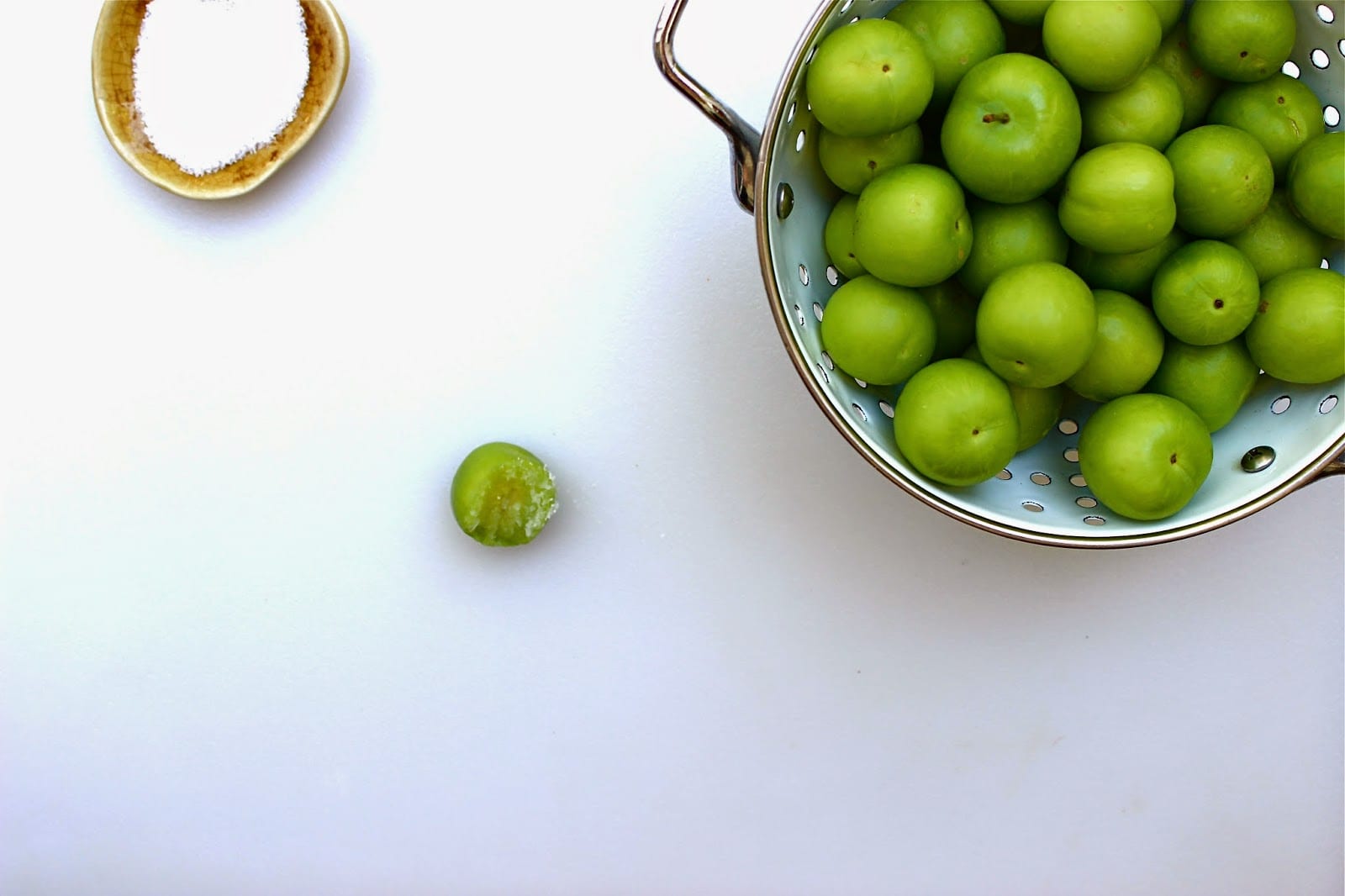
A sour green plum – also referred to as a green cherry plum – is essentially a plum that’s not yet ripe.  Biting into one of these is a delightful explosion of crunchy sourness, making this a highly coveted and sought-after fruit.  Typically it’s consumed raw as a snack – just as it is – with a pinch of salt. Take a bite – sprinkle some salt on it – take another glorious bite of spring – repeat process.  Try not to over-consume.  As a child, there was nothing better than to be greeted with a bowlful of Gojeh Sabz after school. Gojeh Sabz is also used in stews or also preserved to make a pickle.  Persians have an affinity for anything sour.  Which is why you will often find something sour or acidic added to a dish, not only to brighten up all the flavors but also to balance out the salt and sweet.  To bring all the flavors to life.  As the Gojeh Sabz slowly simmer away in this stew they soften up and release their tart juice.  I also think they add a nice visual texture to the stew.  Just be mindful of the pit.  If you can’t get your hands on sour plums you can always compensate by increasing the amount of lemon or lime juice used in the stew.  Sour green plums are only available for a very brief period in the spring time – before the plums ripen up. They can be found at Persian markets between April and May.  Make sure you ask for them as sometimes they are kept behind the cash register – in view but not within reach – as they were at my market.  They are a hot commodity!  I also spoke with a farmer at the Santa Monica Farmers Market and he said he’ll be bringing in sour plums in the next couple of weeks.  Worth asking around and keeping an eye out for them at farmers markets and Middle Eastern grocery stores.

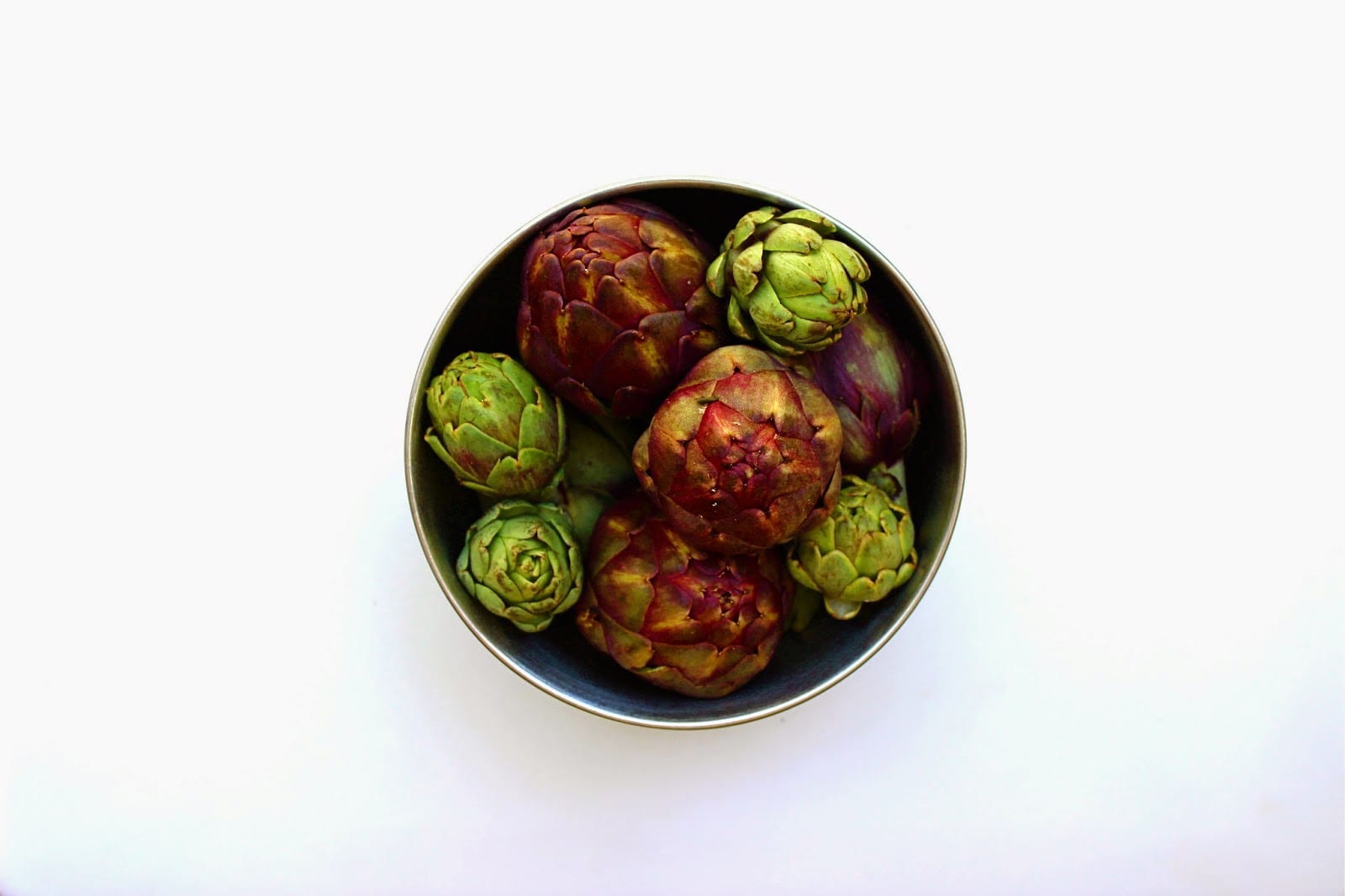
The Persian word for artichoke is Kangar-e-Farangi, which translates to foreign or European cardoon.  In our house we use either their Italian name – carciofi or their French name – artichaut.  Semantics.  Artichokes are very popular in our house.  Luna often claims two whole globe artichokes all to herself.  I was smitten by the baby artichokes at the market and knew they would make a perfect companion to the tart sour plums, the chopped up greens, and the meaty mushrooms in this stew.  But here’s the thing – prepping artichokes (much like shelling 4lbs of fava beans) – paring them down to the heart for a stew like this – takes some time and loving dedication.  And certainly not a job for a weekday.  But if you have the time or if you have little helpers that can assist in peeling away the outer leaves then it is well worth it – otherwise feel free to use frozen artichoke hearts.  They work great as well.   As in so many Persian stews, the greens are a necessity here.  Not only for flavor but also because the parsley and mint aid in offsetting the indigestion (read flatulence) that can occur with the use of the sour green plums and artichokes.  Just keep in mind that mint can burn very quickly and too much of it can turn the dish bitter.  This Artichoke and Sour Green Plum Stew is fantastic served over rice of course.  But I also like to serve it spooned over some crusty bread with a dollop of creme fraiche or Greek yogurt.  I’ve also reheated leftovers with a couple of eggs cracked over it for a quick and delicious lunch.

Dear Mr. President,
This is a long shot, I know.  But as the official Social Secretary to a certain seven-year-old I feel obliged to carry through her request (it has actually grown into a fever pitch command) to invite you and your family over to dinner next time you land at LAX.  Stopping by our house might actually be of assistance to you.  For reasons out of your control I’m sure – what with layovers, flight availability, weather delays, flight cancellations – you seem to have a penchant for braving the streets of our fair city at 6pm.  I understand – it cannot be helped.  But you see Sir, everyone and I mean EVERYONE is in their car and on the streets in Los Angeles at 6pm.  So it might not be such a bad idea to avoid this sea of humanity and machinery and join us for some Polo and Tahdig.  I’ll bet anything Polo and Tahdig will not be served at the dinner party you are scheduled to attend.  It is also my understanding that you do not enjoy beets.  Neither does my four-year-old.  Beets shall not be served.  With the weather warming up we can also grill some kababs to go along with the rice and enjoy it all with a side of Artichoke and Sour Green Plum Stew.  Not sure what your position is  where artichokes or sour green plums are concerned.  On this side – the seven-year-old loves it – the four-year-old not so much.  Much to discern, much to discuss.
Thank you for considering this invitation.
Yours Truly, A Mom

OK Luna I emailed The President inviting him over to dinner.

Mama – you should have called him.


ARTICHOKE, MUSHROOM AND SOUR GREEN PLUM STEW – KHORESH KANGAR-E-FARANGI BA GOJEH SABZ

*There are many resources online with step-by-step instruction on how to prepare artichokes.  Here are a couple: Food52 and theKitchn Keep in mind that the choke (the fuzzy stuff in the middle of the heart) is not fully developed in a baby artichoke so you can skip that part if using baby artichoke.  I also found it helpful to have all my other ingredients prepped before I started prepping the artichokes.  Because you want to get those hearts in the pan as quickly as possible so they don’t brown and oxidize.

** If you can’t find sour green plums just increase the lemon juice to taste.

Ingredients:

Serves 6

2 tablespoons olive oil
1 medium onion, chopped
1 spring garlic (green parts too) or 3 garlic cloves, chopped
1/2 lb cremini mushrooms, halved or quartered depending on size
*2 lbs baby artichokes, pared down to the heart, or 1 package frozen artichoke hearts, thawed
salt
pepper
1/2 teaspoon turmeric
2 cups chopped parsley (I used about 2 small bunches)
1/2 cup chopped fresh mint (I used about half a small bunch), or 2 tablespoons dried mint
1 cup chopped spinach (I used about half a large bunch)
1/4 teaspoon ground saffron steeped in 4 tablespoons hot water
2-4 tablespoons lemon juice, plus more to taste (have about 4 lemons ready to use both for the stew and for prepping the artichokes)
**14 sour green plums
water

1- Heat olive oil over medium heat in a large saute pan .  Add onion and saute until tender about 8 minutes.  Add the garlic and cook for 2-4 minutes.

2- Add the mushrooms and cook for about 5 minutes until they release all their liquid.  Drain the artichoke hearts (if using fresh ones that have been soaking in acidulated water) and add to the pan.  Add turmeric and season with salt and pepper.  Stir to combine and  saute for about 4 minutes.  Add the parsley, mint and spinach.  Give a quick stir to combine.  Add the saffron water, 2 tablespoons lemon juice (4 tablespoons if not using sour green plums), sour green plums, 1 1/2 teaspoons salt and 2 cups water.  Bring to a gentle boil.  Put lid on slightly ajar and turn down heat to medium-low.  Simmer gently for 20-25 minutes.

3- Adjust seasoning and lemon juice to taste. I added another 1/2 teaspoon salt and another 2 tablespoons lemon juice.  If there is not enough liquid add more water, if there is too much liquid remove lid and allow the liquid to evaporate to liking.  Simmer for about another 10-15 minutes until artichoke hearts are tender and sour green plums have softened (but not mushy!) and released their juices.

Serve over rice or grain of choice with a dollop of creme fraiche or Greek yogurt.  Also fantastic spooned over crusty bread.  Remind friends and guests (and children!) that sour plums have pits in them.

Will keep in the fridge for up to 3 days.

Dinner

A Swiss Chard Reduction – A Shrimp and Quinoa Paella – Fun Friday

It’s not a graceful entrance.

We crash/bang/sing/stumble/dance/pontificate/drag/whine/laugh our way into the house.  Backpacks hit the the floor with a thunderous clatter. Jackets are tossed in one direction – even though the coat hooks are at arms length – and at kid height.  Two sets of shoes fly up and come crashing back down – briefly electrifying the room with a shower of sparkly lights.  The strategically placed shoe cabinet looks on in dismay – hungry for its daily feed (we all know that our slightly OCD-inclined dad of the house will put them away).  Sweaty socks peel off, each in the distinct form of the body part they once enveloped, leaving a trail behind. Newly freed feet pitter-patter their way to the living room.

Girls! Wash your hands first!

And so begins the ritual that is Fun Fridays.

The girls are not yet old enough to have their calendars filled with all-consuming extra-curricular activities and social responsibilities.  It could also be that we have chosen not to fill every extra minute with something to do.  Or that our days are jam-packed enough already.  Most likely – it’s because we are just homebodies at heart.  So we have chosen to keep Fridays open.  Anything goes.  Free play time, no homework, time to unwind and just be, and most importantly: time to watch some television.  Seriously – with everything that we pack in a week – wouldn’t you want your Fridays to be about all that?

With that laissez-faire spirit in mind I had also decided to join in on Fun Fridays.  With no dinner plans in the works – no Friday Night Loobia Polo – I had resolved earlier in the day that we were going to order in.  Not a regular occurrence in our house but a necessary one from time to time.  I was taking a break from the kitchen tonight.  Oh – yes – I – was.

As the girls settle in to watch Wild Kratts and Doc McStuffins, I take the opportunity to retire to the study for a cocktail and my current obsession/read.  A perfect setting for David Tannis to teach me a thing or two about artichokes (overlooking the minor details that we don’t actually have a study, I don’t like to drink at 5pm, and David Tannis’  book isn’t really about artichokes.  Minor details – minor details.)  I have a vision of how the afternoon will unfold – and I’m sticking to it.  The spot on the couch next to the girls will serve just fine as said study.  Mr. Tannis will teach and inspire, and after all this day is about breaking the rules – so my cocktail of choice is, of course – A Campari Cocktail.

I lovingly set the Campari bottle on the counter with one hand as the other hand reaches back to open the fridge door – in search of a lime to accompany my drink. And thus begins the beginning of the end.  Instantly my eyes fall upon the bountiful bunch of Swiss Chard from our recent farm box delivery.  There I stand – arms outstretched – one hand on a beautiful red-hued bottle – the other hand holding open the fridge door.  My eyes quickly dart back and forth between the two adversaries.  This should be an easy choice – the plan is already in motion – I’m not cooking tonight – it’s cocktail hour – the study – the book – the drink – the vision.  But the unwelcome voice of reason starts wiggling its way in.  The chard should be used soon – if I drink now I’ll get sleepy and cranky – and the truth is – I simply can’t take my eyes off those dark leafy greens.  I turn and face the Campari bottle – apologetically and gently nudging it to the edge of the counter.  I turn back and face the fridge.  I give my hair a quick flick, lower my eyes slightly, feel a coy smile creep up the sides of my mouth, extend my arm and grab the chard.  It’s on.

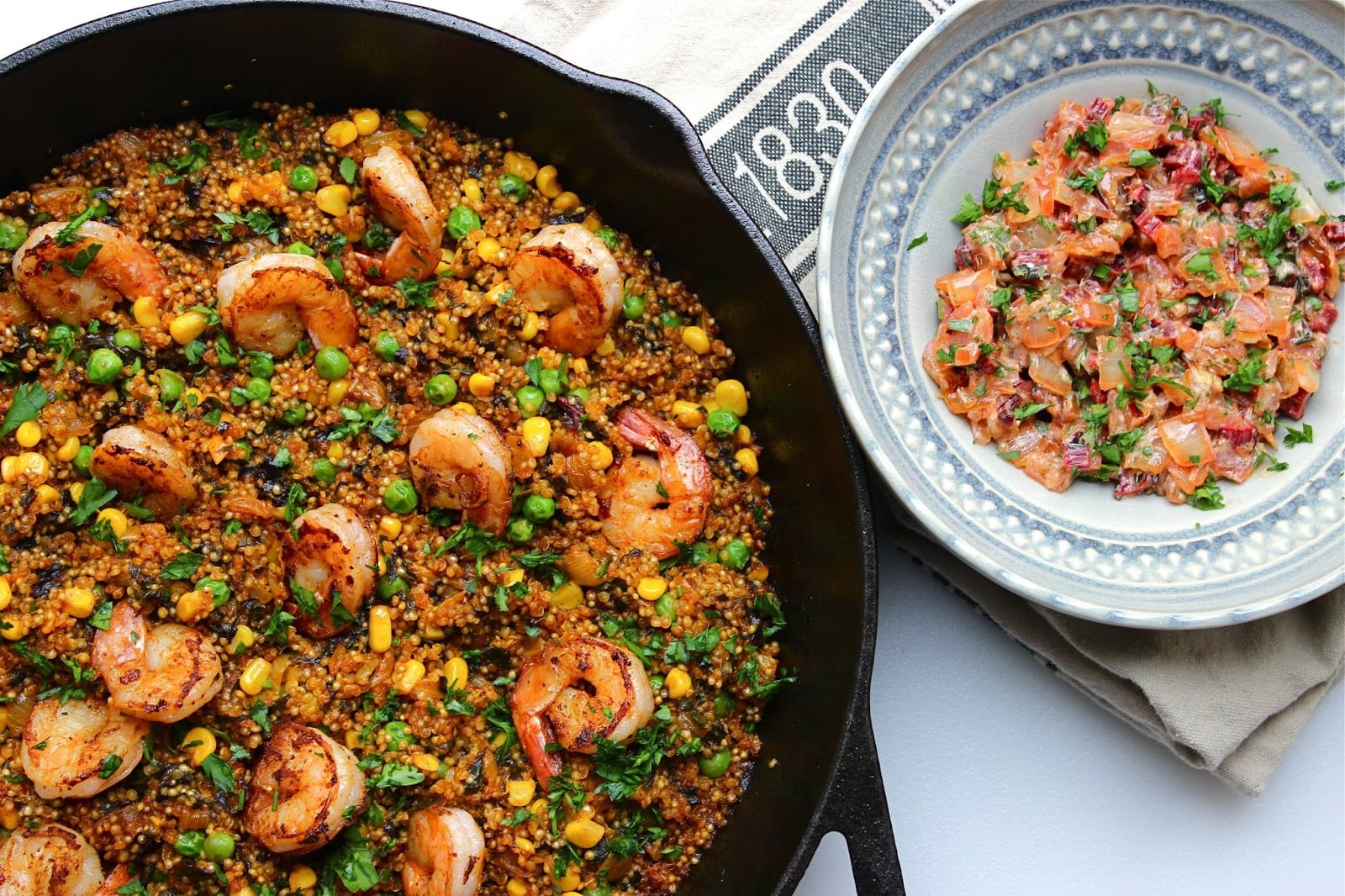
Everyone is always looking for a quick go-to recipe.  This quinoa “paella” is ours.  Quinoa is a superfood commonly used as a whole grain substitute.  It is technically not a grain but an immensely nutrient rich seed – which makes it a great choice for those looking for a gluten-free grain alternative.  It also makes for a perfect vegan choice since it is considered a complete protein – containing all nine essential amino acids. Quinoa has been a staple in our house for some time now, right up there with our beloved rice and pasta.  Drew loves it.  The four-year-old loves it.  I still like it and consume it in abundance but truth be told, I have somewhat grown tired of it (interesting how I never seem to tire of rice and pasta…hmm).  And the seven-year-old is on the brink of jumping the quinoa ship completely.  So I’m always looking for ways to change it up and make it a little more interesting – like adding it to our morning oatmeal (a great way adding much needed protein to our breakfast), working it into soups, salads – recreating it any number of ways, like paella.

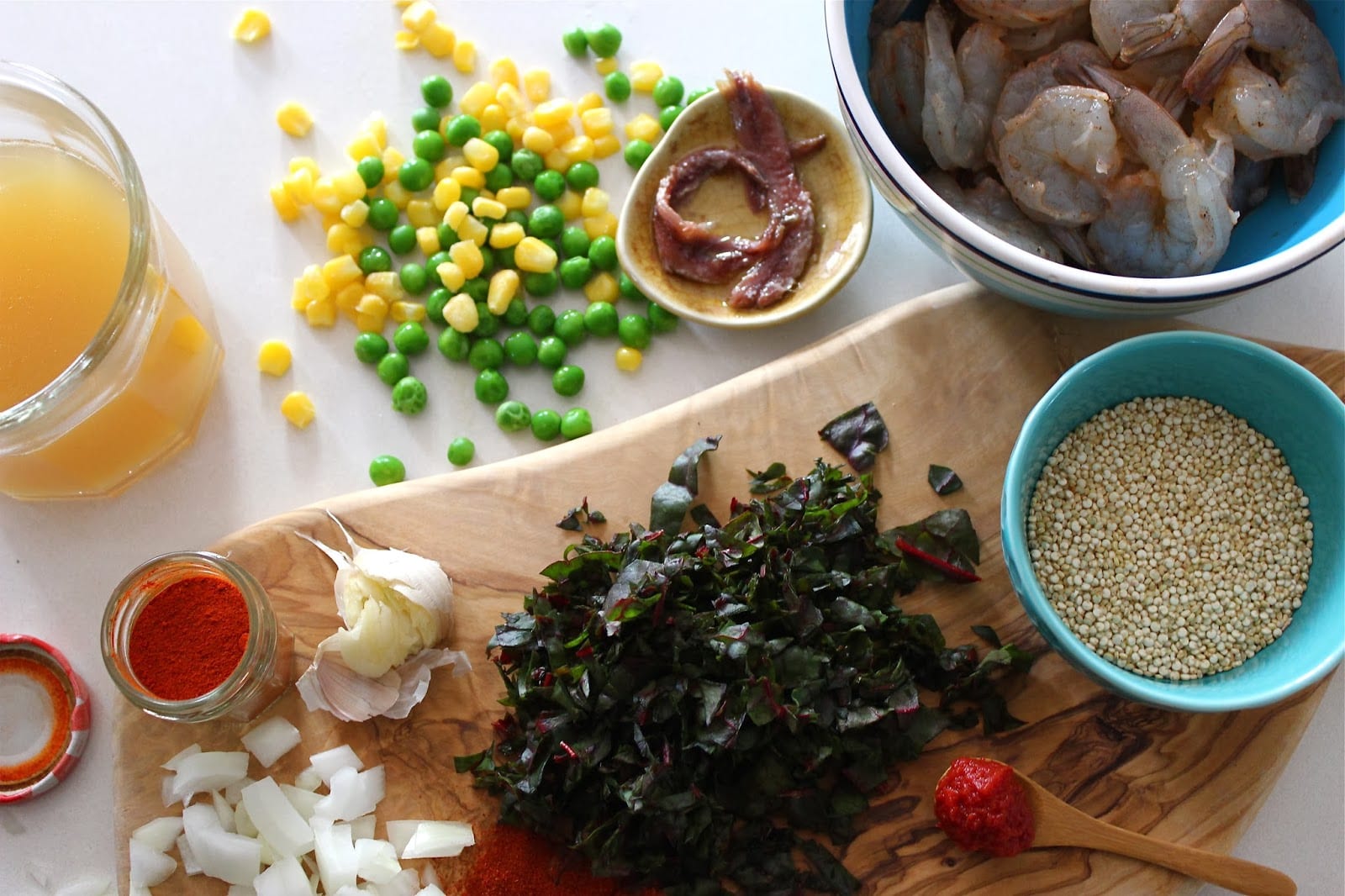
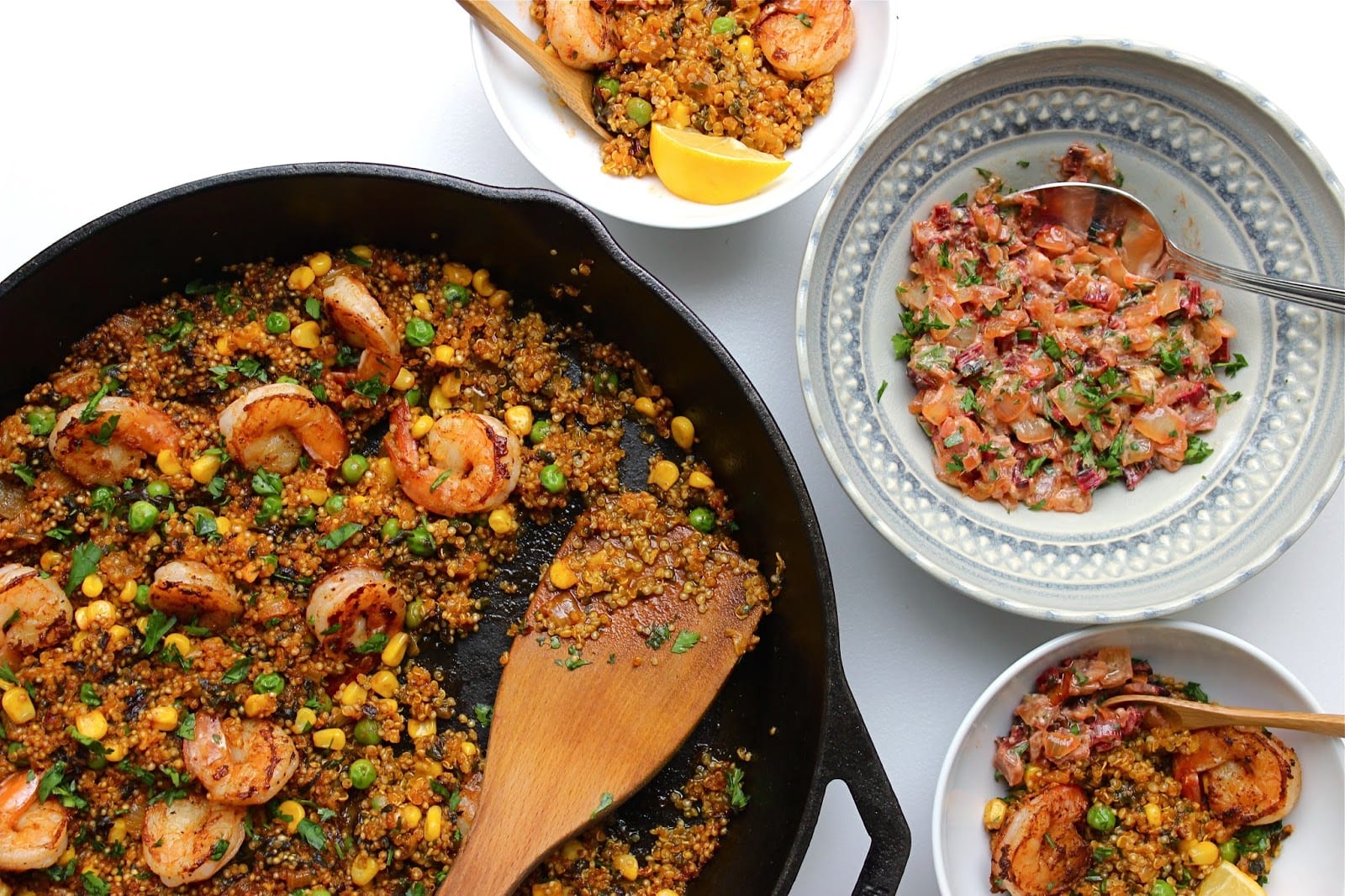
This dish is inspired by the traditional Spanish paella.  The best part about it is that it can essentially be made with whatever you have on hand and can be prepared fairly quickly.  I usually get a lot of help from my freezer goods.  You can use chicken, other types of seafood, sausage, crack an egg on top, or keep it vegetarian (I’m dreaming of mushrooms, asparagus..you get the picture).  I usually have a bag of frozen shrimp saved for those last-minute meals.  And as is the case with all our seafood consumption, I always make sure to check in with Seafood Watch.  They also have a great app which is very helpful when you’re at the seafood counter and not sure about the quality, safety and sustainability of what you’re about to purchase.  Our other freezer staples are bags of frozen peas and corn.  Perfect for the makings of a paella.  Whenever possible I also try to sneak in our dark leafy greens like the chard here but you could also use kale or spinach.  The trick here is to finely chop up the greens or cut them into thin ribbons so they get well-incorporated into the dish; also ensuring no complaints from the little ones. I don’t use the chard stalks in the paella but instead quickly saute them up in olive oil with some chopped onion, garlic and lemon zest.  Then stir in a little yogurt, a hit of parsley and enjoy it as a salsa alongside the paella.  This also makes a great dip you can serve with grilled or sauteed shrimp.

The basis for a traditional paella is the sofrito – the sauce made up of sauteed aromatic vegetables like onion, garlic, green or red peppers, and tomatoes.  I have very loosely recreated a sofrito here, leaving out the peppers (you can include peppers if you like) and adding anchovies.  Now – before you balk at the idea of the little salty fish – I assure you that you will not be able to taste them in the final product – they are used here to add a depth of flavor, a je ne sais quoi, an overall yumminess to the dish.  If you’re still not convinced, you can leave them out but just know you’ll be missing out.  In keeping with a paella preparation methods I add the quinoa to the sofrito for a couple of minutes before adding my cooking liquid.  This allows the quinoa to toast a little, drawing out more of its flavor.  Once the cooking liquid is added I cover the pan and allow the quinoa to cook, uncovering for the last 5 minutes of cooking time. The quinoa should be fluffy, not soggy or mushy.  Right before serving, garnish it with a little chopped parsley and make sure to squeeze a juicy lemon over the whole thing.  And serve alongside the chard stem salsa, or some guacamole, and you know if I can work in a dollop yogurt on top I will.  Delicious goodness in one pan.

I lift the heavy cast iron off the stove – turn – and come face to face with Drew.  Home just in time.

Thought you could use this.  It is Friday after all.

He presents me with a glorious tumbler of Campari Cocktail.  I look to him – to the drink – back at the heavy paella pan precariously balancing in my arms – the room starts pounding with this hip shimmying beat.  I give my hair a quick flick, lower my eyes, place the pan on the counter, give my husband a teasing smile and yell out:

DANCE PARTY

The four of us spontaneously bounce, wiggle, jiggle, shimmy, taking turns showing  off our moves.  And then follow the sock trail back to the kitchen table to tuck into some shrimp and quinoa paella.

Happy Fun Fridays.

Happy New Year.


SHRIMP AND QUINOA PAELLA

Ingredients:

Serves 4-6

1 pound shrimp, peeled and deveined, (thawed if frozen)
1/2 teaspoon paprika, divided
1 lemon, halved
4 tablespoons olive oil, divided
1/2 a medium onion, chopped
1 clove garlic, chopped
2 anchovies in oil
2 tablespoons tomato paste
1 cup quinoa, rinsed
2 cups chicken stock or vegetable stock or water
1/2 bunch swiss chard, off the stem and finely chopped
1/8 teaspoon ground saffron or a pinch of saffron threads
1/2 cup frozen green peas, thawed
1/2 cup frozen corn, thawed
salt
pepper
parsley, chopped for garnish

1- In a medium sized bowl season shrimp with salt and pepper, 1/4 teaspoon paprika and the juice of half a lemon.  Toss to coat well and set aside for 10-30 minutes if you have time otherwise cook right away.
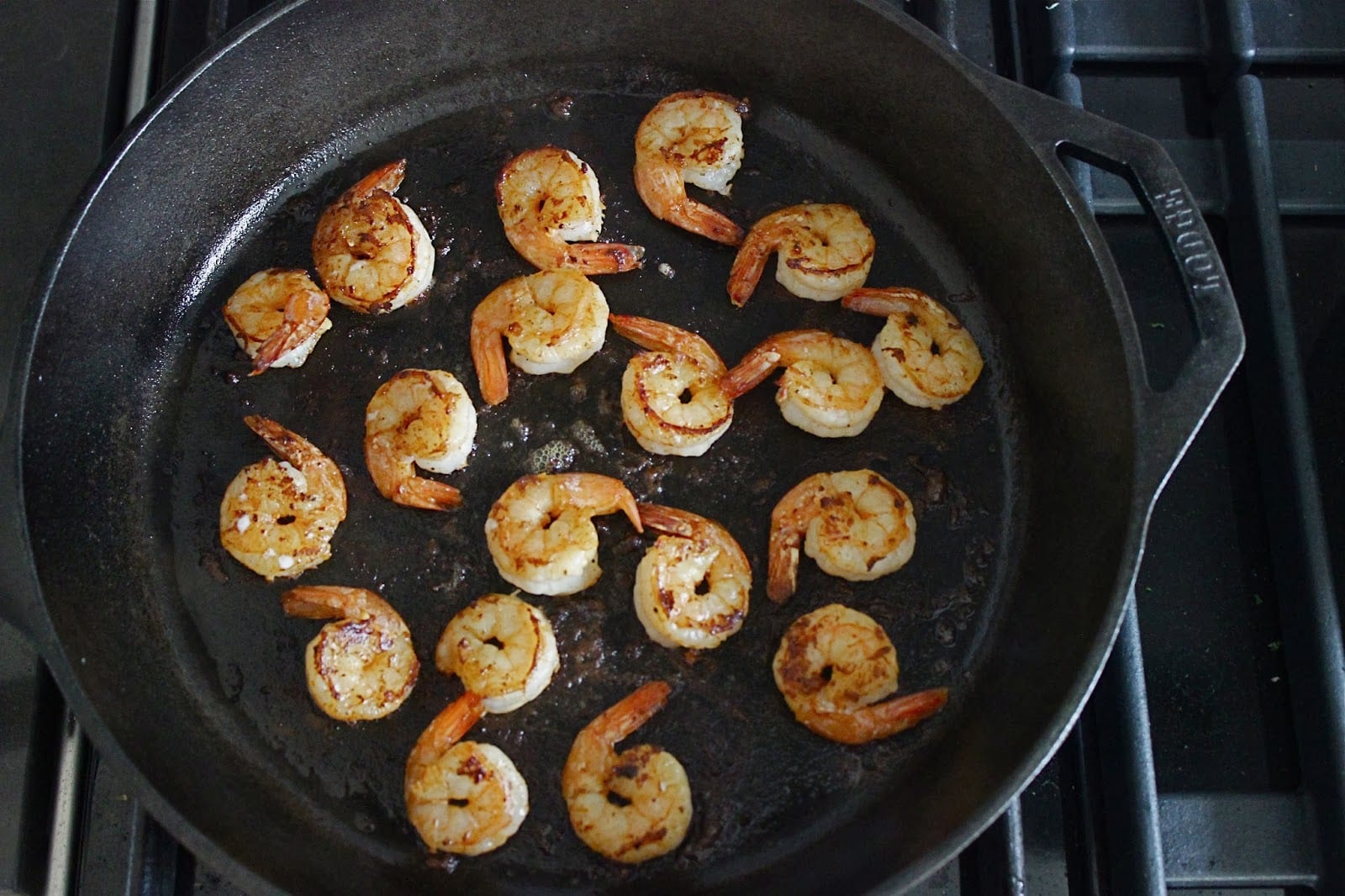
2- In a large pan (cast iron works well) heat 2 tablespoons olive oil over medium/high heat.  Add shrimp and cook for 2-3 minutes on each side.  Do in batches if necessary. Make sure you don’t over cook the shrimp.  Transfer shrimp to a plate and set aside.
3- Turn the heat down to medium and add the remaining 2 tablespoons of olive oil.  Add onion and cook until the onion softens 4-6 minutes.
4- Add garlic and anchovies.  Stir and gently break down the anchovies.  Melting them into the onion and garlic.  About 1 minute.
5- Add the tomato paste and stir into the onion, garlic and anchovy mix. Keep stirring until you get a fragrant sofrito.  About 2-4 minutes.
6- Add quinoa and stir into sofrito.  Toast for 2 minutes.
7- Add swiss chard, stock or water, remaining 1/4 teaspoon of paprika and saffron.  Give a quick stir to incorporate and turn the heat up and bring to a quick boil.  Cover and lower heat.  Simmer for about 10 minutes.
8- Remove lid.  Add the green peas and corn.  Adjust seasoning if necessary.  I usually add some salt and pepper.  Warm the peas and corn through about 5 minutes.  Add the shrimp back to the pan the last 2 minutes of cooking and warm through.  Garnish with parsley and a squeeze of lemon over the whole thing and serve with the swiss chard stalk salsa.

SWISS CHARD STALK SALSA

Ingeredients:

1 tablespoon olive oil
1/2 medium onion, chopped
1 clove garlic, chopped
Swiss chard stalks, from about half a bunch, chopped
zest of 1 lemon
1 tablespoon yogurt
a handful parsley, chopped
salt
pepper

1- Heat the olive oil in a small pan over medium heat.
2- Add onion with a small pinch of salt and saute until the onion softens a little.  About 4 minutes.  Add chard stalks, garlic and lemon zest.  Saute until stalks soften a little and become fragrant.  About 5-8 minutes.
3- Remove from heat and allow to cool a few minutes.  Transfer to serving bowl.  Stir in yogurt, parsley, and squeeze of lemon.  Season with salt and pepper to taste.  Add more yogurt or lemon juice to taste.  Serve with Shrimp and Quinoa Paella.

Dinner

A Thanksgiving Offering – A Rice and Lentil Dish – Adas Polo

He bursts through the front door – unwittingly inviting in the crisp November breeze.  Out of breath and on a mission, he spreads out a world map on the kitchen table.  An explorer out at sea – years in search of a long-lost exotic land.  And now so close to setting his eyes upon it.  Almost within reach. Running his aged fingers along the map and smoothing out its creases, he turns and focuses his periscope on me – the unknowing representative of said exotic land.

Now show me – where have you lived – exactly where are you from?

Uncle Ned.  Drew’s great-uncle.  Sweet, sweet Uncle Ned.

We were spending Thanksgiving with Drew’s grandparents and extended family in Battle Creek, Michigan. Over the years my travels had taken me throughout the United States –  the Pacific Northwest, West Coast, East Coast, the South. But somehow I had always simply flown over the middle of the country – with maybe a brief (or at times not so brief) layover at Chicago’s O’Hare.  This was officially my first visit to The Midwest.  In the heart of the country to celebrate a mighty American tradition: Thanksgiving.

I didn’t grow up celebrating Thanksgiving.  Whole turkeys are kind of hard to come by in Rome or Tehran.  But having attended American schools, I was fully versed in the tradition and folklore of this holiday.  Later when we moved to Canada, the Thanksgiving celebration shifted to early in October.  My understanding of the difference of dates between the two countries is simple geography. Thanksgiving is essentially a celebration of the end of the harvest, and it is believed that since Canada is farther north, the end of the harvest and the onset of winter comes earlier. Another notable difference is the fervor and intensity with which this holiday is celebrated in America, versus the slightly more subdued approach Canadians take in all things (the current Toronto mayor buffoonery not-withstanding). Regardless – even tough this holiday is not cemented in my past – it is a gathering I can fully appreciate.  An event centered around family, food, warmth, togetherness, love, and the mandatory familial tensions and misunderstandings.  Yes – a gathering I can fully understand and embrace.

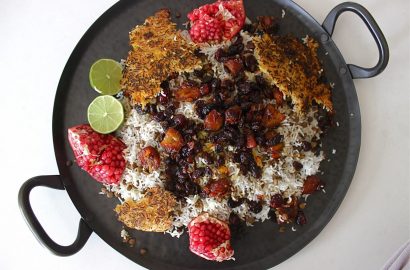
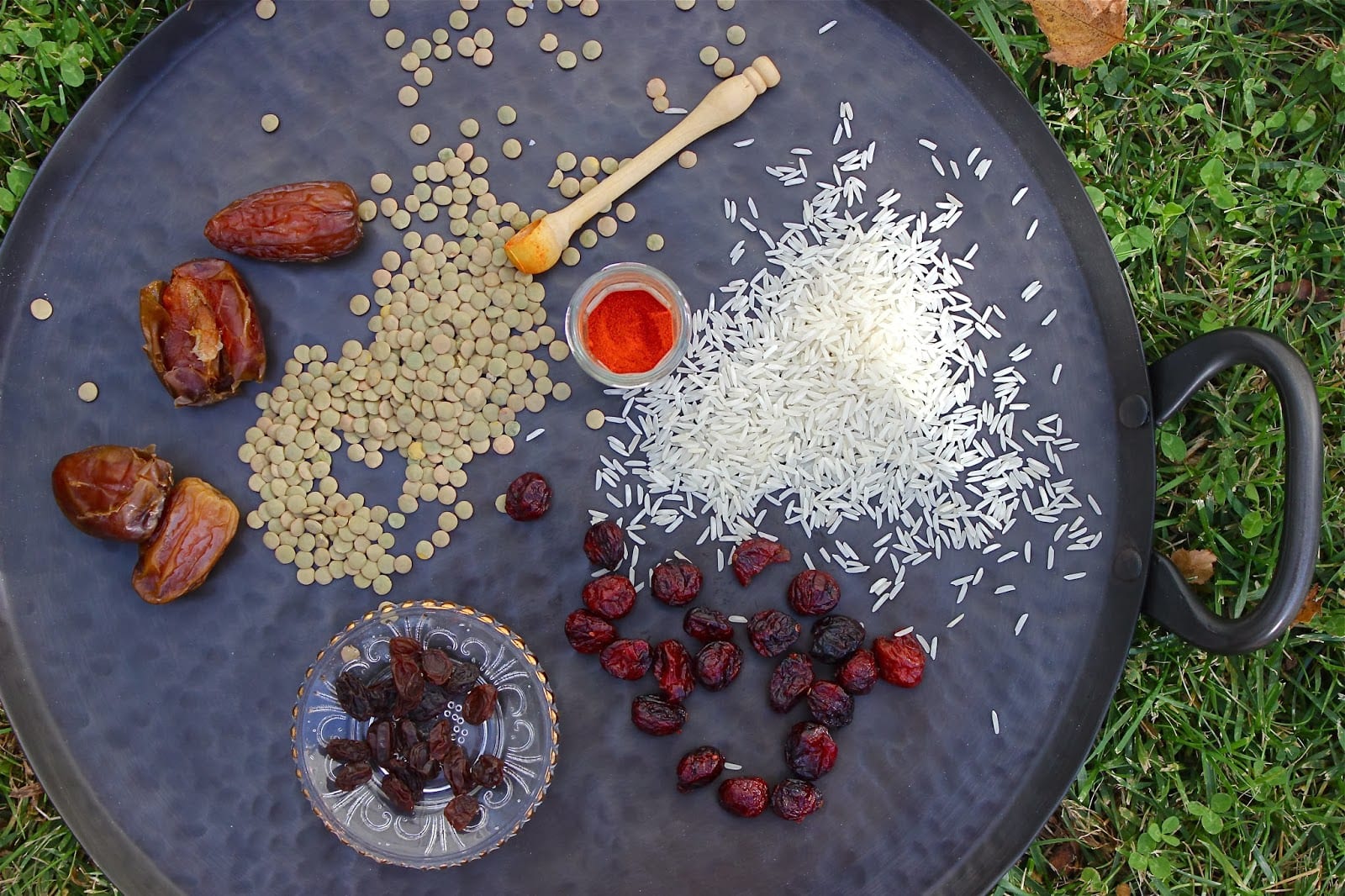
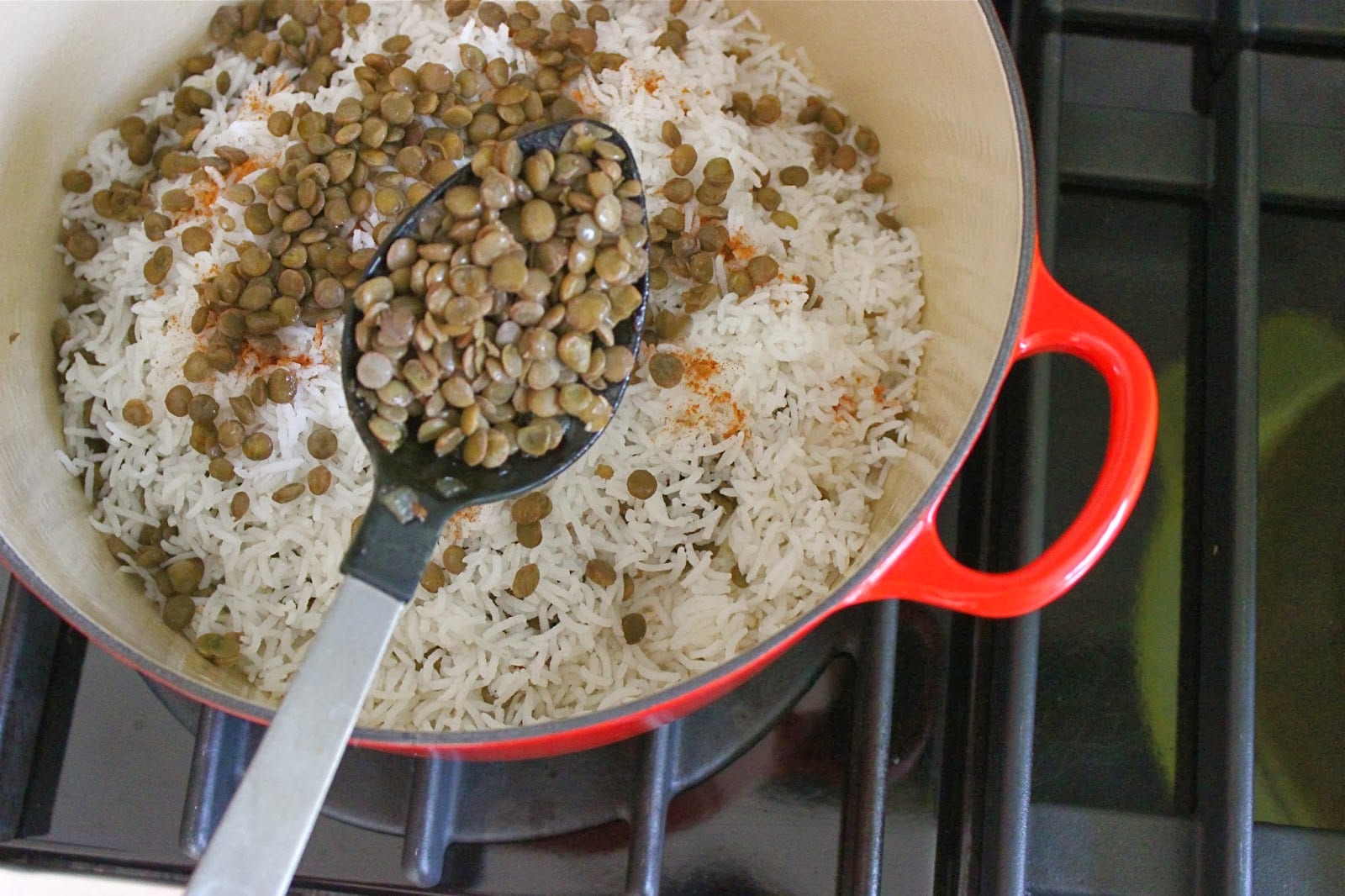
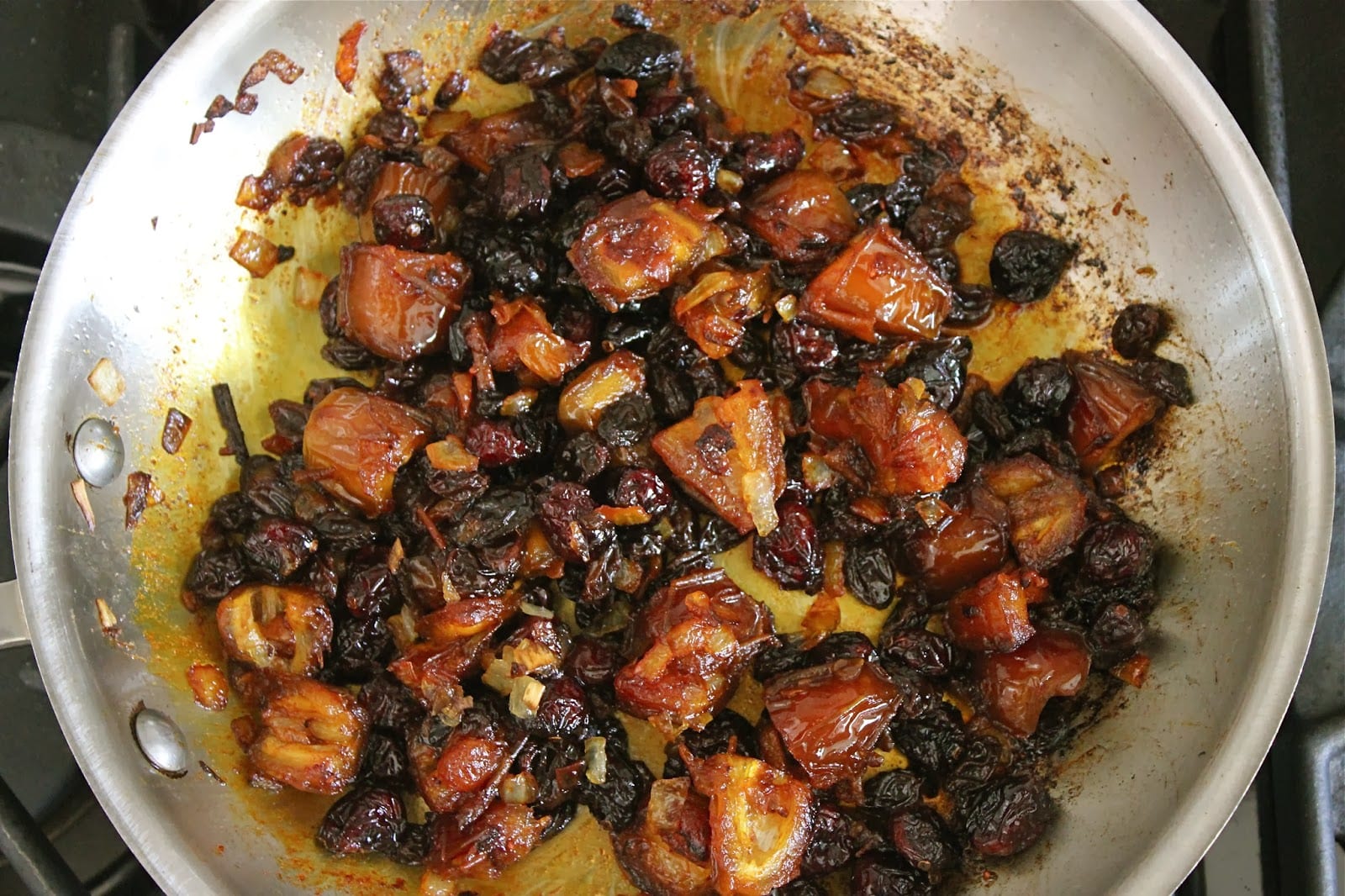
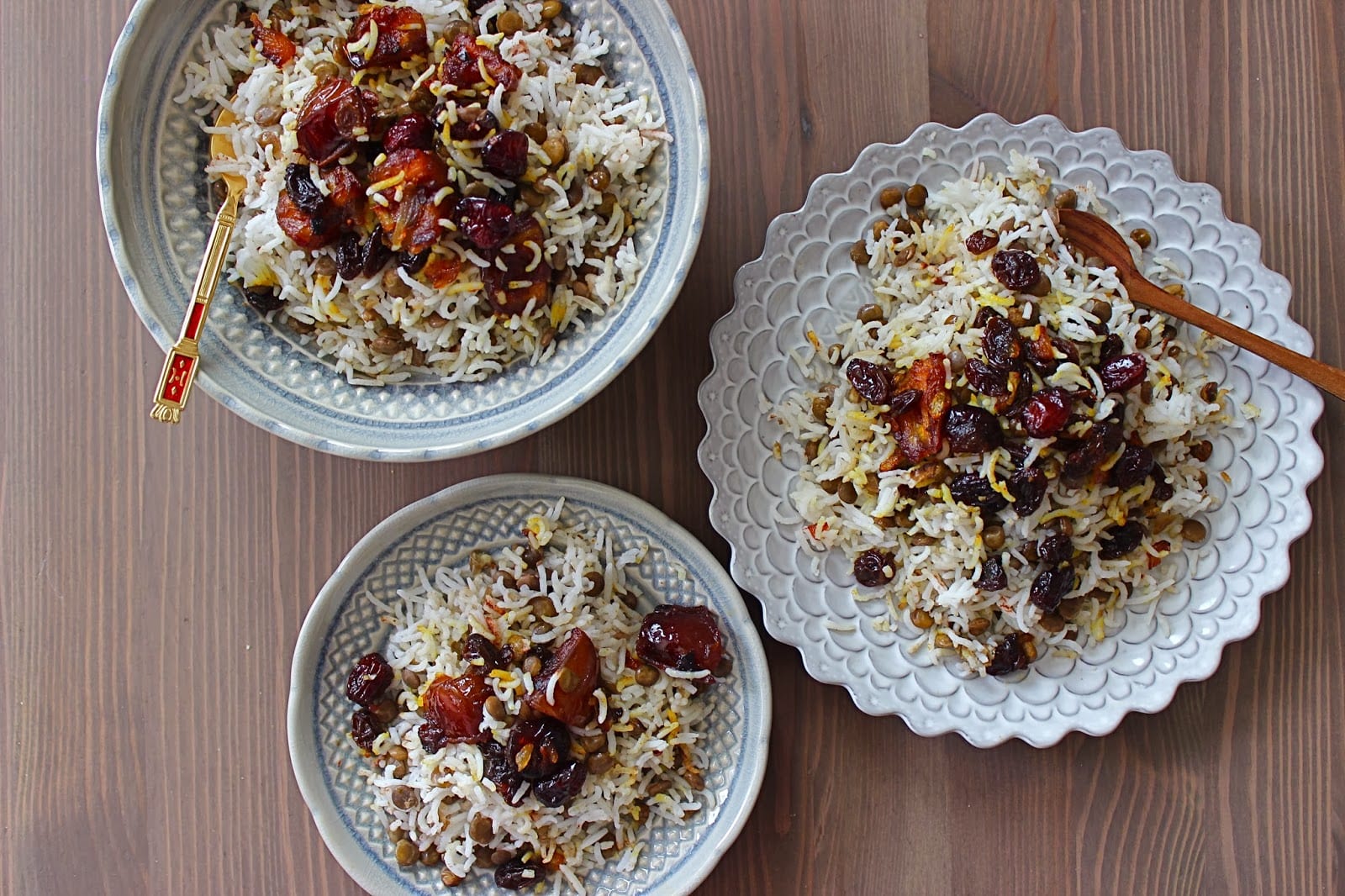
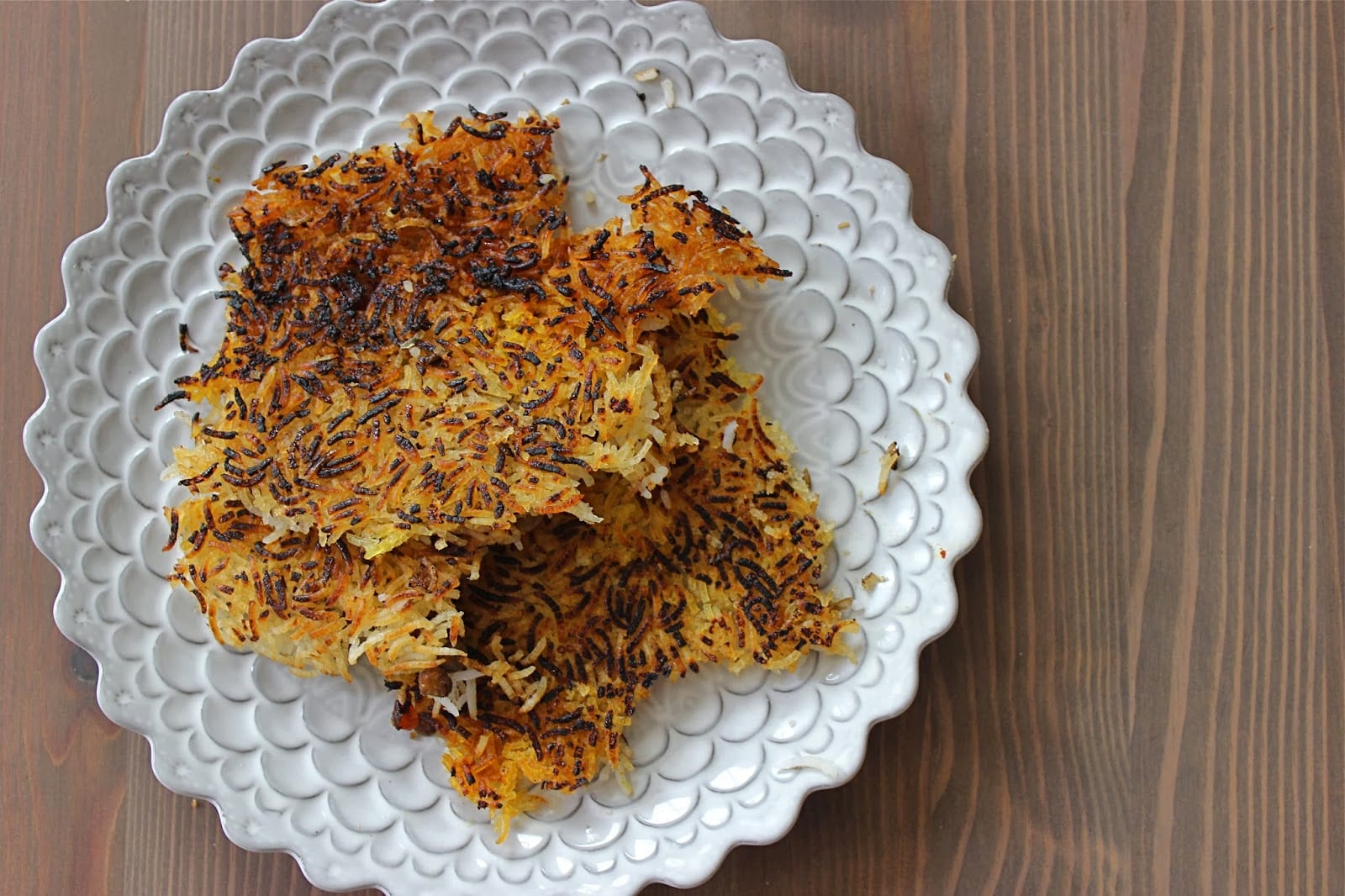
Adas polo literally means lentils and rice.  It is a very common, everyday dish typically served with a fried, or hard-boiled egg.  I think a poached egg would also be great.  Ultimate comfort food.  It has also taken on the role of the side dish to serve for Thanksgiving in many Persian homes.  The addition of the dates, raisins, cranberries and a hint of cinnamon sprinkled in the rice give it a beautiful festive autumnal appeal and add just the right amount of sweetness and texture.  It is also a great vegetarian alternative.  Typically,  adas polo is prepared with tahdig in mind.  Which means you would go through the two step method of preparing the rice.  First parboiling the rice and also cooking your lentils separately until they’re  al-dente.  Then steaming the two together until everything is cooked through and you have crunchy golden tahdig.  You also have the option of adding the dried fruits mixture to the steaming process or simply scattering them on top of your rice when serving – as I have done here. But if you don’t want to make tahdig you can prepare your basmati rice (white or brown) as you like, cook your lentils completely through separately, prepare the dried fruits mixture and mix them all together at the very end when serving.  But you know I’m going to urge you all to try and make tahdig.  And actually, steaming the rice and lentils together wonderfully melds all the flavors.

I was seven years old the last time my entire extended family had the opportunity to gather in one place.  This was before many of them scattered to various corners of the world, while some stayed – living through a revolution, a war and other struggles brought on by these events.  We might have been celebrating a birthday, it might have been Persian New Year, it might have simply been a dinner – a get-together.  As hard as I try, I can’t remember the exact occasion.  And at the time I’m sure no one had an inkling that this particular get-together would be the last time we would all be laughing, eating, and bickering together.  That those casual good nights and kisses at the door would be our very last.

As foreign as Battle Creek, Michigan might have seemed to me – as foreign and exotic as I might have seemed to Battle Creek – spending that Thanksgiving at Drew’s grandparents house was as familiar and loving as any family get-together from my childhood.  The linoleum-floored cozy kitchen, the shaggy rug, playing Canasata with Grandma and great-aunt Lolie, Grandpa’s morning coffee and doughnut ritual, Grandma’s Steinway piano and German antiques, the cuckoo clock, Grandpa enchanting me with his tales of serving in the Coast Guard in Alaska during World War 2, bringing down boxes full of black and white photographs capturing those moments (some of which now adorn our walls), Lolie and Ned sharing their love story and how they loved to go out dancing.  And of course the day long madness of preparing the great meal.  Tip-toeing around individual desires and needs of what and how a dish should be prepared.  (I’ve come to understand that it really takes some diplomatic, ambassadorial savvy to successfully get everything on the table to everyone’s liking).  And finally opening up the card tables, attaching them to the antique dining table, spreading out the table cloth and gathering around the table.  No matter what is served, or how it is served – it’s that moment of togetherness that is forever going to be etched in our memories.

All the elders of the family are now gone.  Grandma, Grandpa, Lolie & Ned.  As are my own grandparents and great uncles and aunts. All of them hearts and souls of the family.  We are told Thanksgiving is a day to give thanks and be thankful. And so I give thanks for that Thanksgiving in Michigan.  For the warm embrace of all those sweet people.  And with that same sentiment I offer you a lentil and rice dish.  It might not be familiar, it might not be traditional, but it is delicious and made with love.  And I hope at some point it can find its way to your table.

When the explorer sets foot on the foreign land gifts are exchanged, customs and languages described.  And when he leaves to make his long journey back home he returns with new stories, new discoveries and hopefully a box full of new recipes.

Happy Thanksgiving.

* For a more detailed guide to cooking Persian rice please see this post.
* If you don’t want to make tahdig (but you really should!) you can prepare white or brown basmati rice, prepare the lentils as described below, just make sure to add a little more water so they cook through, prepare the dried fruits mixture as described below and mix everything together when serving.


LENTILS AND RICE DISH WITH TAHDIG AND DRIED FRUITS – ADAS POLO

Ingredients:

Serves 4-6 as a main dish or 8-10 as a side dish

3 cups white basmati rice, washed and soaked in 2 cups cold water with 3 tablespoons kosher salt for 30 mins or up to 1 hour
water
salt
1 cup lentils, picked over and rinsed
2 1/2 tablespoons butter or ghee for rice, plus more for dotting, plus 2 tablespoons for dried fruits mixture
cinnamon, for sprinkling
1/2 teaspoon ground saffron, steeped in 2 tablespoons hot water, plus a small pich for tahdig
1/2 medium onion, chopped
8 large dates, quartered
1/2 cup dried cranberries, roughly chopped if they are large
1/3 cup raisins

1- While the rice soaks place the lentils in a medium sized pot and cover with 1 and 1/4 cups water and 1/4 teaspoon salt. Gently stir and cover with the lid slightly ajar  and bring to a boil over medium-high heat.  Once at a boil turn down the heat to medium-low and cook until all the water has evaporated and the lentils are cooked al-dente.  About 20 minutes.  Set aside.

2- In a large  non-stick pot or heavy bottomed pot (not stainless steel) bring 12 cups water and 4 tablespoons salt to a boil.  Once at a boil drain the rice and add the rice to the pot (do not stir!).  Return to a boil and keep a close eye on it.  Skim off any foam.   Test your rice after 6-8 minutes until the rice is al-dente.  Once al-dente drain the rice and give a quick gentle rinse under cold water.  Allow the rice to drain completely.

3- Give your pot a quick rinse.  Have the rice and lentils close by.  Melt 2 and 1/2 tablespoons butter or ghee over low heat.  Make sure the melted butter covers the entire surface of your pot and along the sides.  If not add more butter accordingly.  Add a pinch of saffron to the oil and swirl around.  With a spatula add enough rice to fully cover the bottom of the pot. Using the back of the spatula or the back of a wooden spoon pack down the rice firmly. Sprinkle with a little bit of cinnamon.  Add a layer of lentils.  Add a layer of rice sprinkle top of rice with cinnamon.  Repeat, alternating rice, cinnamon, lentil layer in the shape of a pyramid.  Your top layer should be a rice layer.  Using the handle of a wooden spoon poke a couple of holes in the rice to allow the steam to escape.  Dot with a little butter or drizzle with a little olive oil.  Cover and turn up heat to medium-high.  Cook for 10 minutes.  (Don’t go anywhere!  The tahdig can burn very quickly)

4-  Turn down the heat to medium.  Lift the lid and cover with a clean kitchen towel or a couple of layers of paper towel.  Place the lid firmly back on the pot and cook for 10 minutes.

5- Turn the heat down to low.  Place a heat diffuser under the pot and cook for 40 minutes.  In the meantime prepare the dried fruits mixture.

6- In a medium sauté pan melt 2 tablespoons butter (you can use coconut oil or olive oil instead as well) over medium-high heat.  Add onion and a pinch of salt.  Stir constantly for 5-8 minutes.  Turn down heat to medium-low and cook for another 10 minutes, until the onion has softened and turned golden.  Turn heat up to medium and add all dried fruits.  Give a quick stir and add half of the saffron water.  Stir and allow dried fruits to soften.  About 10 minutes.  Take off heat and set aside.

7- When the rice is done remove lid and with a spatula gently scatter the rice and lentils mixture on a serving platter.  Drizzle the top with the remaining saffron water and scatter the dried fruit mixture on top.  Gently remove the tahdig and serve on the side.

Will keep in the fridge for up to 3 days and in the freezer for up to 3 months.

Dinner

A Pomegranate Molasses BBQ Sauce and Park Ribs – Food Diplomacy 101

You never see the sun in the night, but once in an ice cream while, you see the moon in the daytime. – Luna

BBQ sauce and pork ribs are not exactly part of my everyday cooking vernacular.  I am not what you might call a BBQ sauce/ribs enthusiast – not even close.  I know there are cookbooks, TV shows and competitions dedicated to this mighty American tradition.  Somewhere along the line I’ve learned that there are distinctions and differences, and pride to boot, between Texas BBQ, Mephis BBQ, North Carolina, South Carolina, Kansas City…BBQ.  What those differences are – I’m not sure.  This is not that story.  It’s not a particularly Persian story either.  It’s more a mother’s everyday story to get dinner on the table, working with what she’s got in the pantry and fridge.  A simple story.  At least that’s how they all begin.

One of our quick, last minute, pre-made, go-to meals used to be the fully-cooked baby back pork ribs in smoky BBQ sauce from one of our local stores.  It was a hit with the girls.  All we had to do was heat it up in the oven or on the grill, roast some sweet potatoes, toss a salad and call it a night.  It was the meal we were about to enjoy the night Soleil fell and we thought she had broken her wrist (she hadn’t).  It was the meal we quickly had on the table the nights we had unexpected company.  The meal that required extra napkins and lots of finger licking.  That is – until the fateful night I read this.

Drew and I are both avid magazine lovers.  Consumer Reports is considered an exciting, cozy, bedtime read.  So when CR talks about “bugs in pigs” and “pigs on drugs,” that gets our attention.  This news was actually not all that shocking.  Whenever possible we try and buy all of our meats organic, grass fed, antibiotic-free, hormone-free, local, etc.  But this practice had not applied to our baby back pork ribs.  So it got me thinking.  How difficult would it be to make our own organic, antibiotic-free, pork ribs with a homemade BBQ sauce.

Down the internet vortex I went.  Once I came up for air I was armed with a little more knowledge.

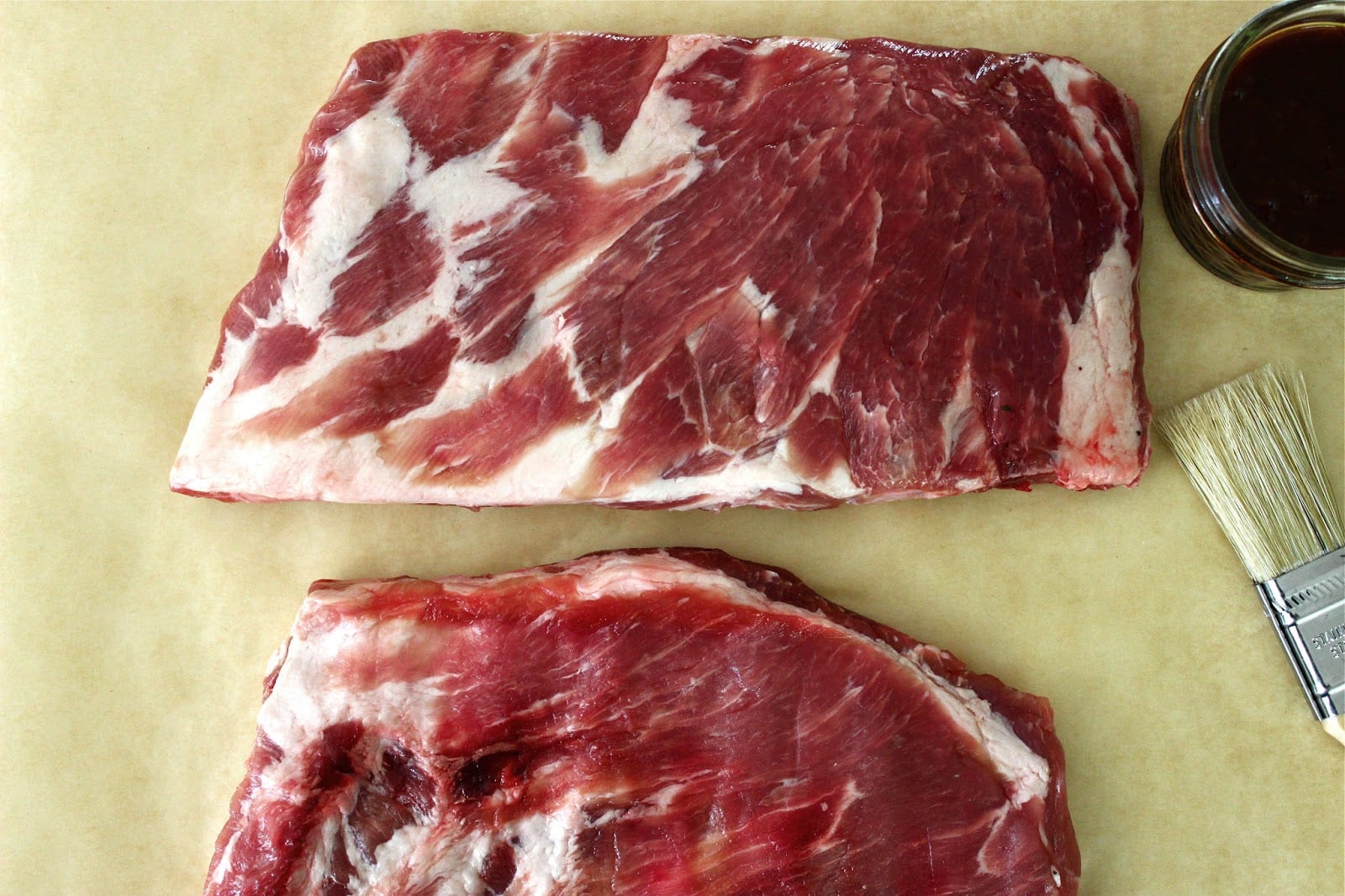
There are a few different cuts of pork ribs.  So far I have worked with the baby backs and the St Louis style.  I found the St. Louis style (pictured above) slightly meatier and fattier, and the baby backs slightly more tender.  Both have been a hit and turned out delicious.  But organic pork ribs don’t come cheap.  What I also learned is that when preparing the ribs you need to remove the membrane (the thin layer of skin on the back of the bones).  You can do this yourself or ask the butcher to do it for you.  I also like to trim most of the excess fat. Although the fat provides much of the flavor, none of us (especially the girls) like the chewy texture once cooked.

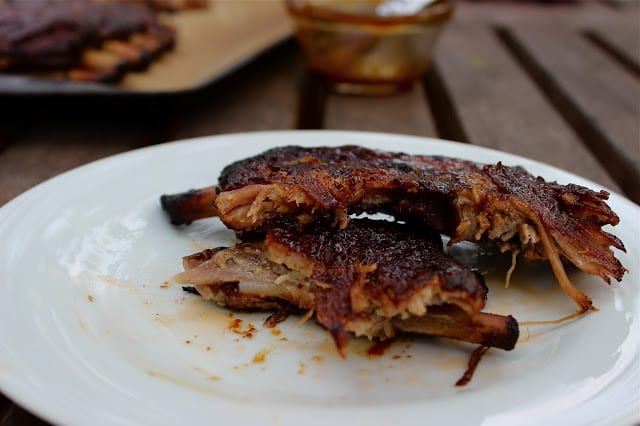
As for the cooking, I’ve learned low and slow is the key to tender, fall-off-the-bone meat. But since this was going to be a midweek meal, I certainly did not have the time or patience to babysit pork ribs cooking in the oven or on the grill for hours.  So I turned to my most trusted low and slow kitchen appliance – the slow cooker.  After 5 hours on high (or 8 hours on low), not only were the ribs fall-off-the-bone tender but the whole house smelled fabulous.  I finished off the ribs under the broiler for a couple of minutes to get that slightly crisp and grilled effect.

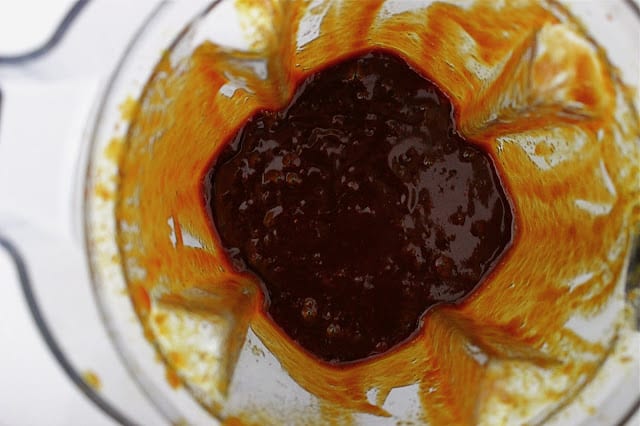
The preparation of the BBQ sauce is where my worlds started to collide.  After 3 failed attempts (read 3 separate trips to the store) to buy bottled BBQ sauce that would not be too spicy for the girls, and not loaded with a bunch of ingredients I did not recognize as food, I gave up and resolved to make that myself too.  It turns out I had most of the ingredients needed to make BBQ sauce, either in the pantry or in the refrigerator door.  And it was there, at the perpetually overstuffed fridge door that I was suddenly lifted out of my cooking malaise.  To reach the worcestershire sauce I had to move the pomegranate molasses out of the way.  And that is when I hit my cooking high.  The fog lifted.  I was filled with adrenalin as I poured the pomegranate molasses into the blender, along with ketchup (worlds collide!) and reached for other familiar spices that I usually use to compliment pomegranate molasses – cinnamon, turmeric, cumin.  The result was a tangy and slightly sweet – finger licking good – concoction; one most definitely approved of by the girls.  I happened to have a sour pomegranate molasses on hand, and I added 2 tablespoons of honey to the sauce to cut the tang a bit. If you use a sweeter pomegranate molasses, start off with one tablespoon of honey, try it and add more honey according to taste.  Pomegranate molasses is readily available now at most stores or at any Middle Eastern market.  The sauce also works great with chicken, lamb chops or Portobello mushrooms.  It also freezes really well.  So whatever you don’t use you can portion out and put in the freezer for another time.

Perhaps this is a story about when my American kitchen met my Iranian ingredients.  Something that happens on an everyday basis.  And I am here to testify that this encounter is quite harmonious, peaceful, and  delicious.  A little food diplomacy can go a long way.  And although we might not be indulging in pork ribs smothered in pomegranate molasses BBQ sauce all the time – we will be enjoying them once in an ice cream while.

Enjoy your Memorial Day weekend.


POMEGRANATE MOLASSES BBQ SAUCE

Adapted from theKitchn

Ingredients:

Makes about 2 cups

1/2 cup pomegranate molasses
1/2 cup organic ketchup
1 teaspoon unfiltered apple cider vinegar
1 teaspoon worcestershire sauce
1 tablespoon organic unsulphured molasses
1 – 2 tablespoons organic raw honey, according to taste
1 shallot, roughly chopped
1 clove garlic, roughly chopped
1/2 teaspoon cumin
1/4 teaspoon cinnamon
1/2 teaspoon turmeric
1/2 teaspoon salt
1/4 teaspoon fresh ground pepper

Put all ingredients in a blender.  Blend until smooth. The BBQ sauce can be kept in the fridge for up to 3 days and frozen for up to 3 months.

PORK RIBS PREPARED IN THE SLOW COOKER*

Ingredients:

Serves 4

1 rack baby back or St. Louis pork ribs, about 2 pounds, membrane removed, extra fat trimmed, cut in half to fit in the slow cooker
salt
fresh ground pepper
olive oil
pomegranate molasses BBQ sauce, about 1 cup

1-  Season both sides of ribs with salt and pepper.  Lightly brush both sides with pomegranate molasses BBQ sauce.  Oil the bottom of the slow cooker with olive oil.  Place ribs inside.  It’s ok if they overlap.  Cook on high for 4-6 hours (depending on slow cooker) or low for 8-10 hours (depending on slow cooker).  Mine were done on high after about
4 1/2  hours.

2- Brush ribs with more BBQ sauce (as much as you like) and place under broiler on High for 2-5 minutes.

Serve immediately with extra BBQ sauce on the side for dipping.

* The ribs can also be made in the oven or on the grill.