Tag / Aash

Soup

City fo Gold and a Farro, Mung Bean, Cannellini Aash

 ♪ Music We’re Cooking To ♪

I expected food, culture, and a unique culinary guide to the city – my adopted city.

I didn’t expect the tears.

I was invited to a screening of the documentary film City of Gold about Pulitzer Prize-winning Los Angeles Times food writer Jonathan Gold, directed by Laura Gabbert. It was a mid-week event right around dinner time. Which means high level planning, texting, and coordinating by the tag team parental unit. It means somewhere between school pick-up, homework, piano and violin practice, and endless queries about when it’s ok to play Minecraft, there’s dinner to consider. It means preferably a one-pot meal – stove to table. Something that will satisfy and nourish. Something a six-year-old can pick at and deconstruct to the daily (hourly?) whims of her palate. Something for which a nine-year-old will happily lick her bowl clean. All of which translates to aash – a hearty Persian soup. Use up whatever is within reach kind of aash.
I take my seat in the intimate theater. The lights dim and Laura Gabbert’s lens invites us to ride shotgun along side Mr. Gold. He guides us through the streets of his beloved Los Angeles with ease, respect, curiosity and a local’s sense of love and authority. A true reflection of what has made him and his columns so adored by Angelenos and beyond. He weaves on and off our Escherian freeways in search of a taco truck, a hot dog stand, Szechuan, very spicy Thai, Oaxacan, fancy French fare, Ethiopian, grasshoppers with Ruth Reichl, and a brief stop at the always reliable and delicious Attari for a little taste of Iran.

What shines brightest in City of Gold, what resonated most deeply with me, what grabbed my heart and lodged a lump deep in my throat are the stories behind the food. Laura Gabbert touchingly captures Mr. Gold’s gift to shine a light on these stories. The people, the families, the struggles and successes, life in the diaspora, life in every corner of Los Angeles.

Mr. Gold’s dedicated pursuit of the next satisfying meal reveals the many colors of the mosaic that makes up Los Angeles. We are reminded that our communities are alive and bursting with all sorts of flavors, people and stories – we just need to venture out a little more east, south, north and west to discover them. To break bread with them.
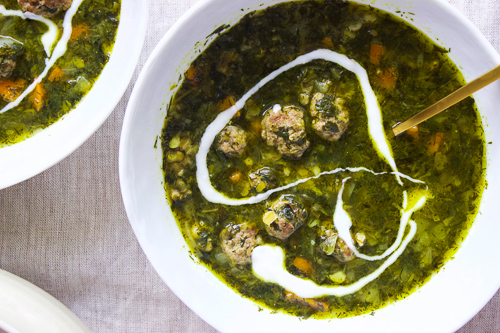
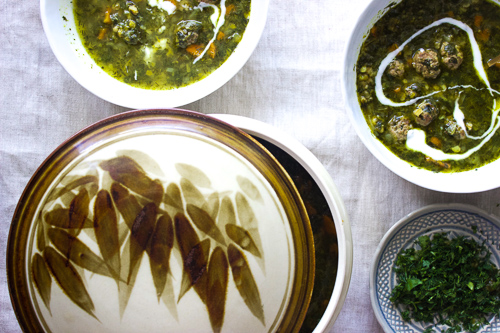
This aash is a reflection of the flavors and ingredients that have journeyed with me from east to west. A mix of flavors that bring comfort in their familiarity. There is the abundance of fresh greens so beloved in Iranian cooking, the chewy bite of Italian farro, a mix of creamy cannellini and mung beans, a whole leek – white and green parts, mini-meatballs mixed with fresh herbs and Parmesan (for added flavor and more importantly because that’s how my kids love them) and a couple of spoonfuls of yogurt to bring it all to life.

The true spirit of aash-making is not in how accurately you measure, or use these ingredients exactly as dictated. Aash is generous in spirit and very forgiving. If you don’t have mung beans on hand try lentils, or substitute rice or noodles for the farro. For a vegetarian option, leave out the meatballs. Don’t get too caught up on how big or small your bundle of greens is. Reach deep in the back crevices of your fridge and revive the forgotten and neglected. This is also a great dish to use the whey (from straining yogurt) sitting in your fridge door, politely waiting for its turn to be asked to the dance. If you don’t have whey, not a problem, just use water.This recipe can serve as a guide as your pantry, crisper and taste buds lead the way. From east, south, north and west.
At a time when there is so much talk about building walls to separate – Laura Gabbert and City of Gold quietly offer Jonathan Gold, an ambassador of sorts. A not so anonymous, suspenders and bowler hat-clad food critic – crossing bridges, and overpasses in his green pickup truck – connecting us to our neighbors. One dish at a time.

FARRO, MUNG BEAN, CANNELLINI AASH

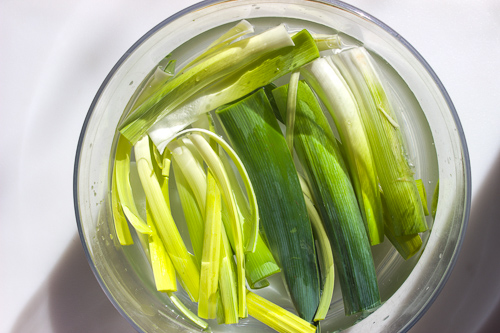
Notes: Cleaning and chopping bunches upon bunches of fresh green herbs can be time-consuming. Don’t get too caught up in the task. Chop off the thick stems (set aside to use in broths, if you like) and chop the more tender stems and leaves. I highly recommend pulsing the leek, green herbs and the green onion in a food processor to save time.

Serves 8

  • 4 tablespoons olive oil
  • 1 medium onion, finely chopped
  • 3 garlic cloves, chopped
  • 1 medium leek, white and green parts, finely chopped
  • 2 medium carrots, chopped
  • 4 large chard leaves and stems, leaves and stems chopped and set side separately
  • 1/2 teaspoon turmeric
  • 1 tablespoon dried mint
  • 3/4 cup semi-pearled farro
  • 1/4 cup cannellini beans, soaked overnight
  • 2 cups whey, (if using, otherwise use equal parts water)
    10 cups water
  • 1/4 cup mung beans, soaked overnight
  • 1 bunch parsley, chopped
  • 1 bunch cilantro,chopped
    1 bunch dill,chopped
  • 3 green onion, chopped
  • fine grain sea salt
  • ground black pepper

Meatballs

  • 1/4 of a medium onion, grated
  • 1 tablespoon chickpea flour, or bread crumbs
  • 1/3 cup finely grated Parmesan
  • 1 lb ground meat
  • 2 tablespoons chopped fresh herb mix, from above
  • 2 heaping tablespoons plain yogurt, plus more for serving
  • 1 teaspoon fine grain sea salt
  • 1/4 teaspoon ground black pepper

Mix the chopped parsley, cilantro and dill. Set aside 2 tablespoons of the mix for the meatballs.

Heat the oil in a large pot over medium. Add the onion and cook for 10 minutes until golden and fragrant. Add the garlic, the turmeric, dried mint (crush between your fingers to release its fragrance) 1/2 teaspoon salt, 1/4 teaspoon black pepper. Cook for 2 minutes, stirring. Add the leeks, carrots and chard stems, cook for 5-8 minutes, until slightly softened. Add the farro and cannellini beans, give a quick stir and add the whey (if using) and water. Bring to a boil, cover with the lid slightly ajar and simmer over medium heat for 20 minutes.

In the meantime make the meatballs. In a medium bowl mix together the grated onion, chickpea flour (or bread crumbs), and Parmesan. Add the meat, fresh herbs mix, salt and pepper. Mix well, massaging all ingredients into the meat. Form into mini-meatballs (I use a teaspoon to scoop up the meat) and set aside. You can make the meatballs ahead of time and refrigerate.

Add the mung beans, chard leaves, and green onion to the aash, simmer covered with lid ajar for 10-15  minutes, until beans soften. Add the fresh herbs and meatballs, and 2-1/2 teaspoons sea salt. Simmer covered with lid ajar for about 15 minutes, until meatballs have cooked through and beans and farro have softened.  Scoop out a couple of ladels full of the broth in a bowl and mix the yogurt with it. Pour back in the aash and stir. Taste and adjust all seasoning. Add more yogurt in this manner if desired.  Serve with extra yogurt on the side.

Soup

A Winter’s Tale and a Pomegranate Soup – Shab-E Yalda – Aash-E Anar

Yeky bood, yeky nabood…

‘Twas the longest night of the year.

‘Twas the darkest night of the year.

‘Twas the most magical night of the year.

Soak the rice as the split peas simmer away.  Immerse your hands in the cold water and gently break up the rice into bits and pieces. Feel the familiar beat of nostalgia course through your body.  Memory knocking at your door.  It always begins with a gentle knock. Patiently waiting for permission to enter.  Sometimes you grant it – sometimes you don’t. It’s a slippery slope – the unpaved road to nostalgia and memory. You often tread those loose cobblestones cautiously. But tonight you are in a generous mood. It’s a night of celebration.  A night of light, poetry, food, music, laughter, dancing, stories, family, jokes, togetherness, and a warm and tangy crimson-hued Aash-e Anar – Pomegranate Soup. You gently shake the rice off your fingers, dry your hands and place a firm grip on memory’s door. Wildly swinging it open. Welcoming with it a howling gust of wind echoing with tales of

Shab-e Yalda/Shab-e Chelleh.

Winter Solstice – December 21, 2014.

‘Tis the one night of the year children are allowed to stay up all night.

(Only to inevitably fall asleep at the foot of the korsi.  In the warmth of their grandmother’s lap.)

Giddy with anticipation of outlasting the long and dark night and welcoming a new crimson dawn.

Turn the music up.  Let its joyful rhythm, fervor and urgency draw your girls down the stairs. Add the rice to the aash along with a sprig of mint. Stir, stir and stir some more. The split peas have a tendency to stick.

What’s he singing about, Mama? -Luna

I’m not sure. It’s in Kurdish. I think it’s a love song.

Who are Kurdishes, Mama? -Soleil

Friends and neighbors.

Interlace your fingers with your moon and sun and start spinning.  Orbiting around one another.  Shake your hair out, shimmy your hips, spin, spin and spin some more. Let yourself get lost in the moment.  Catch the sun’s light reflect off the moon and bounce around the room.  A magical night, after all.  Spin, spin, and spin some more.  Jump and sing along until your heart can’t take it anymore.  Collapse on the floor.  Only to get back up and repeat it all.

‘Tis the night of Yalda – birth.

The birth of the sun.

As light, love, truth and wisdom prevail over darkness.

Start on the meatballs.  Put the girls to work.  Add the parsley, cilantro, dill and advieh to the mixture.  Now listen – don’t get too crazy measuring out the chopped herbs.  Grab a handful and chop away.  What you don’t use in the meatballs you can use as garnish on the aash.  Place a small bowl of water next to the girls and show them how to wet their hands a little before forming the mini-meatballs.  Show them how small you want them. Bite your tongue and move away (go stir the aash) as they start forming odd shapes and sizes.  Let them get lost in the moment.

‘Tis a well-told and oft-repeated tale.

Told by ancient Persians six thousand years ago.

Told by George Lucas. In six parts.  Soon to be seven.

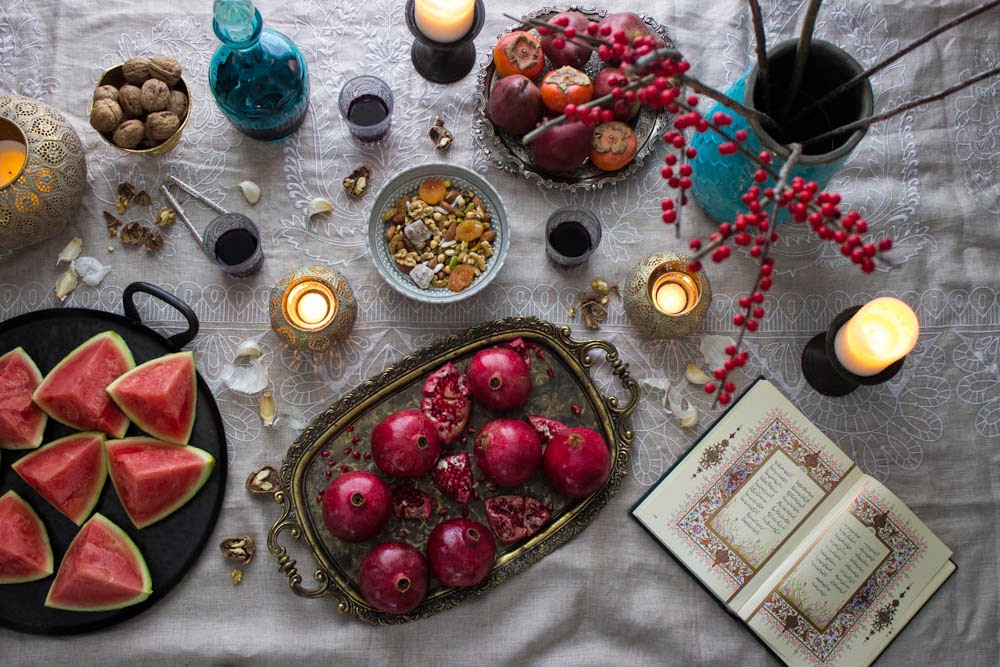
Set the Yalda table.  A study in various shades of red. All to symbolize a crimson dawn – the light of life. Watermelon for protection against excess heat in the summer months. Pomegranates and red pears to ward off insect bites.

Just like those patches we put on to keep away the mosquitos when we went camping.  Remember, Mama?

I remember, Soleil.

Dried fruits and nuts for an abundant and prosperous harvest. Candles to light the house and keep darkness at bay. Garlic for joint pain.

Mama, do your joints hurt?

Not right now, Luna.  But just in case…

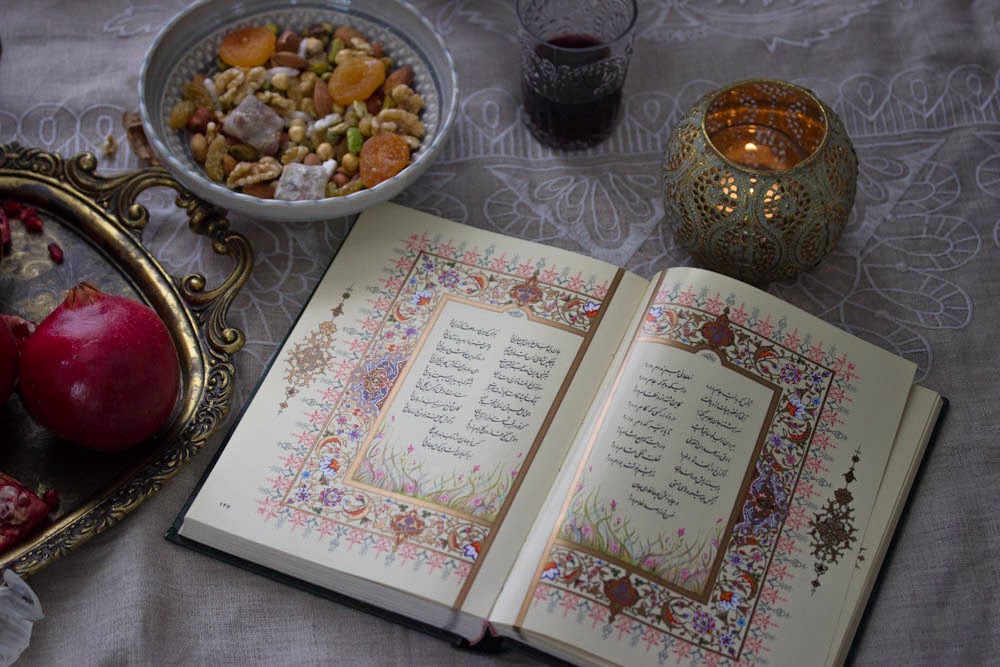
Divan-e Hafez to stir your soul and look into your future. And a crimson-hued wine to stir your thoughts and reminisce of days long gone.  A magical night, after all.

‘Twas a well fought battle.

With no end in sight.

As the night raged on and on.

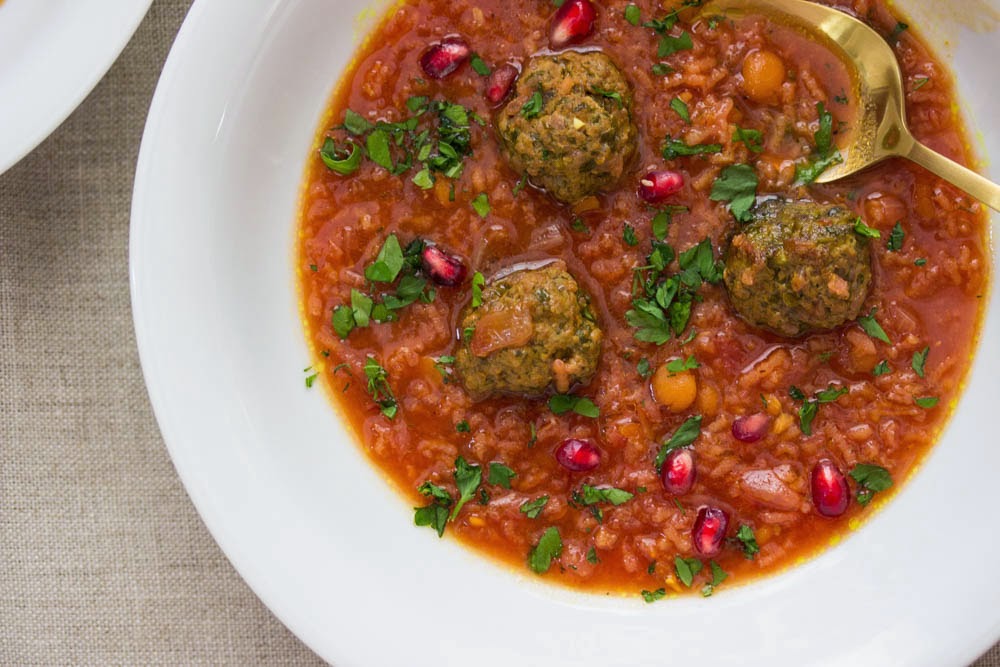
Gently drop the meatballs in the pot. Grate the beet and let its juices drip through your fingers and into the aash.  Chalk it up to more good luck. Hold the bottle of pomegranate molasses high above your caldron as you release its contents. Stir, stir and stir some more, then cover.

But where there is dusk – there is dawn.

And the sun always rises.

She always rises.

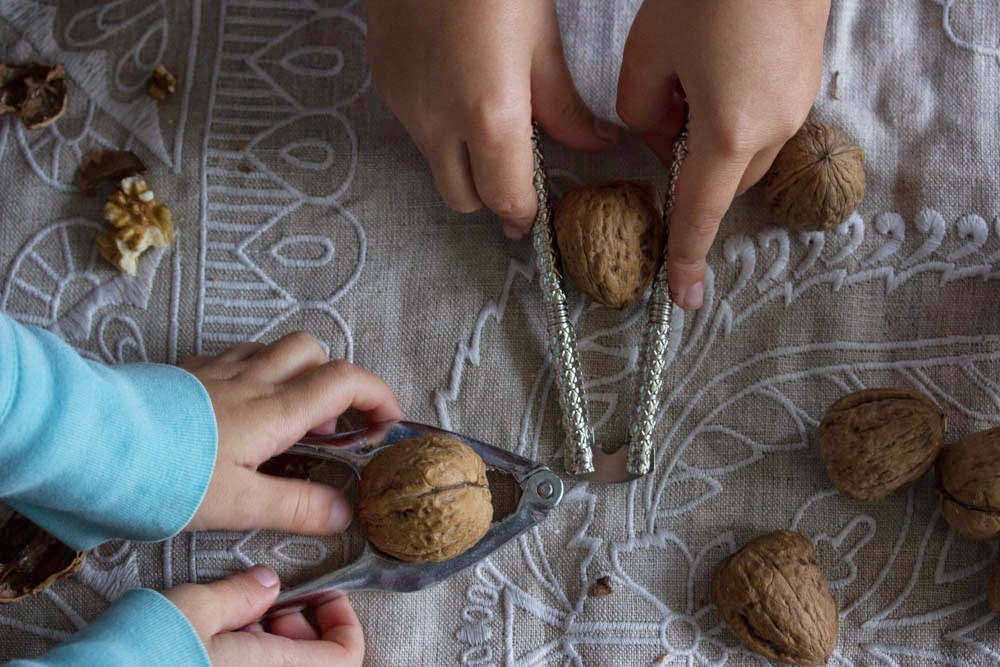
Serve the warm and tangy crimson-hued Aash-e Anar as the girls crack open the walnuts.  Duck as walnut shells ricochet off the walls.

Mama, can we please stay up all night?  Please?

Yeky bood, yeky nabood…

Wishing you all a very joyful and happy Yalda and Holidays. Please make sure you also check out the wonderful Yalda posts below. Plenty to tempt you with for this Yalda night.

POMEGRANATE SOUP – AASH-E ANAR

Notes:

  • Soaking the rice makes it easier to break it into pieces.  This is so we have smaller pieces of rice visible in the soup. You want to break the rice into bits and pieces; don’t pulverize it.
  • How long you simmer the yellow split peas depends on the quality and freshness of your peas.
  • Pomegranate molasses can be easily found in Middle Eastern markets, most grocery stores and online. I use a more sour kind.  This aash is meant to be slightly tangy.  But if you prefer, and depending on the kind of pomegranate molasses you use, you can balance out the flavors by adding a little bit of sugar.  Start with a small amount and add as needed.
  • Advieh is a Persian spice mix. Recipe can be found here.
  • This aash is best if made a day or two in advance. The flavors sit and mingle and really intensify.  When reheating adjust the water.  You want this aash on the slightly thicker side.

Ingredients:

Serves 6

3 tablespoons olive oil
1 medium yellow onion, chopped
2 garlic cloves, chopped
1 teaspoon turmeric
1/2 cup yellow split peas, picked over and rinsed
1 1/2 teaspoons salt
1/4 teaspoon pepper
water
1/2 cup white basmati rice, soaked in cold water for 30 minutes
1 mint sprig
1/2 cup pomegranate molasses
1 small beet, grated
sugar or sweetener of choice (optional), to taste
fresh chopped herbs (parsley, dill, cilantro, mint), as garnish
pomegranate seeds, as garnish

MEATBALLS

1/2 small yellow onion, grated
2 garlic cloves, finely chopped
2 tablespoons chopped parsley
2 tablespoons chopped dill
2 tablespoons chopped cilantro
1/2 teaspoon advieh
3/4 teaspoon salt
pepper, to taste
1 lb ground beef or lamb or combination of

1- In a large pot heat the oil over medium heat.  Add the onion and saute until it softens, about 6 minutes.  Add the garlic and turmeric and cook for 2 minutes.  Add the yellow split peas and give a quick stir.  Add 8 cups water and 1 1/2 teaspoons salt and pepper and bring to a boil. Lower the heat and simmer, partially covered and stirring ocassionally, for about 20-30 minutes, depending on the quality of the peas.

2- Gently break the rice into bits and pieces.  Add the rice to the pot and bring back up to a gentle boil.  Add the mint sprig and lower the heat and simmer, partially covered and stirring ocassionally, for 20 minutes. In the mean time make the meat balls.

3- In a large bowl combine the onion, garlic, parsley, dill, cilantro, advieh, salt and pepper.  Add the meat and combine well.  Wet your hands and form into mini meatballs. I use a 1tsp measuring spoon to scoop out the meat.  Should make about 30 meatballs.

4- Add the pomegranate molasses and the grated beet to the soup.  Stir to combine.  Gently drop in the meatballs and cover.  Simmer for about 20 minutes, until the meatballs are cooked through and the peas are tender (but not mushy).  Taste and adjust seasoning.  Add sweetener if desired.

Garnish with fresh chopped herbs and pomegranate seeds and serve.

Will keep in the fridge for up to 3 days and in the freezer for up to 3 months.  Adjust water amount when reheating.

Soup

A Fresh Herb, Bean, and Noodle Soup – Aash-E Reshteh – Azadi

Azadi?  What does Azadi mean, mama?

It means Freedom in Farsi, Luna.

The day before Nowruz – Persian New Year. We are at the Persian Bazaar – aka Westwood Blvd. – doing some last-minute shopping.  The girls pick out the sonbol – hyacinth – a purple one, of course.  Happily they crunch on the ajeel – the nut mix the store owners keep offering them. They marvel at the mounds of fresh green herbs everyone is sorting through – cilantro, parsley, dill, tarragon, chives, green onion, fenugreek.  With every inhale their noses fill with the inescapable aroma of Spring – a new day – tulips, cherry blossoms, rose water, seville oranges, hyacinth, hyacinth, hyacinth.  They practice snapping their fingers and swaying their hips to the joyful and celebratory music pouring out of every store.  At the bookstore Luna discovers a bookmark with Azadi written on it.

What does Freedom mean?

Three grown adults are momentarily left speechless.  Once we gather our thoughts – Drew, my mom and I try to convey what Freedom means to a five year old.  She listens quietly – head leaning to one side – chestnut brown eyes resting their soulful gaze on the haphazard chaotic world rushing past her car window.  Nothing more is said – or asked.

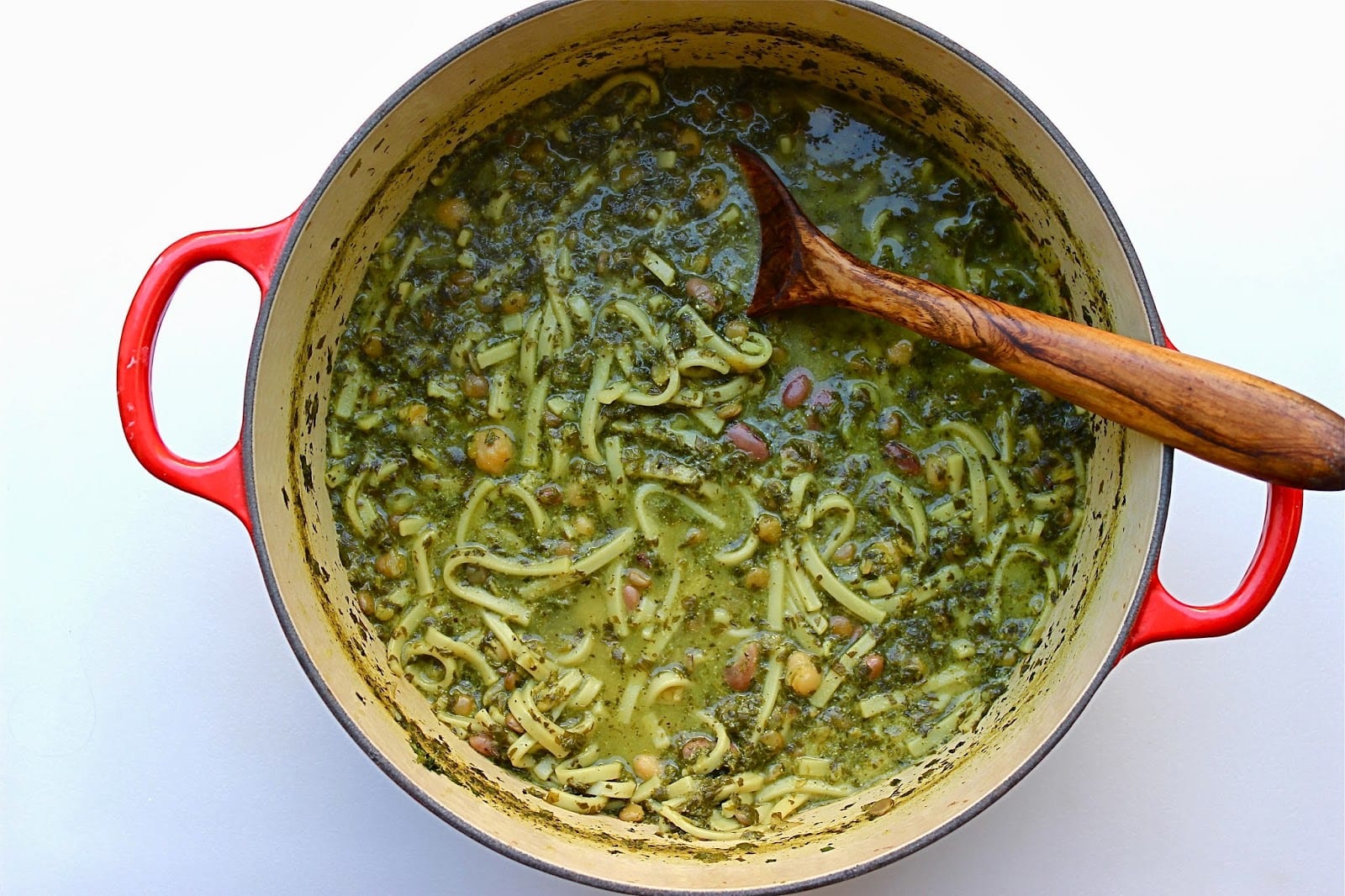
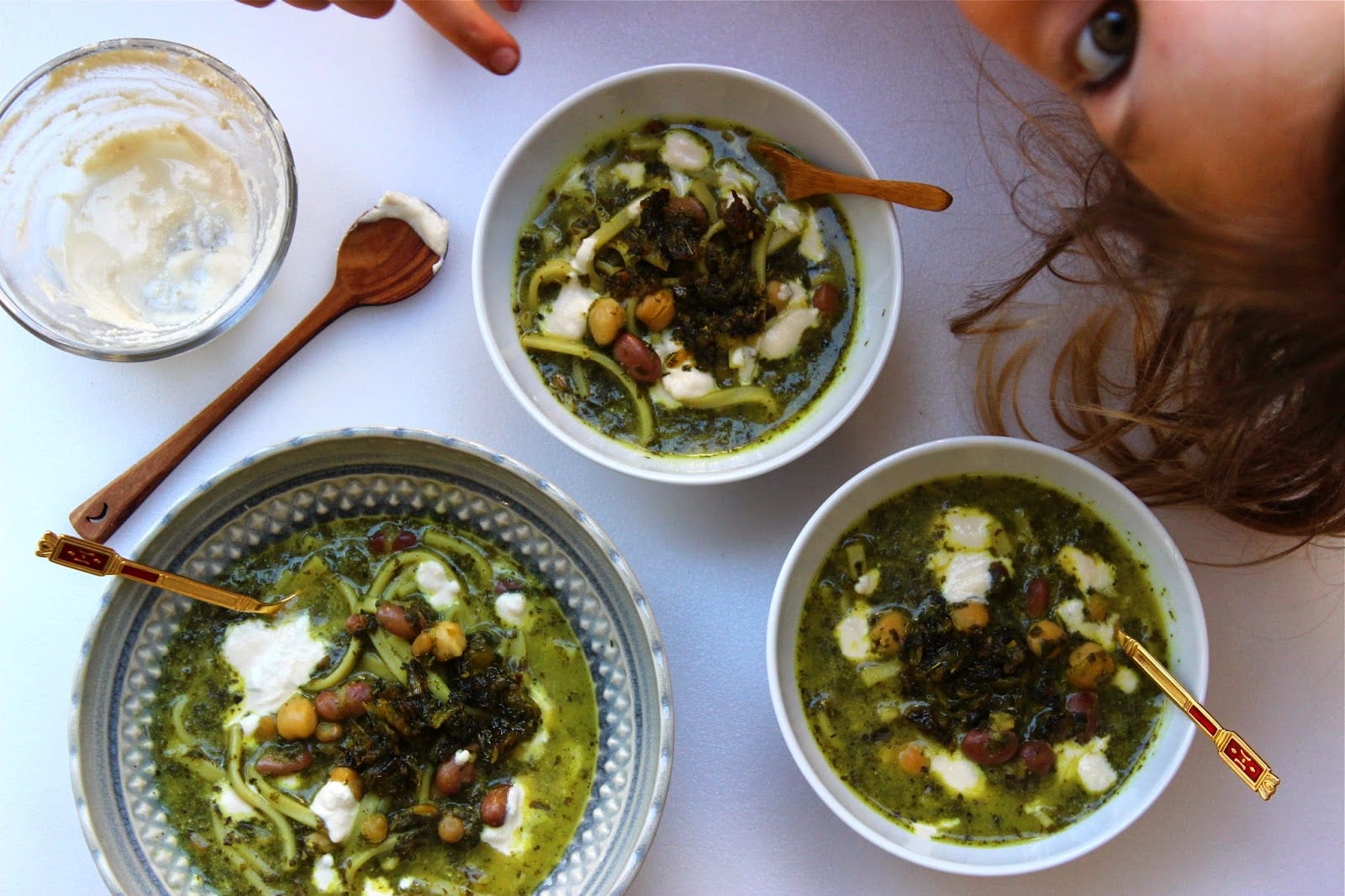
Aash (rhymes with wash) is a hearty, thick soup typically made with a variety of herbs, legumes and grains. There are many different varieties of aash.  Each bursting with flavor and satisfying enough to be served on its own as a meal or in a smaller portion to begin each meal. Most aash can also be prepared vegetarian/vegan and gluten-free.

Aash can be considered the foundation of Persian cooking.  The heart and soul of it.  In fact, the Persian word for kitchen is aash paz khaneh – the house (or room) where aash is made and the word for cook is aash paz – the maker of aash.  Different kinds of aash are traditionally eaten to celebrate or commemorate special occasions.

Aash-e Reshteh literally means aash with noodles.  Traditionally Aashe-e Reshteh also known as Aashe-e Chaharharshanbeh Suri is served on the last Tuesday night before Nowruz – shabeh Chaharshanbeh Suri.  The noodles in the aash are said to symbolize the many winding paths that life spreads before us.  It is fitting then, to enjoy this heart warming aash right before the New Year, perhaps in the hopes of embarking on the right path for the coming year.  This also reminds me of the Italian tradition of eating Lentil Soup for good luck in the New Year.

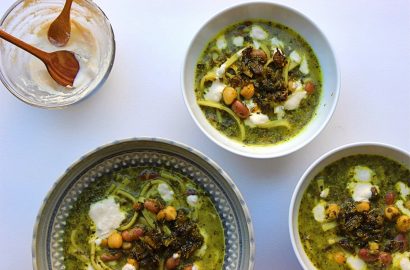
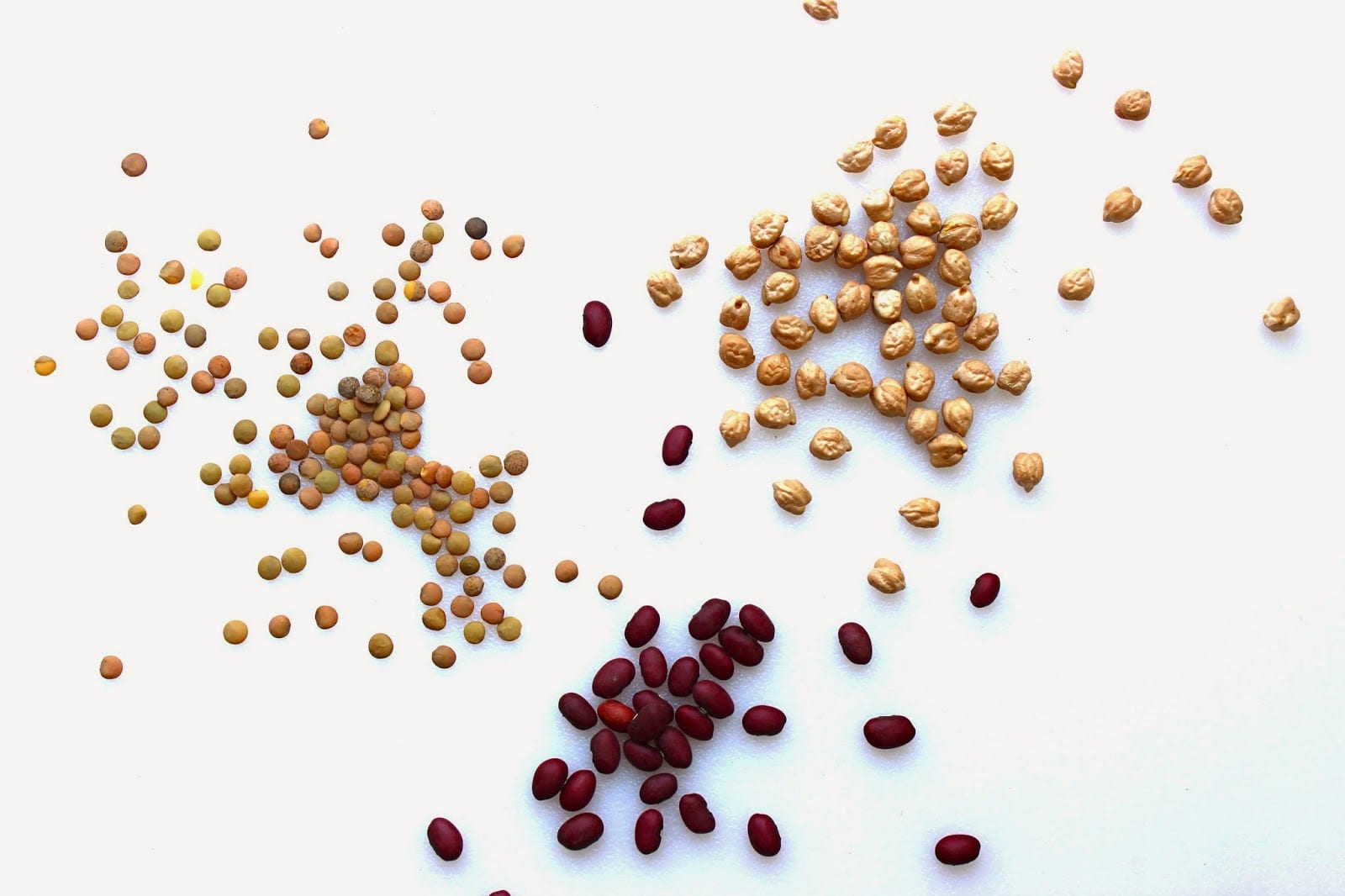
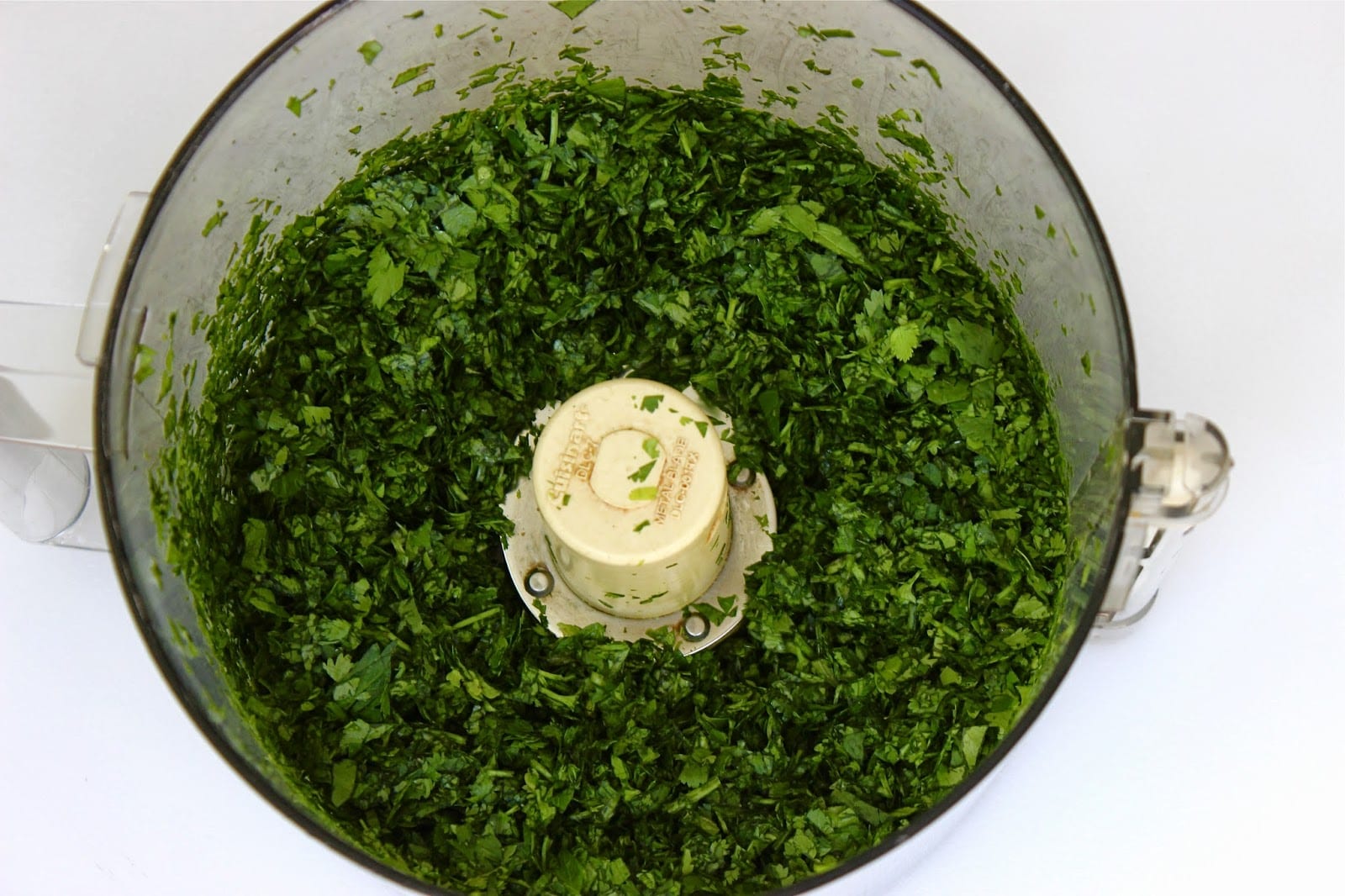
The preparation of Aash-e Reshteh is quite simple.  As with most Persian dishes that use an abundance of herbs, the most time consuming part is the washing and chopping of the fresh herbs.  A food processor can be of great help here.  And just like the preparation of Koo Koo Sabzi you don’t need to get too caught up with taking every parsley leaf off the stem.  I cut off the long stems (you can save the stems for stock) and then run my knife through the herbs (little stems and all) a couple of times and throw everything in the food processor.  I like to use dry beans which I first soak for a few hours or overnight.  But you can also use canned beans if that’s what you have on hand.  The combination I used here is chickpeas, red pearl beans (you can also use the slightly larger red kidney beans) and lentils.  Persian noodles -reshteh – can be found at Persian grocery stores or online, but linguini noodles work just as well.  And just like Kashki Bademjan, what really elevates this aash are the garnishes:  kashk and carmelized onion, mint and garlic.  If you can’t find any kashk (or are still unsure of starting a relationship with this handsome new stranger), a sour European-style yogurt, or strained Greek-style yogurt or creme fraiche will work just fine too.  But I really think you should give kashk a chance.

Be it a special occasion, a cold winter’s night, a new journey, or simply one of those days when you just need a big hug, and a big bowl of comforting goodness in a bowl – Aash-e Reshteh is sure to hit the spot.

The girls enthusiastically help me set up the Haft Seen table.  The hip-shimmying Persian music winds its way through the house.  Soleil and I debate the placement of the sonbol in relation to the goldfish – the goldfish like to be close to the sonbol so they can smell the sweetness too – two year old logic.  Luna runs up – out of breath – waving her Azadi bookmark.  She insists that we add it to the Haft Seen table.

It’s important Mama.

This year on Thursday, March 20, 2014 at precisely 9:57am PST – precisely the moment when the Earth’s axis tilts neither away nor toward the sun – when night and day are exactly the same length all around the world – we will welcome in a New Day – Nowruz.  And for the third year in a row Luna’s Azadi bookmark will have a place at our Haft Seen table.

Because it’s important.

Wishing you all a very Happy Nowruz and Peace and Freedom for everyone around the globe.

FRESH HERB, BEAN AND NOODLE SOUP – AASHE-E RESHTEH

Serves 6-8 as a starter or 4-6 as a main dish

Ingredients:

1/3 cup dried chickpeas, soaked  overnight
1/3 cup red pearl beans or red kidney beans, soaked overnight
1/2 cup lentils, rinsed and drained
1/3 cup caramelized onion, mint and garlic, plus more for garnish (recipe here)
1 large bunch cilantro, chopped
1 large bunch parsley, chopped
1 bunch green onion, finely chopped
1 bunch spinach, chopped
8oz linguini noodles or reshteh snapped off into 2 inch pieces
1-2 tablespoons kashk or Greek style yogurt or creme fraiche, plus more for garnish
fine grain sea salt
ground black pepper

1- Place chickpeas and 10 cups water in a large pot over medium/high heat and bring to a boil.  Turn down the heat to medium and simmer partially covered until chickpeas are slightly tender but not fully cooked through.  The amount of time depends on how fresh your beans are and if they were soaked or not.  Anywhere between 20-30 minutes.

2- Add the red beans.  Partially cover again and simmer over medium heat until the red beans are slightly tender.  About 10-20 minutes depending on your beans.

3- Add the lentils, cilantro, parsley, green onion, spinach, 1 tablespoon salt, 1/2 teaspoon black pepper and caramlized onion mixture.  Partially cover and simmer for 15-20 minutes until the lentils are tender but not mushy. (The aash can be made in advance until this point).

4- Add the noodles and more water if necessary, and simmer uncovered until the noodles are fully cooked through and all the flavors have melded.  This soup should be on the thicker side so adjust the amount of water accordingly. Stir in  the kashk or yogurt or creme fraiche 1 tablespoon at a time according to taste.  Simmer for a couple of minutes.  Taste and adjust seasoning.  (Taste for seasoning after you add the kashk).  Garnish with caramelized onion and dollops of kashk or yogurt or creme fraiche.

The aash tastes even better the next day.  You may need to add a little more water if reheating.

Will keep in the fridge up to 3 days and in the freezer up to 3 months.