Tag / Rice

Uncategorized

Clinging to Freddie Mercury and a Pot of Rice – Zereshk Polo – Barberries and Rice

Zereshk – barberries – like memories – first need to be sorted through.  Scatter them on a plate as you would dried legumes, and with a discerning eye pick out the older, shriveled and darker looking ones.  Hang on to the bright crimson ones.  Occasionally you might come across a small stone, pebble, or something of the sort.  Give those the boot as well.  While you’re at it remove the little stems too.  Sometimes I skip this step.  Like other things in life it all depends on my patience level, and the all-too-demanding tick-tock of the clock.

It’s 1977, maybe 1978.  When you are very young the magnitude of every hour, day and month is never lost on you. You proudly announce your age by year, month, day, even minute.  Making sure no one mistakes the six-year-old you for the much younger five-and-a-half-year-old you. When later in life you look through the long lens of memory, the years meld into one.  And now you refrain from any unnecessary age announcements.
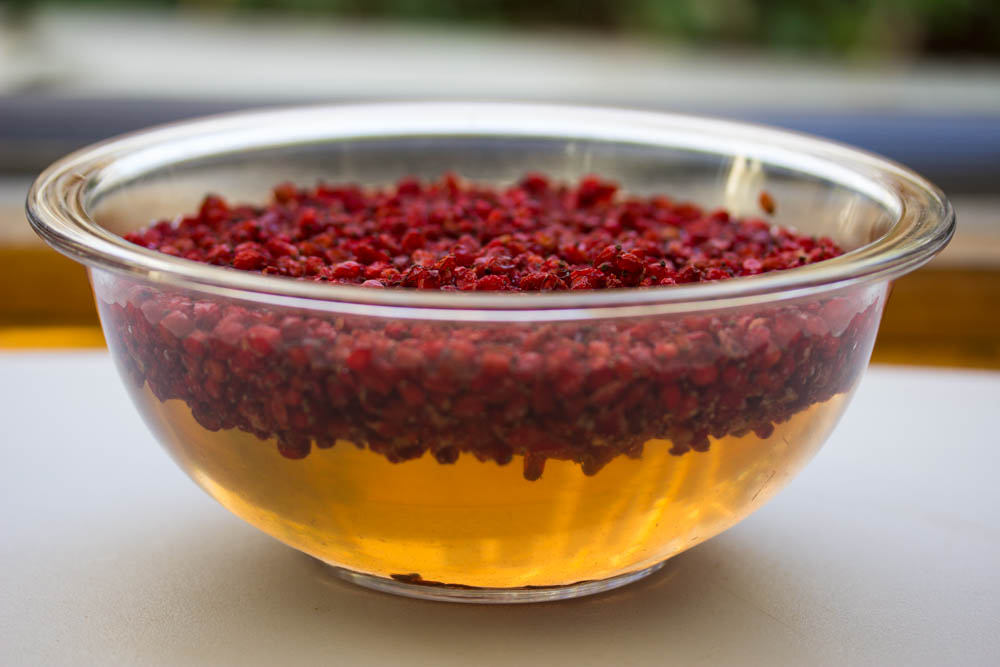
Next give the zereshk a bath.  Even on lazy days follow through with this step.  Place them in a bowl and fill with cold water.  Let them sit and soak for about 15 minutes. Observe as the ruby red jewels re-hydrate, plump up and rise to the top as all the sand settles to the bottom. Best to leave the dirt and detritus behind.  In life and cookery.  Reach in and gently lift up the barberries (you can use your hands or a very small mesh colander for this) without disturbing the sand that has settled on the bottom. Place the barberries in a small colander, give a quick rinse and set aside to drain.

My older brother Ramin and I take our positions at either end of the carpet adorning the family room floor.  A recurring game of koshti – wrestling face-off between siblings.  The sizzle of the onions hitting the hot butter catches me off-guard and within a few seconds the heady aroma of onions melting and caramelizing sneaks out of the kitchen. Winding its path beyond the piano (a constant reminder to practice), and stops short at the large living room windows.  There it lingers in awe of the first snowfall of the season settling on the window sills. Just in time for Yalda night  – the winter solstice. Overnight Tehran will be covered in a peaceful blanket of white. Hypnotized and distracted by the scents and sounds my eyes scan past Ramin, who is ready to charge, and fall upon our mother in the kitchen, rhythmically lifting the tart, jewel-like zereshk in and out of the bowl. I overhear our parents’ conversation. Like the onions, it sizzles and softens, casually weaving in and out of earshot. There’s talk of a possible trip to the mountains to enjoy the first snowfall. There’s also murmurs of unrest on the streets.  With a yek-doh-seh my brother and I charge at each other.  I give it all my little body has to give.  He lets me win.  He always lets me win.  A typical weekend.  It’s Tehran.  But it could be anywhere.
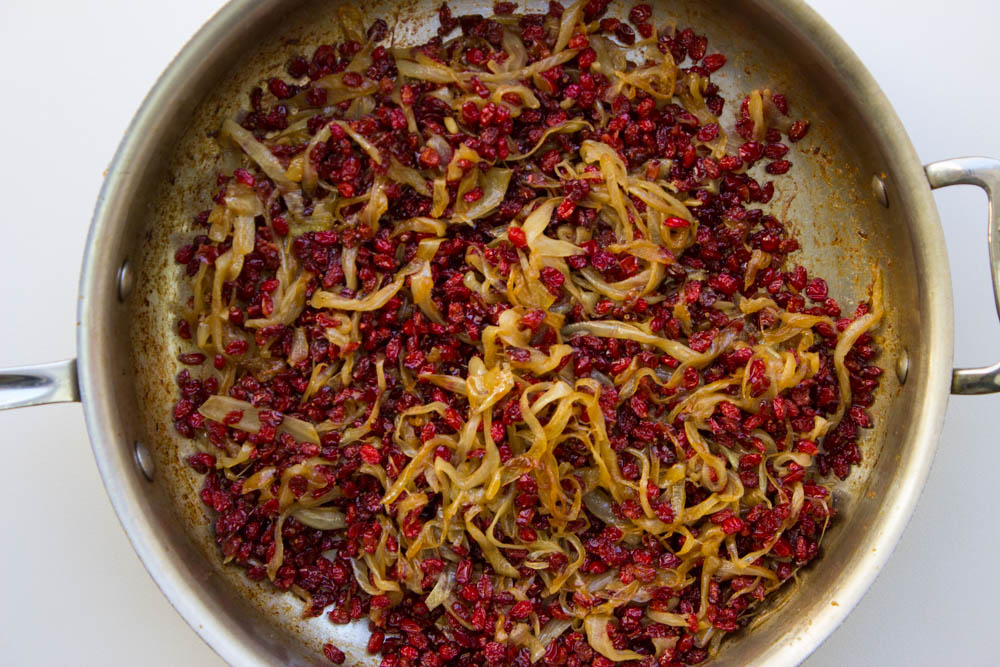
Caramelizing onions is a test in time, patience and heat control.  But where there is great effort, there is also great reward.  Most of the time.  When preparing Zereshk Polo I like to caramelize the onions in butter for a silkier, nuttier, and of course tastier, finish.  Start at a higher temperature and stir often.  At this point you’ll need to use all senses to determine when to turn down the heat.  Listen to the sizzle, stick your nose in there, and keep a close eye on those onions.  Play with your heat source and don’t get discouraged – it takes time.  Ultimately, after about 40 minutes the onions will shrink,  sweeten and turn into a sticky rich shade of brown – caramel like.  Some pieces turn darker and crunchier than others.  Add the barberries to the caramelized onion at the very end.  Barberries can burn very quickly so they only need a quick sauté, no more than 3-5 minutes.

It’s 1980, maybe 1981.  Snowfall in Rome is rare, but then again the past year or so has been anything but ordinary.  The murmurs of unrest turned into demonstrations, which turned into revolution, which turned into blackouts, sirens and bombs.   All that and so much more is now behind you.  What’s ahead is unknown, uncertain, unnerving.  But when you are young all that matters is what’s in front of you.  And on this particular day it’s a few flakes of snow ushering in a new season and gently dusting the eternal city.
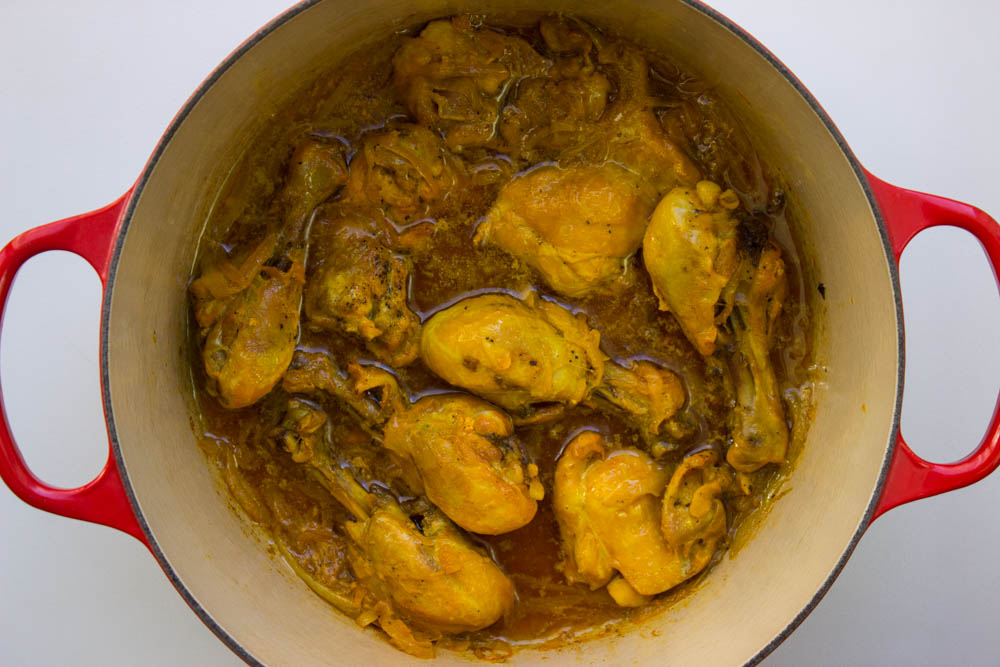
Gently simmering chicken in its own juices and saffron is one of the simplest and most satisfying dishes ever.  Even if you don’t scatter the chicken pieces in between the rice and barberries for the Zereshk Polo make this chicken and serve it with a side of plain rice, or roasted potatoes or scoop up with a warm piece of bread, like lavash or sangak.  I like to use skinless, boneless chicken (except for drumsticks that are on the bone).  If you prefer you can use thighs on the bone, with the skin on.  Just make sure to remove the skin before adding it to the rice.

Ramin instructs me to take my place at the other end of the living room, which also serves as the entrance, the family room, the dining room and my bedroom.  There’s no space to charge at one other. I’m told to just stand, listen, and have my life as I knew it altered forever.  My brother is now a full-fledged teenager and this is how teens speak.  As I wait for further instructions I glimpse Baba anxiously flip through the newspaper.

“Anything?” Maman asks.

Anything about all that was left behind.  Everyone that was left behind.  Anything about what lies ahead.

Anything.  Anything. Anything.

I hear the trepidation in her voice but I watch as her hand remains steady as she meticulously scatters the barberries, and the saffron chicken in between the rice.  With the future unknown all we can do is take charge of what is in front us.  She calls out that she’s put aside a few chicken pieces for us to snack on.  I especially like to gnaw on the drumsticks.  My brother declares the ubiquitous yek-doh-seh. He reaches over to the black cassette player and presses play.

Life alters.
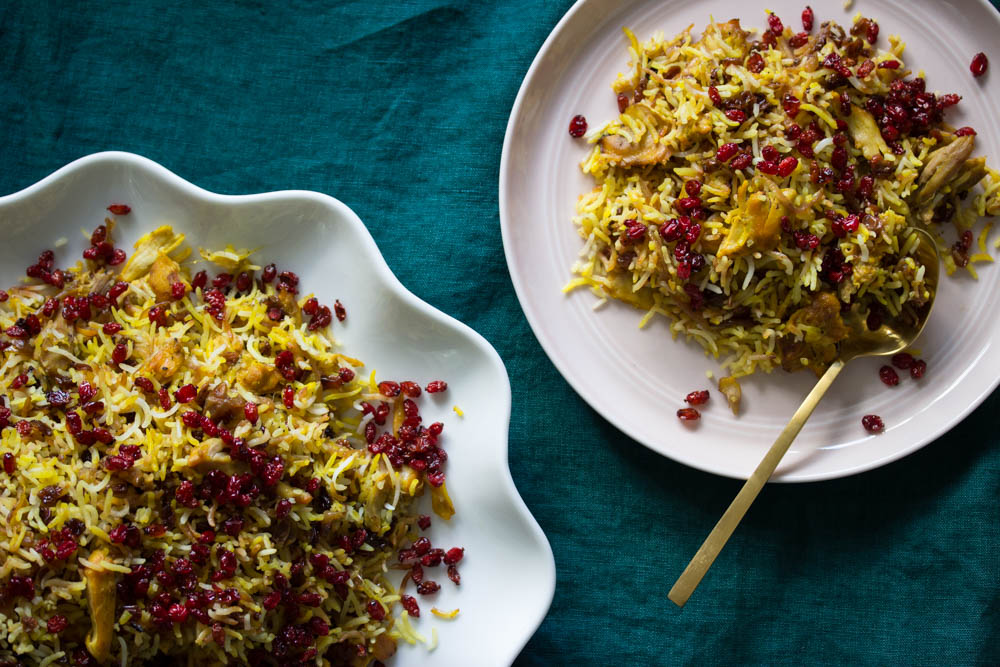
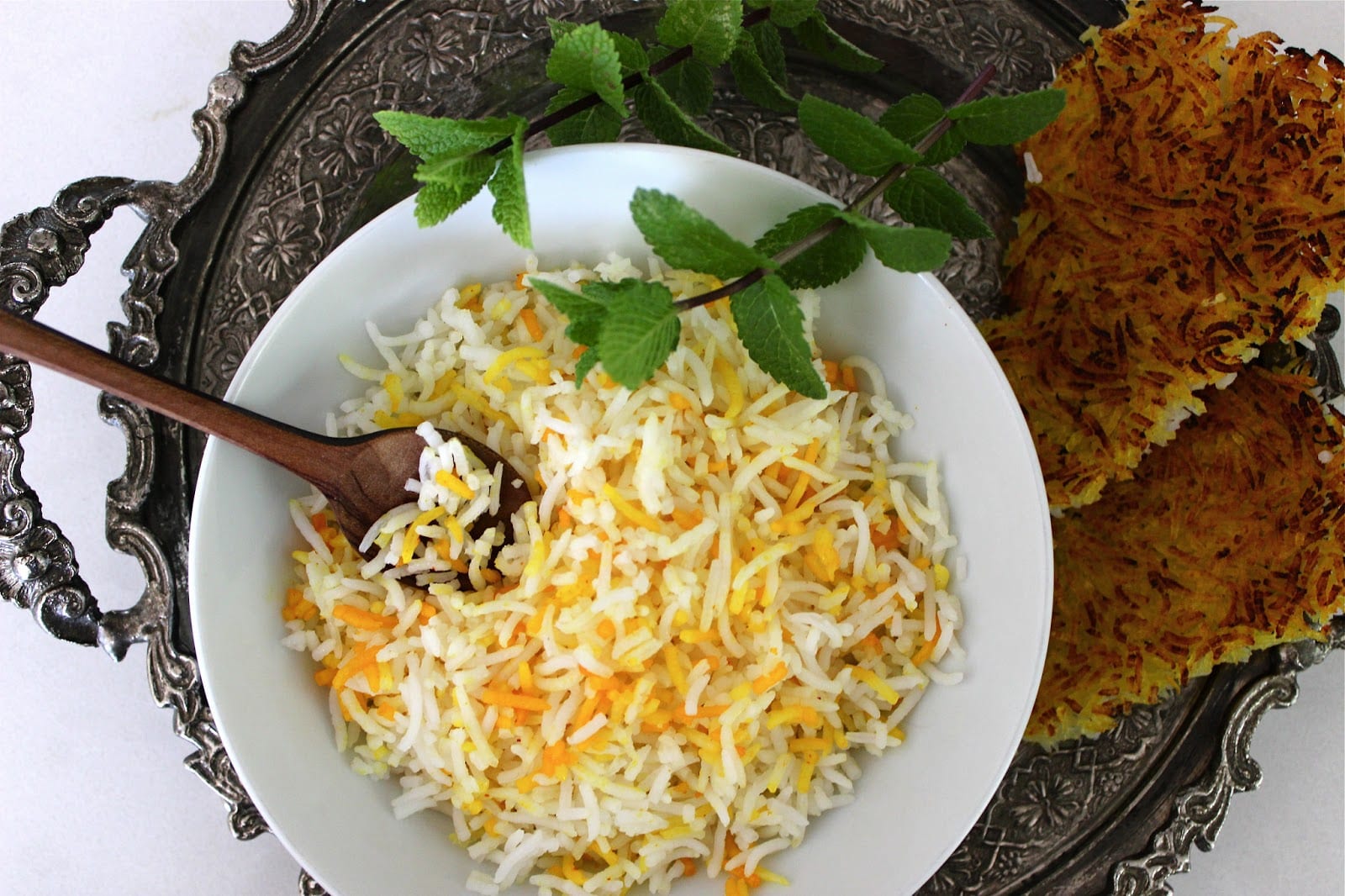
Just like Sabzi Polo, I prefer to make Zereshk Polo by layering the barberries, onions, and chicken in between layers of par-boiled rice and then steaming it all.  The barberries will bleed their crimson hue into the rice in this process so I like to set aside a couple of spatulas full of the barberries and onions to scatter over the entire dish when serving. Allowing the gems to shine.  You can always also make a pot of rice and add the chicken and barberries to it when serving.  But I find the rice absorbing the flavors and juices of the saffron chicken and onion/barberries mix to be essential in this dish.  It’s also the only way I was able convert my six-year-old into a Zereshk Polo lover.

It’s 1983, maybe 1984.  The unknown presented itself in the shape and form of Canada and you adapted.  That’s what happens when you’re young – you adapt. To the rain. To the lush green maple trees and brown squirrels.

To the questions, the assumptions, and presumptions.

Ramin tells me to sit down.  I do as I’m told.  It is apparent he has important information to share with me.  As I take a seat I watch Baba set the table.  Ramin tells me to focus and listen closely to what he is about to tell me.  I try to focus but am instantly distracted by the cloud of steam rising from behind him.  Maman lifts the towel covered lid to the rice pot and instantly the windows fog over.  For a brief moment I spy flakes of snow descending down on our rainy town of Vancouver.  A moment to be celebrated. The steam carries with it the scent of Iranian rice, ruby red barberries and saffron chicken.  The scent of home – wherever that may be.  The very scent that has enamored my newly made Canadian friends with our food and in return with us.  I quickly look back to Ramin and lock eyes with him, giving him all my attention.  The scent of Zereshk Polo circles us both. I close my eyes.  It’s Tehran, it’s Rome, it’s Vancouver.  There is a comfort, a safety in it all.

“Freddie Mercury is Persian” declares my brother with pride.

I open my eyes.  He smiles.  I smile back.  The scent of the rice and Ramin’s revelation have us both drunk with hope.  They are gifts.  Gifts to deflect all the mind-boggling questions, assumptions, presumptions and misunderstood notions of who we are and where we came from with the appropriation of a genuine rock star – a rock god – and a steaming pot of rice jeweled with tart, crimson berries.
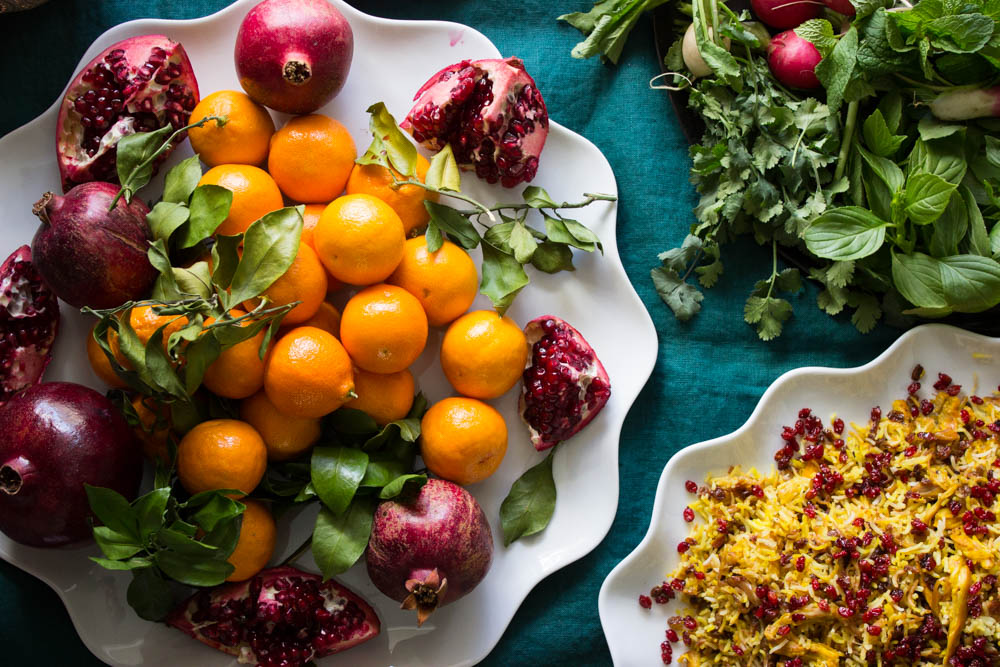
It’s 2015, soon to be 2016.  Snow flakes are a fairy tale mystery in Los Angeles, as are drops of rain these days.  Turns out Freddie Mercury isn’t Persian.  It didn’t take us long to figure this out.  But it doesn’t matter.  He was Persian for us when we most needed him to be.  And after all these years I find myself once again reaching for Freddie and an unmistakable fragrant pot of Iranian rice.  To explain it all.

The questions, assumptions, and presumptions.

Everything and anything.

Anything.  Anything.  Anything.


Wishing you all a light filled, healthy and peaceful Shabeh Yalda – Winter Solstice 2015.  Please also enjoy these posts for Yalda night from fellow Persian food bloggers around the globe:

My Persian Kitchen, Family Spice  Lab Noon , Fae’s Twist & Tango , Honest & Tasty, My Caldron , Parisa’s Kitchen

ZERESHK POLO – BARBERRIES AND RICE

Notes:

  • For a more detailed guide to cooking Persian rice please see this post.
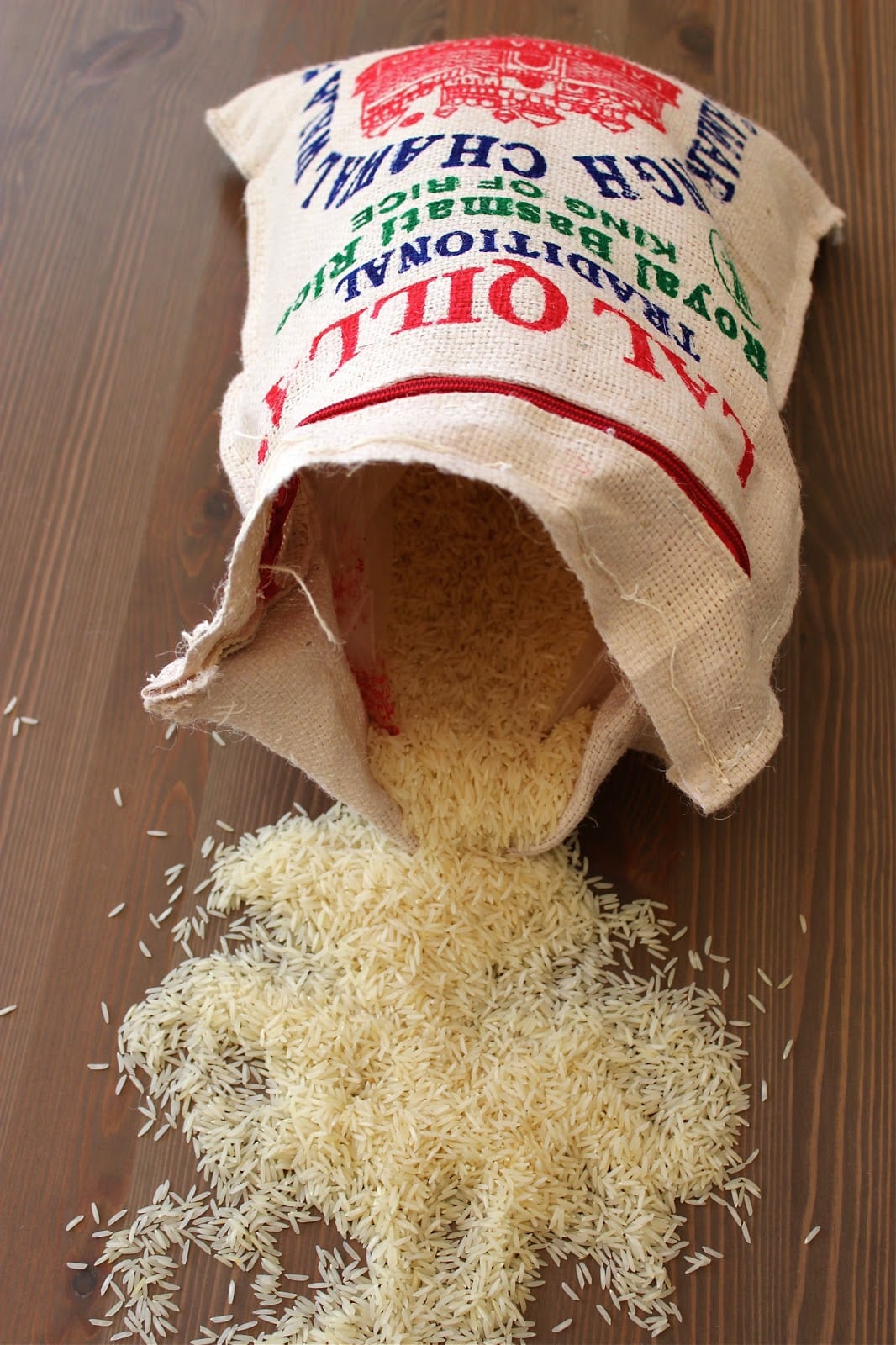
  • My preferred basmati rice at the moment is Royal Chef’s Choice. I purchase mine from my local Iranian market.
  • You can purchase dried barberries (zereshk) at Middle Eastern stores or online.  I have written more about zereshk here.
  • I add a very small amount of sugar to the barberries here to balance out their tartness.  I prefer them on the tart side.  Feel free to add as much sugar as you like.  But take note this is not meant to be a sweet dish!
  • The great thing about this dish is that the caramelized onion and the saffron chicken can be made ahead of time. I don’t like to add the barberries ahead because they can dry out.

Ingredients:

Serves 6-8

2 cups dried barberries (zereshk)
3 cups white basmati rice, washed and soaked in 2 cups cold water with 3 tablespoons  salt for at least 1 hour
2 large onions
6 tablespoons butter, divided
3 tablespoons olive oil
5 skinless chicken drumsticks
4 boneless/skinless chicken thighs
1/4 teaspoon ground saffron steeped in 2 tablespoons hot water, plus a small pinch
1 tablespoon sugar (optional)
salt
pepper

Scatter the barberries on a plate and look through.  Discard any older, shriveled, darker looking ones. Discard any small stones or pebbles.  If you have the time take the little stems off the barberries too.  Transfer the barberries to a small bowl and cover with cold water. Soak for 15 minutes. Lift the barberries out of the bowl with your hand or using a small mesh colander.  Taking carel not to disturb any of the sand and dirt that’s settled on the bottom.  Give a rinse and set aside to drain.

Finely slice 1 1/2 onions for caramelizing.  Slice the remaining half and set aside for the chicken.  In a medium pan melt 3 tablespoons butter over medium heat.  Add the onions you had set aside for caramelizing.  Turn up the heat to medium-high and saute for 10 minutes, stirring often. Turn down the heat to medium-low, sprinkle with a pinch of salt and caramelize, about 30 minutes.  Keep an eye on them.  Listen to the sizzle.  Stir often.  Play with your heat source.  Turn it up slightly if necessary and turn it back down if they look like they might be burning.  Ultimately, they will shrink to half their volume and take on a rich, silky caramel shade.  Add the barberries and sugar in the final 3-5 minutes.  Stir to incorporate, take off the heat and set aside.  In a separate small bowl set aside a couple of spatulas of this mixture to garnish the finished dish.

Wile the onions caramelize cook the chicken.  Heat the olive oil over medium heat in a large pot. Scatter the onions put aside for the chicken in one layer on top of the oil. Place the chicken on top of the onion, add 2 teaspoons salt, 1/4 teaspoon ground black pepper and pour the saffron water over the whole thing.  Make sure you get every last drop of saffron water.  Swirl more water into the glass to get it all out.  This is precious stuff! Give everything a stir. Cover and bring to a gentle boil.  Turn down the heat to low and simmer for 40 minutes.  Until the chicken is tender and cooked through.  When the chicken is done tear into pieces, discarding any bones and skin and set back in its juices. Set aside.

In a large pot bring 14 cups water and 1/4 cup kosher salt to a boil. Drain the rice and add to the pot. Stir ONE TIME very gently.  Return to a boil and keep a close eye on it.  Skim off any foam.  Test your rice after 4-6 minutes until the rice is al-dente.  Once al-dente drain the rice (I usually drain the rice at the 4-5 minute mark) and give a quick gentle rinse under cold tap water.  Drain the rice completely.

In a large non-stick pot melt 3 tablespoons butter over low heat.  Make sure the melted butter covers the entire surface of your pot and along the sides.  If not add more butter or 1 tablespoon olive oil accordingly.  Add a pinch of saffron and swirl around.  With a spatula add enough rice to fully cover the bottom of the pot. Using the back of the spatula or the back of a wooden spoon pack down the rice firmly. Add another layer of rice, then a layer of barberries, then another layer of rice, then a layer of chicken. Repeat, alternating layers in a pyramid shape. Your top layer should be a rice layer. Gently pour the juices from the chicken over the whole thing. Using the handle of a wooden spoon poke a couple of holes in the rice to allow the steam to escape.  Cover and turn up the heat to medium/high.  Cook for 10 minutes.  Don’t go anywhere!  The tahdig can burn very quickly.

Turn down the heat to medium.  Lift the lid and cover with a clean kitchen towel or a couple of layers of paper towel.  Place the lid firmly back on the pot and cook for 10 minutes.  Turn the heat down to low.  Place a heat diffuser (if using) under the pot and cook for 40 minutes.

When the rice is done gently lift the lid (without any condensation dripping back into the pot) and set aside. With a spatula gently scatter the rice mixture on a serving platter.  Make sure you don’t disturb the tahdig at the bottom of the pot.  Garnish the top with the reserved barberries mixture.  Gently scoop out the tahdig and serve on the side.

Enjoy with a side of mast-o khiar and sabzi khordan.  Listening to Queen while enjoying this dish is optional but recommended!
Dinner

A Thanksgiving Offering – A Rice and Lentil Dish – Adas Polo

He bursts through the front door – unwittingly inviting in the crisp November breeze.  Out of breath and on a mission, he spreads out a world map on the kitchen table.  An explorer out at sea – years in search of a long-lost exotic land.  And now so close to setting his eyes upon it.  Almost within reach. Running his aged fingers along the map and smoothing out its creases, he turns and focuses his periscope on me – the unknowing representative of said exotic land.

Now show me – where have you lived – exactly where are you from?

Uncle Ned.  Drew’s great-uncle.  Sweet, sweet Uncle Ned.

We were spending Thanksgiving with Drew’s grandparents and extended family in Battle Creek, Michigan. Over the years my travels had taken me throughout the United States –  the Pacific Northwest, West Coast, East Coast, the South. But somehow I had always simply flown over the middle of the country – with maybe a brief (or at times not so brief) layover at Chicago’s O’Hare.  This was officially my first visit to The Midwest.  In the heart of the country to celebrate a mighty American tradition: Thanksgiving.

I didn’t grow up celebrating Thanksgiving.  Whole turkeys are kind of hard to come by in Rome or Tehran.  But having attended American schools, I was fully versed in the tradition and folklore of this holiday.  Later when we moved to Canada, the Thanksgiving celebration shifted to early in October.  My understanding of the difference of dates between the two countries is simple geography. Thanksgiving is essentially a celebration of the end of the harvest, and it is believed that since Canada is farther north, the end of the harvest and the onset of winter comes earlier. Another notable difference is the fervor and intensity with which this holiday is celebrated in America, versus the slightly more subdued approach Canadians take in all things (the current Toronto mayor buffoonery not-withstanding). Regardless – even tough this holiday is not cemented in my past – it is a gathering I can fully appreciate.  An event centered around family, food, warmth, togetherness, love, and the mandatory familial tensions and misunderstandings.  Yes – a gathering I can fully understand and embrace.

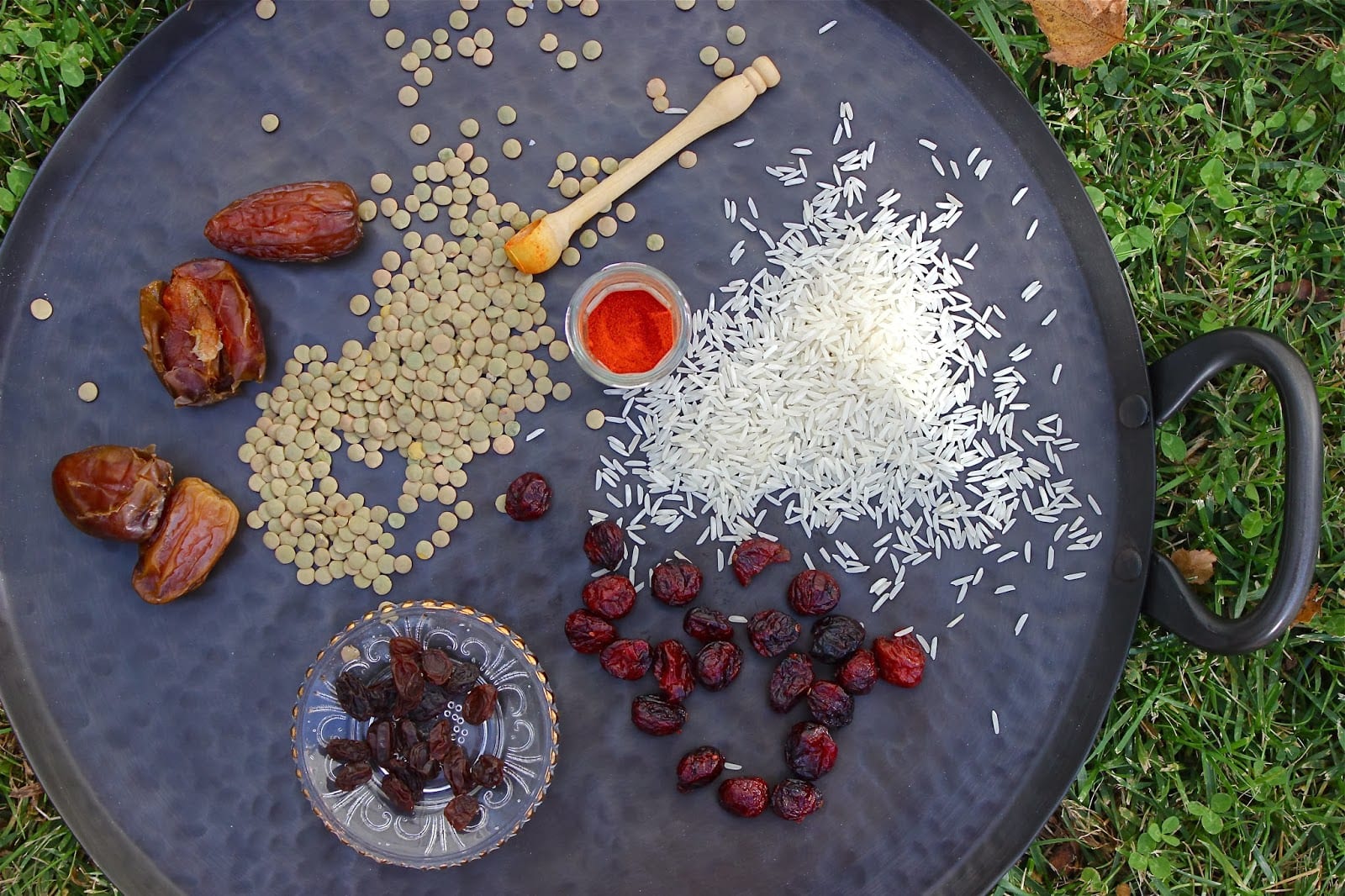
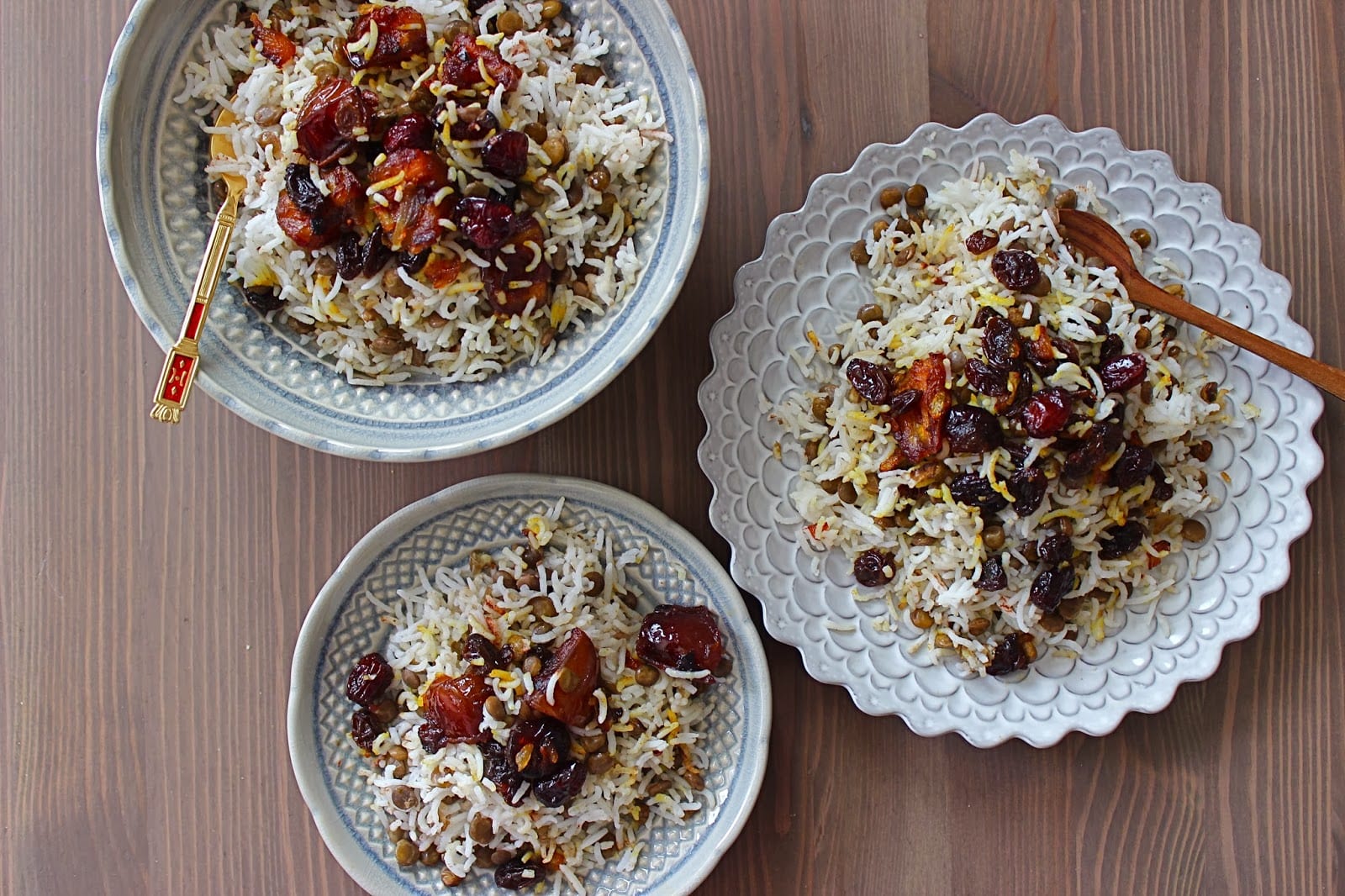
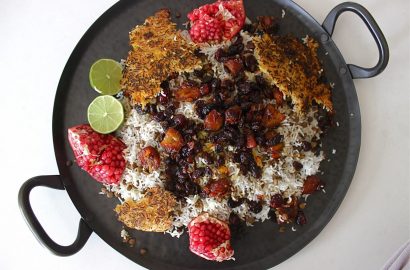
Adas polo literally means lentils and rice.  It is a very common, everyday dish typically served with a fried, or hard-boiled egg.  I think a poached egg would also be great.  Ultimate comfort food.  It has also taken on the role of the side dish to serve for Thanksgiving in many Persian homes.  The addition of the dates, raisins, cranberries and a hint of cinnamon sprinkled in the rice give it a beautiful festive autumnal appeal and add just the right amount of sweetness and texture.  It is also a great vegetarian alternative.  Typically,  adas polo is prepared with tahdig in mind.  Which means you would go through the two step method of preparing the rice.  First parboiling the rice and also cooking your lentils separately until they’re  al-dente.  Then steaming the two together until everything is cooked through and you have crunchy golden tahdig.  You also have the option of adding the dried fruits mixture to the steaming process or simply scattering them on top of your rice when serving – as I have done here. But if you don’t want to make tahdig you can prepare your basmati rice (white or brown) as you like, cook your lentils completely through separately, prepare the dried fruits mixture and mix them all together at the very end when serving.  But you know I’m going to urge you all to try and make tahdig.  And actually, steaming the rice and lentils together wonderfully melds all the flavors.

I was seven years old the last time my entire extended family had the opportunity to gather in one place.  This was before many of them scattered to various corners of the world, while some stayed – living through a revolution, a war and other struggles brought on by these events.  We might have been celebrating a birthday, it might have been Persian New Year, it might have simply been a dinner – a get-together.  As hard as I try, I can’t remember the exact occasion.  And at the time I’m sure no one had an inkling that this particular get-together would be the last time we would all be laughing, eating, and bickering together.  That those casual good nights and kisses at the door would be our very last.

As foreign as Battle Creek, Michigan might have seemed to me – as foreign and exotic as I might have seemed to Battle Creek – spending that Thanksgiving at Drew’s grandparents house was as familiar and loving as any family get-together from my childhood.  The linoleum-floored cozy kitchen, the shaggy rug, playing Canasata with Grandma and great-aunt Lolie, Grandpa’s morning coffee and doughnut ritual, Grandma’s Steinway piano and German antiques, the cuckoo clock, Grandpa enchanting me with his tales of serving in the Coast Guard in Alaska during World War 2, bringing down boxes full of black and white photographs capturing those moments (some of which now adorn our walls), Lolie and Ned sharing their love story and how they loved to go out dancing.  And of course the day long madness of preparing the great meal.  Tip-toeing around individual desires and needs of what and how a dish should be prepared.  (I’ve come to understand that it really takes some diplomatic, ambassadorial savvy to successfully get everything on the table to everyone’s liking).  And finally opening up the card tables, attaching them to the antique dining table, spreading out the table cloth and gathering around the table.  No matter what is served, or how it is served – it’s that moment of togetherness that is forever going to be etched in our memories.

All the elders of the family are now gone.  Grandma, Grandpa, Lolie & Ned.  As are my own grandparents and great uncles and aunts. All of them hearts and souls of the family.  We are told Thanksgiving is a day to give thanks and be thankful. And so I give thanks for that Thanksgiving in Michigan.  For the warm embrace of all those sweet people.  And with that same sentiment I offer you a lentil and rice dish.  It might not be familiar, it might not be traditional, but it is delicious and made with love.  And I hope at some point it can find its way to your table.

When the explorer sets foot on the foreign land gifts are exchanged, customs and languages described.  And when he leaves to make his long journey back home he returns with new stories, new discoveries and hopefully a box full of new recipes.

Happy Thanksgiving.

* For a more detailed guide to cooking Persian rice please see this post.
* If you don’t want to make tahdig (but you really should!) you can prepare white or brown basmati rice, prepare the lentils as described below, just make sure to add a little more water so they cook through, prepare the dried fruits mixture as described below and mix everything together when serving.


LENTILS AND RICE DISH WITH TAHDIG AND DRIED FRUITS – ADAS POLO

Ingredients:

Serves 4-6 as a main dish or 8-10 as a side dish

3 cups white basmati rice, washed and soaked in 2 cups cold water with 3 tablespoons kosher salt for 30 mins or up to 1 hour
water
salt
1 cup lentils, picked over and rinsed
2 1/2 tablespoons butter or ghee for rice, plus more for dotting, plus 2 tablespoons for dried fruits mixture
cinnamon, for sprinkling
1/2 teaspoon ground saffron, steeped in 2 tablespoons hot water, plus a small pich for tahdig
1/2 medium onion, chopped
8 large dates, quartered
1/2 cup dried cranberries, roughly chopped if they are large
1/3 cup raisins

1- While the rice soaks place the lentils in a medium sized pot and cover with 1 and 1/4 cups water and 1/4 teaspoon salt. Gently stir and cover with the lid slightly ajar  and bring to a boil over medium-high heat.  Once at a boil turn down the heat to medium-low and cook until all the water has evaporated and the lentils are cooked al-dente.  About 20 minutes.  Set aside.

2- In a large  non-stick pot or heavy bottomed pot (not stainless steel) bring 12 cups water and 4 tablespoons salt to a boil.  Once at a boil drain the rice and add the rice to the pot (do not stir!).  Return to a boil and keep a close eye on it.  Skim off any foam.   Test your rice after 6-8 minutes until the rice is al-dente.  Once al-dente drain the rice and give a quick gentle rinse under cold water.  Allow the rice to drain completely.

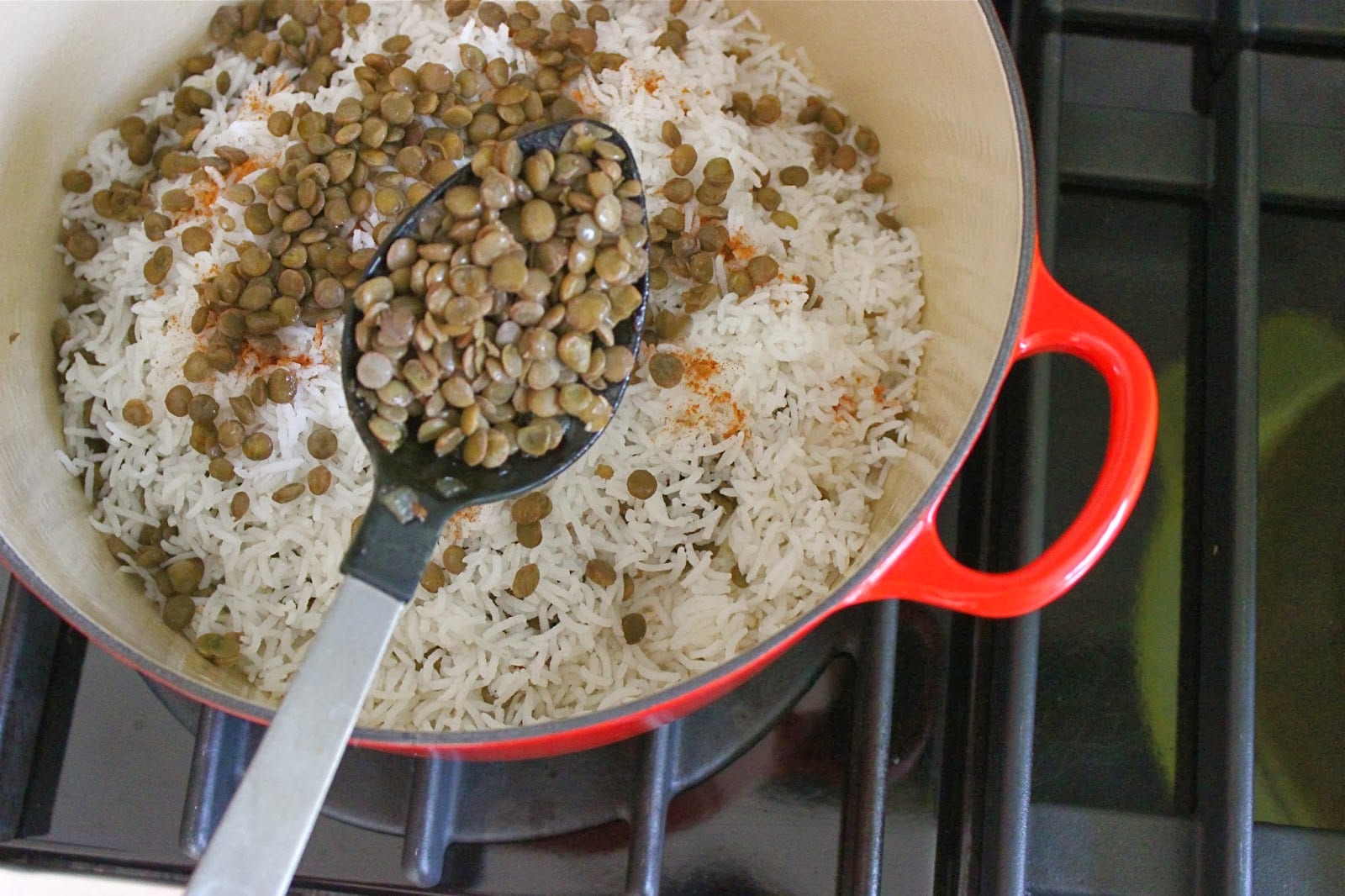
3- Give your pot a quick rinse.  Have the rice and lentils close by.  Melt 2 and 1/2 tablespoons butter or ghee over low heat.  Make sure the melted butter covers the entire surface of your pot and along the sides.  If not add more butter accordingly.  Add a pinch of saffron to the oil and swirl around.  With a spatula add enough rice to fully cover the bottom of the pot. Using the back of the spatula or the back of a wooden spoon pack down the rice firmly. Sprinkle with a little bit of cinnamon.  Add a layer of lentils.  Add a layer of rice sprinkle top of rice with cinnamon.  Repeat, alternating rice, cinnamon, lentil layer in the shape of a pyramid.  Your top layer should be a rice layer.  Using the handle of a wooden spoon poke a couple of holes in the rice to allow the steam to escape.  Dot with a little butter or drizzle with a little olive oil.  Cover and turn up heat to medium-high.  Cook for 10 minutes.  (Don’t go anywhere!  The tahdig can burn very quickly)

4-  Turn down the heat to medium.  Lift the lid and cover with a clean kitchen towel or a couple of layers of paper towel.  Place the lid firmly back on the pot and cook for 10 minutes.

5- Turn the heat down to low.  Place a heat diffuser under the pot and cook for 40 minutes.  In the meantime prepare the dried fruits mixture.

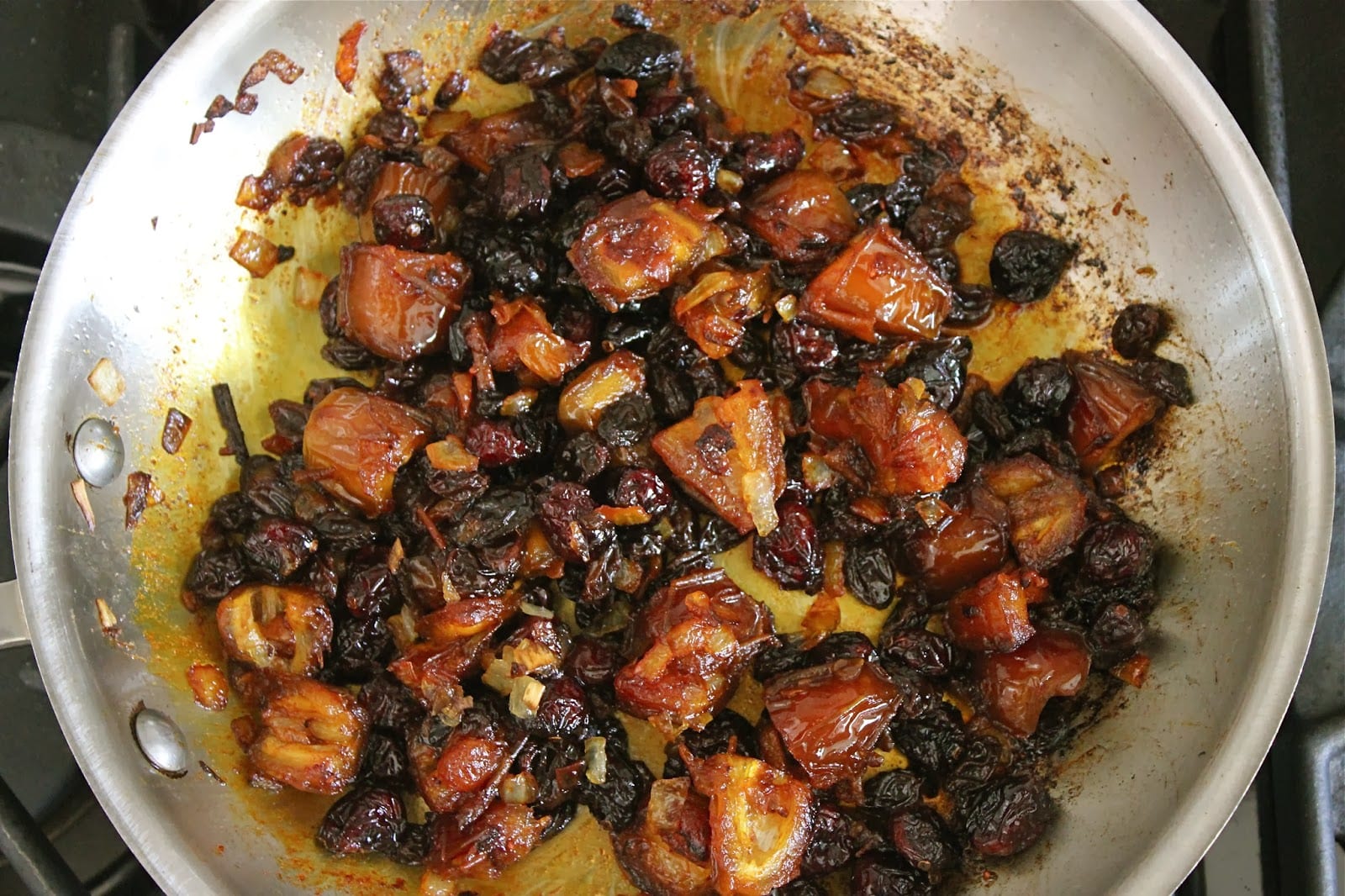
6- In a medium sauté pan melt 2 tablespoons butter (you can use coconut oil or olive oil instead as well) over medium-high heat.  Add onion and a pinch of salt.  Stir constantly for 5-8 minutes.  Turn down heat to medium-low and cook for another 10 minutes, until the onion has softened and turned golden.  Turn heat up to medium and add all dried fruits.  Give a quick stir and add half of the saffron water.  Stir and allow dried fruits to soften.  About 10 minutes.  Take off heat and set aside.

7- When the rice is done remove lid and with a spatula gently scatter the rice and lentils mixture on a serving platter.  Drizzle the top with the remaining saffron water and scatter the dried fruit mixture on top.  Gently remove the tahdig and serve on the side.

Will keep in the fridge for up to 3 days and in the freezer for up to 3 months.

Chicken

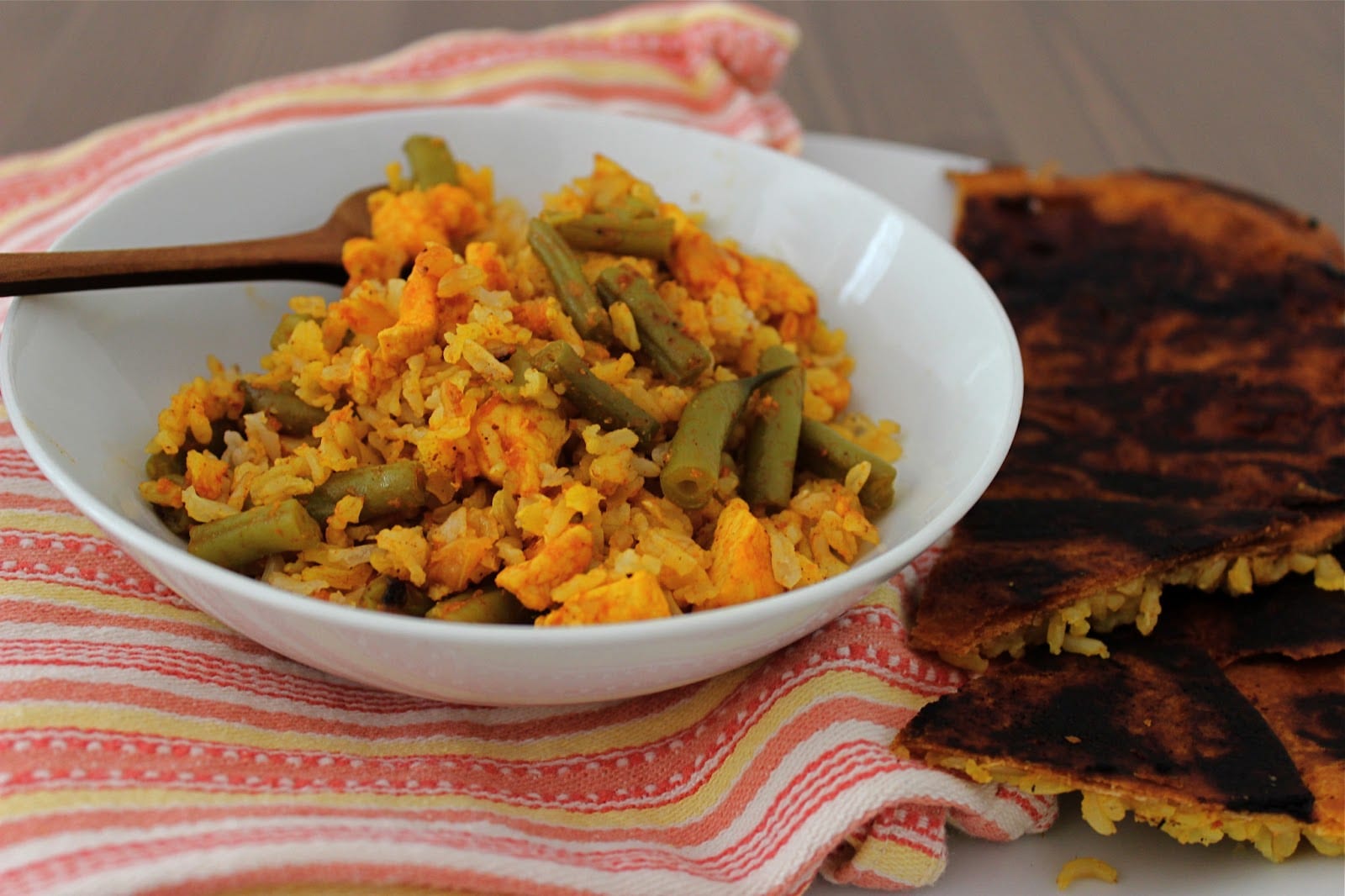
A Green Beans and Chicken Rice with Lavash Tahdig – A Friday Night Loobia Poloa

Occasionally I’ll be caught standing in front of the fridge or the pantry – a blank look on my face – desperately staring down the goods – hoping that this time, all the produce, legumes and grains have magically developed telepathic powers to convey to me how to prepare them in a mouth watering, nutritious fashion for the whole family to enjoy.  It is a losing battle.  As my six year old Luna is quick to remind me.

Vegetables and beans and rice can’t talk Mama.  They can’t even think.  Even though vegetables are alive they’re not like us because they don’t have hearts.  Except for artichokes.  Artichokes have hearts.

So just as I am about to give up – throw my hands up in the air – walk away from it all –  declare that my cooking days are done – that one song, that one beat, that one sound, that one voice echoes through the speakers.  And in an instant, inspiration fills the house, my knife comfortably cozies up to my hand ready to begin our duet.  And before the song has ended I have the night’s meal figured out.

What I listen to while I cook is much more critical than what we listen to while we eat.  It can make all the difference between an inspired meal and a tedious job that just needs to get done. My musical tastes and the songs that inspire me in the kitchen vary from day to day.  But there is one sound that is a constant companion in our house.  On at all times – providing the soundtrack to our daily lives.  This.

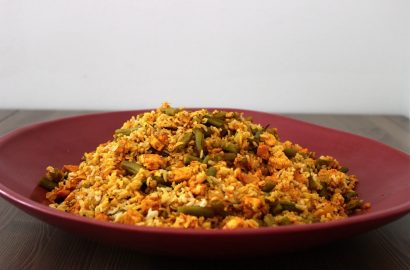
NPR is the sound that links us to the outside world, challenging our minds, provoking debate, but more importantly comforting and grounding us in our daily routine.  The meal equivalent of this comforting staple in our house is Loobia Polo – green beans and rice.  Loobia Polo is my husband Drew’s most loved Persian meal.  In fact, it could very well be his all-time favorite dish for dinner.  It’s the one meal that even the pickiest of little eaters will dig in for seconds.  It also makes a great thermos lunch for school the next day.

Where NPR challenges us, gets us thinking, and fills us with sensational-free information – Loobia Polo comforts and soothes our souls.  Every morning we wake and without a second thought put the kettle on and turn on the radio.  And every Friday we celebrate having made it through another week with an exultant Friday Night Loobia Polo.

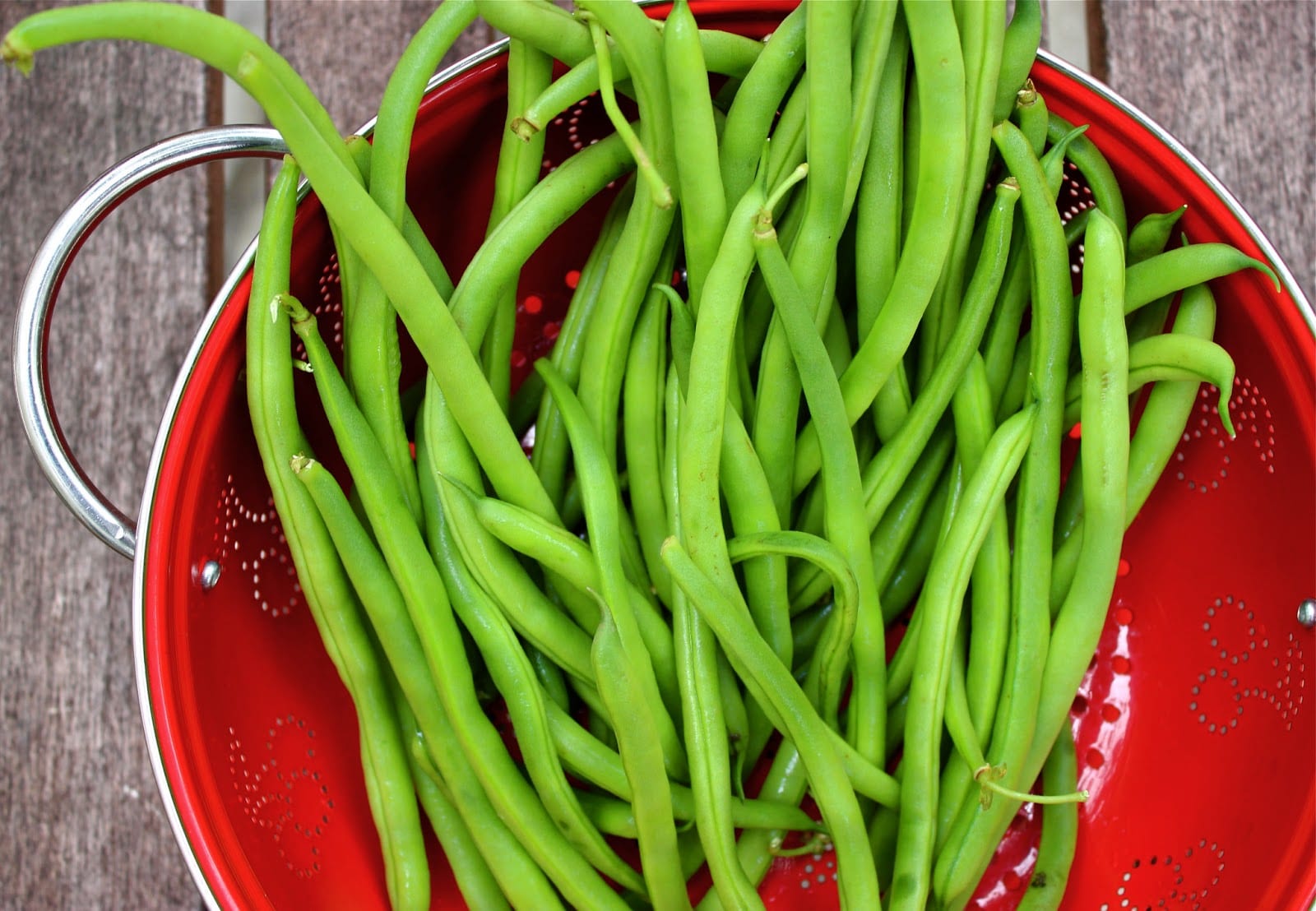
Green beans are bursting at the farmers market and in our farm box right now. The green bean mixture is quite easy and quick to prepare.  The beans delicately soak up the  aromatic and flavorful blend of the spices: saffron, turmeric, cinnamon – with the addition of tomato paste to create a sauce, and of course freshly squeezed lemon juice for that slightly tangy sour taste that dictates most Persian stews.  When the end of the recipe asks that you adjust the seasoning to taste, this not only applies to the addition of salt and pepper but also to extra lemon juice if necessary.  What you also want to keep in mind is to maintain the texture of the green beans.  No mushy, out of the can style, green bean mess please.  The green bean mixture is traditionally served mixed in with rice – I typically use brown basmati rice, but you can serve it along side white rice or any grain you prefer.  The mixture can also be prepared ahead of time.  Fridays happen to be one of our busiest days, so I like to split up the preparation process.  I might prep the beans and chicken (prepping is the most time-consuming part) the night before, so all I would have to do the day of is cook the mixture and put on a pot of rice. Or if I can find the time I will cook the mixture a few days in advance. The green bean mixture can be made 2 days in advance and stored in the fridge.  It can also be made ahead of time and stored in the freezer for up to 3 months.  And if there is one dish that begs to be accompanied by mast o khiar, it’s Loobia Polo.

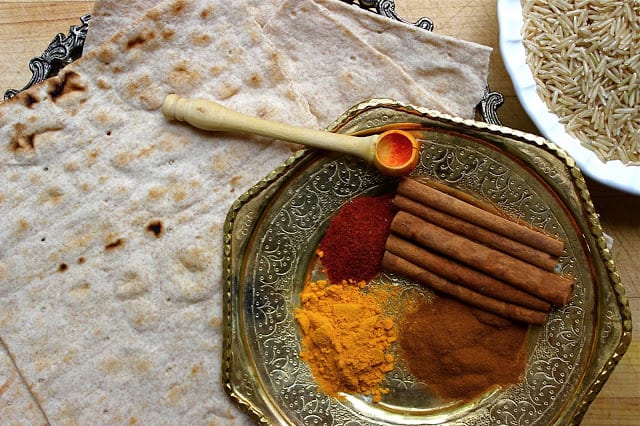
The preparation of the bread tahdig is very similar to that of a rice tahdig.  I used bread here for variety and because the girls happened to ask for it.  Some days Luna prefers bread tahdig and Soleil prefers rice tahdig.  The challenge is to get them to agree to the same kind of tahdig on the same day. Typically we use lavash bread – which is like a thin Middle Eastern style flat bread.  On this particular day I used a whole wheat lavash from Trader Joe’s.  I simply tear fairly large pieces and place them on the bottom of the pot. Then I patch up any open spaces with smaller pieces.  Make sure the sides of your pot are well-greased to avoid the bread sticking to the sides of the pot.  Bread tahdig can burn very quickly so really keep a nose on this one and use a heat diffuser for the rice steaming part to ensure no burning of the bread.  I use an old toaster oven metal rack insert as my heat diffuser.

So thank you Morning Edition’s Steve Inskeep, Renne Montagne, and David Greene for accompanying us through another school year of hurried and harried breakfasts and lunches.  Thank you Weekend Edition’s Scott Simon, Rachel Martin and puzzle master Will Shortz for your constant reminders that we are now parents, and that weekends and sleeping in are no longer synonymous.  And thank you to All Things Considered’s  Robert Siegel, Mellisa Block and Audie Cornish for being there with us through many weeknights of dinner prep – culminating with a satisfying Friday Night Loobia Polo.  And of course, my husband’s favorite: Lakshmi Singh.

Please do share – what do you like cook to?  Is there a particular tune that gets you going in the kitchen?

Green Beans And Chicken Rice With Lavash Tahdig – Loobia Polo

Notes: 

  • If you don’t want to make the tahdig you can simply make the mixture and serve it with any kind of rice or grain you like.  It is tastiest mixed in with your grain of choice.
  • The recipe below uses brown basmati rice.  If you would like to use white basmati rice keep in mind that white rice takes a shorter time to cook al dente at the par-boil stage.  8-10 minutes for white rice, 20-25 minutes for brown rice.
  • For a more detailed guide to cooking Persian rice please see this post.

Ingredients:

Serves 6-8

2 1/2 cups brown basmati rice
3 tablespoons olive oil
1 medium yellow onion, chopped
1 pound organic green beans, trimmed and cut into 1/2 inch pieces
2 boneless skinless organic chicken breasts, cut into 1/2 inch pieces
1 teaspoon turmeric
1/4 teaspoon ground saffron steeped in 2 tablespoons hot water
1 teaspoon ground cinnamon
2 to 4 tablespoons tomato paste dissolved in 6 tablespoons hot water*
4 tablespoons fresh lemon juice, roughly the juice of 2 lemons, plus more to taste
sea salt
fresh ground black pepper
3 tablespoons ghee or butter
lavash tahdig

*  I used bionaturae tomato paste.  I find it is slightly less concentrated in flavor than other tomato pastes. So I ended up using 4 tablespoons of paste.  You might want to start with 2 tablespoons and add and adjust amount to taste.

  1. Wash and soak brown basmati rice and 2 tablespoons salt for 1 hour.
  2. Heat 3 tablespoons olive oil in a large sauce pan over medium heat.  Add onion and a pinch of salt and saute for 5 minutes, stirring occasionally until onion softens.
  3. Add green beans and 1/2 teaspoon salt.  Saute for 5-8 minutes, stirring occasionally until green beans soften slightly.  Take care not to burn green beans.  Turn down heat if necessary.
  4. Add chicken, turmeric, cinnamon, 1 teaspoon salt, 1/4 teaspoon pepper.  Saute for 3-5 minutes.
  5. Add saffron water, tomato paste water, and lemon juice.  Stir to combine.  Turn heat down to medium low and simmer uncovered for 20 minutes, stirring occassionally until chicken has cooked through and green beans have softened, but not mushy.  Adjust seasoning and add more lemon juice if necessary.
  6. Meanwhile, bring 10 cups of water and 3 tablespoons of salt to a boil in a large non-stick pot.  Drain soaked rice and add rice to pot.  Bring back up to boil.  Scoop off any foam that rise to the top.  Start testing your rice at 20 minutes.  Once rice is al dente (takes 20-25 minutes) drain in a colander and quickly rinse under cold water.  Allow rice to completely drain off any excess water.
  7. Melt 3 tablespoons ghee or butter in the large non-stick pot over low heat.  Arrange the bread on the bottom of the pot.
  8. Place 2 spatulas full of rice on top of the bread.  Using the back of the spatula or the back of a wooden spoon pack down the rice firmly.  Add a layer of green bean mixture on top of the rice.  Repeat, alternating rice layer and green bean layer in the shape of a pyramid.  Your top layer should be a rice layer.  Using the handle of a wooden spoon poke a couple of holes in the rice to allow the steam to escape.  Cover and turn up heat to medium-high.  Cook for 10 minutes.
  9.  Turn the heat down to low.  Cover the lid with a clean kitchen towel or a couple of layers of paper towel.  Place heat diffuser under the pot.  Cook for 50 minutes.
  10. Remove lid.  Scatter the green beans rice mixture on a serving platter and gently remove the tahdig and serve on the side.  Serve immediately.  Remember to serve with a side of mast o khiar!

Will keep in the fridge for up to 3 days and in the freezer for up to 3 months.

Side Dish

Rice and the Art of Getting to the Bottom of the Pot – Chelo Ba Tahdig

They gather around me with bated breath.  The air is thick with anticipation and hope.If it all goes as planned, the fruits of my labor will be met with thunderous applause and joyous cheers.  High fives and high jumps and quasi-cartwheels all around.  Maybe even a little impromptu jig.

If it all falls apart (literally), shoulders will slump, and slight groans will replace the cheers.  Dissapointed little feet will shuffle back to the table.  And once they recover from this let-down, they will do their best to make me feel better.

It’s ok Mama.  Next time.

It’s not as great as usual Mama but it’s still ok…

These are the pressures I face.

They crowd in even closer.  My audience of two.  I place the serving dish over the pot.  Inhale.  Hold my breath.  Tighten up my abs.  Chant a little mantra.  Flip the pot over.

First it’s the triumphant sound of success, the swish sound of the release, as the rice drops from pot to dish.  I gently pull the pot up and away and there she is in all her glory – golden and regal  – TAHDIG.  Merrymaking ensues.  Exhale.  The Muse of Cooking decided to smile upon me  – this time.

Rice is the crown jewel of Persian cuisine.  A platter of fragrant saffron-steamed rice is almost always present at the dining table.  The perfect companion to the many flavorful stews (like celery stew), koo koos and kababs.  As a child there was nothing more comforting and reassuring as a bowl of polo* ( cooked rice), crunchy tahdig, with mast o khiar and a few sprigs of fresh mint and parsley.

* Technically, plain saffron-steamed rice served alongside a stew is called chelo-khoresh.  Polo is steamed rice mixed with other ingredients like vegetables and meats.  But in our house we refer to all cooked rice as polo.

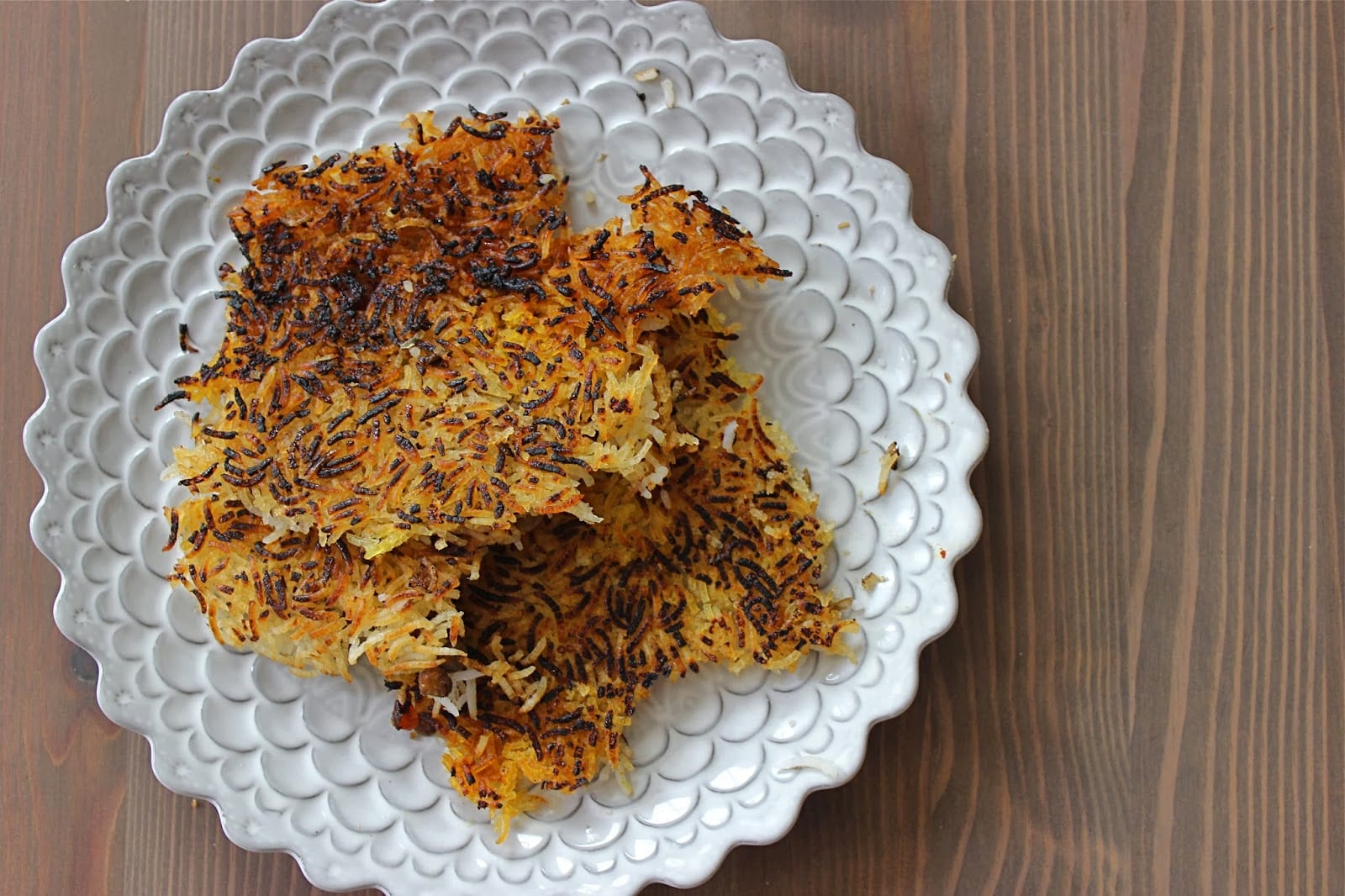
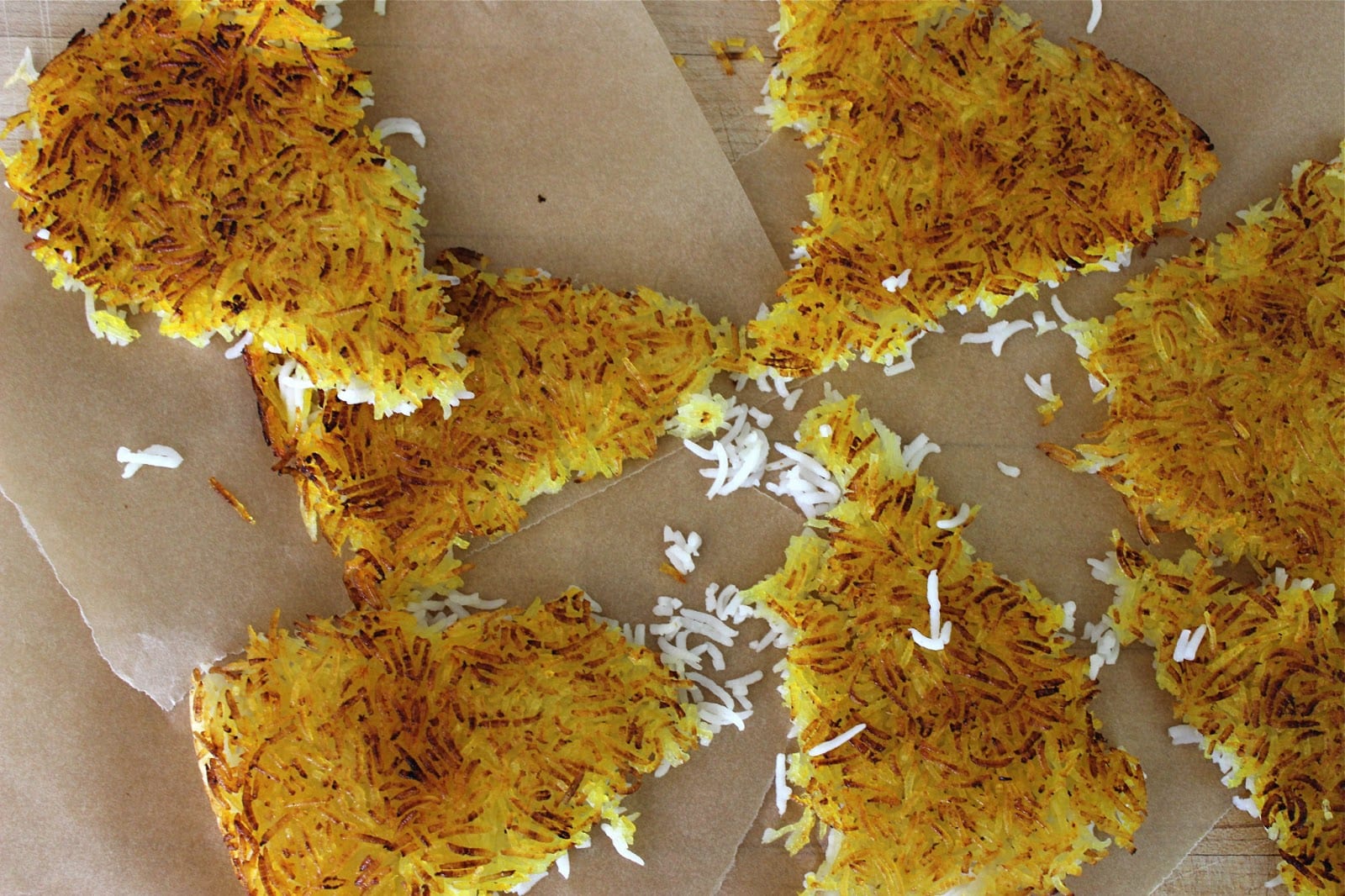
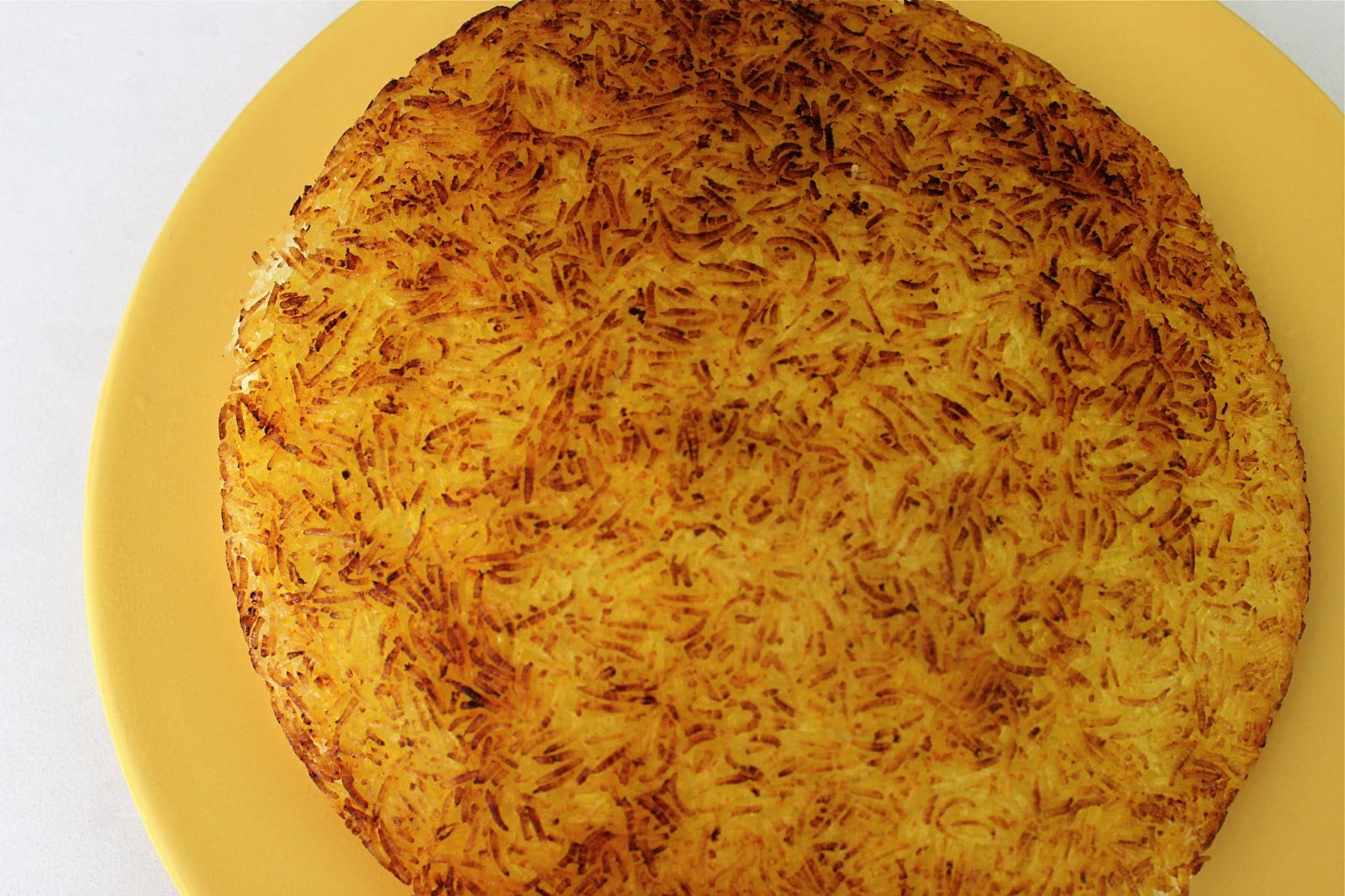
A Persian cook’s reputation rests first and foremost on his or her ability to turn out the perfect pot of fluffy rice and tahdig (pronounced “tah DEEG”).  Tahdig literally means the bottom of the pot.  The most common type of tahdig is made with rice (using bread or potatoes is popular as well).  The crispy, golden fried rice, nestled at the bottom of the pot – and the most coveted dish at the table.

Making Persian rice is truly a creative process.  No pot of rice ever turns out exactly the same and a perfect golden tahdig is never assured.  But even at it’s most imperfect, it’s as close as one can get to delicious perfection.  Really.

Every grain of rice should be separate, long, individual, fluffy – and shine on its own.  No clumps.  No sticking together.  Every grain is a jewel.

These are the words that echoed in our kitchen as my mom gently, methodically and artistically scattered the steamed rice – the jewels – on a platter.

There are a few key ingredients and techniques that you must follow to achieve this:

RICE
You have to start with a long grain rice.  Indian white basmati rice is very similar to the rice enjoyed in Iran.  On any given day if you go the Persian market you can overhear the ladies AND gentlemen passionately discussing the merits of one imported basmati brand over the other.  I use the Lal Qilla brand (which means committing to a 10lb sack).  I have also found the Trader Joe’s white basmati works quite well too.   Try a couple of different brands.  You’ll get a feel for which will turn out the fluffier rice.  Or visit a Persian market and ask.  But beware you might get a twenty minute thesis on rice!  We are very serious about our rice.

I should also mention that we made the switch to brown rice many years ago, for all the obvious nutritional, health conscious, waistline-minded reasons.  But there are times when nothing else will suffice but a dish of white saffron-steamed basmati rice.

POT,  PAN AND HEAT DIFFUSER
You have to use a non-stick pot or a deep non-stick pan.  A well-seasoned cast iron works too. DO NOT USE A STAINLESS STEEL POT.  To get the most tahdig, try to use a pot or pan with a flat bottom and one large enough that will give the rice plenty of room to expand.  If your pot or pan is too small the rice will clump together.  For this recipe I used a pot with a 10″ bottom.  If using a pan, make sure you have a lid that will tightly fit it.  The zeery – heat diffuser – is used to ensure the tahdig doesn’t burn.  If you don’t have one don’t worry about it.  It’s just extra insurance.

HEAT SOURCE
Heat temperatures differ on any given stove.  This is where you have to get a feel for your heat source and its relation to your rice.  It’s basically knowing when to go from a high heat to a low heat.

THE TWO STEP METHOD
Here comes the art.  You will first par-boil the rice (much like making pasta) so it is al-dente.  This also comes down to a feel for knowing when it’s al-dente and ready to drain.  It all depends on the quality of the rice you use and how long it has soaked.  You want the rice to be soft but still with a bite to it, not completely cooked through.  Boil it too long and you’ll end up with clumpy overdone rice; boil it not long enough and your rice will be slightly hard.

The second part is the steaming process.  There is a dichotomy at play here.  As you want to gently steam the rice up top you also want to crisp up the tahdig at the bottom of the pot without burning it.

SERVING
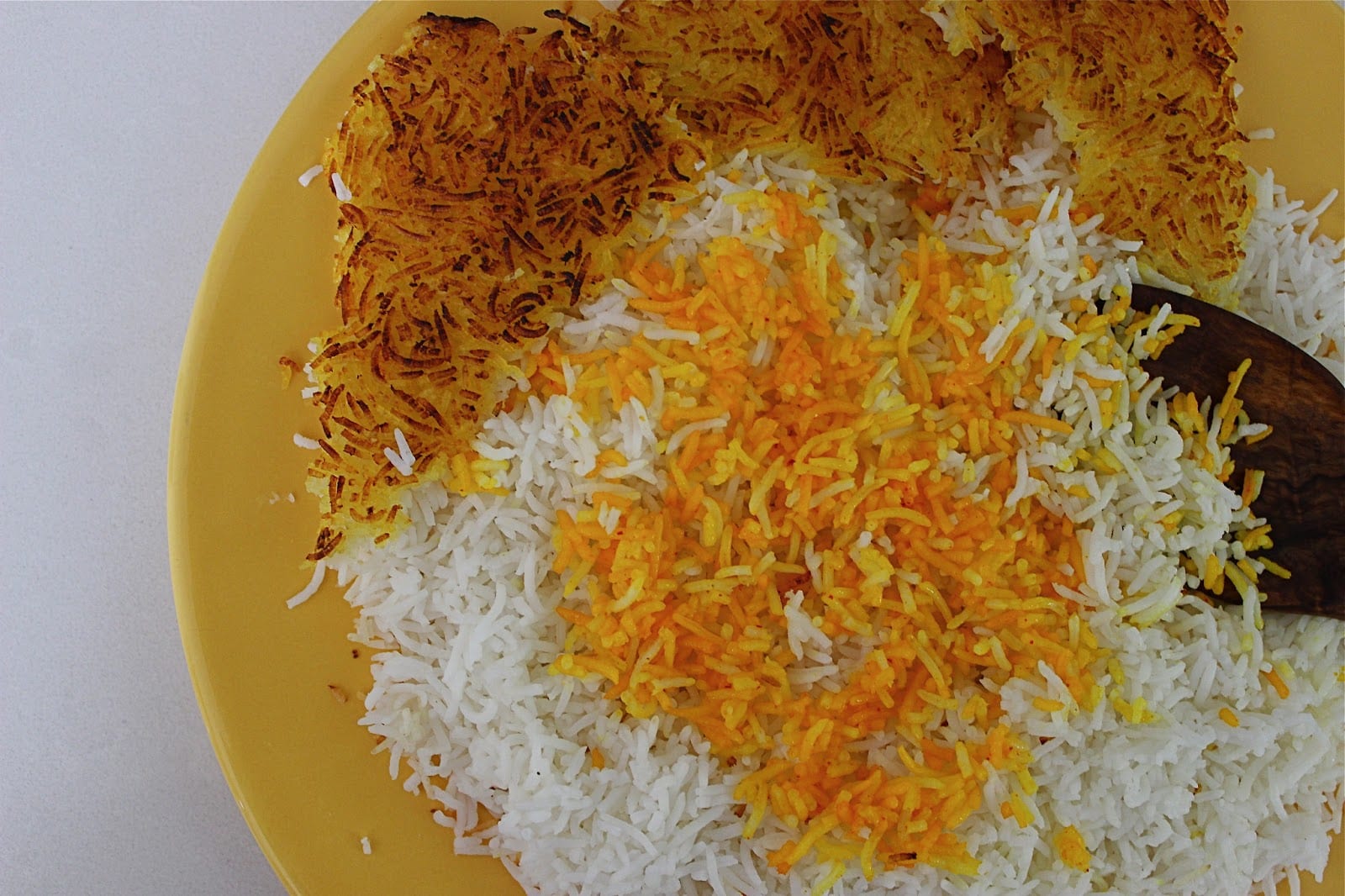
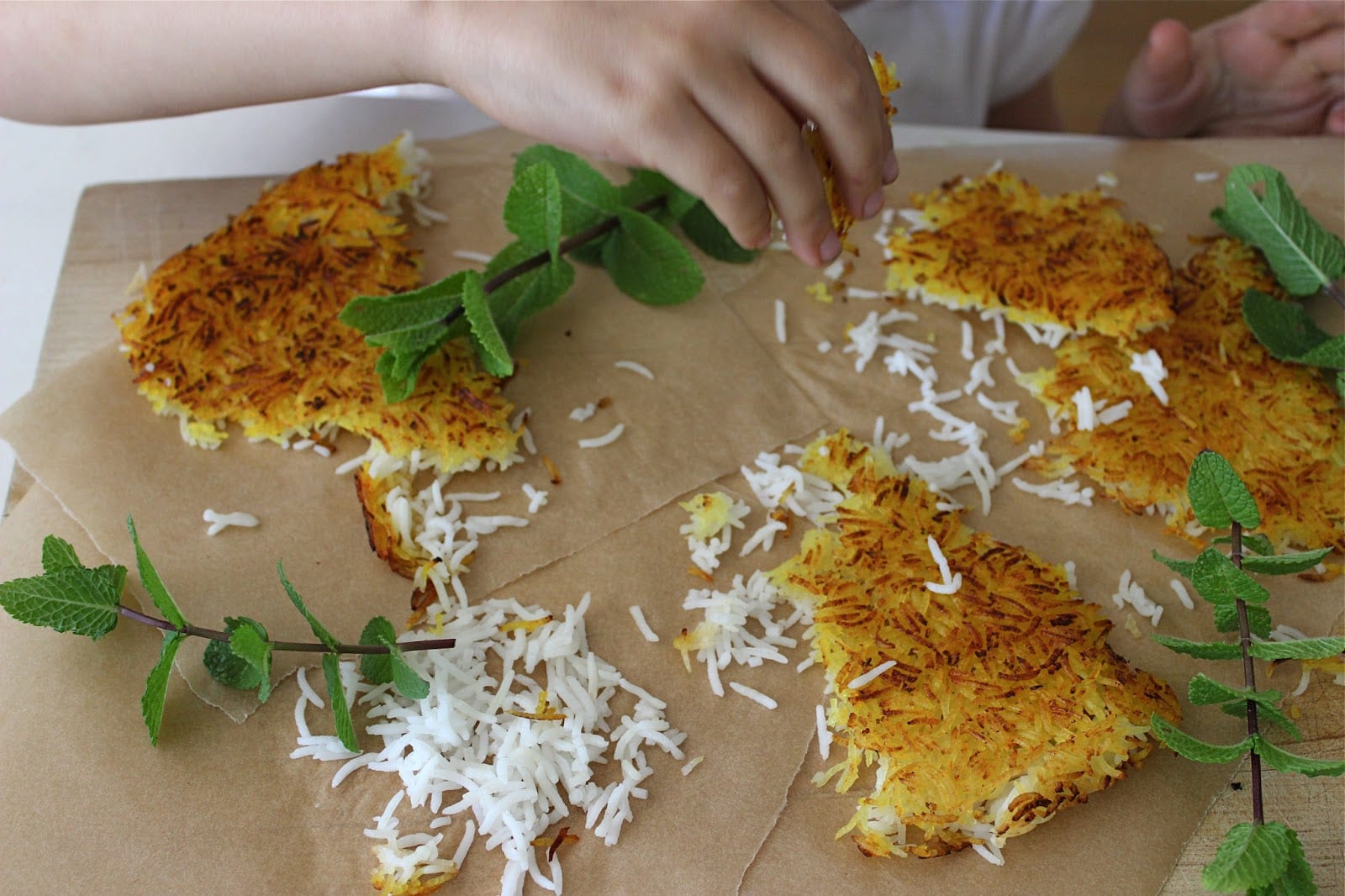
There are two options on how you can serve the rice.  First, with a spatula you can gently scatter the fluffy rice onto a serving dish.  (No dumping the rice out of the pot onto a dish in one fell swoop.  Remember, you are dealing with jewels!)  And then gently loosen and remove your tahdig from the bottom of the pot, divide in portions and serve separately.

Or, you can place a serving dish big enough to fit over the pot, and carefully but with purpose, flip the pot over.  Tahdig still intact.  Kind of like a cake.  This option has a great “tada” and “wow” appeal.

Think of Persian rice as a coy lover.  You have to treat her with respect.  You have to be patient.  You have to know when it’s appropriate to make a move and when to pull back, give her space.  You have to seduce her with a gentle touch, poetry and love.  And ultimately you have to dive in with complete and utter unbridled passion and abandon.  If she turns you down the first time – try, and try, and try again.  Because she’s worth it.  Really.

Please do share and let me know how your rice and tahdig turns out.  Were you good to your lover? Was your lover good to you?

SAFFRON STEAMED RICE – CHELO

Ingredients:

Serves 4-6

2 cups white basmati rice
5 tablespoons salt, divided
10 cups water, plus additional for soaking
2 1/2 tablespoons ghee or butter or oil of choice
1/8 teaspoon ground saffron steeped in 1 tablespoon hot water, plus a pinch for tahdig
2 tablespoons butter or ghee, melted,  divided for drizzling over rice (optional)

1- Place rice in a medium sized mixing bowl.  Fill with cold water.  Wash rice in water by gently swirling the rice around in the water.  Drain and repeat process about 5 times.  Until the water that is rinsed runs clear, not cloudy.  Soak washed rice in 2 cups cold water and 2 tablespoons salt for at least 1 hour.

2- In a large pot bring 10 cups water and remaining 3 tablespoons of salt to a boil.  Drain soaked rice.  Add the rice to the boiling water and bring back up to a boil.  Leave pot uncovered and don’t go anywhere!  The water can boil over very easily. With a spoon scoop off any foam that rises to the top. Watch your timer.  Start testing your rice after 4 minutes.  My rice was al-dente and ready to drain at 5 minutes.  It shouldn’t take longer than 6-8 minutes.  Once al-dente, drain in a colander and quickly rinse the rice under warm water.  Make sure your colander’s holes are small enough so you don’t lose any rice. When rinsing the rice under warm water make sure you don’t open a gushing amount of water on the rice.  If your faucet has a spray option use that.  If not place your hand under the tap and with fingers create a spray.  Gentle.  Let rice completely drain off any excess water.

3- In a non-stick pot or pan (if using the same pot you boiled the rice in make sure you wash and dry it first) melt 2 1/2 tablespoons ghee or butter over low heat.  If using oil heat the oil over low heat for a couple of minutes. The cooking oil should cover the entire surface of the bottom of the pot. (If your pot is bigger add more oil or butter accordingly) Add a pinch of saffron to the oil. Swirl around. (You want to work fairly quickly here, so the oil at the bottom of the pot doesn’t cool off too much)  With a spatula add enough rice to fully cover the bottom of the pot.  Using the back of the spatula or the back of a wooden spoon pack  down the rice firmly.

4- With a spatula gently scatter the rest of the rice into the pot in the shape of a pyramid.  This is to give the rice enough room to expand and lengthen.  With the handle of a wooden spoon poke a couple of holes in the rice to allow the steam to escape.   Don’t poke all the way down to the tahdig.  Drizzle half of the melted butter a 2 tablespoons hot water over the rice.  Cover and turn heat up to medium-high.  Cook for 10 minutes.

5- Turn the heat down to medium.  Lift lid without allowing any of the condensation collected on the lid to drip back in the rice.  Cover the lid with a clean kitchen towel or a couple of layers of paper towel. This is to catch the condensation.  Place lid firmly back on the pot.  Cook for 10 minutes.4- With a spatula gently scatter the rest of the rice into the pot in the shape of a pyramid.  This is to give the rice enough room to expand and lengthen.  With the handle of a wooden spoon poke a couple of holes in the rice to allow the steam to escape.   Don’t poke all the way down to the tahdig.  Drizzle half of the melted butter a 2 tablespoons hot water over the rice.  Cover and turn heat up to medium-high.  Cook for 10 minutes.

6- Turn heat down to low.  Place heat diffuser under pot.  Cook for 40 minutes.  7- Turn heat off.  Remove lid.  If serving like a cake, place serving dish over pot and flip.  Otherwise,  set aside a couple of spatula fulls of rice.  Scatter remaining rice on a platter and gently remove the tahdig.   In a small bowl mix the saffron water with the remaining melted butter.  Mix the reserved rice with the saffron water/butter mixture.  (if not using butter just mix the saffron water with the reserved rice) Scatter the saffron/rice mixture over the white rice.6- Turn heat down to low.  Place heat diffuser under pot.  Cook for 40 minutes.

Serve immediately.  Enjoy and do a cartwheel for a job well done!

The tahdig  should be eaten right away.  It does not keep.  And frankly I’ve never had any tahdig left over.  The rice will keep in the fridge for up to 3 days and can be frozen for up to 3 months.