Author / Naz

Side Dish

Yogurt – A Love Story – Mast O Khiar

If we were playing that silly “what if you were stranded on a deserted island, what is the one food item you would take with you” game – my answer without hesitation would be  yogurt.

Plain, un-adulterated – nothing added – yogurt.

If I were a poet I would compose volumes of love sonnets declaring my eternal love and devotion to yogurt.   I would weave my words together with golden thread – describing it’s creamy, silky, smooth and nutritious goodness.

Yogurt is a staple in Persian homes – and in our home growing up the container of yogurt was always present at the table.  As it still is – a constant companion to pretty much any meal – rice, stews, soups, salads…

As a child, if I showed little interest in a particular dish, some yogurt would be added to side of my plate.  And miraculously, by adding a little yogurt to each bite the food was somehow transformed and made more enjoyable.  And since I had no taste for milk,  yogurt provided most of my calcium.  Cereal was not part of our breakfast routine, but for a time there was the Corn Flakes craze.  My five year old self could not think of anything less appetizing.  Cold milk poured over dry flakes – which then turned to mush – first thing in the morning.  But it had to be good; after all, that’s what everyone ate in America.  Was there something I was missing?  My solution: skip the milk and cover every single rooster-crowing flake with yogurt.  Still not great, but at least palatable.
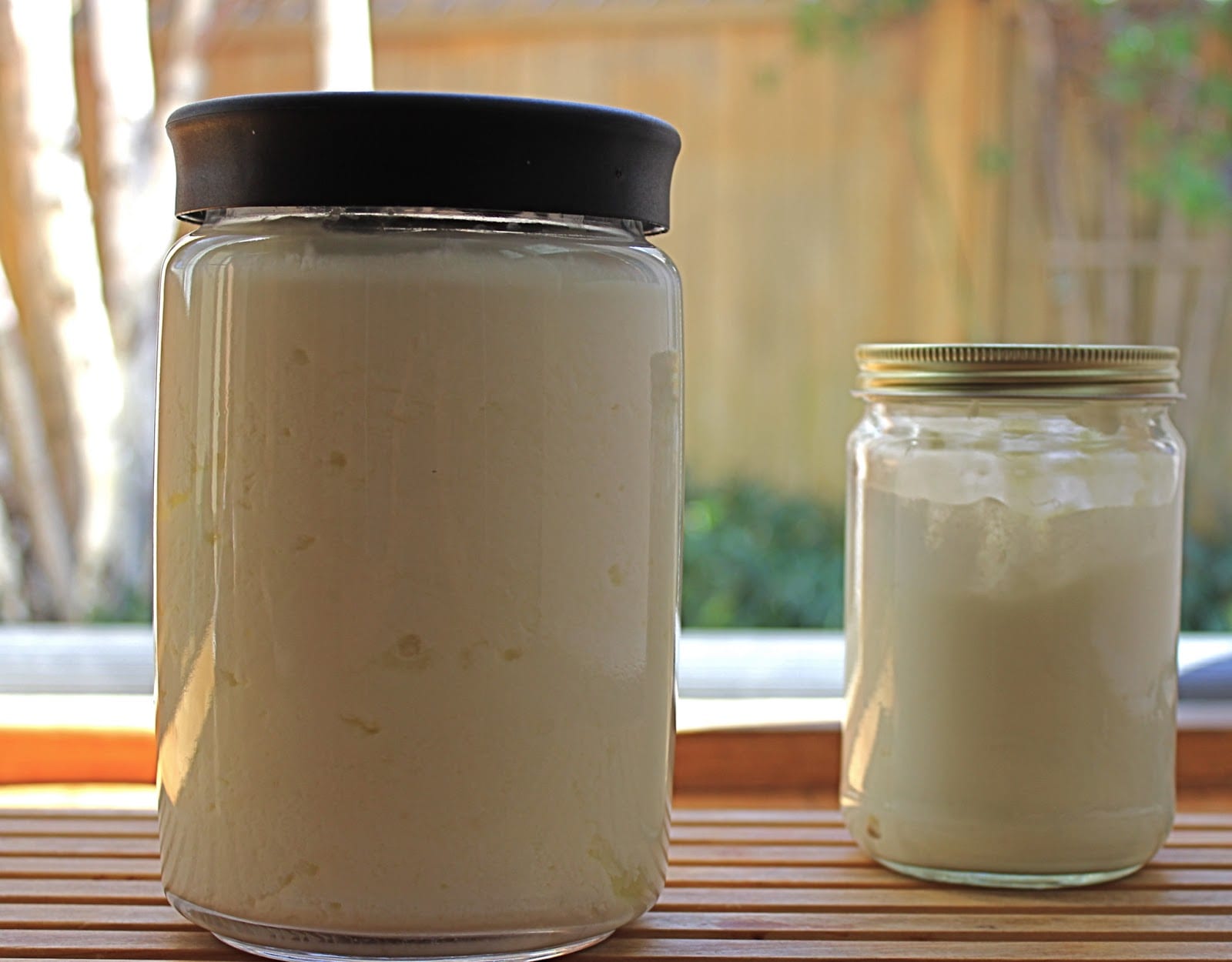
I suppose it was only inevitable that I would start making my own yogurt.  I am just surprised it took me so long to do so.  Strained (what’s referred to as Greek yogurt) or not – a lot of yogurt is consumed in our house on a daily basis.  The girls have also inherited my love for yogurt.  It’s one of those foods referred to only in Farsi – mast (sounds like cost). A typical after school snack: mast and honey.  And if it’s not the container of plain yogurt making itself right at home at the dinner table, then it’s mast o khiar.
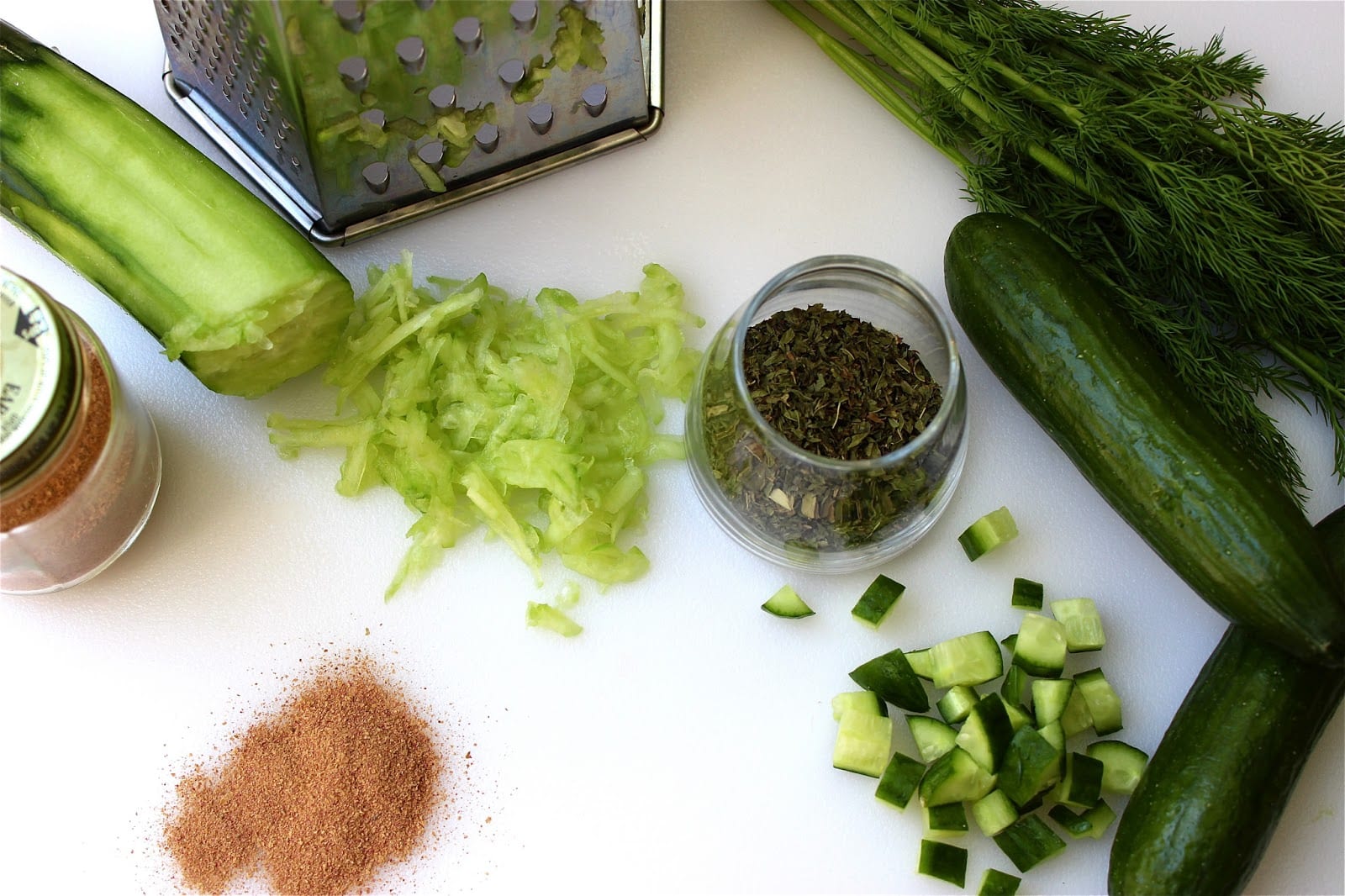
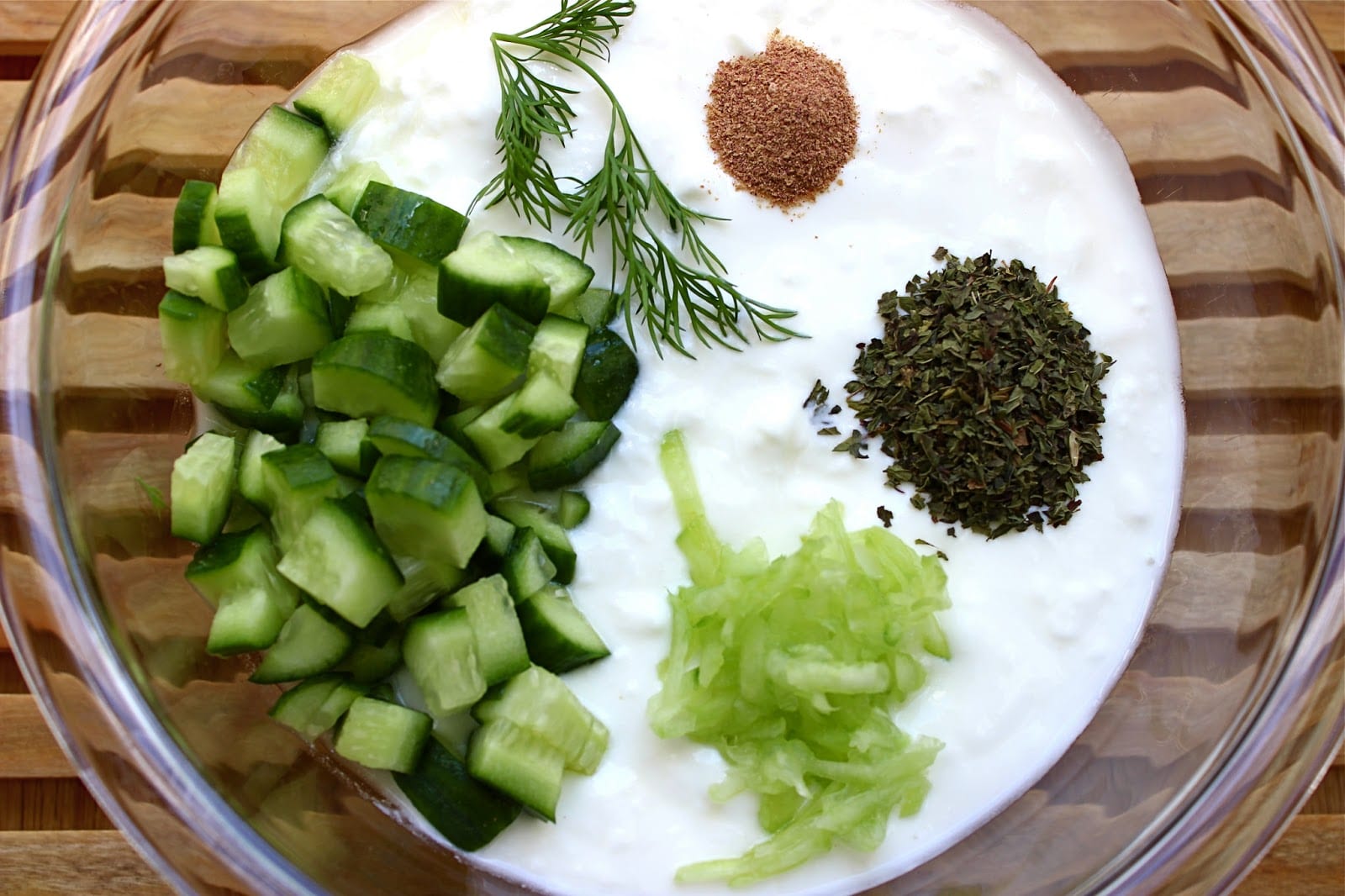
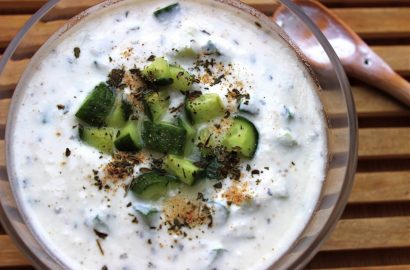
Mast o khiar literally means yogurt and cucumber.  Typically it is considered a dip or a side dish.  In our house it is consumed by the bowlful.  Drew routinely commits the cardinal sin of smothering his rice and stew dishes with it (but since over the years he has so lovingly and enthusiastically embraced so many of our idiosyncrasies, he gets a pass for this), Soleil and Luna like it on the side of their dish.  A little bit of rice, a little bit of stew and a little bit of mast o khiar – creating the perfect bite. Or it can be found right next to the hummus, and other similar dips, perfect for crudites, a cracker, warm bread or my favorite (and weakness) – a chip.  You will never find any left over either.  Just like it used to be in my childhood home – my brother Ramin and I keeping a close eye on the mast o khiar bowl, waiting to pounce, to see who would be the lucky person to get to eat the last remaining spoonfuls right out of the serving bowl.  And when no one was looking lick clean the inside of the bowl.  Nothing more comforting.

Mast o khiar comes in many different variations.  But its simplest preparation – and what you will find on most nights at our table: good quality organic plain yogurt, cucumber, and a pinch of salt.  From there, I build on this canvas depending on what’s in my fridge, spice cupboard, or just delivered in my farm box (like fresh dill or fresh mint!).  You can chop up your cucumber, or grate it.  If you grate your cucumber don’t get rid of the excess cucumber juice.  All the flavor is in that juice.  I am rather reluctant to give actual measurements of ingredients here.  This really is one of those dishes you can make to suit your taste.  Work with what you have.  Even if you don’t have a cucumber – the real hero here is the mast.

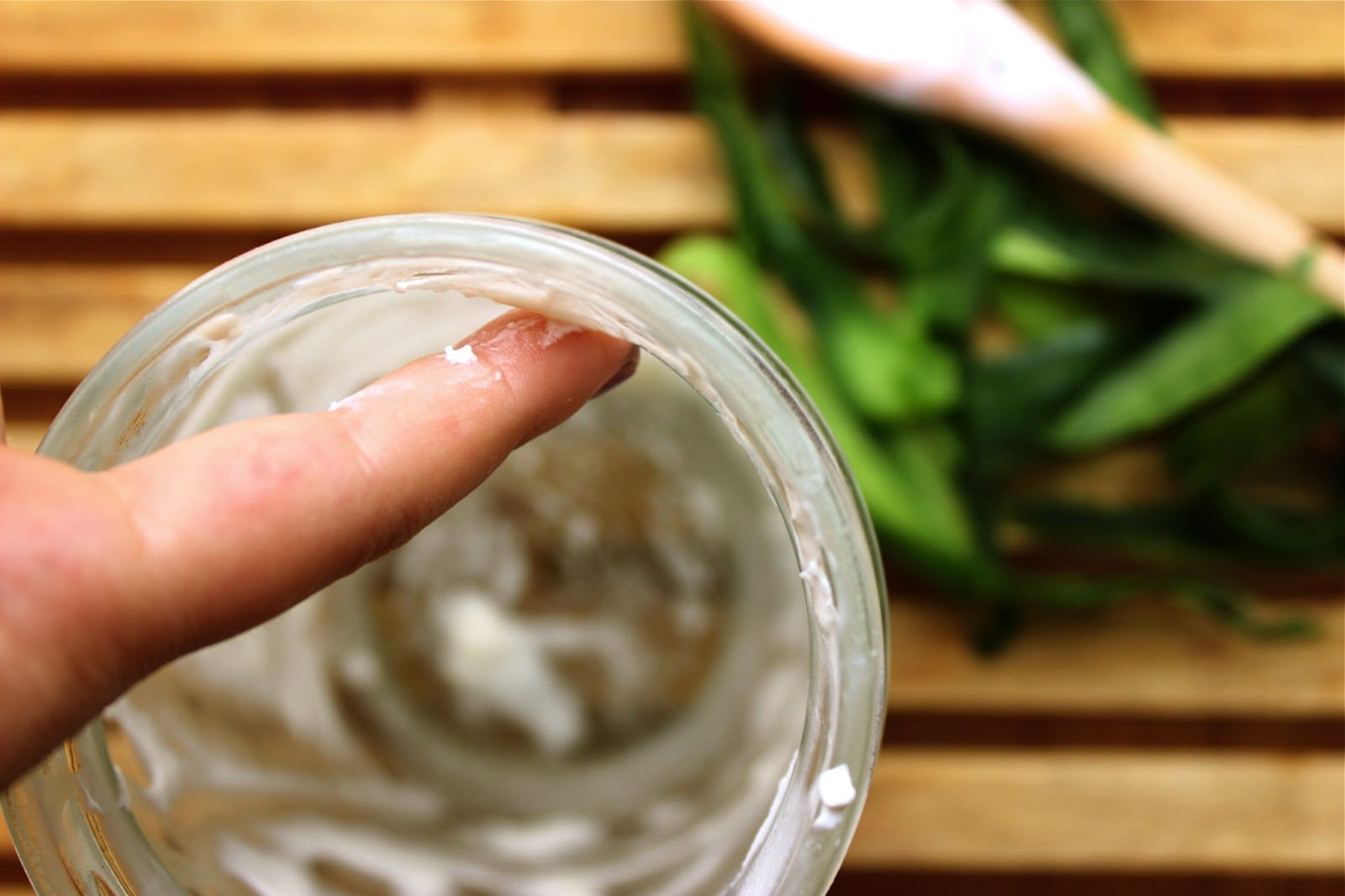
Yogurt – my late night confidant, my consigliere, always there to share in my triumphs and heartbreaks, in the mundane and the extraordinary, over three continents, consistent and unconditional.
MAST O KHIAR

Ingredients:

Serves 4

2 cups yogurt , strained (Greek) or regular, or a combination of
1 1/4 cups cucumber, chopped or grated, approximately 1/2 english cucumber or 3-4 Persian cucumbers *
1 teaspoon salt
1 tablespoon dried or fresh mint or fresh or dried dill and more for garnish
small pinch of black pepper
1/2 teaspoon ground dried rose petals and more for garnish (optional)

1- Mix all ingredients in a bowl.

2- Garnish top with ground dried rose petals, mint and/or dill.  Adjust all ingredients to taste and serve.

*I usually peel the cucumber except when using Persian cucumber.  In which case it is best to use organic.

Will keep in the fridge for up to 2 days.
Tips

Saffron – Liquid Gold

It’s time to have a talk.  Yes, that talk. I know, we just started this thing.  We’re just getting to know each other.  It’s been fun.  But if this is going to go on any further I need to know that you’re fully invested.  Ready to take a chance.  Ready to shake things up a little.  Ready to commit.

To saffron.

I know, I know, I’m asking for a lot.  But we’re worth it.  You’re worth it.  Trust me.  You won’t regret it.

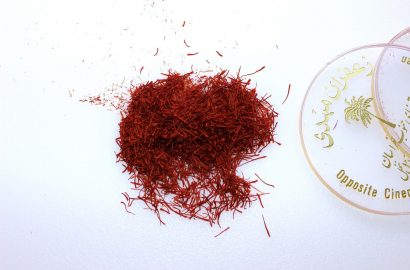
Saffron is the crown jewel of all spices – the most expensive spice in the world.  And for good reason.  It comes from the crocus flower.  And each flower has 3 stigmas attached to it.  These stigmas are then individually handpicked and dried, resulting in this precious spice we call saffron .  A lot of work.  But oh so worth it.

Persian cuisine and saffron are almost synonymous.  Iran is responsible for over 90% of the global production of the spice.  It is used in both savory and sweet dishes.  It is treasured for its distinct, rich sunset hue and its purported “joy inducing” fragrance.  It is also a natural dye, so beware of stains.

If it is true that we eat with our eyes first, then Persians eat with their eyes and noses first.  In our house, growing up, the color and aroma of even the most basic dishes were just as important as the taste.  Often my mom will talk of a spice or dish releasing its “perfume”.  Thus, the use of so many rich aromatics in Persian cuisine; saffron, rose water, cinnamon, cumin, and cardamom evoke poetic descriptions.  Persians by nature are a very poetic people.  Young school children can be heard quoting Hafez, Saadi, Rumi, Ferdowsi, Khayyam.  Poets ancient and new are highly revered and respected.  So it’s not surprising that romanticism and metaphor should spill over into our cooking as well.

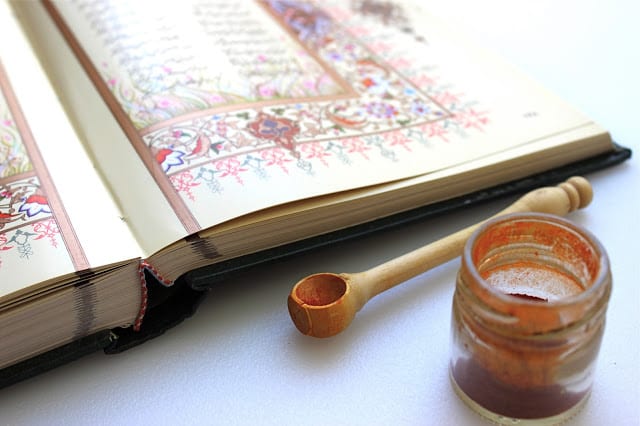
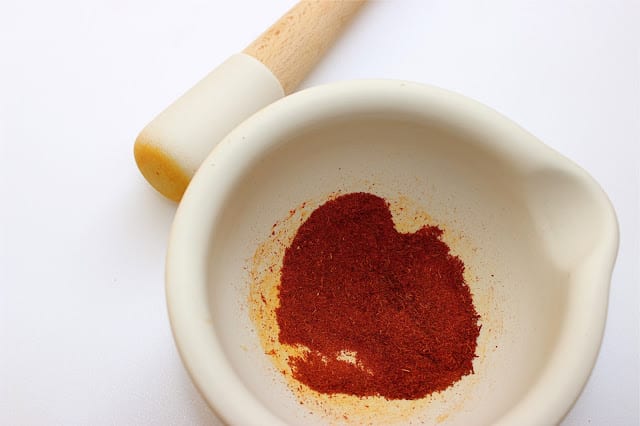
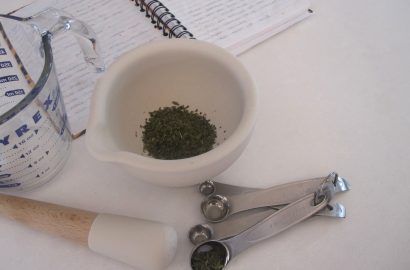
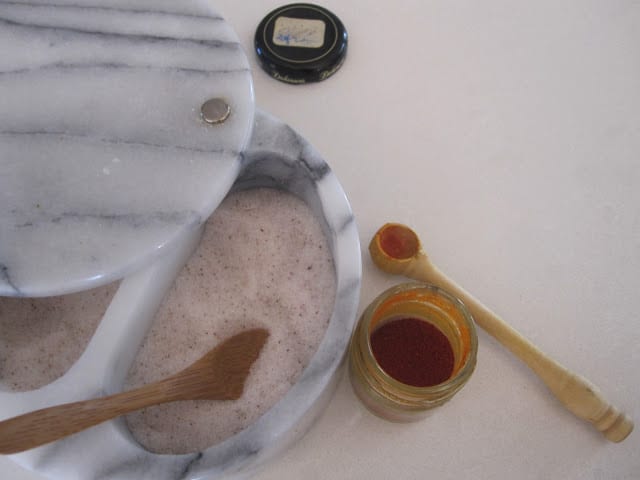
Because of its high cost, rich hue and taste, a little saffron goes a long way.  The best way to maximize its use is to grind up the saffron threads.  This can be easily done with mortar and pestle.  It only takes a couple of minutes.  Or, you can use a spice grinder.  Once ground up, the saffron can be kept in a little spice jar with its lid on tight.  It is also best not to purchase already ground up saffron.  As it may be adulterated.  Sounds scandalous doesn’t it?  What it means is that it might not be 100% saffron.  It might have other spices like turmeric or paprika mixed in.  In our house, I am very protective of the saffron jar.  Liquid gold we call it.  To get to the saffron, you have to go through me first. I even have a little wooden spoon that is specifically for saffron use only.


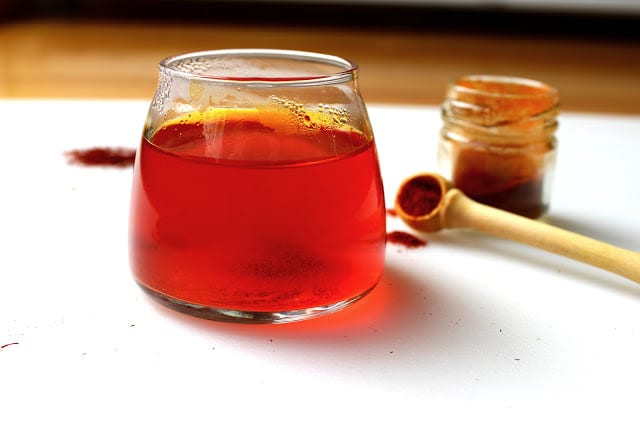
In order to get the most saffron bang for your buck, a bit of the ground up spice is mixed in a small glass of hot – but not boiling – water.  This is much better than adding your saffron directly to your cooking food, as you will be using less but still getting the flavor you want, as well as releasing its wonderful medicinal qualities.  Specific amounts of saffron-to-water ratios will be given in recipes.  If you have saffron threads that you do not think you will be grinding up and using soon, you can store the threads in their case, in the freezer to retain freshness, although you might lose some of the perfume over time.

So what do you think?  Ready for the next step?  Still unsure, nervous?  Then lean a little closer.  What if I were to tell you saffron is also an aphrodisiac…what do you say…

Dessert

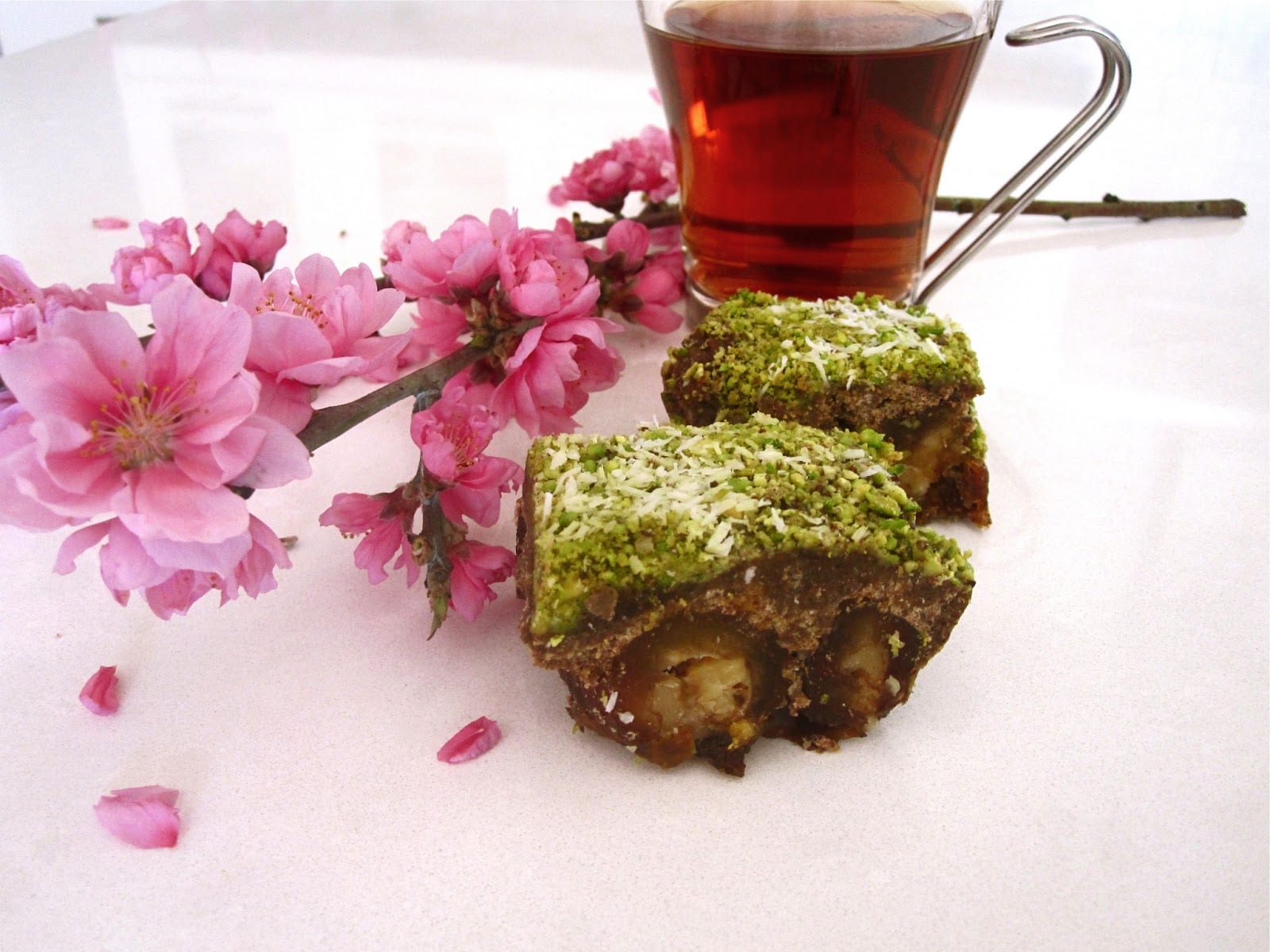
A Sexy Dates and Walnut Pie – Ranginak

Yes.  I know.  How can dates and walnuts ever be described as sexy.

Well, maybe it’s just time to re-think sexy, and welcome some new players into this exclusive (and elusive?) club.  After all, it’s not all about outward appearances.  Most of the time it’s about how we are made to feel.  And this pie is here to help bring back the inner sexy.  Or so I hear.

Recipes are usually inherited.  And I inherited this one from an unexpected source – Luna’s wonderful Farsi teacher.  One day she was kind enough to bring us fresh, plump dates from the Persian store. The girls love dates.  We got to talking about making different desserts using dates.  She asked if I had ever tried ranginak – a dessert made with dates and walnuts.  I had never heard of it.  She went on to describe how she makes it, and very casually mentioned that gentlemen in particular love it for how it makes them feel.

It’s an aphrodisiac.  It gives “energy” and increases the libido.

Ahem – my curiosity piqued – of course.

It turns out walnuts and dates have been used for centuries to increase the libido.  I always refer to dates as natural energy bars.  Besides being delicious, they are packed with essential nutrients and vitamins and give you that extra boost of energy when you need it.  It is said Middle Eastern men have been relying on dates to increase their sexual stamina for centuries.  Walnuts, I discovered, are used as a natural Viagra.  (The omega-3 fatty oils help with “blood circulation” and like many other nuts they contain arginine – an amino acid which has been said to help with erectile dysfunction.)

It should be mentioned here that for as long as I have been thinking of starting this blog – not once did I think the words “Viagra” and “erectile dysfunction” would find their way in to a post of mine.  But here we are.

Technically, this is not a pie.  But I made it in a pie plate, so why not call it a pie.  Traditionally, the dates are stuffed with walnuts, and a hot batter made of butter and all-purpose flour is poured over the dates.  I decided to make my batter using coconut oil and whole-grain spelt flour.   The batter is stirred for about 15-20 minutes until it’s color turns golden and a caramel-like consistency is reached.

After about 20 minutes of stirring, my batter had thickened somewhat but was still much more runny than desired.  And because of the whole-grain spelt flour, it’s color actually got darker – more like a rich brown.  All was lost I thought.  I should have stuck with the original butter/white flour mixture.

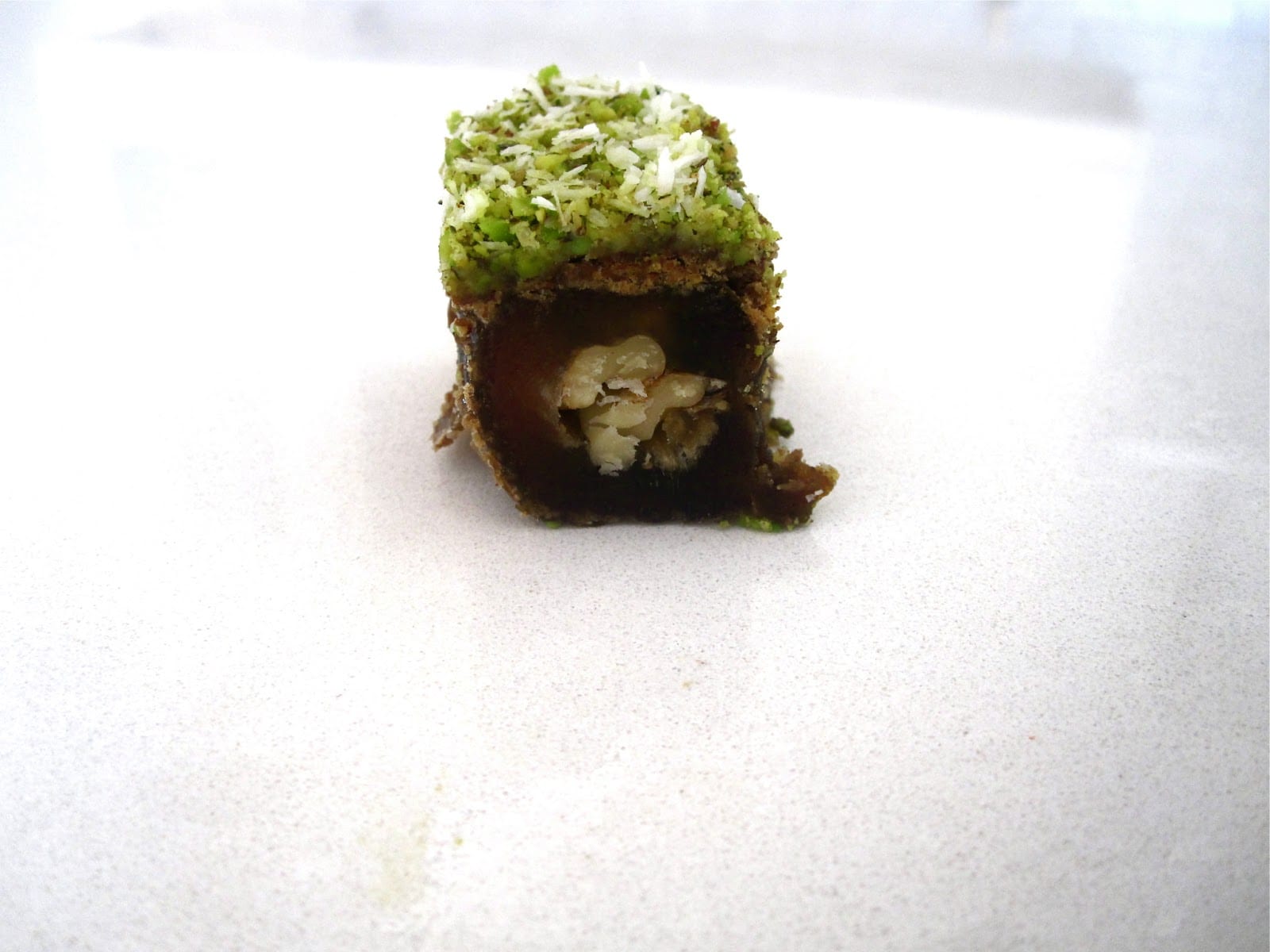
But I forged ahead and poured the batter over the dates.  After the pie cooled I cut into a piece, releasing the toppings’ fragrant mix of flavors: cinnamon, cardamom, pistachios, and a hint of coconut.  And then, the first bite: the crunch of walnuts, and the soft chewiness of dates.  The girls tried a piece, and burst into an impromptu dance.  Still, the dough topping was not holding shape as I would have liked it to.  Dismayed, I wrapped it up and put it in the fridge.

When I took it out the next  morning – Hurrah! – the batter was no longer loose.  It had taken shape.  Accidental success!  I only should have cut it into squares the night before.  The pieces can crumble easily, so presentation-wise it is best to cut it before putting it in the fridge.

Also, a note on cinnamon.  It is a spice I use quite often in both savory and sweet dishes.  Which is why I was so intrigued to find out from the lovely Shiva Rose about it’s different varieties, and it’s effects on our health.

As for the this will cure you effects of a Date and Walnut Pie?  Even if all of the above mentioned ingredients don’t produce the sought after results,  maybe sometimes all we need to bring back the sexy is a mere suggestion. A hint of a dessert with “magical” powers, or a giggle over the possibility.  All while sharing a bite or two of Date and Walnut Pie.

Happy Valentine’s Day.

DATE AND WALNUT PIE

Inspired by S. joon

Ingredients:

Serves 8

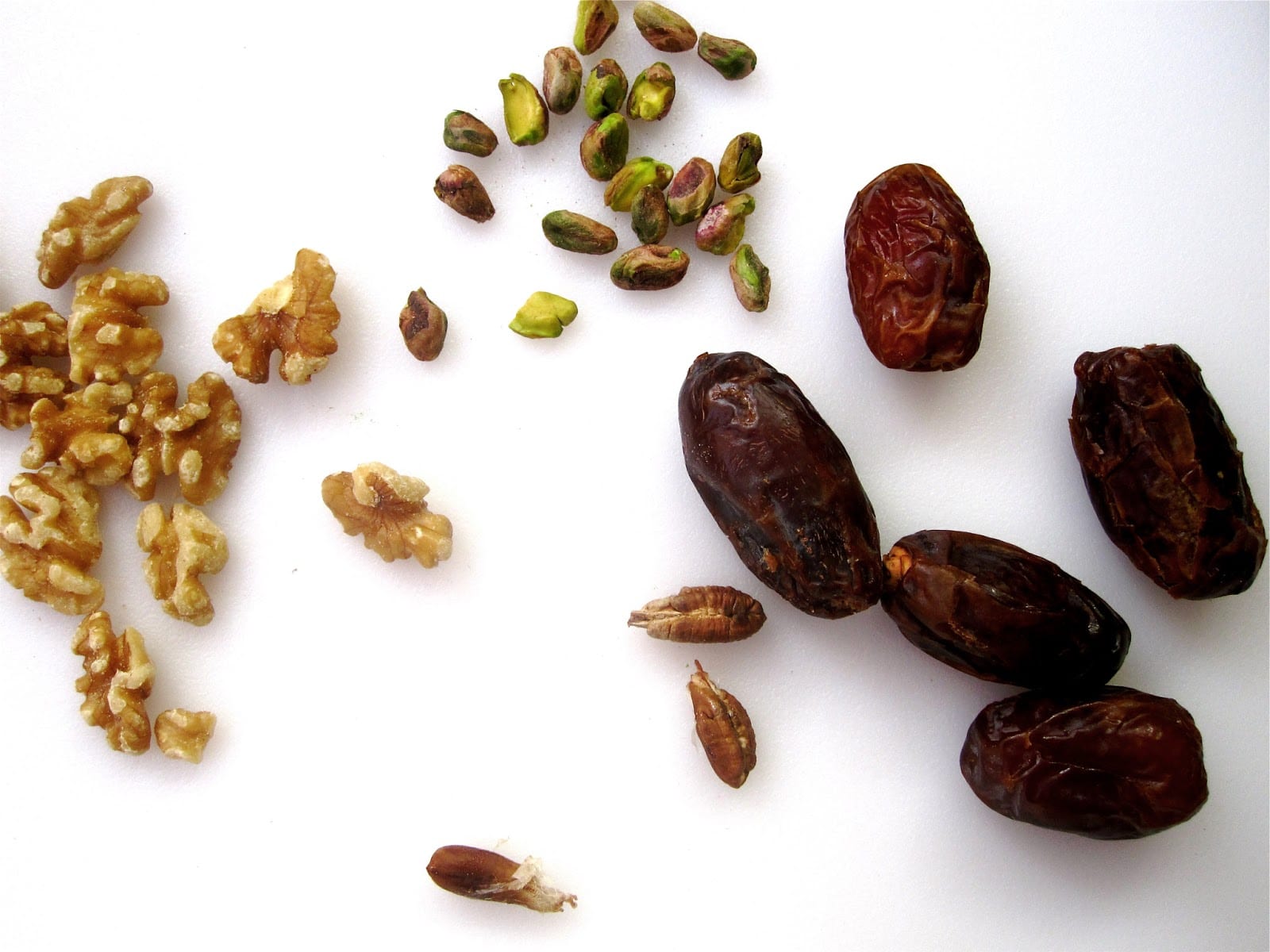
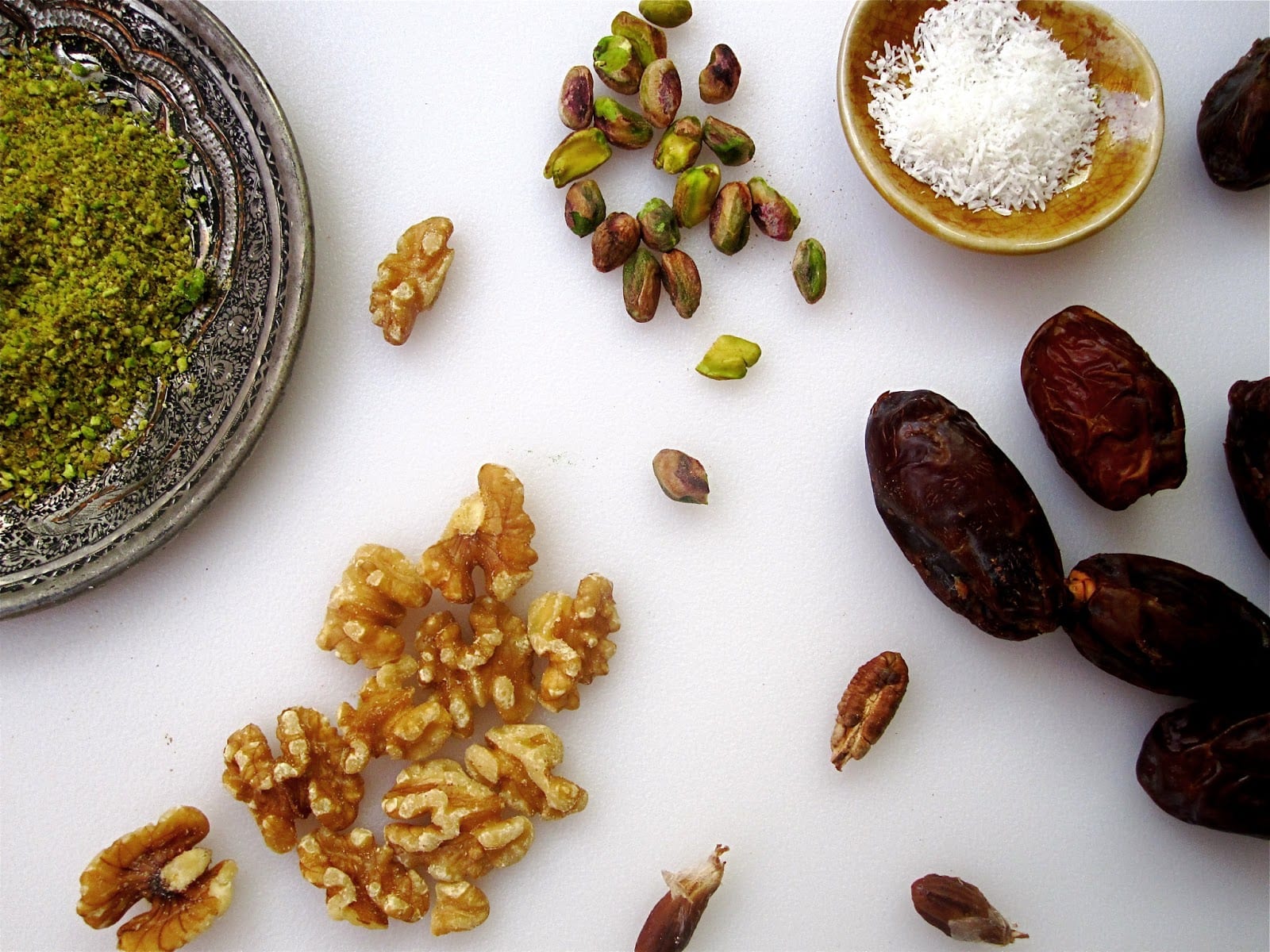
1 cup walnuts broken in half or coarsely chopped
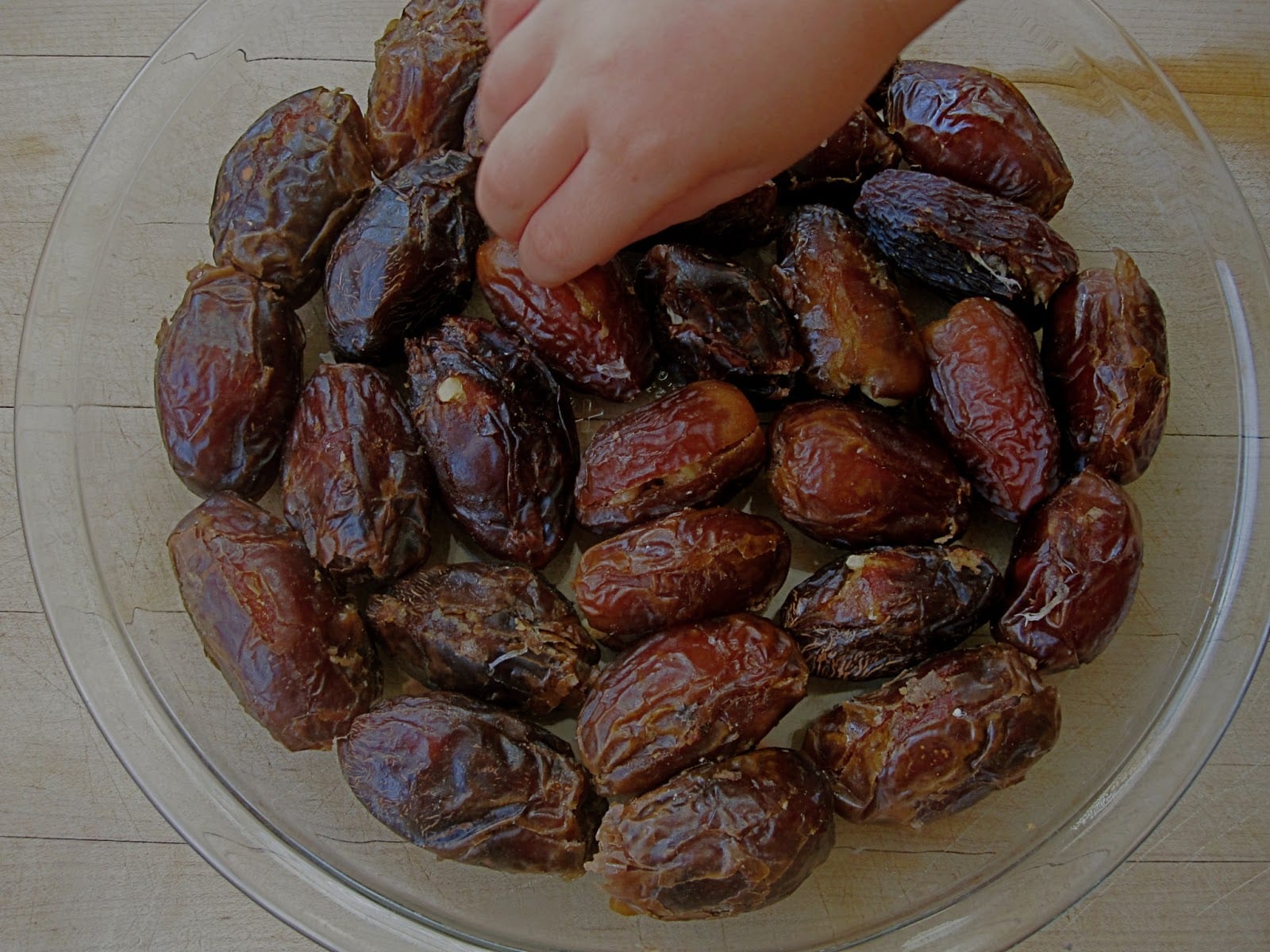
30 dates approximately or enough to fill a pie plate
1 cup coconut oil (or 1 cup butter or ghee)*
2 cups whole grain spelt flour (or 1 1/2 cups all- purpose flour)*
2 tablespoons maple syrup
1/2 teaspoon cardamom
1 teaspoon cinnamon
1 cup ground or finely chopped unsalted pistachios
shredded unsweetened coconut (optional) for garnish

  1. Arrange dates tightly next to each other  in a 9-inch pie plate or similar size serving dish.  Determine how many dates  you’ll need.  Cut a small slit vertically in each date to take the pit out.
  2. Toast the walnuts in a large pan over medium heat.  Roughly 5 minutes.  Allow the walnuts to cool.
  3. In a small bowl combine the cinnamon and cardamom.
  4. Fill each date with a walnut half.  And place in the pie plate.
  5.  Melt the coconut oil over medium heat. You can use the same pan used to toast the walnuts.  Add the flour, stirring constantly.  The batter will start to turn into a dark rich brown and thicken.  About 15-20 minutes.  Keep an eye and a nose on it.  You don’t want the flour to start burning.
    * If using the butter/all-purpose flour batter look for it to change to a caramel like consistency and color.  About 15 minutes.
  6. Pour the hot batter over the dates.  Packing it down and making sure the surface is smooth with the back of your spoon.  No lumps on the top.
  7. Drizzle the maple syrup evenly over the hot batter.
  8. Sprinkle the cinnamon/cardamom mix evenly over the hot batter.  It will soak right into the batter.
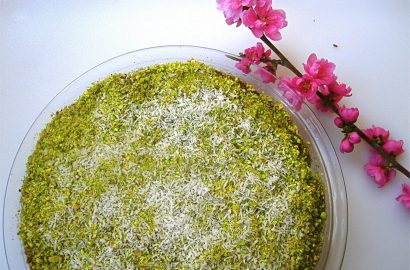
  9. Sprinkle the pistachios over the top.  Sprinkle as much shredded coconut as you like on top of the pistachios.  Set aside and allow to cool.  About 1 hour.
  10. Once cool cut in small squares.  Place in the fridge for at least 2 hours or overnight.
    * If using the butter/all-purpose flour batter you can serve once the pie has cooled.
  11. Once the batter has set in the fridge arrange squares on a serving dish or serve right out of the pie plate.

Will keep in the fridge for up to 3 days.

Soup

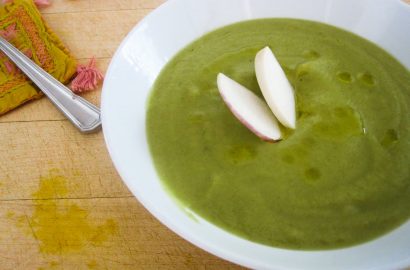
A Turnip Soup – Shalgham

How has this winter been treating you?  We’ve managed to stay pretty healthy.  Well, except for that terrible chest cough that everyone seems to be sporting.  You know, the one that overstays it’s welcome by about a month.  Both girls got it.  Soleil was hit especially hard for a couple of days. Each time she coughed she sounded like an eighty year old man who has spent sixty of those years puffing cigarettes.

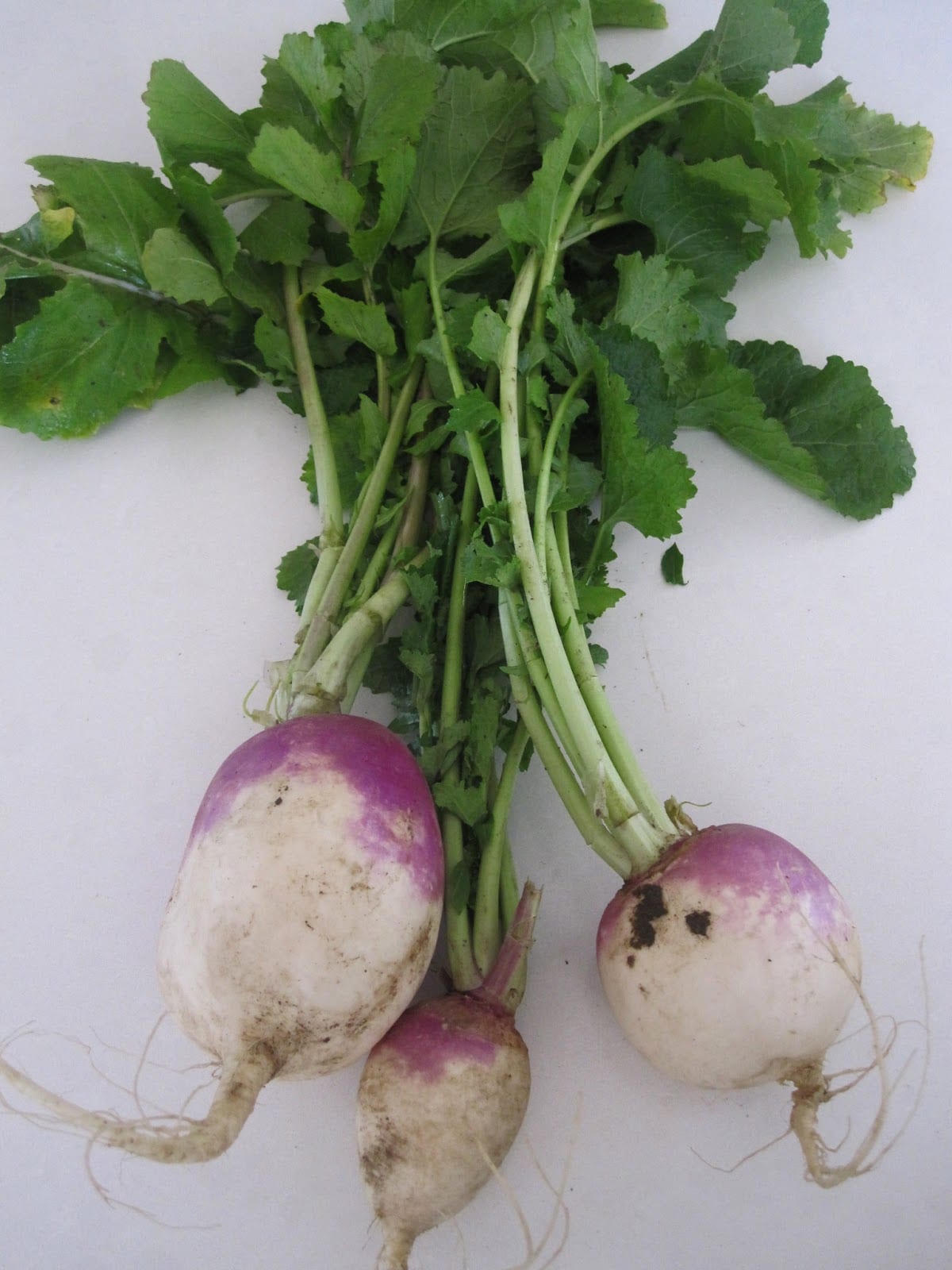
A chest cold – bronchitis, respiratory infection, whatever you want to call it – is not fun. So when I was going through all the goods in my weekly farm box a couple of weeks ago and dug out a bunch of turnips, it became very clear what needed to happen.

This will cure you.  Yes, there it was again.  The Whisper.

Got a hacking chest cough?  Eat some turnips.  That’s the way it was in our house.  Usually made into an “ash” (sounds like wash) which is like a thick soup.  I wasn’t sure if the girls would be into a turnip ash – ash e shalgham.  Things were a little touch and go with all the coughing, but I knew a silky, blended soup would at least get their attention.

Most stores cut off the turnip greens, which is a shame because not only are they tasty (something along the lines of kale, mustard greens and arugula) but they are packed with vitamins and minerals – vitamin K, calcium, vitamin A, and beta carotene to name a few.  Add that to the vitamin C and potassium in the bulb, and the medicinal properties in onion, garlic, turmeric and cinnamon; and you have the makings of a this will cure you soup.  If you can’t find turnips with the greens, you could use some cilantro or parsley.  I also had some yukon gold potatoes left over from the previous weeks’ farm box and thought they would nicely thicken the soup and give it its silky texture.

And then, there it was.  The lone granny smith apple.  Perched on the counter.  Perfect.  A little sweet, a little tart.  Does it help a cough?  I have no idea.  But I quickly grabbed it  without any fanfare so as not to bring any attention to it.  (Apples are a hot commodity in our house and I surmised it would be very difficult to explain to a 6-year and a 3-year old why the only apple left in the house was going in the soup pot.)

We enjoyed the soup for lunch and the following day as an after-school snack.   Were the little ones cured of their coughs?  Eventually, yes.  Did the soup play a part in that?  Most certainly yes.  It soothed, it comforted, it nourished, it brought us all to the table.


Turnip Soup

* Update: I had orginally written 3 yukon gold potatoes – what I meant is 3 BABY yukon golds.  It has now been corrected below.

Ingredients:

Serves 4-6

2 tablespoons olive oil,  plus a little more for garnish
1 medium brown onion, diced
1 teaspoon fine grain sea salt, divided
3 cloves garlic, minced
1 bunch turnips about 1 1/2 pounds, cubed, save one small bulb thinly sliced for garnish (optional)
3 baby yukon gold potatoes or 1 medium russet potato, peeled and cubed
1 medium granny smith apple cubed or apple of choice
1/2 teaspoon turmeric
1/4 teaspoon cinnamon
1/4 teaspoon black pepper
2 cups vegetable or chicken stock
1 bunch turnip greens, washed really well, stems off,  roughly chopped or greens of choice, about 1 cup cilantro or parsley loosely packed

1 – Heat 2 tablespoons olive oil in a large pot over medium heat.  Add onion and 1/2 teaspoon salt and cook for 5 minutes.  Stirring occasionally, until onion softens.  Add garlic and cook for 2 minutes, stirring so the garlic doesn’t burn.

2 – Add the turnips, potatoes, and apple.  Add the turmeric, cinnamon, pepper and remaining 1/2 teaspoon of salt.  Stir to coat and cook everything for about 8 minutes.

3 – Add the stock and bring liquid to a boil.  Once at a boil reduce heat to medium-low.  Add the greens.  Cover the pot, and simmer for 15-20 minutes or until all vegetables are tender.

4 – Puree the soup in a blender or in the pot with an immersion blender.  Adjust seasoning according to taste.  Serve the soup with a little drizzle of olive oil.  Sprinkle a little salt on the sliced turnip and place on top for a little crunch.

Enjoy right away!  The soup will keep in the refrigerator for up to 3 days or in the freezer for up to a month.

Tips

A Thing or Two about Recipes

But you can’t tell people exactly what to use, they have to see what they have in the fridge! – my mom.

When I decided to officially leave home – Vancouver being home at the time – and move to Los Angeles on my own, oh so many moons ago, I knew I couldn’t survive more than a week without a home-cooked meal.  One of the downfalls of being raised on home cooking: nothing else will suffice.  Specifically a Persian meal.  Rice, stew, the staples.  It was then that my culinary skills were truly put to the test.  I knew I had a lot to learn and a lot of cooking ahead of me.  So I bought a brand new notebook, leopard print cover and all, and sat down with my mom to write down the recipes for some of my favorite meals.  This was a harder task than I had anticipated.

You see, everyone in my family cooks.  And cooks really, really well.  A typical dinner party at my mom’s house means no less than 15 people, regardless of her dining table only seating 6.  Of course, she has slowed down some over the years but she still cooks in the same generous spirit of Persian hospitality: everyone is welcome.  My brother, Italian by birth, is “L’Enfant Terrible” of all things culinary and beyond.  He may leave behind a storm in the kitchen, but sitting down to one of his simple pastas or more complex creations is truly a treat.  In our house my dad’s spaghetti carbonara is simply known as Baba’s carbonara.  That’s all the girls (and my husband) need to hear to come running to the table.  My step-mother Kumi is Japanese. Delicious and fresh homemade sushi.  Enough said.   And not one of this colorful cast of characters cooks from a recipe.  In fact, it’s rather looked down upon to do so.  This does not apply to baking of course; that’s another story.  The only time I can recall seeing my mom use a measuring cup or a measuring spoon is when she would bake, and even then I think she used a scale.  The general feeling in my family goes something like this:  if you cook from a recipe you are not cooking, you are following directions.  Anyone can follow directions.  Cooking is a personal creative art form.  You use all your senses, taste, smell, sight, touch.  You use the best ingredients you can get your hands on and taste as you go along.  If it doesn’t taste right, tinker with it until your taste buds are happy.  Did I mention my family happens to be quite direct, opinionated and most of all, very passionate about things that matter most – like food?

For me, recipes are something to be admired, respected, studied, tried once or twice –  and then rebelled against.  Over the years I’ve found my own way around the kitchen and recipes.  I’ve discovered I don’t like being told exactly what to do (hence the baking allergy), and I’m kind of lacking in the patience department.  Cooking for me is stress relief, and as my brother put it not so long ago – escapism.  When the 5pm meltdowns start I find myself slowly backing out of the living room and into the kitchen.  The chopping board becomes my yoga mat.  And all sense and order return to the world.  There are times I will follow recipes exactly as written, but most days I’m at the mercy of what’s in the fridge and the pantry.  A recipe becomes more of an inspiration.

As I’ve started to develop recipes for you here, I’ve realized that I have been raised in a culture where recipes are passed along not in the written word, but through the spoken one.  And as my sister-in-law Sarah can attest, much to her frustration, I am also guilty of this.  When asked how something is made I get very animated, hands gesticulating wildly to show you the pinch of salt, sound effects to emphasize the pouring of the olive oil, and yes I always start by saying oh it’s so easy.  So I look forward to actually putting down all this performance art into some kind of cohesive written narrative – a recipe.

A couple of things –

I always cook with leftovers in mind.  Especially on a weeknight for the school lunch the next day, which includes Drew’s (Mr. Husband) lunch as well.  If we don’t finish it in a couple of days it gets portioned out and put in the freezer – a life-saver on a rushed weeknight a month later when you’re about to reach for the phone to order in.  This is something to keep in mind if the serving size seems too large and you’re thinking of cutting it in half.

I also like to season in layers.  I find the individual flavors of the ingredients are really drawn out this way.  So I’ll add a little pinch of salt when I first throw in the onions, and might add another little pinch when I add the carrots.  I’ll mention this if I do it, but I can’t quantify it for you.  A little pinch is just that.

I hope you find inspiration in the recipes here, and after you follow the recipes a few times, I urge you to rebel and add your own twist.  And when you do, write it down and tell me about it.

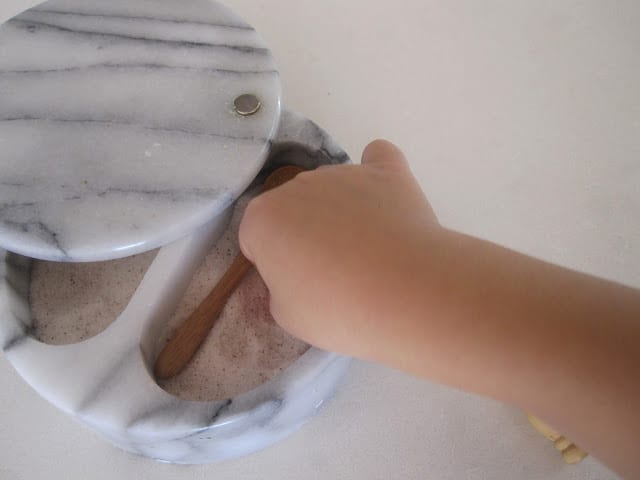
As is the case in our house, beware of little fingers in the salt bowl.

Fruit

Sweet Lemons

I promise every post is not going to be about random fruits and how to juice them.  But here’s the thing – these lemons will cure you.  Well, so say my parents.

At the first sign of a cold, a random sneeze, cough or sniffle – my dad will run out and return with a four pound bag of sweet lemons.  Mention to my mom over the phone that Soleil (my 3 year old daughter) has a little cough and I have to take an oath that as soon as we hang up I will start cutting up some sweet lemons.  Because – these sweet lemons will cure you!

Every culture (particularly old world cultures), every family has certain idiosyncrasies and rituals that get passed down from generation to generation.  Over time, some of these “superstitions” change and adapt.  But some prevail and linger around, a constant little whisper in your ear. And my culture is FULL of them.  It’s winter – cold and flu season – a particularly popular time for these little whispers.  Or, in my family’s case, not really a whisper but more of a full-on voice command:

Never sleep with wet hair
NEVER go out with wet hair
Always wear socks (especially on hardwood or tile floors)
NEVER sleep in front of a draft or in an air conditioned room
You’ll catch a cold – cover up your throat and chest (oh dreaded turtle neck that was my nemesis as a six year old)
Always wash hands as soon as you get home (this one is an all year round one and a given but I’m always surprised, so many people don’t)

And it goes on and on.  So many times as a rebellious teenager I would try to argue that none of these have been proven scientifically, medically.  The doctors don’t know what they’re talking about, is what they would say.  Now, it should be pointed out here that my parents have the utmost respect for western/modern medicine.  In fact, sneeze once and in the same breath as telling you to go pick up some sweet lemons they’ll urge you to call the doctor and make an appointment.  And I suppose now as an adult and a mother I have grown to fully appreciate this embrace of both the scientific and the traditional.  And for the record I still can’t sleep with wet hair and can now fully appreciate a nice soft turtleneck.  What can I say – my parents were right.

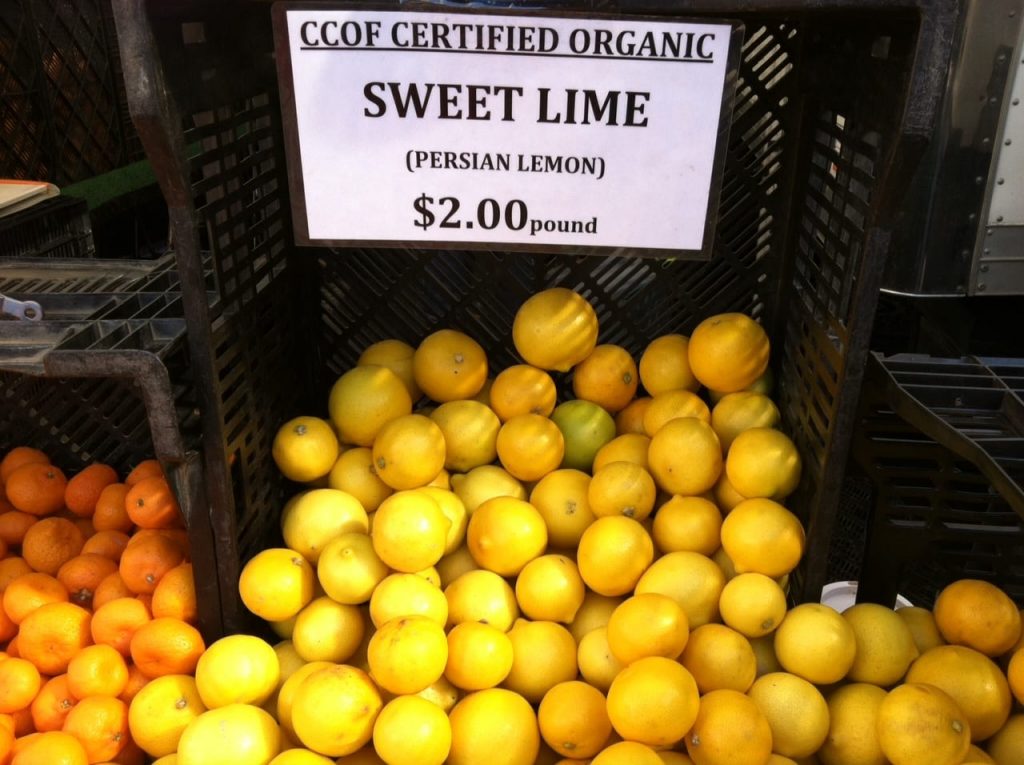
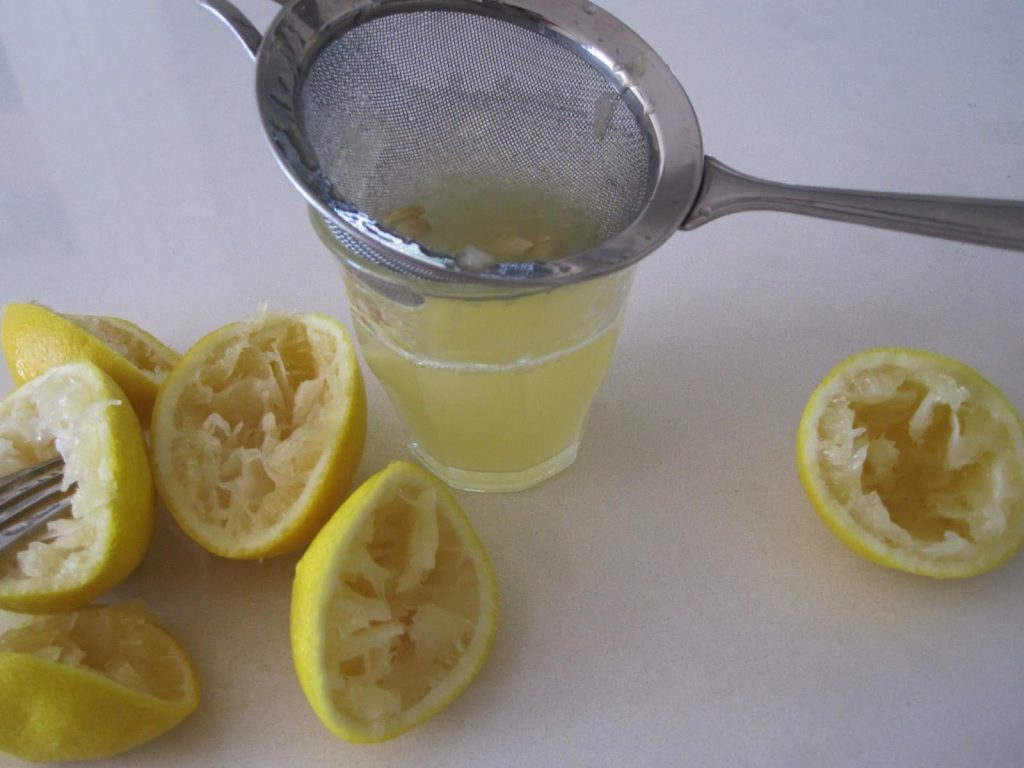
Sweet lemons are exactly that – sweet.  And packed with vitamin C.  They are rounder than regular lemons with a softer and thinner rind.  These are not Meyer lemons as many people think they are.  The Persian markets usually have them at this time of year.  I have been lucky to find organic ones at the citrus stand at our local Santa Monica farmer’s market.  And every week at that stand, I manage to convert a handful of people and families into sweet lemon fanatics.  They approach the sample slice with suspicion and skepticism.  I gently push them to try one.  They grab a slice, pucker up their lips in anticipation of what they assume will be sour and – epiphany! – their eyes widen in delight at the first burst of sweetness.  In contrast, I can also always pick out the Persians who show up  like me and fill their bag with 4 pounds of sweet lemons.

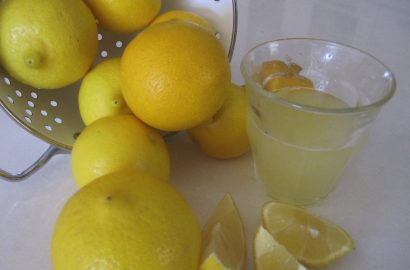
The girls love these.  Whenever we have a friend over who is curious about the lemons they chant in unison: try it try it!  Most of the time we just slice them up into wedges and enjoy them as is.  Or we juice them simply by hand.  Fresh lemonade the girls call it.  Just make sure to drink the juice right away.  Sweet lemon juice gets bitter if it sits out too long.

So go ahead.  Try it try it!  Because these lemons will cure you.

The whisper has been passed.  From one generation to the next.

Drinks

Pomegranate Juice – Abeh Anar

This pomegranate brought me back to life!

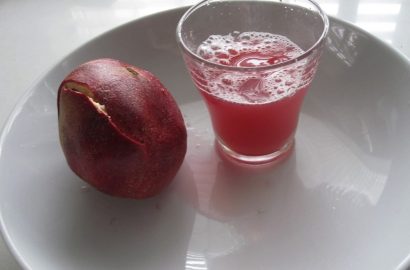
So said my 6 year old daughter Luna when she got through the very last drop of her abeh anar – pomegranate juice.  Next came the search for any surviving seeds that didn’t have their juice sucked right out of them.  Dainty, stained fingers ripped though the ravaged piece of fruit in hopes of one more little morsel, one more blood-red seed, one more crunch.

My childhood in Iran during the autumn months meant the arrival of pomegranates, and with it the cold winter months.  The pomegranates would be quartered for us, and we’d pick through them for seeds. An after-school snack, dessert, something to keep us occupied and out of the way of the adults for a while.  But what I loved most was sucking the juice right out of the pomegranate.  No juicers, no special equipment.  Just a strong yet careful pair of hands to do the squeezing.

Juicing a pomegranate

1 pomegranate, rinsed (organic if possible)

I highly recommend doing this over the kitchen sink at first until you get the hang of it.  And it is also advisable to not wear your favorite freshly laundered and pressed white men’s button-down.  So go ahead and put on an apron.
It should also be pointed out that my husband is the official pomegranate squeezer in our house.  Like I said – strong yet careful hands.

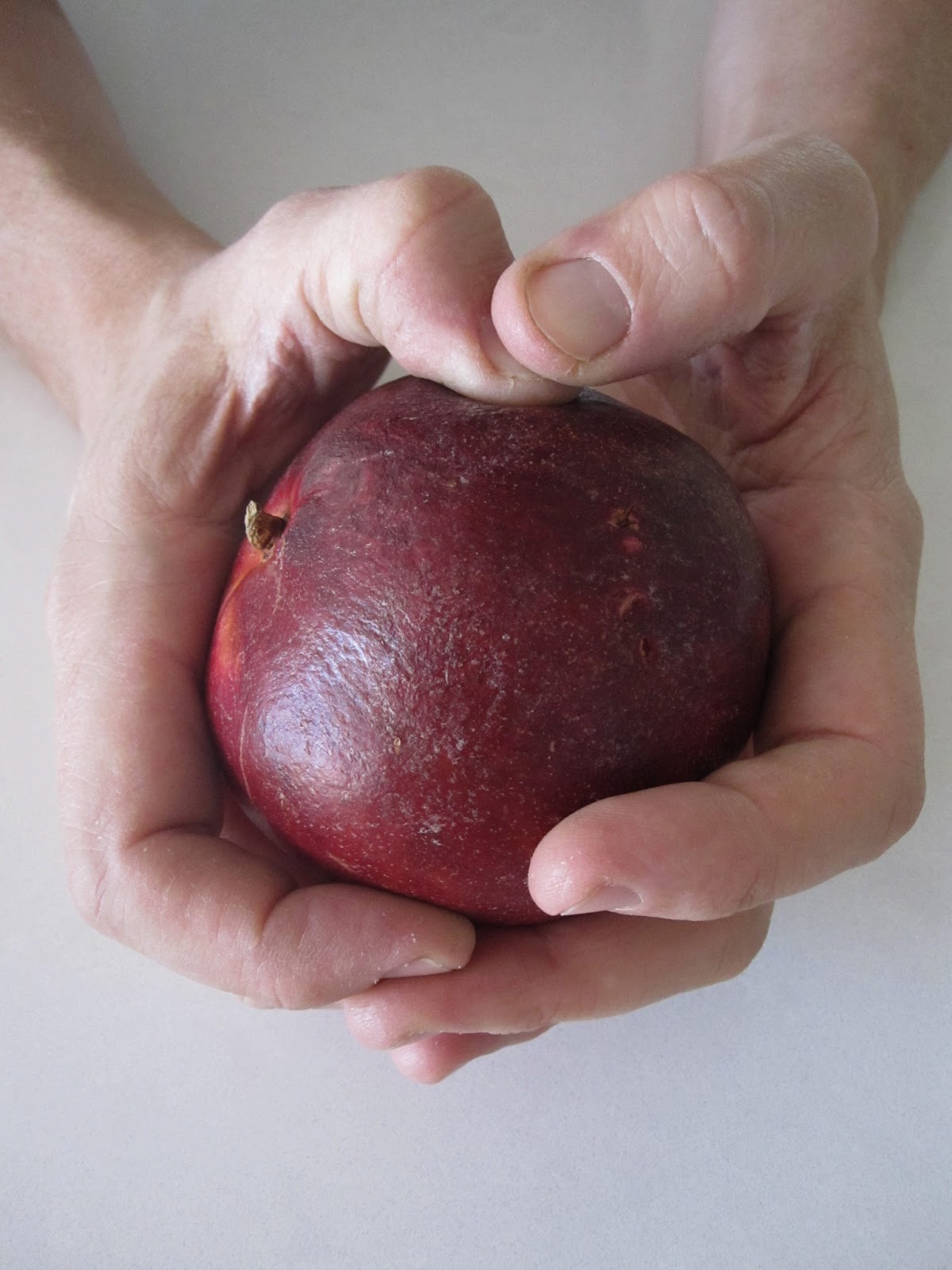
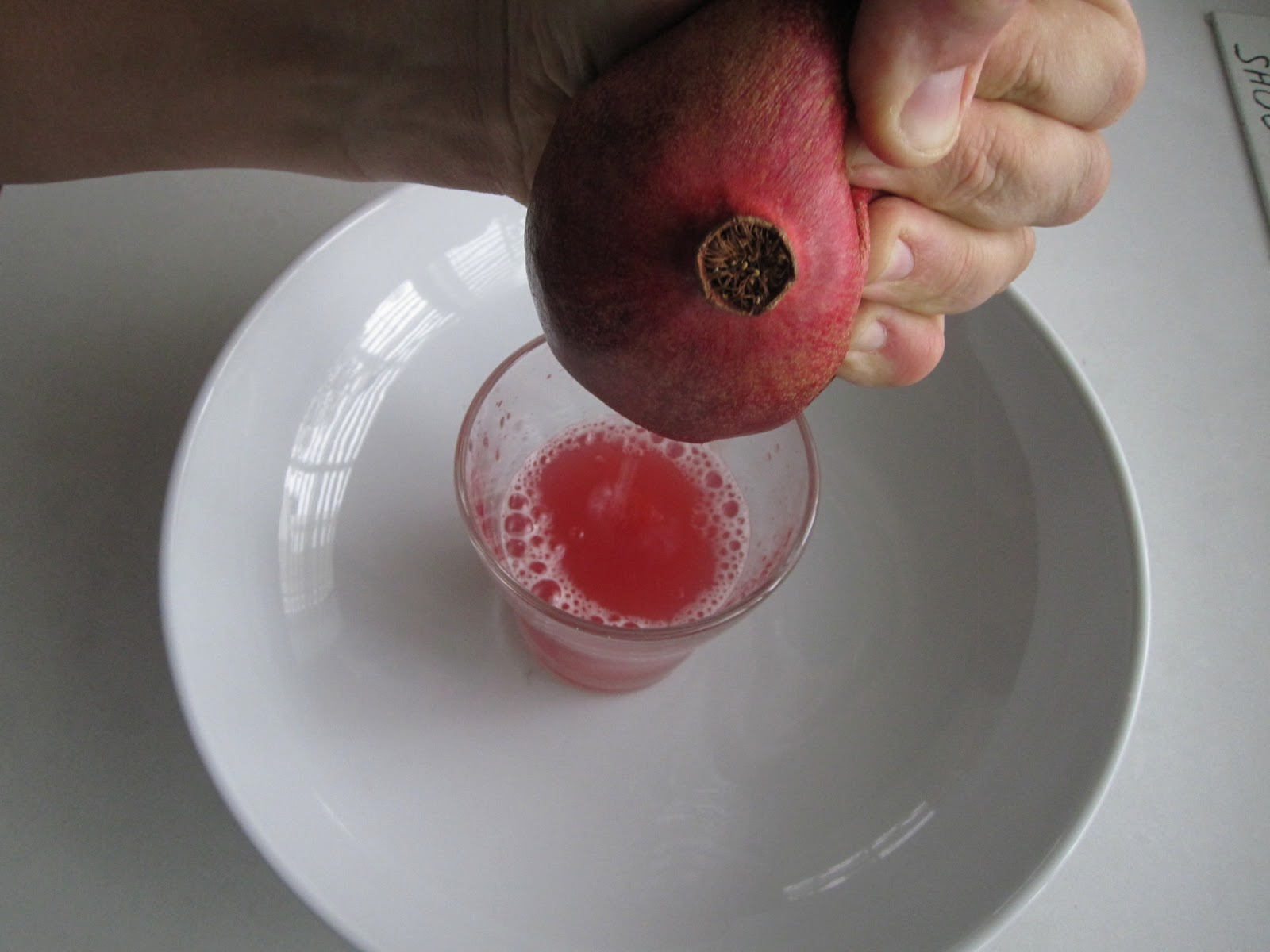
Gently but firmly squeeze the pomegranate with both hands to release the juice inside the seeds.

You will start to feel the seeds crunch and the fruit soften.
Work your way through the entire fruit.
You want the  pomegranate to soften but don’t over do it or the fruit will burst.
Take care not to  break through the skin.
If you do – don’t panic – try to recover as much of the juice as possible.  It might involve sticking your head right under the pomegranate with your tongue dashing about madly trying to catch every antioxidant-filled drop of delicious life-altering goodness.  This will not look pretty.  But it will be oh so delicious.
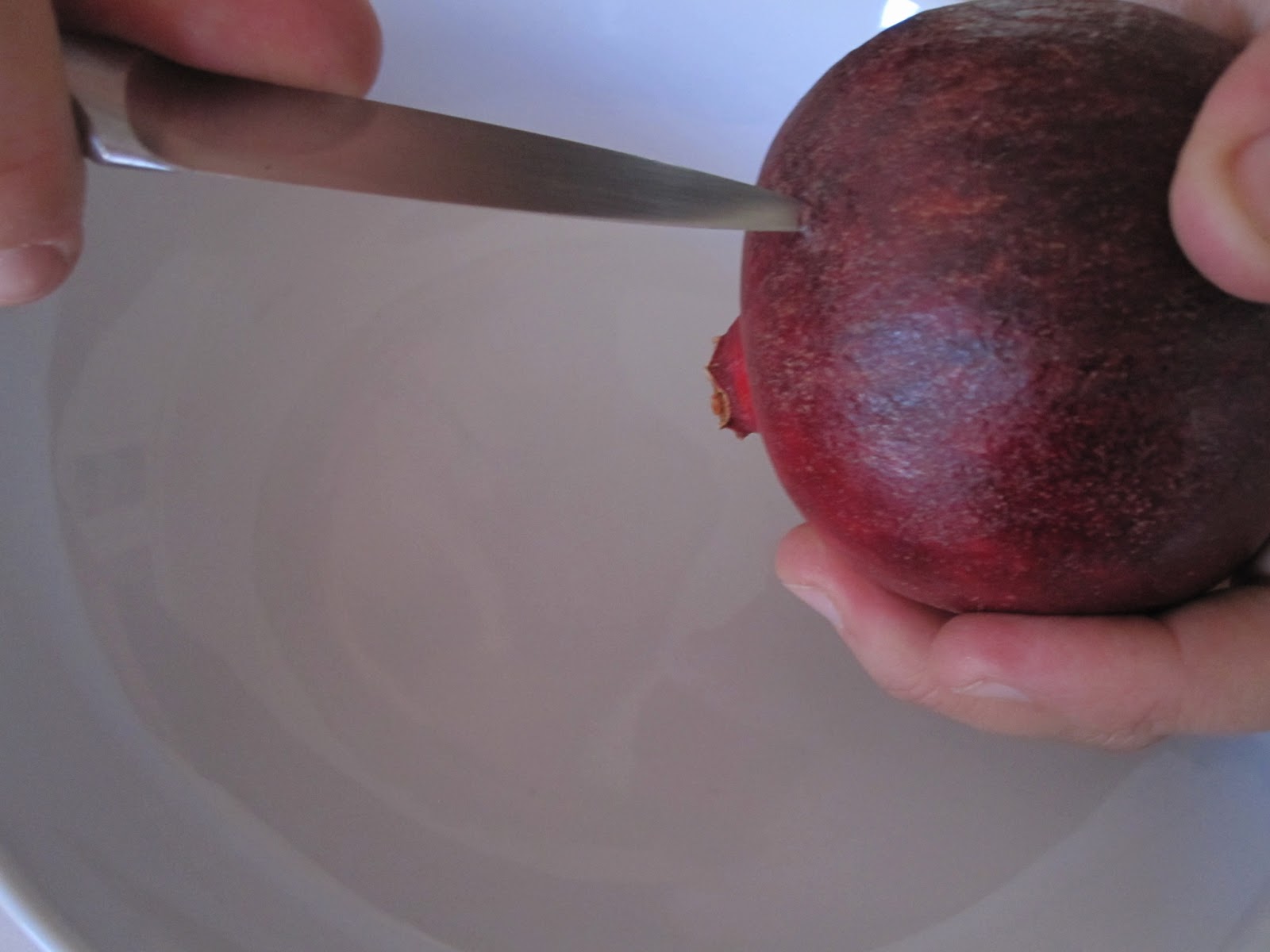
If you have been successful and have not been afflicted by the above-mentioned calamity, take a sharp pointed tool like the tip of a knife and make a small incision in the skin somewhere in the middle of the pomegranate.  BE READY.


The juice is going to come gushing through.  So have a mouth ready to start sucking the heck out of that fruit.  Gently squeeze as you suck.
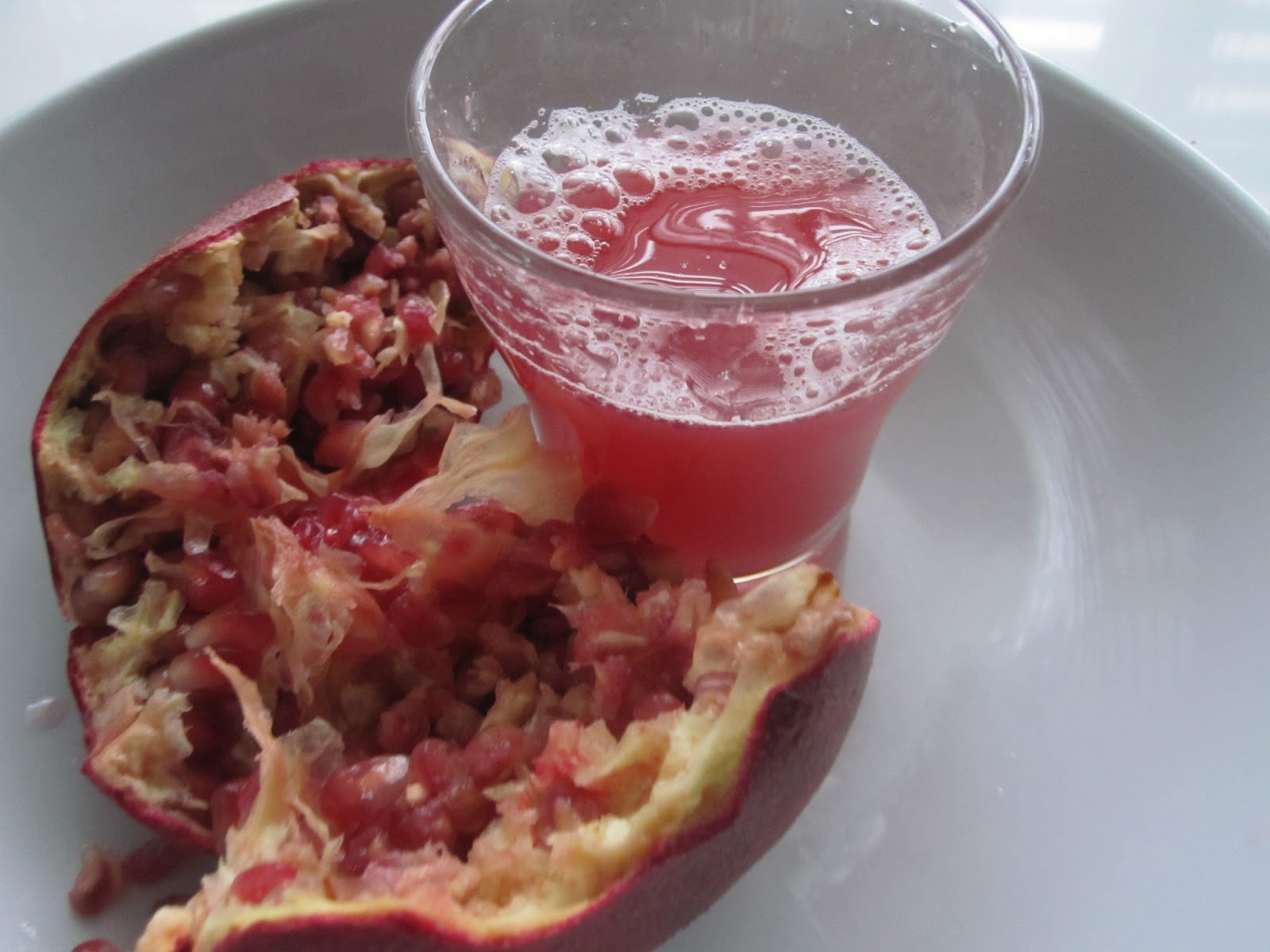
Or you can squeeze the juice right in a glass.
On most days my girls want the juice right away and don’t want to work for it, so we squeeze it in a glass.  They drink up that juice in one straight shot.

Luna, take a breath in between sips.

But Mama, it’s so good.  I can’t stop.

It’s mid-winter and we won’t be enjoying pomegranates for much longer.  But for now, while we still can, we’ll keep on squeezing, and relishing this ethereal nectar from this fruit that seems to carry with it stories from far away lands, from times long, long ago.  Or maybe it’s just a reminder of a time not so long ago.  A reminder of a childhood in a land that was once home.  A reminder of children walking around sucking on pomegranates.

Get yourself a pomegranate and let those seeds and juices bring you back to life.

Thank you for joining me on this food journey!  And tell me, how did the pomegranate squeezing go for you?

UPDATE: My mom just checked out my inaugural post and she called right away with some advice.  As she is apt to do.  From Maman:  When looking for the juiciest pomegranate choose one with a bumpy surface.  Not a smooth surface.  Those bumps are the juicy seeds bulging out.

Good to know!